

Article
Thomas Carothers
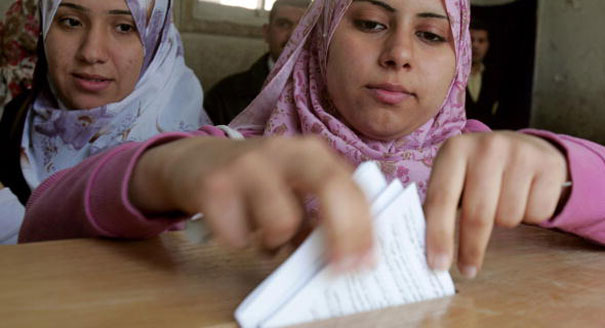
Source: Getty
Good news on democratization, though often less visible, has occurred in roughly equal proportion to bad news. By taking on this more balanced perspective, the Obama administration can ensure that unnecessary pessimism does not hinder important U.S. support for democracy around the world.
The Obama administration faces pressure to pull back U.S. democracy promotion efforts, given the Bush administration’s legacy and increasing talk of a global “democratic recession.” The United States can and should remain an active supporter of democracy abroad. By building a new approach to democracy promotion around the new president’s cardinal values—non-confrontational, measured, cooperative, and empowering—the United States can regain its place as a respected, trusted, and influential ally of democracy around the world.
Thomas Carothers offers a wide-ranging assessment of the state of democracy in the world, finding that despite set backs in the troubled regions of the Middle East and former Soviet Union, democracy has not experienced a global retreat this decade. Good news on democratization, though often less visible, has occurred in roughly equal proportion to bad news, and considerable continuity exists in many places. By taking on this more balanced perspective, the Obama administration can ensure that unnecessary pessimism does not hinder important U.S. support for democracy.
Understanding Democracy Development in Key Regions

Harvey V. Fineberg Chair for Democracy Studies; Senior Fellow, Democracy, Conflict, and Governance Program
Thomas Carothers, a senior fellow in the Carnegie Endowment for International Peace’s Democracy, Conflict, and Governance Program, is a leading expert on comparative democratization and international support for democracy.
Recent Work
Thomas Carothers
Thomas Carothers
Carnegie does not take institutional positions on public policy issues; the views represented herein are those of the author(s) and do not necessarily reflect the views of Carnegie, its staff, or its trustees.

A notable degree of participative democracy has firmly arrived in Europe. But to have more far-reaching impact, democratic deliberation needs to move into a radically new phase.

Richard Youngs

The domestic impacts of how long it is taking to end the war in Ukraine have pushed the French electorate to the political extremes and compromised the country’s diplomatic capacity.

Rym Momtaz

Before the next wave of EU enlargement takes place, the union needs to grapple with thorny questions of how power is distributed among its members.


Emil Sondaj Hansen, Ditte Brasso Sørensen

Radical-right parties are expected to do well in upcoming elections in four of the EU's biggest member states. If successful, they could prevent the union from addressing key challenges ahead.

Stefan Lehne

An overwhelming victory by a far-right-wing party in a small state in eastern Germany will have major repercussions for Chancellor Friedrich Merz’s coalition.

Judy Dempsey