

Paper
Lora Saalman
Source: Getty
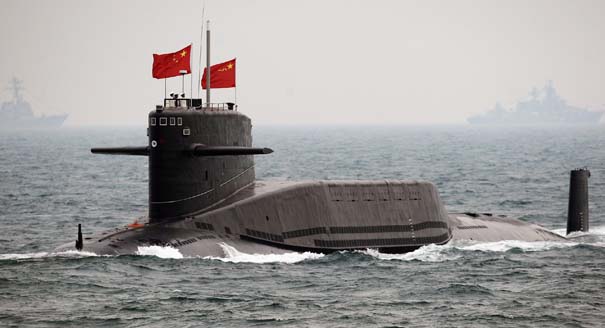
While the United States has expressed its desire to enhance strategic stability with China, there needs to be a better understanding of how China perceives America’s nuclear posture.
China is increasingly factored into U.S. nuclear strategy. When President Obama released the administration’s Nuclear Posture Review (NPR)—a document that guides America’s nuclear policy, strategy, capabilities, and force posture for the next five to ten years—in April 2010, China was named 36 times. By contrast, China was barely mentioned in the last NPR completed in 2002. The United States expressed its desire to enhance strategic stability with China, but there needs to be a better understanding of how China perceives America’s nuclear posture.
While China is unsure how to interpret the NPR, there is a consensus among Chinese experts that the strategy lacks a complete definition of how strategic stability applies in the context of Sino-U.S. relations. The term—generally used in describing the U.S.-Russia relationship—often signifies a balance between two roughly equal or balanced nuclear powers, but there is a considerable disparity in numbers and capabilities between the United States and China.
As a result, China sees both challenges and opportunities in moving toward strategic stability with the United States. The challenge is that Washington could use nuclear talks to force Beijing to become more transparent without any U.S. commitment to limit its own military ambitions in return. The opportunity is that the two powers could build a relationship based on mutual vulnerability, diminishing the possibility of either side using nuclear coercion or aggression.
To improve nuclear relations, four fundamental issues must first be resolved.
First, the United States and China must clearly define the meaning of strategic stability and what bilateral nuclear cooperation will entail. While Beijing seeks to define specific terms of engagement, Washington relies on broad concepts. A vague approach by the United States, however, carries the risk that its intentions will be misinterpreted and this could damage overall bilateral ties. And in the end, nuclear talks are unlikely to lead anywhere unless both sides are willing to make concessions.
Second, the United States must define and develop concrete confidence-building measures to encourage China to take part in detailed discussions on nuclear issues. Better understanding of the other’s motives is critical for both sides. Areas for greater discussion and clarification include: no-first-use policies; advanced conventional weapons systems; use of nuclear weapons in “extreme circumstances,” including Taiwan; extended nuclear deterrence; and weaponization of outer space.
Third, the NPR opens the door to greater U.S. engagement with China and it also gives China the chance to shape new strategic trends in the relationship. Chinese experts differ on when and at what level Beijing should take part in arms control discussions with Washington, but China should actively participate in strategic stability talks now before any new trends develop that hurt its interests.
Fourth, Washington and Beijing should resume and expand on cooperative measures to deepen their interaction, such as reciprocal visits and projects between U.S. and Chinese nuclear laboratories. This cooperation could be expanded into other arenas to include eradicating space debris, sharing data on ballistic missile defense, and developing a joint radar system. Building on such measures will show China that the United States wants to engage on substantive issues and will require China to work with the United States on multiple levels.
It is clear that Washington needs to match its rhetoric on nuclear disarmament with concrete proposals and measures that will build confidence between the United States and China. And Beijing needs to become an active participant in shaping bilateral strategic relations. Without these steps, it will be nearly impossible for a nuclear relationship that is clearly defined by strategic ambiguity today to shift to one of strategic trust—and ultimately strategic stability.

Former Nonresident Associate, Nuclear Policy Program
Saalman was a nonresident associate in the Nuclear Policy Program at the Carnegie Endowment for International Peace. Her research focuses on China’s nuclear and strategic policies toward India, Russia, and arms control.
Recent Work
Lora Saalman
Lora Saalman
Carnegie does not take institutional positions on public policy issues; the views represented herein are those of the author(s) and do not necessarily reflect the views of Carnegie, its staff, or its trustees.

Amid uncertainty caused by the Iran war, the global drive for nonproliferation has stalled. With Europe diplomatically marginalized and countries reassessing their nuclear options, efforts to curb the spread of nuclear weapons risk becoming irrelevant.

Jane Darby Menton
Between the United States’ market-driven approach and China's state-led industrial strategy, Europe is reckoning with how it can remain competitive in the global economy. But is Europe in danger of becoming a U.S. or China colony?


Noah Barkin, Anu Bradford
The full list of humiliations Europe has endured since Donald Trump returned to the White House makes for grim reading. But Washington’s adversarial approach to its allies undermines its own power base.

Rym Momtaz
The closure of the Strait of Hormuz has triggered a global energy crisis, but Europe is stuck in reaction mode. Without more strategic foresight, the EU will remain dependent on fossil fuels and will never be truly secure.


Milo McBride, Pauline Gerard
Debate is heating up on how Turkey could be integrated into a common European defense framework. Commercial and industrial deals offer a better chance at alignment than sweeping political efforts.

Marc Pierini