

Commentary
Five countries staged the biggest political boycott in Eurovision history over Israel’s participation. With the FIFA World Cup and other sporting or cultural touchstones on the horizon, are boycotts effective?
Rym Momtaz, ed.
The real cause of today’s currency tensions lies not in the international monetary system, but in misguided domestic policies in the world’s major economies, which must undertake long overdue and largely internal reforms.
In September 2010, Brazilian Finance Minister Guido Mantega shocked the world by launching the opening salvo in what he called a “currency war.” Mantega claimed that emerging markets were being squeezed by a combination of a depreciating U.S. dollar and an undervalued Chinese renminbi (RMB).
Only weeks later, French President Nicolas Sarkozy placed reform of the international monetary system atop the G20 agenda under France’s chairmanship, prompting the International Monetary Fund (IMF) and other organizations to launch a host of events and studies on the issue. Meanwhile, Congress renewed its bid for legislation to brand China as a currency manipulator, while China, Brazil, and other countries condemned the United States for its quantitative easing policies, claiming that their real purpose was to devalue the dollar.
Over the ten months that followed the ostensible eruption of the “currency wars,” Carnegie economists wrote a series of short articles, collected in this report, to address three questions: What is the nature of the problem that Mantega first brought to the world’s attention? What caused it? And, finally, what can be done about it?
The central message that emerges here is that the international monetary system performed well during an extraordinarily tumultuous time and does not need a major overhaul. The real cause of currency tensions lies in misguided domestic policies and the disequilibrium caused by the crisis in the reserve currency countries. One very important contributing factor is Chinese exceptionalism. China, the world’s largest exporter, is the only major trading nation to maintain a pegged and nonconvertible currency, and also remains almost entirely insulated from global financial markets. This situation requires reforms in China.
The implication is that reformers should focus on putting the reserve currency countries back on an even keel and on making China less exceptional. But, in fact, only incremental changes are needed in the international monetary system. In short, the rules of the game do not need a big change; rather, the big players need to raise their game. Until they do, no conceivable reform of the rules can provide stability.
We explore each of these ideas in the following articles, focusing on the performance of the international monetary system during the crisis in Part I, the tensions arising from the disequilibrium in the core countries in Part II, and the needed policy changes in Part III. A brief summary of each section follows.
In contrast to its predecessors—the gold and dollar standards—the current international monetary system has served the global economy well, even in the most difficult of times. During the Great Recession—the worst downturn in seventy years—the system exhibited great flexibility and resilience. Countries with flexible exchange rates, which account for 80 percent of global gross domestic product (GDP), used them to good effect as shock absorbers. Several countries with pegged rates switched to more flexible regimes during the crisis and some switched back again when confidence returned. These changes were nearly always orderly, with most currencies following a common path against the dollar, which retained its safe-haven status despite the fact that the United States was at the epicenter of the crisis: Currencies depreciated against the dollar during the worst of the crisis and then appreciated again once it ended. Though some currencies saw large real appreciation, most remained in line with fundamentals; misalignments occurred in only a few instances, usually related to the dysfunctional institutional set-up of the eurozone monetary union. Overall, the global economy avoided the balance of payments crises and protectionist responses that characterized previous episodes of acute economic turmoil.
For these reasons, it is difficult to conclude that today’s exchange rate system is fundamentally flawed. At the same time, a number of undesirable developments and responses have occurred in the aftermath of the Great Recession: some developing countries have excessive reserves; several countries have reluctantly resorted to capital controls; a few countries, including Brazil, Switzerland, and Japan, have seen very large exchange rate appreciations; the eurozone is in deep crisis; and fear persists that global imbalances may widen again as the recovery progresses.
The roots of these problems, however, lie not in inadequate international exchange-rate arrangements, but in the fact that countries and regions holding the main reserve currencies—the United States, the eurozone, Japan, and the United Kingdom—are severely off balance: their output gap (actual versus potential GDP) is large, unemployment is high, public debt is soaring, monetary policy remains extremely loose, and divergences in economic performance and fiscal management within Europe have placed the survival of the euro itself in question. Not surprisingly, doubts about the soundness of these economies have big repercussions: No one welcomes currency appreciation when demand is weak and uncertainty reigns; nervousness about exchange-rate levels and competitiveness, and hot money flowing into emerging markets, are two of the most severe manifestations of the turmoil. At the same time, China’s extraordinary advances in world markets have compounded these fears, as perceptions that the remninbi is undervalued are widespread, and China’s capital controls have kept out inflows that are flooding other, much smaller developing economies.
In response to the sharp domestic imbalances that were the main cause and are now also the effect of the financial crisis that engulfed them, the reserve currency economies—beginning with the United States and the eurozone—are scrambling to find an international fix to their problems. It is often easier to place the focus on reducing “global” imbalances or on reform of the international monetary system than to recognize that the politically thorny solutions to their problems lie at home.
The United States’ fundamental problem is not a loss of competitiveness, and it will not be corrected by dollar devaluation—nor, as is more politically correct in Washington these days, by demands that China and other countries allow their currencies to appreciate. Instead, the United States must find ways to durably raise its household savings rate and reduce its budget deficit.
The eurozone must move faster toward fiscal and labor market integration in support of its single currency, while the countries in its periphery must accelerate their structural reforms and budget consolidation if they are to regain access to the government debt markets.
China cannot aspire to be both the world’s largest trading nation and largest economy while conducting itself as if it were an outsider to the international monetary system. It must move faster on the far-reaching reforms required to internationalize its currency, open its capital markets, and make the RMB more flexible.
All of these moves are necessary not only to ease currency tensions—which may be alleviated naturally as the reserve currency economies regain their footing and as the RMB plays an increasingly important role in international transactions—but also, and more important, to restore the health of the advanced economies and to make China’s growth more balanced and sustainable.
Meanwhile, any efforts to reform the international monetary system should recognize the resilience that the system exhibited during the crisis, and that the changes needed are incremental rather than revolutionary. These changes include encouraging more exchange-rate flexibility where appropriate, increasing the diversity of reserve holdings, and further expanding IMF resources and the organization’s surveillance role. While these improvements will make the international exchange rate system work more smoothly and help alleviate currency tensions, they are of secondary importance to the reforms needed in the major countries.

Former Senior Associate, International Economics Program
Dadush was a senior associate at the Carnegie Endowment for International Peace. He focuses on trends in the global economy and is currently tracking developments in the eurozone crisis.
Vera Eidelman
Former Research Assistant, International Economics Program
Carnegie does not take institutional positions on public policy issues; the views represented herein are those of the author(s) and do not necessarily reflect the views of Carnegie, its staff, or its trustees.

Five countries staged the biggest political boycott in Eurovision history over Israel’s participation. With the FIFA World Cup and other sporting or cultural touchstones on the horizon, are boycotts effective?

Rym Momtaz, ed.
The full list of humiliations Europe has endured since Donald Trump returned to the White House makes for grim reading. But Washington’s adversarial approach to its allies undermines its own power base.
Rym Momtaz
After spending much of 2025 trying to placate Donald Trump, some European leaders are starting to change posture. But is even a hostile Washington still so important to Europe that the U.S. president’s outbursts are worth putting up with?
Rym Momtaz, ed.
European leaders have now not only lost faith in Donald Trump’s U.S. presidency, but also in America’s hegemony as a whole. But short-term challenges make an immediate divorce unwise.
Rym Momtaz
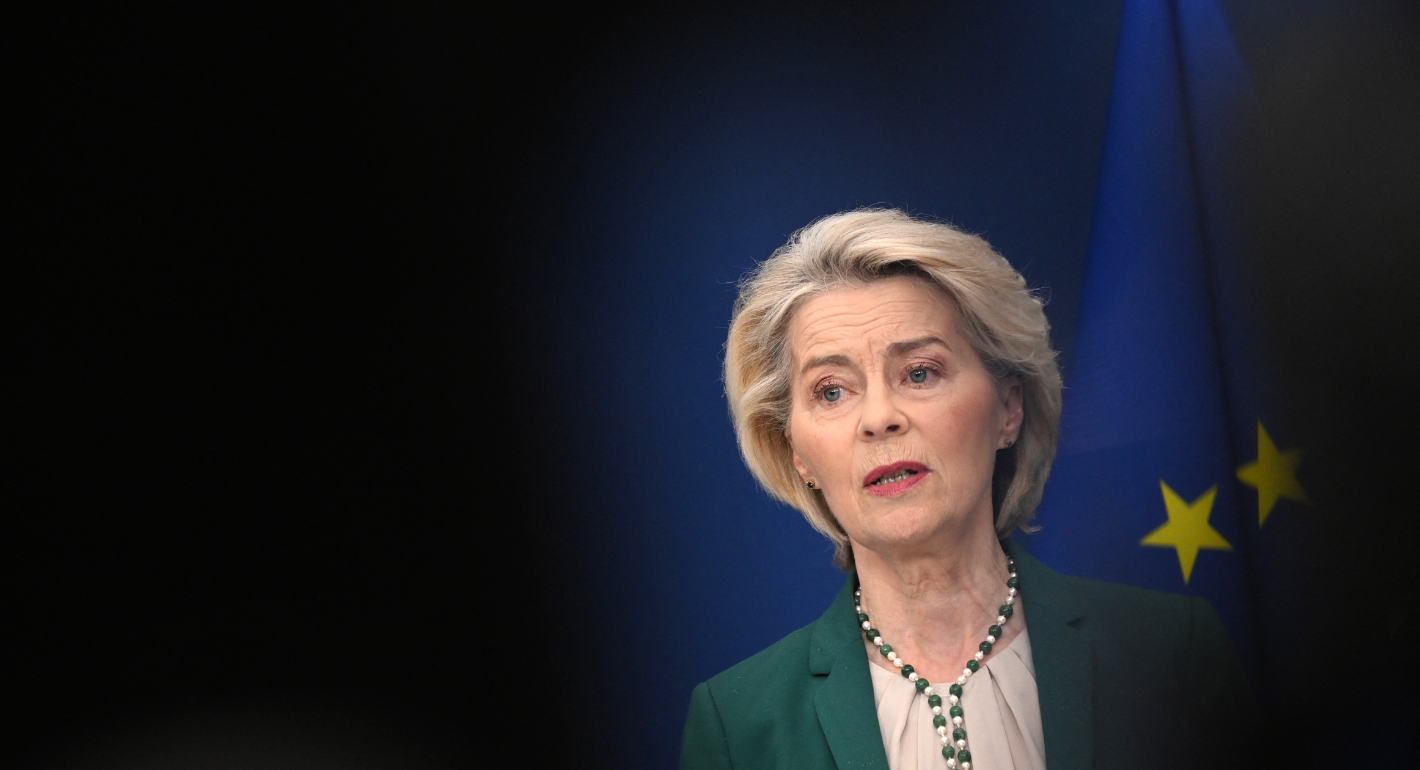
Following Ursula von der Leyen’s gaffe equating Turkey to Russia and China, relations with Ankara risk deteriorating even further. Without better, more consistent diplomatic messaging, how can the EU pretend to be a geopolitical power?

Sinan Ülgen