

Commentary
Judy Dempsey
{
  "authors": [
    "Judy Dempsey"
  ],
  "type": "commentary",
  "blog": "Strategic Europe",
  "centerAffiliationAll": "",
  "centers": [
    "Carnegie Endowment for International Peace",
    "Carnegie Europe"
  ],
  "collections": [],
  "englishNewsletterAll": "",
  "nonEnglishNewsletterAll": "",
  "primaryCenter": "Carnegie Europe",
  "programAffiliation": "",
  "programs": [],
  "projects": [],
  "regions": [
    "Europe",
    "Russia"
  ],
  "topics": [
    "EU"
  ]
}
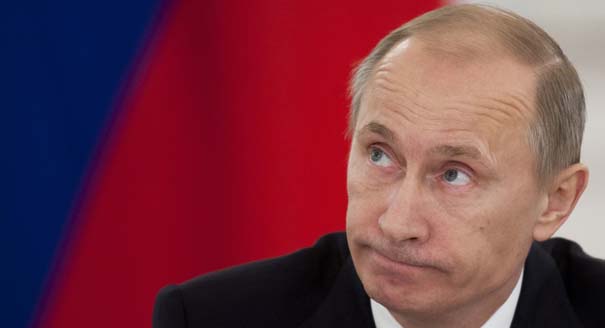
Source: Getty
The political space is slowly opening in Russia and now is the time for Germany and others to use it.
The congratulatory phone calls from Europe were neither swift nor fulsome after Vladimir Putin was elected president of Russia last Sunday night, a job he will hold for six years. He can then run again if he chooses to do so.
Catherine Ashton, the European Union’s foreign policy chief was pretty terse in her message to Mr. Putin. She refrained from congratulating him. Instead, she called on him to work with Brussels to advance reforms—although it’s hard to see Mr. Putin taking Mrs. Ashton’s request seriously. Britain’s Prime Minister David Cameron’s message was bland. He said he hoped that London and Moscow could develop some kind of constructive relationship.
As for Germany, Chancellor Angela Merkel, who is no friend of Mr. Putin’s, did not mince her words. She said that the shortcomings during the election campaign and the voting procedures were regrettable. Still, she expected two things from Mr. Putin. Germany wanted to continue the strategic partnership and make it work. And second, she wanted the burgeoning civil society movements to be respected and to be allowed play a role in shaping Russia.
What a German leader says to the Kremlin and how it conducts its relations with Russia matters to the rest of Europe. The reality is that Berlin can influence the kind of short or long-term policy the EU wants with Russia. That is why there is now an opportunity for Germany to try and persuade the Kremlin not to do business as usual.
Business as usual would mean Russia continuing to sell arms to Syria. It would mean continuing to block attempts to resolve a costly frozen conflict in the Moldovan breakaway territory of Transnistria. It would mean Russia resorting whenever it likes to imposing embargoes of food imports to intimidate Eastern European countries. It would mean the Kremlin continuing to intimidate the Baltic states and Poland by threatening to deploy missiles in Kaliningrad because it opposes the United States’ missile defense plans.
The list goes on.
Until now, German industry and indeed the government have placed some store in the strategic partnership that was agreed between Berlin and Moscow in 2007. The main thrust of that accord was that Germany, meaning businesses and banks, would help Russia modernize its economy. That meant upgrading the infrastructure and even more importantly, diversifying the economy so that the country would not remain dependent on oil and gas as its main source of income.
Above all, the strategic partnership was supposed to set long-term goals on how to deal with the deteriorating environment, the poor health system, and the ever declining birth rate. Of course, Germany also hoped that modernization would lead to more democracy.
These aspirations from the German side all came to naught. Russia’s political system, until now, has been too closed to allow a real debate about Russia’s future. And besides, Germany did not push hard enough. Which is why Mr. Putin’s election provides Mrs. Merkel with an opportunity to move away from the business as usual mentality.
Weakened, Mr. Putin already faces immense problems. How is he going to make good on his promises during his populist election campaign for higher wages for the police and teachers, soldiers and pensioners? Russian economists say they are unaffordable especially if oil prices fall. And even if Mr. Putin does buy off these sections of the population, the demonstrators who have taken to the streets since last December cannot be bought off economically. Their demands are political.
That is why any European leader who wants to believe that business as usual is possible is mistaken. The political space is slowly opening in Russia. Now is the time for Germany and others to use it.

Nonresident Senior Fellow, Carnegie Europe
Judy Dempsey is a nonresident senior fellow at Carnegie Europe
Recent Work
Judy Dempsey
Judy Dempsey

In supporting Europe’s far-right, MAGA and Russia both want the same thing: a weaker EU. Europe must defend itself without abandoning the openness these forces exploit.

Armida van Rij

As we close out another season of Strategic Europe, it is worth taking stock of the deep shifts underway.

Rym Momtaz
The EU had to compromise to adopt a twenty-first sanctions package against Russia, exposing growing cracks in the union’s resolve. Is this latest, weaker round worth it to keep pressure on Moscow?
Rym Momtaz, ed.

Trump is distracted and Ukraine wants Europe to step up. The continent’s leaders must find their voice and assert it in talks with Russia.

Alissa de Carbonnel

Mounting economic strain and battlefield losses will not necessarily make the Kremlin less dangerous. They could instead push Moscow toward a more aggressive hybrid campaign designed to test NATO’s Eastern flank, exploit allied hesitation, and fracture European resolve.

Maksym Beznosiuk