

Commentary
Judy Dempsey
{
  "authors": [
    "Judy Dempsey"
  ],
  "type": "commentary",
  "blog": "Strategic Europe",
  "centerAffiliationAll": "",
  "centers": [
    "Carnegie Endowment for International Peace",
    "Carnegie Europe"
  ],
  "collections": [],
  "englishNewsletterAll": "",
  "nonEnglishNewsletterAll": "",
  "primaryCenter": "Carnegie Europe",
  "programAffiliation": "",
  "programs": [],
  "projects": [],
  "regions": [
    "Europe"
  ],
  "topics": [
    "Climate Change",
    "EU"
  ]
}
Source: Getty
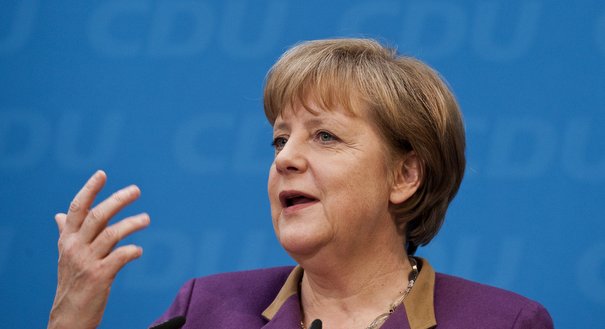
France is one of Europe's biggest headaches when it comes to addressing the euro crisis, which is why Berlin's influence in Paris is crucial.
Being based in Berlin, sometimes I think that the world is against Germany.
The critics always say the same things.
Chancellor Angela Merkel has shown no leadership during the euro crisis.
Wolfgang Schauble, the finance minister, along with Merkel, has stifled growth by pushing through drastic austerity measures across euro zone countries (but not in Germany).
Germany is becoming inward looking, less interested in Europe and unwilling to initiate a major debate about Europe’s future.
Well, a recent visit to Brussels debunked several of those views.
If anything, it is France, not Germany that is the problem.
Whether Nicolas Sarkozy or Francois Hollande wins the presidential elections next Sunday, one thing is certain. France will have to introduce major structural and financial reforms.
If it does not, then Europe’s second largest economy will pull down the rest of Europe, including Germany.
That is one of the big issues that preoccupy policy makers in the Commission and the Council. It also is a major concern in Berlin.
In contrast, EU officials have only praise for Germany when they speak about economic and financial issues.
For one thing, Germany, some of them said, is the only big country prepared to keep pushing for austerity measures despite their unpopularity.
It is not that Germany wants hard working people to lose their jobs, receive less pay, or have their pensions reduced.
What it is trying to do is introduce sound fiscal policies across the euro-zone countries (even if domestics critics are right about Merkel’s government not doing enough at home to cut the horrendous German debt).
Of course, German notions of sound fiscal policies often clash quite badly with other countries’ traditions about how to collect taxes and how to disburse money, especially structural funds.
Germany has its own faults in this regard.
Its tax system is highly complex. Some of the spending programs are absurd. For instance, Germany has spent hundreds of thousands of Euros of its own tax revenues and EU structural funds on building a very fancy fence around a public lake in Berlin.
Nevertheless, Germany is making a real effort to impose a particular kind of fiscal discipline. And for that, it is winning substantial praise in Brussels.
Another thing that struck me among Germany watchers was the belief that Merkel was not drifting away from Berlin’s long held commitment to communautaire policies to a more inter-governmental approach.
That surprised me.
Merkel rarely mentions the commission. Indeed, she rarely gives speeches about Europe. When she does, it’s her usual mantra: the euro is good for Europe and Germany and without the euro, there would be no Europe.
That, however, is her public image. In smaller circles, Merkel appears committed to Europe and some aspects of integration, but not to the same extent as Schauble whose instincts and upbringing are soaked in European-ness.
So Merkel’s decision, taken after many months of reluctance, to give the Commission more powers over handling the euro crisis, meant a step towards more economic integration. It also meant that Germany, in a way, ceded a degree of leadership and responsibility to Brussels.
Paradoxically, that required leadership in a country that loathes any kind of scrutiny from outside.
Now comes the hard task.
With its new powers, the Commission will have to push the new president of France to introduce reforms. We will see if Commission President Jose Maria Barroso has the mettle. We will also see how Merkel will take forward the Franco-German relationship, whoever wins. If Hollande does, she may be in trouble, having grossly interfered in the election campaign on Sarkozy’s behalf.
But there is another, less complementary side, to the view of Germany from Brussels. The Merkel government is doing almost nothing on the defense and security front.
It pays only lip service to the EU’s and NATO’s plans for smart defense or pooling and sharing.
It blocks any discussion about the need for long term strategic thinking in both organizations.
It balks at the idea of the EU devising a new Security Strategic. The first one, published in 2003, was updated in 2008 after a lot of infighting among member states. Even after all that, the updated version lacks real substance. Above all, it ducks the essential question: what are Europe’s strategic interests?
Of course, you will often hear in Brussels that it’s best not to talk about a new security strategy because of the euro crisis.
But then, the EU has a knack for finding reasons not to discuss things, especially if it means a major dispute among the 27 members.
The belief that it is better to wait even longer before getting down to writing a new security strategy is misplaced.
Europe needs one because the Middle East, China, and the transatlantic relationship to name are three particularly daunting issues. Above all, Europe needs one because it should finally start defining its interest and its values. Should Germany be afraid of that?

Nonresident Senior Fellow, Carnegie Europe
Judy Dempsey is a nonresident senior fellow at Carnegie Europe
Recent Work
Judy Dempsey
Judy Dempsey
Carnegie does not take institutional positions on public policy issues; the views represented herein are those of the author(s) and do not necessarily reflect the views of Carnegie, its staff, or its trustees.

Trump is distracted and Ukraine wants Europe to step up. The continent’s leaders must find their voice and assert it in talks with Russia.

Alissa de Carbonnel

Mounting economic strain and battlefield losses will not necessarily make the Kremlin less dangerous. They could instead push Moscow toward a more aggressive hybrid campaign designed to test NATO’s Eastern flank, exploit allied hesitation, and fracture European resolve.

Maksym Beznosiuk

Over the past ten years, NATO has held almost as many summits as it did during the entirety of the Cold War. Are they still useful, or is it time to stop holding annual meetings?

Rym Momtaz, ed.
Nearly a year and a half after Europeans leaned into sucking up to Trump, the strategy has produced some benefits when it comes to Ukraine.
Rym Momtaz
Far-right leader Marine Le Pen can—and will—run in France’s next presidential election. What does the outcome of her appeal against a 2025 embezzlement conviction mean for the country’s political future?

Catherine Fieschi