

Commentary
Judy Dempsey
{
  "authors": [
    "Judy Dempsey"
  ],
  "type": "commentary",
  "blog": "Strategic Europe",
  "centerAffiliationAll": "",
  "centers": [
    "Carnegie Endowment for International Peace",
    "Carnegie Europe"
  ],
  "collections": [],
  "englishNewsletterAll": "",
  "nonEnglishNewsletterAll": "",
  "primaryCenter": "Carnegie Europe",
  "programAffiliation": "",
  "programs": [],
  "projects": [],
  "regions": [
    "Europe"
  ],
  "topics": [
    "EU"
  ]
}
Source: Getty
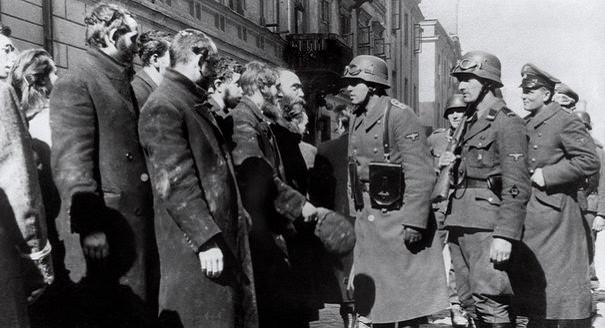
Polish reaction to a recent German TV series confirms that history casts long shadows, but also reminds us of the EU’s role in fostering rapprochement between countries.
When the German public television channel ZDF recently broadcast a three-part series about World War II, it set off an emotional debate about atonement and victimhood.
Many Germans were deeply touched by the narrative of Unsere Mütter, unsere Väter (“Our Mothers, Our Fathers”). The series, watched by 8 million viewers, followed the lives of five young German friends, including a Jew, throughout the war. It depicted immense suffering and death.
Germans have become accustomed to documentaries about World War II ever since the late 1960s, when children of the post-1945 era broke through the barrier of silence. They began asking how the rise of the Nazis and the Holocaust was possible, and what their parents did during the war.
Yet the passage of time has not diminished the burden of guilt and responsibility. To this day, Germany’s Nazi past continues to influence the country’s relations, especially with its Eastern neighbors.
Besides dealing with the human side of the war, ZDF reopened old and deep wounds between Germany and Poland, exposing the fragility of the rapprochement between the two countries, which began in the early 1970s.
Indeed, so great is the Poles’ anger over the series that the conservative weekly news magazine Uważam Rze recently published a cover with a mock-up of German Chancellor Angela Merkel as a concentration camp prisoner.
The headline read “Falsification of History: How the Germans are Turning Themselves Into Victims of the Second World War.”
Besides the belief that the ZDF series was rewriting history by portraying the Germans as victims, what particularly rankled the Poles was the assumption that they were all anti-Semites.
One scene in the series shows Viktor, the young Jew, escaping from a train on the way to a concentration camp. When he seeks refuge among resistance fighters in Poland, he hides his Jewish past after he hears their anti-Semitic remarks.
In another scene, a Pole belonging to the Home Army, the dominant Polish resistance movement during the war, says that Jews should be drowned like rats.
The Polish ambassador to Germany, Jerzy Margański, has complained bitterly in a letter to ZDF about this depiction of Poles. “The image of Poland and the Polish resistance against the German occupiers as conveyed by this series is perceived by most Poles as extremely unjust and offensive,” he wrote. “I am shocked.” Other Polish diplomats, among them Poland’s ambassador the United States, Ryszard Schnepf, have also spoken out against the program.
Nico Hofmann, the producer of the series, said he had been scrupulous with his research. The drama, he argued, was based on historically vetted material. His intention was to encourage a debate among generations “to speak for the first time about the experience” of the war.
In Poland alone, nearly 6 million people were killed during German occupation, including 3 million Polish Jews. Anti-Semitism was widespread in Poland even after 1945. In July 1946, 40 Jews who had survived the Holocaust and returned to their home city of Kielce were killed in a Polish pogrom. But there were also numerous cases of Poles protecting and hiding Jews from the German occupiers.
The case of Unsere Mütter, unsere Väter shows that despite the close personal ties that Chancellor Merkel has forged with her Polish counterpart Donald Tusk—leading to vastly improved relations between the two countries—the past can still easily puncture any relationship.
No doubt, Poland’s anger with the series will subside. But the Polish reaction is a timely reminder about how the past makes it difficult for Europe to speak and act with one voice.
It is a reminder too about how the EU and the post-Communist reunification of Europe have been a source of rapprochement between countries, despite the bitter experiences of war. Indeed, the EU could not have been born without its founding fathers making the bold decision to end centuries of war and enmity.

Nonresident Senior Fellow, Carnegie Europe
Judy Dempsey is a nonresident senior fellow at Carnegie Europe
Recent Work
Judy Dempsey
Judy Dempsey

Canadian Prime Minister Mark Carney has twice inspired praise for standing up to U.S. President Donald Trump: at the 2026 World Economic Forum in Davos and on Canada-U.S. trade negotiations. Is Carney showing a third way better than the EU has in dealing with the Trump administration?

Rym Momtaz, ed.

The EU’s responses to two recent incidents expose the gulf between European perceptions and capabilities. Unless the union can bridge that gap, it will never become a real geostrategic power.
Rym Momtaz

In supporting Europe’s far-right, MAGA and Russia both want the same thing: a weaker EU. Europe must defend itself without abandoning the openness these forces exploit.

Armida van Rij
As we close out another season of Strategic Europe, it is worth taking stock of the deep shifts underway.
Rym Momtaz
The EU had to compromise to adopt a twenty-first sanctions package against Russia, exposing growing cracks in the union’s resolve. Is this latest, weaker round worth it to keep pressure on Moscow?
Rym Momtaz, ed.