

Commentary
Judy Dempsey
{
  "authors": [
    "Judy Dempsey"
  ],
  "type": "commentary",
  "blog": "Strategic Europe",
  "centerAffiliationAll": "",
  "centers": [
    "Carnegie Endowment for International Peace",
    "Carnegie Europe"
  ],
  "collections": [],
  "englishNewsletterAll": "",
  "nonEnglishNewsletterAll": "",
  "primaryCenter": "Carnegie Europe",
  "programAffiliation": "",
  "programs": [],
  "projects": [],
  "regions": [
    "Europe",
    "North America"
  ],
  "topics": [
    "EU",
    "Security"
  ]
}
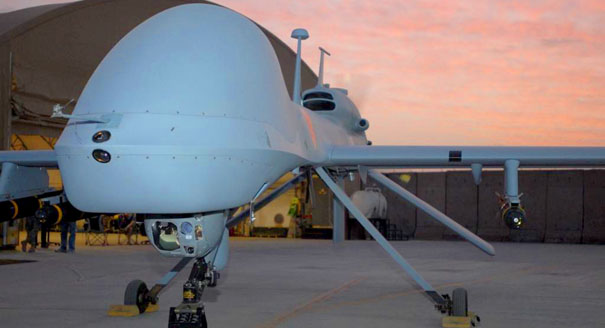
Source: Getty
The scandal ensnaring Germany’s defense minister is damaging Merkel. But it shows that Germany has come further along the path of military modernization than one might think.
Woe to the person appointed Germany’s defense minister. It is one of the country’s most vulnerable posts, and not just because of Germany’s past, which inhibits thinking about security strategy. The position rarely brings success. Over the years, most defense ministers have fallen from grace because of scandals, incompetence, or mistakes.
Yet when, two years ago, Chancellor Angela Merkel appointed Thomas de Maizière, one of her most trusted lieutenants, to the post, there was a consensus that this scion of a Huguenot would bring calm and order to the German armed forces, or Bundeswehr. Hope rose, too, that he might define the strategic and security interests of Germany and, by implication, Europe.
Alas, a botched and expensive project to produce a drone system for the Bundeswehr could be de Maizière’s undoing. It is even possible that he will have to step down. Were this to happen, it would not only demoralize the Bundeswehr, but would also destroy any chance that Germany might in the near future start thinking strategically about the role of its armed forces.
De Maizière became defense minister when his charismatic predecessor Karl-Theodor zu Guttenberg had to resign over a scandal caused by his plagiarizing his doctoral thesis.
Zu Guttenberg, to his credit, had pushed through the abolition of conscription. But he neglected the mammoth day-to-day work of transforming the military from a conscription force into a highly professional army. De Maizière was supposed to oversee that.
Soon after his appointment, de Maizière attended the 2012 NATO Chicago Summit, where Germany’s Chancellor Angela Merkel agreed to participate in NATO’s Alliance Ground Surveillance program. That entailed NATO signing a $1.7 billion contract with U.S. defense technology firm Northrop Grumman for five Global Hawk unmanned aerial vehicles (UAVs).
Germany was under a lot of pressure to agree to the deal. Its NATO partners, and the United States in particular, were still angry over the fact that, as a member of the UN Security Council in 2011, Germany had not voted in favor of a no-fly zone over Libya.
But Germany was already separately developing the Euro Hawk, at enormous cost. This transatlantic project between Northrop Grumman and the European defense corporation EADS was designed to produce a prototype of the high-altitude, long-endurance Global Hawk for the Bundeswehr. The new drone would have additional signals intelligence.
Surprisingly enough, the project was begun back in 2004 by Germany’s Social Democrat–Green coalition. There was no public debate over it. Germans had had enough of the war in Kosovo, the war in Afghanistan, and the war in Iraq. They did not want to know about UAVs.
The program continued under Merkel when she first became chancellor in 2005 (in coalition with the Social Democrats) and when she was reappointed in 2009 (in coalition with the Free Democrats).
By last week, de Maizière had to admit that the Euro Hawk would never fly. After spending more than €500 million ($643 million) on the project, Germany was going to abandon it. The minister cited safety concerns. “Better an end with horror than a horror without end,” he said. Some justification.
Euro Hawk has two big problems. First, it does not meet the standards of the European Aviation Safety Agency (EASA). High-altitude drones need sophisticated equipment that will prevent them from colliding with conventional aircraft, losing control, or getting lost. For Germany, this would mean spending another €600 million ($772 million) on equipment, according to experts.
The second snag is the EASA certification, for which Germany would have to fork out another substantial sum. What is more, Northrop Grumman was not prepared to provide certain technical documents for the certification process, which is quite remarkable given the long cooperation between the U.S. firm, EADS, and the defense ministry.
“The whole thing is a scandal. As if the defense ministry and the chancellery did not know what was needed to make the Euro Hawk workable,” said Elke Hoff, defense spokeswoman for the governing Free Democrats’ parliamentary group.
Of course, the controversy over the Euro Hawk is fueled by the fact that 2013 is an election year in Germany. The opposition Social Democrats are determined to try and dent Merkel’s immense popularity—and de Maizière’s, too. If he wants to avoid the fate of many of his predecessors, he has much explaining to do before the parliament’s defense committee, which will meet early next month.
Yet the drones debacle has further repercussions. First of all, there will be further delays before the Bundeswehr—and perhaps NATO, too—can put modern surveillance drones to work over Europe’s skies.
The second effect is counterintuitive: the Euro Hawk scandal is remarkable because it shows how much the German public has accepted the military reality of drones. The outrage is not over the use of UAVs in principle, as might have been expected after the debates over U.S. drone killings in Pakistan, but over implementation issues.
In that sense, Germany has come further along the path of military modernization than one might have assumed even a short while ago. That’s one positive thought in the middle of this messy scandal.

Nonresident Senior Fellow, Carnegie Europe
Dempsey is a nonresident senior fellow at Carnegie Europe
Recent Work
Judy Dempsey
Judy Dempsey
Carnegie does not take institutional positions on public policy issues; the views represented herein are those of the author(s) and do not necessarily reflect the views of Carnegie, its staff, or its trustees.
The far right failed to win big in France’s municipal elections. But that’s not good news for the country’s left wing, which remained disunited while the broader right consolidated its momentum ahead of the 2027 presidential race.
Catherine Fieschi
Donald Trump has demanded that European allies send ships to the Strait of Hormuz while his war of choice in Iran rages on. He has constantly berated NATO while the alliance’s secretary-general has emphatically supported him.

Rym Momtaz, ed.
The EU is structurally incapable of reacting to today’s foreign policy crises. The union must fold the EEAS into the European Commission and create a security council better prepared to take action on the global stage.

Stefan Lehne
The war in Ukraine is costing Russia its leverage overseas. Across the South Caucasus and Middle East, this presents an opportunity for Europe to pick up the pieces and claim its own sphere of influence.

William Dixon, Maksym Beznosiuk
The war in Iran proves the United States is now a destabilizing actor for Europe and the Arab Gulf. From protect their economies and energy supplies to safeguarding their territorial integrity, both regions have much to gain from forming a new kind of partnership together.
Rym Momtaz