

Commentary
Judy Dempsey
{
  "authors": [
    "Judy Dempsey"
  ],
  "type": "commentary",
  "blog": "Strategic Europe",
  "centerAffiliationAll": "",
  "centers": [
    "Carnegie Endowment for International Peace",
    "Carnegie Europe"
  ],
  "collections": [],
  "englishNewsletterAll": "",
  "nonEnglishNewsletterAll": "",
  "primaryCenter": "Carnegie Europe",
  "programAffiliation": "",
  "programs": [],
  "projects": [],
  "regions": [
    "Europe",
    "North America"
  ],
  "topics": [
    "EU",
    "Security"
  ]
}
Source: Getty
Europeans’ anger over U.S. surveillance is at odds with their own appetite for data. What’s more, snooping in the name of security calls into question Europe’s core values.
Most Europeans take privacy quite seriously.
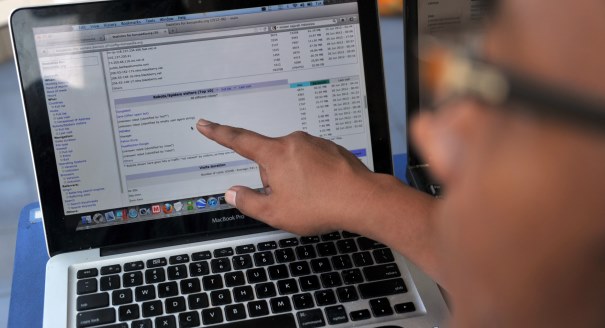
No wonder, then, that they were outraged when the story broke over the U.S. electronic surveillance program Prism. The program has given the U.S. National Security Agency (NSA) access to the servers of Google, Facebook, Twitter, and Skype, allowing the agency to pry on phone calls, e-mails, and messages sent through social media.
Europeans are particularly angry that U.S. intelligence agencies are so suspicious of millions of European citizens’ possible terrorist activities that they feel justified in spying on them. But European outrage and criticism are in reality a case of double standards.
During a debate about the Prism scandal in the European Parliament earlier this week, Claude Moraes, a British Labour Party MEP, said that “citizens have been shocked by a major breach of trust.”
Sophie in ’t Veld, a Dutch Liberal MEP, said that “500 million European people were shocked to find a foreign country has access to the most intimate details of their private lives.”
Viviane Reding, the EU’s justice commissioner, said she intended to raise the issue with Eric Holder, the U.S. attorney general, when they meet in Dublin today. And German Chancellor Angela Merkel said she would ask U.S. President Barack Obama about the matter when he calls on her next week in Berlin.
Yet, for years, the European Parliament and the other EU institutions have been cooperating very closely with the United States over intelligence.
As the Financial Times reported today, the European Commission itself paved the way for U.S. intelligence agencies to eavesdrop on international phone calls and e-mails when it agreed to dilute its data privacy legislation in January 2012.
Under immense pressure from Washington, the Commission got rid of privacy safeguards, allowing the NSA to request access to any data that technology and telecoms companies hold on European citizens.
Then, in April 2012, the EU reached an agreement with the United States on passenger name records (PNRs). This allows the United States access to extensive information about passengers flying across the Atlantic. It is not reciprocal.
Emboldened by the U.S. agreement, the European Commission is now trying to establish a similarly intrusive PNR data system for flights into Europe.
Citing the need for better security and more efficient ways to detect and prosecute serious crimes, the Commission proposed that air carriers should collect data from passenger reservations for people leaving or entering the EU and pass them to the Commission.
Supporters of the proposal argued that if Britain and France were already doing this on a national level, and other countries wanted access to the data too, it would make sense to have a pan-European PNR data bank.
The European Parliament’s Civil Liberties Committee last month rejected the Commission’s proposals, and not just because the Commission lacks democratic legitimacy. Opponents questioned the effectiveness of setting up enormous databases for combating terrorism.
The same questions could have asked about the PNR accord and the data deals that the Commission made with the United States.
The Prism scandal, Europe’s close cooperation with the United States, and Europe’s eagerness to set up a PNR data bank of its own all raise serious issues of values and credibility.
Since the 9/11 terrorist attacks on the United States, the gap in attitudes toward privacy on the two sides of the Atlantic has widened. Americans largely accept the government’s intrusion into people’s lives because they believe it makes them safer. European citizens tend to be far more critical of this argument.
U.S. policy in this area carries a price tag, though. How can Washington lecture authoritarian regimes in Iran, China, or Russia on respecting civil liberties if U.S. agencies don’t?
U.S. credibility is further weakened by the fact that, legally, most of the spying is limited to non-Americans. While this makes the surveillance efforts more palatable to Americans, for obvious reasons it has the opposite effect on the rest of the world.
Europe is in great danger of going the same way. Despite the difference in the public’s attitude, European governments are displaying an ever-increasing appetite for data. In Germany, for instance, the security services have been monitoring the country’s mosques—leading to repeated complaints from the Turkish community there.
So how can Europeans uphold their values of human rights, civil liberties, and habeas corpus?
If EU member states and institutions follow the United States down the path of listening, intruding, and prying in the name of security—and with minimal accountability—Europe is certain to lose much of its moral standing vis-à-vis authoritarian regimes.
European politicians would do well to consider that, even as they are busy expressing their outrage over the Prism scandal.

Nonresident Senior Fellow, Carnegie Europe
Judy Dempsey is a nonresident senior fellow at Carnegie Europe
Recent Work
Judy Dempsey
Judy Dempsey
Carnegie does not take institutional positions on public policy issues; the views represented herein are those of the author(s) and do not necessarily reflect the views of Carnegie, its staff, or its trustees.

The European Commissioner for Trade is headed to China. But after President Xi’s bridge-building visit to Washington, can a more isolated EU overcome Beijing’s stranglehold on critical raw materials? Who will blink first?

Rym Momtaz, ed.

The domestic impacts of how long it is taking to end the war in Ukraine have pushed the French electorate to the political extremes and compromised the country’s diplomatic capacity.
Rym Momtaz

Before the next wave of EU enlargement takes place, the union needs to grapple with thorny questions of how power is distributed among its members.


Emil Sondaj Hansen, Ditte Brasso Sørensen

A summer of escalation in the Black Sea has hurt Ukraine economically and is exacerbating world food security. A truce is needed—as is a broader reframing of Europe’s Ukraine strategy.

Thomas de Waal

Are Germany’s economic, industrial, and political struggles becoming a liability for the EU’s ability to rise to the geopolitical moment?
Rym Momtaz, ed.