

Commentary
Judy Dempsey
{
  "authors": [
    "Judy Dempsey"
  ],
  "type": "commentary",
  "blog": "Strategic Europe",
  "centerAffiliationAll": "",
  "centers": [
    "Carnegie Endowment for International Peace",
    "Carnegie Europe"
  ],
  "collections": [],
  "englishNewsletterAll": "",
  "nonEnglishNewsletterAll": "",
  "primaryCenter": "Carnegie Europe",
  "programAffiliation": "",
  "programs": [],
  "projects": [],
  "regions": [
    "Southern, Eastern, and Western Africa",
    "Europe"
  ],
  "topics": [
    "Democracy",
    "EU"
  ]
}
Source: Getty
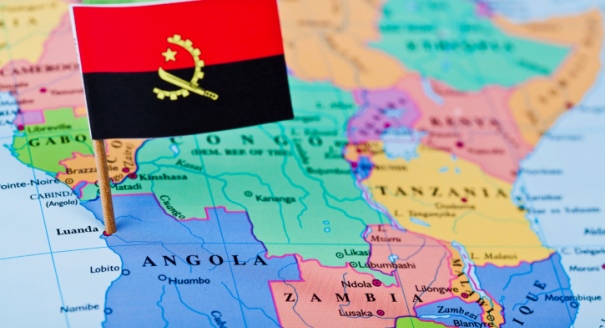
The case of an Angolan journalist who faces criminal charges for exposing human rights abuses in his country will be an important test case for the EU’s human rights strategy.
José Manuel Barroso receives hundreds of letters every day. The people who write to him hope that he will use his influence as president of the European Commission to help them.
Nearly a month ago, Barroso received such a letter from two prominent NGOs, the International Press Institute and the Media Legal Defense Initiative. They asked him to intervene in the case of Rafael Marques de Morais, an Angolan journalist and human rights activist who faces criminal charges for exposing abuses in his country.
Angola, a former Portuguese colony, is far away from Europe. That may explain why its longtime dictator president, José Eduardo dos Santos, believes he can act with impunity against anybody who challenges his authority.
Amnesty International, Human Rights Watch, and the U.S. State Department have all harshly criticized the Angolan government for human rights violations and endemic corruption. Yet from the EU, the country receives development aid. Is the EU now making the same mistake with dos Santos as it did in the Arab world before 2011?
Before the Arab Spring, the EU and most of its member states supported regimes promising stability and secure energy supplies, rather than helping genuinely independent human rights movements and civic-minded individuals. That policy discredited Europe’s rhetoric about the importance of promoting human rights.
Two years on, the case of Angola seems to confirm that the EU still hasn’t found a way to reconcile its trade, business, and security interests with its human rights values.
That is certainly the view of Rafael Marques de Morais. Since the late 1990s, Marques has consistently criticized the governing elite’s plundering of the country’s immense wealth from diamonds and oil.
During that time, Marques has been put under surveillance, imprisoned, harassed, and beaten up. The same happened to dozens of younger activists, as Human Rights Watch reported recently.
Those activists had been inspired by the Arab revolutions of 2011 to set up a movement demanding press freedom, respect for human rights, and an end to corruption. When they accused dos Santos’s own family of taking bribes, the security forces cracked down hard.
Now, Marques has called for the EU to take a clear stand on the situation in Angola. He hopes that Barroso, as a Portuguese, will play on the historic ties his country has to its former colony in order to stop the repression there.
Marques was in Brussels last week to attend a meeting at the European Parliament. Asked why the Angolan authorities allowed him the freedom to travel, if he was such a thorn in their side, he gave an interesting answer. He replied that the dos Santos government could not afford the bad publicity that blocking his trip might generate. The EU mattered too much to Angola.
In July 2012, during Barroso’s presidency of the European Commission, the EU and Angola signed a far-reaching cooperation agreement aimed at increasing trade and investment opportunities. The EU has also given Angola development aid totaling €215 million ($290 million) over the past five years.
As for trade, the EU is the largest exporter to Angola. What is particularly important for Angola, as a least developed country, is that Angolan produce has free access to EU markets.
“The burgeoning trade figures show that the EU could exert some influence,” Marques said. He believes that Barroso’s reluctance to speak out against human rights abuses is not just because of Angola’s close economic ties with Portugal. It is also because of the geopolitical power play taking place in the country between Europe and China, which buys up vast amounts of Angola’s raw materials. In 2012, China accounted for 47 percent of Angola’s exports.
“De Santos is playing China against the West and the EU,” Marques said. “Chinese investments and money are pouring into Angola. The EU surely sees that.”
Nowhere in Africa has China ever linked trade and investment to respect for human rights. The EU finds it difficult to compete for access to African countries’ raw materials when it is expected to tie its trade accords to values. Yet this conditionality is now part of the EU’s human rights strategy, which was published over a year ago.
Several EU member states balked at that strategy, insisting that business and values should be kept separate. However, its proponents won through by advocating the influence of trade on governance as well as environmental, health, and employment conditions.
If Marques has his wish, Angola may become one of the first test cases for the EU’s human rights strategy. Barroso will need to think very carefully about how he answers that letter on his desk.

Nonresident Senior Fellow, Carnegie Europe
Judy Dempsey is a nonresident senior fellow at Carnegie Europe
Recent Work
Judy Dempsey
Judy Dempsey
Carnegie does not take institutional positions on public policy issues; the views represented herein are those of the author(s) and do not necessarily reflect the views of Carnegie, its staff, or its trustees.

The EU can impose sanctions but struggles to enforce them without the United States. With Washington increasingly disinterested in backing European interests, the bloc must now fend for itself.


Nicu Popescu, Tiago Antunes

Russia is testing the waters of NATO’s mutual defense clause. What do strikes in Romanian territorial waters mean for the alliance’s posture toward Moscow?

Dimitar Bechev

With its public finances in shambles, the far right polling at 35 percent ahead of the 2027 presidential election, and a growing protest movement, is France’s crisis a threat to the EU’s geopolitical awakening?

Rym Momtaz, ed.

Ahead of a tough winter for Ukraine, Donald Trump’s swing back toward Russia bodes ill. But instead of panicking, Kyiv’s European allies are focusing on action.
Rym Momtaz

While the EU and European governments are embracing the much-lauded middle-power moment, this entails three difficult conundrums.

Richard Youngs