

Commentary
Judy Dempsey
{
  "authors": [
    "Judy Dempsey"
  ],
  "type": "commentary",
  "blog": "Strategic Europe",
  "centerAffiliationAll": "",
  "centers": [
    "Carnegie Endowment for International Peace",
    "Carnegie Europe"
  ],
  "collections": [],
  "englishNewsletterAll": "",
  "nonEnglishNewsletterAll": "",
  "primaryCenter": "Carnegie Europe",
  "programAffiliation": "",
  "programs": [],
  "projects": [],
  "regions": [
    "Europe",
    "North America"
  ],
  "topics": [
    "Climate Change",
    "Economy",
    "Trade",
    "EU"
  ]
}
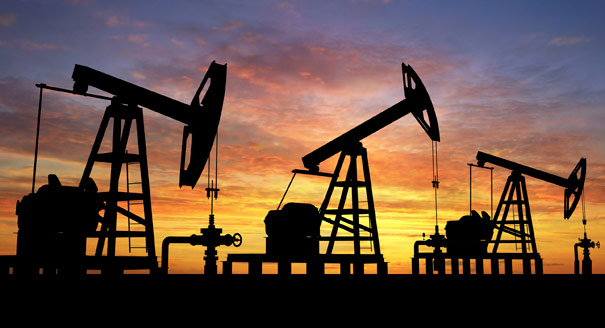
Source: Getty
The U.S. shale gas revolution is having a big effect on European manufacturing. New transatlantic trade talks should focus European minds on energy market reforms.
Supporters of the proposed Transatlantic Trade and Investment Partnership (TTIP) never tire of enthusing about the many economic opportunities that an accord would bring.
The idea of a transatlantic “internal market” is so exciting that some analysts even rave about the creation of a new Western liberal order—and the immense geopolitical consequences that would have.
Yet there is also a real danger that the TTIP could prove detrimental to Europe, due to the widening energy gap between the United States and Europe. If all trade barriers were abolished, manufacturers would no longer need to own factories in Europe to ensure market access. Investment could shift toward the United States to take advantage of better manufacturing conditions there.
Indeed, persistently higher energy prices are already sapping European manufacturers’ competitiveness. That could accelerate the deindustrialization of some countries. What would industrial decline do for Europe’s ambitions to be a global economic and strategic player?
This energy gap between the United States and Europe is a result of the extraordinary energy revolution that is taking place in America. Thanks to shale gas, the United States is on its way from being a net importer of gas to being a net exporter. Observers have yet to fully grasp the geopolitical consequences of that development for U.S. foreign policy.
In Europe, too, this shale gas revolution is having an impact on energy prices, competitiveness, and the environment.
In 2012, industry gas prices in the United States were only about a quarter of those in the EU, according to a recent report by the European Commission. What is more, according to the International Energy Agency’s industrial price index, real electricity prices in European countries increased by 37 percent between 2005 and 2012. In the United States, the corresponding prices fell by 4 percent.
There are several reasons for Europe’s high prices. Dependency on imports, especially from Russia, certainly plays a role, but is now slowly decreasing. With the present market glut—another effect of U.S. shale gas—Europeans can shop around for gas, especially liquefied natural gas imports from Qatar and other countries. Such competition is finally severing the traditional link between oil and gas prices.
Another reason for high energy prices is state subsidies for renewables in the form of feed-in tariffs. Under this mechanism, whether or not energy is transmitted, the consumer has to pay a guaranteed price to the producer. In Germany, such subsidies and other energy taxes account for about half of industry’s electricity bill.
Furthermore, despite the European Commission’s ambitions, a single, liberal energy market yet has to materialize. Member states still largely dictate policy. The energy market remains regional and fragmented. In parts of Eastern Europe, Russia is able to monopolize the market and set prices.
The biggest danger of the price differential between the United States and Europe is its effect on Europe’s competitiveness. “This erodes the competitiveness of European companies,” the commission’s report states.
Johannes Teyssen, the chief executive of E.ON, Germany’s largest utility, warned in an interview this week with the Financial Times that heavy industry might even be forced to quit Europe. Of course, industry chiefs are always prone to complaining about energy costs. Nor is it the first time that they have threatened to cross the Atlantic to take advantage of lower energy costs and a huge market.
But E.ON’s boss has a valid point. High energy prices could undermine Europe’s role as a global economic player.
The other consequence of the U.S. shale gas revolution is the increasing use of carbon dioxide–emitting coal in Europe’s power plants.
According to the European Commission, the high consumption of gas in the United States has freed up U.S. coal for export to Europe. EU consumption and imports of coal increased by 2 percent and almost 9 percent respectively over the first eleven months of 2012. This completely undermines the EU’s efforts to cut carbon dioxide emissions.
Curbing such coal imports is not easy. Industry cannot yet rely on renewables: supply is insufficient and irregular, the price is too high, and storage and transmission facilities are inadequate. And since environmental movements across Europe oppose opening new coalfields or extending the life of existing ones, American coal helps fill this gap.
So where does that leave Europe if it wants to be on the winning side of the TTIP?
The European Commission reckons that the EU needs €1 trillion ($1.4 trillion) of investment by 2020 to ensure security of supply, diversification of sources, cleaner energies, and competitive prices within an integrated energy market.
It is not easy to imagine that huge level of investment happening, given the continent’s economic woes. It is equally hard to see the EU speeding up the single market for gas and electricity, even though that could lead to lower prices as well as cleaner and more secure supplies of energy.
The TTIP, however, might help concentrate minds on the need to reinvigorate Europe’s energy market. Now wouldn’t that be something to rave about?

Nonresident Senior Fellow, Carnegie Europe
Judy Dempsey is a nonresident senior fellow at Carnegie Europe
Recent Work
Judy Dempsey
Judy Dempsey
Carnegie does not take institutional positions on public policy issues; the views represented herein are those of the author(s) and do not necessarily reflect the views of Carnegie, its staff, or its trustees.

Are Germany’s economic, industrial, and political struggles becoming a liability for the EU’s ability to rise to the geopolitical moment?

Rym Momtaz, ed.

European Commission President Ursula von der Leyen is about to give her annual address on the state of the EU. Here’s what she won’t—but should—say.
Rym Momtaz

The aftermath of the Ceuta crisis shows Europe has drawn the wrong lessons. Rather than doubling down on failed migration policies, the EU needs to address the underlying roots of such episodes.

Richard Youngs

An overwhelming victory by a far-right-wing party in a small state in eastern Germany will have major repercussions for Chancellor Friedrich Merz’s coalition.
Judy Dempsey

Canadian Prime Minister Mark Carney has twice inspired praise for standing up to U.S. President Donald Trump: at the 2026 World Economic Forum in Davos and on Canada-U.S. trade negotiations. Is Carney showing a third way better than the EU has in dealing with the Trump administration?
Rym Momtaz, ed.