

Commentary
Judy Dempsey
{
  "authors": [
    "Judy Dempsey"
  ],
  "type": "commentary",
  "blog": "Strategic Europe",
  "centerAffiliationAll": "",
  "centers": [
    "Carnegie Endowment for International Peace",
    "Carnegie Europe"
  ],
  "collections": [],
  "englishNewsletterAll": "",
  "nonEnglishNewsletterAll": "",
  "primaryCenter": "Carnegie Europe",
  "programAffiliation": "",
  "programs": [],
  "projects": [],
  "regions": [
    "Eastern Europe",
    "Russia",
    "Ukraine",
    "Western Europe",
    "Europe"
  ],
  "topics": [
    "Democracy",
    "Foreign Policy",
    "EU",
    "Civil Society"
  ]
}
Source: Getty
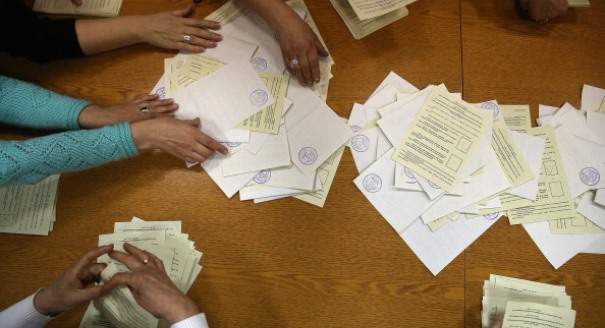
Europeans are united in their opposition to Crimea’s Russian-sponsored referendum. EU leaders should convert that opposition into intelligent and effective soft power.
With few exceptions, governments across Europe are now willing to impose sanctions on Russia. European leaders had warned Russian President Vladimir Putin against letting Crimea go ahead with a referendum on whether to join Russia. Now, the EU has no choice but to introduce punitive measures. At the same time, the EU must step up its civil society support for its Eastern neighbors.
The diplomatic channel that Germany and other EU countries had pursued with Moscow has been exhausted. Putin held out the possibility of diplomacy when he spoke on March 16 to U.S. President Barack Obama. But that was hours after the controversial referendum had been held. By then, Russia had established even more facts on the ground in Crimea than it had already.
The EU will not be able to change those facts. Putin, however, may have unwittingly changed the EU by dispelling the notion that he can play member states off against each other.
It has been a long time since Europeans have been so united. The sanctions that EU foreign ministers are now set to impose mark a radical shift in how the EU sees Russia. Hopefully, the measures will be painful enough for the Russian elite to stop Putin from trying to absorb any more parts of Ukraine or other neighboring countries.
Even more important than the impact of sanctions on Russia are the effects that the Crimean crisis will have on the EU’s attitude toward its more immediate Eastern neighbors.The crisis goes back to February’s ouster of former Ukrainian president Viktor Yanukovych. That made EU leaders, particularly German Chancellor Angela Merkel, recognize the inherent weakness of the EU’s European Neighborhood Policy. And it finally made European leaders aware of the depth of corruption not only in Ukraine and Russia but also in Moldova and elsewhere.
For far too long, the EU had turned a blind eye to systemic corruption and the power of oligarchs in its neighborhood. That poisonous mix has not only smothered democracy. It has also prevented the modernization of these countries’ political, social, and economic structures. It will take many years to reverse those trends.
The EU will have to use its soft power tools much more intelligently than in the past to deal with these huge issues. Allocating large sums of money to Eastern European governments or promising them closer economic and political ties to the EU amounts to plastering over the problems.
Brussels must bear that in mind as pressure mounts to allow Ukraine to sign an association accord with the EU sooner than planned. Putin’s actions in Crimea will also force the EU to decide whether to offer Ukraine or the bloc’s other Eastern neighbors the prospect of membership. That is a big change. Full accession is something that until this crisis, most EU leaders did not want to consider.
But beyond any offer of eventual EU membership, Brussels will have to work much harder than before to foster the rise of civil society movements in Eastern Europe.
The prodemocracy demonstrations that engulfed Kiev and other Ukrainian cities over the past two months showed the emergence of a new and powerful sense of civil society. It is clear that in Ukraine and elsewhere, citizens want to break through the corruption that has put a brake on the development of their societies.
Yet these movements need help—help to prolong their attention span beyond the formation of the next government, help to translate their demands into legislation, and help with the institution building needed to implement change. In all of this, the EU can provide huge support if it puts its mind to it.
Brussels urgently needs to come up with ways to help civil society movements in the EU’s neighborhood. It is these movements that Vladimir Putin fears more than any economic reprisal. It is EU soft power that holds the key to changing Eastern Europe and, over time, even Russia.

Nonresident Senior Fellow, Carnegie Europe
Judy Dempsey is a nonresident senior fellow at Carnegie Europe
Recent Work
Judy Dempsey
Judy Dempsey
Carnegie does not take institutional positions on public policy issues; the views represented herein are those of the author(s) and do not necessarily reflect the views of Carnegie, its staff, or its trustees.

Before the next wave of EU enlargement takes place, the union needs to grapple with thorny questions of how power is distributed among its members.


Emil Sondaj Hansen, Ditte Brasso Sørensen

A summer of escalation in the Black Sea has hurt Ukraine economically and is exacerbating world food security. A truce is needed—as is a broader reframing of Europe’s Ukraine strategy.

Thomas de Waal

Are Germany’s economic, industrial, and political struggles becoming a liability for the EU’s ability to rise to the geopolitical moment?

Rym Momtaz, ed.

European Commission President Ursula von der Leyen is about to give her annual address on the state of the EU. Here’s what she won’t—but should—say.
Rym Momtaz

The aftermath of the Ceuta crisis shows Europe has drawn the wrong lessons. Rather than doubling down on failed migration policies, the EU needs to address the underlying roots of such episodes.

Richard Youngs