

Research
- +5
Alper Coşkun, Fatih Ceylan, Tacan İldem, …
{
  "authors": [
    "Sinan Ülgen"
  ],
  "type": "commentary",
  "blog": "Strategic Europe",
  "centerAffiliationAll": "",
  "centers": [
    "Carnegie Endowment for International Peace",
    "Carnegie Europe"
  ],
  "collections": [
    "Turkey’s Transformation"
  ],
  "englishNewsletterAll": "",
  "nonEnglishNewsletterAll": "",
  "primaryCenter": "Carnegie Europe",
  "programAffiliation": "",
  "programs": [],
  "projects": [],
  "regions": [
    "Middle East",
    "Europe",
    "Türkiye"
  ],
  "topics": [
    "Democracy",
    "EU"
  ]
}
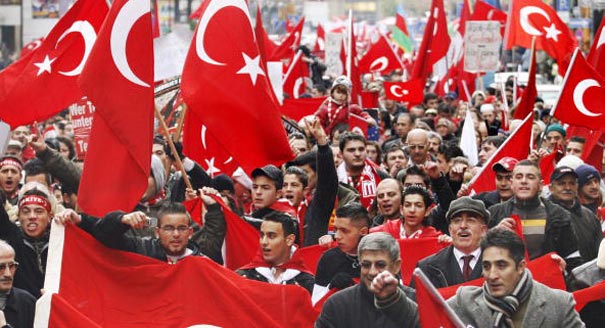
Source: Getty
The result of recent municipal elections in Turkey was a clear endorsement of Recep Tayyip Erdogan’s leadership. But the vote also raises a number of tough long-term questions.
Turkey’s local elections on March 30 had a clear winner. Prime Minister Recep Tayyip Erdoğan’s ruling Justice and Development Party (AKP) scored 44 percent of the national vote and won 41 metropolitan municipalities. The main opposition Republican People’s Party (CHP) polled 27 percent and won only 13 municipalities.
Although the purpose of the vote was to elect local leaders, the outcome can only be interpreted as a strong mandate for Erdoğan to continue to lead the country. The prime minister’s success at the ballot box will now allow him to decide the future course of Turkish politics on his own.
Before the elections, the key question in Turkish politics was about Erdoğan’s future. It was widely believed that after the Gezi Park protests of 2013 and a recent wave of corruption allegations, Erdoğan had been weakened to the extent that he would have to reconsider his ambition to become Turkey’s first directly elected president. Expectations shifted to the idea that Erdoğan would instead contemplate a fourth term as prime minister.
If Erdoğan wins that election, the next question will be who succeeds him as party leader. It is clear that as the incumbent, Erdoğan himself will have the biggest say in the matter.
Yet a conundrum awaits him. On the one hand, as a politician who has constantly strived to accumulate more power, he will want a malleable prime minister. That way, he can more easily continue to exercise influence over the direction of Turkey’s domestic and international politics.
On the other hand, a softer candidate may not be what the Turkish people want. So choosing a compliant leader may lead to an erosion of popular support for the AKP at the next parliamentary election, currently slated for 2015. If, as a result, the AKP fails to win an absolute majority, President Erdoğan may have to cooperate with a coalition government or, worse, appoint a prime minister from another party and adapt to French-style cohabitation.
Faced with this possibility, Erdoğan may feel growing pressure to bring forward the parliamentary election. If Erdoğan opts for an early vote, then in August the country may be asked to choose its legislators as well as its president. In this scenario, Erdoğan may become the front man for his party’s general election campaign while also running his own presidential campaign.
Another factor in favor of an early election is the economy. Turkey is entering a clear economic slowdown. GDP growth forecasts for 2014 have dropped to 2–3 percent, compared with the 5–6 percent of recent years. In March, unemployment reached double digits for the first time in many years. Gradually but inevitably, Turkey’s economic slowdown will have first a social and then a political impact. This gloomy economic backdrop gives Erdoğan a further incentive for an early general election this summer.
The local elections have also cemented the fault lines within the country’s political landscape. The AKP remains the only party that has been able to win votes on a national scale. Other parties, including the CHP, have been cornered into becoming regional parties. The CHP remains strong in the west of Turkey but is almost nonexistent in the conservative heartland of Anatolia and the southeast.
The Kurdish Peace and Democracy Party (BDP) receives significant support only in the Kurdish southeast of the country. But the BDP can be considered the second winner of this year’s municipal elections, since the party managed to win all the constituencies in that region. As a result, the BDP will be emboldened to implement its program of democratic autonomy in the localities that it commands. Managing the nationalist backlash that this plan will inevitably create will be a key concern for Erdoğan, who will have to rely on the Kurdish vote to facilitate his presidential aims.
The formidable challenge for Turkey’s political parties, with the exception of the ruling AKP, is to become—or go back to being—national parties. Turkey’s democracy would be in a much better position to deal effectively with political disputes if the country had a stronger opposition that could credibly claim national representation.
In the short term, Turkey’s recent local elections produced a clear result: a firm endorsement of the prime minister’s leadership. Yet by encouraging Erdoğan to become a presidential candidate, the vote has introduced new uncertainties in the country’s political system, not least surrounding the future of the AKP leadership and therefore of Turkey’s top executive position.

Senior Fellow, Carnegie Europe
Sinan Ülgen is a senior fellow at Carnegie Europe in Brussels, where his research focuses on Turkish foreign policy, transatlantic relations, international trade, economic security, and digital policy.
Recent Work

Alper Coşkun, Fatih Ceylan, Tacan İldem, …
Carnegie does not take institutional positions on public policy issues; the views represented herein are those of the author(s) and do not necessarily reflect the views of Carnegie, its staff, or its trustees.

Are Germany’s economic, industrial, and political struggles becoming a liability for the EU’s ability to rise to the geopolitical moment?

Rym Momtaz, ed.

European Commission President Ursula von der Leyen is about to give her annual address on the state of the EU. Here’s what she won’t—but should—say.
Rym Momtaz

The aftermath of the Ceuta crisis shows Europe has drawn the wrong lessons. Rather than doubling down on failed migration policies, the EU needs to address the underlying roots of such episodes.

Richard Youngs

An overwhelming victory by a far-right-wing party in a small state in eastern Germany will have major repercussions for Chancellor Friedrich Merz’s coalition.

Judy Dempsey

Canadian Prime Minister Mark Carney has twice inspired praise for standing up to U.S. President Donald Trump: at the 2026 World Economic Forum in Davos and on Canada-U.S. trade negotiations. Is Carney showing a third way better than the EU has in dealing with the Trump administration?
Rym Momtaz, ed.