

Commentary
Judy Dempsey
{
  "authors": [
    "Judy Dempsey"
  ],
  "type": "commentary",
  "blog": "Strategic Europe",
  "centerAffiliationAll": "",
  "centers": [
    "Carnegie Endowment for International Peace",
    "Carnegie Europe"
  ],
  "collections": [],
  "englishNewsletterAll": "",
  "nonEnglishNewsletterAll": "",
  "primaryCenter": "Carnegie Europe",
  "programAffiliation": "",
  "programs": [],
  "projects": [],
  "regions": [
    "Eastern Europe",
    "Russia",
    "Ukraine"
  ],
  "topics": [
    "Political Reform",
    "Democracy",
    "Security",
    "EU",
    "Civil Society"
  ]
}
Source: Getty
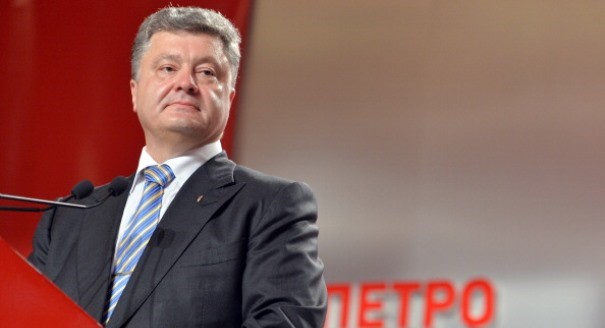
The challenges facing Petro Poroshenko, Ukraine’s president-elect, are daunting—not least because he does not rule over his entire country.
Petro Poroshenko has a terrifyingly difficult task. As Ukraine’s president-elect, he has to try to keep his country together.
Poroshenko, known as the “Chocolate King” thanks to his fortune in Ukraine’s confectionery industry, carried the presidential election on May 25 with over 55 percent of the vote, giving him a mandate that even Moscow won’t find easy to contest. Far-right parties did miserably. That puts paid to the propaganda meted out by Russia’s state-run media that Ukraine’s interim government was run by fascists and anti-Semites.
Poroshenko’s first-round victory also means that Ukraine was spared a bitter run-off between him and Yulia Tymoshenko. The former prime minister won only 15 percent of the vote. That confirmed all the opinion polls that Ukrainians wanted a break with a past dominated by corruption, mismanagement, and broken promises. Above all, they voted for Poroshenko because they wanted an end to instability and the chance to build a state.
This explains to some extent why Ukraine’s security forces were unable to stop Russia from taking over the Crimean peninsula or why they could not prevent pro-Russian militia groups from taking over parts of Eastern Ukraine. By default, it was often left up to powerful local oligarchs to restore some kind of order. Over the past quarter of a century, politics in Ukraine have been substituted by the rule of oligarchs.
Poroshenko, himself an oligarch, owner of a television station, and enormously rich, now faces the task of moving Ukraine away from an oligarchy. If Ukrainian democracy, which was so hard fought for on Kiev’s Independence Square, is to survive, Poroshenko has to rebuild the state as a functioning set of independent institutions.
But he is not in control of the whole country—large parts of Eastern Ukraine have fallen to pro-Russian militias. To make matters worse, the new president lacks proper state institutions that he could work with to regain territorial control of the East.
Eastern Ukraine could not even vote properly in the presidential election. Militia groups raided polling stations and intimidated the population so much that 10 percent of Ukraine’s overall electorate did not vote.
In the Donbas region, where Ukraine’s coal mines are based, the polling places did not even open. According to a Reuters report, rebels scoffed at the “fascist junta” and announced a plan to “cleanse their people’s republic of enemy troops.”
During his victory speech in Kiev on May 25, Poroshenko said his first visit would be to the Donbas. He said he was prepared to consider some aspects of regional autonomy and to respect language rights. “To people who have taken up arms but are not using them, we are ready to grant an amnesty,” he told a news conference. “As for those who are killing, they are terrorists, and no country in the world conducts negotiations with terrorists,” he added.
Much depends on Vladimir Putin. The Russian president has already successfully annexed Crimea. The hand-wringing by the EU and the United States and the sanctions they have imposed on Russia are unlikely to reverse that annexation. Moreover, Russia’s interference in Eastern Ukraine has had the result that Moscow wanted: a divided and unstable Ukraine.
Will Putin accept the legitimacy of the ballot? He said before the poll that its result would count. But the deputy speaker of the Russian State Duma and a leading member of Putin’s United Russia party, Sergei Neverov, wrote on Facebook: “It is hard to recognize the legitimacy of elections when tanks and artillery are wiping out civilians and a third of the population is driven to the polling stations at gunpoint.”
It won’t be easy for Poroshenko to counter that disinformation. Nor will it be easy for him to regain control of the pro-Ukrainian civil defense groups that have sprung up to protect what is left of Ukraine’s territorial integrity. If these units are not convinced that Poroshenko can regain control of the East, they could continue waging their own armed struggle against the separatists.
Under such complex circumstances, the EU can’t do much except support Poroshenko politically and send expert advice to assist in institution building. It should also begin disbursing some of the €11 billion ($15 billion) it pledged to the interim government. Such funding is conditional on Kiev implementing major reforms.
Poroshenko, who will need enormous political will to end Ukraine’s corruption, will have to move fast with reforms. At least he has been given a clear mandate to do just that.
As for being president of all of Ukraine, that will be up to Russia. Poroshenko has said he is ready to negotiate with Putin, calling Russia a vital partner. Let’s see how Putin will respond.

Nonresident Senior Fellow, Carnegie Europe
Judy Dempsey is a nonresident senior fellow at Carnegie Europe
Recent Work
Judy Dempsey
Judy Dempsey
Carnegie does not take institutional positions on public policy issues; the views represented herein are those of the author(s) and do not necessarily reflect the views of Carnegie, its staff, or its trustees.

The European Commissioner for Trade is headed to China. But after President Xi’s bridge-building visit to Washington, can a more isolated EU overcome Beijing’s stranglehold on critical raw materials? Who will blink first?

Rym Momtaz, ed.

The domestic impacts of how long it is taking to end the war in Ukraine have pushed the French electorate to the political extremes and compromised the country’s diplomatic capacity.
Rym Momtaz

Before the next wave of EU enlargement takes place, the union needs to grapple with thorny questions of how power is distributed among its members.


Emil Sondaj Hansen, Ditte Brasso Sørensen

A summer of escalation in the Black Sea has hurt Ukraine economically and is exacerbating world food security. A truce is needed—as is a broader reframing of Europe’s Ukraine strategy.

Thomas de Waal

Are Germany’s economic, industrial, and political struggles becoming a liability for the EU’s ability to rise to the geopolitical moment?
Rym Momtaz, ed.