

Commentary
There is an elephant in the room when it comes to the EU’s upcoming security strategy: Donald Trump. Unless European leaders acknowledge the depth of the transatlantic crisis, true autonomy will remain out of reach.
Stefan Lehne
{
  "authors": [
    "Roderick Parkes"
  ],
  "type": "commentary",
  "blog": "Strategic Europe",
  "centerAffiliationAll": "",
  "centers": [
    "Carnegie Endowment for International Peace",
    "Carnegie Europe"
  ],
  "collections": [],
  "englishNewsletterAll": "",
  "nonEnglishNewsletterAll": "",
  "primaryCenter": "Carnegie Europe",
  "programAffiliation": "",
  "programs": [],
  "projects": [],
  "regions": [
    "North America",
    "United States",
    "Eastern Europe",
    "Western Europe",
    "Europe"
  ],
  "topics": [
    "EU",
    "Foreign Policy"
  ]
}
Source: Getty
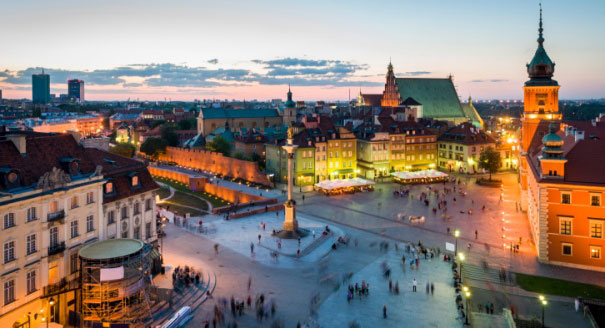
Poland has the potential to play a pivotal role in a new transatlantic relationship. But Warsaw’s Western partners must learn to understand what makes the country tick.
The reaction in Europe and the United States to leaked recordings of senior Polish officials discussing their country’s international ties has been instructive. It has not been one of outrage—Poland’s assessments of its allies seem pretty accurate. Nor has it been one of surprise—Polish ministers are as candid in public as in private. No, the reaction has been one of mild confusion: Why does Poland cling to certain relationships when it so clearly sees their faults?
The question matters. As the transatlantic partners head toward a new settlement, Poland finds itself again acting as a swing state. It performed that role in 2003 before the Iraq War, siding with the Atlanticist United States, UK, and “New Europe” against a Franco-German-Russian trio. And Poland played a pivotal part again in 2007 when its pragmatic rapprochement with Paris, Berlin, and Moscow ushered in a Europeanist turn.
So with so much at stake today, can the EU and United States trust in Poland’s good judgment when it comes to forging a new transatlantic settlement? The answer is yes, implicitly, but the alliance needs to recognize a tick. For Poles, international relations can mean just that: international relationships, ties, and loyalties. Sometimes, Poland cannot help but give greater weight to loyalty than to substance.
Take the sharp public statements from Warsaw since the beginning of the Ukraine crisis. For many in the West—Berlin and London—the shrill tone can be off-putting. But this is the point. Such words are meant less as statements of intent than as tests of loyalty. Warsaw makes a purposely divisive statement, and the response it wants to hear is one of unfettered support.
Some states get this. U.S. President Barack “Here’s $1 billion” Obama and French President François “The United States shouldn’t have a monopoly on reassurance” Hollande are the ones making all the right noises. France in particular has been generous in giving cheap but highly symbolic shows of support, be it French participation in NATO’s 2013 Steadfast Jazz operation in the Baltics or Paris’s recent growling about the need for reassurance.
France’s moves have paid off. The Poles are now trying hard to understand and even excuse a deal by Paris to supply Mistral-class boats to the Russians. And they are affording the French a kind of honorary membership in “New Europe” alongside the Balts and Romanians. (The logic is that precisely because France didn’t get caught up in Iraq, it now has the appetite to defend Western values.)
This weltanschauung could clearly have an impact on the way issues are debated by the allies. Poland will permit loyal states like France or the United States to broaden the agenda away from collective defense—even to mention the South and the need for pragmatic cooperation with Russia. But suspect countries may meet resistance, even when they think they are echoing wider Polish priorities.
If Berlin, for instance, tries to shift the transatlantic debate to energy security or democratic transition, Poland will hear only the sound of Germans trying to wriggle out of their military commitments. And although the UK might get away with talking about Syria (which signifies “awareness of security issues”), the words Tunisia (“democratic transition”) or Libya (“energy”) could be red rags to a bull.
This privileging of loyalties over substance is not just the result of Poland’s history of abandonment by the West but also the lesson from the country’s recent integration into it. After twenty-five years spent adapting to Western organizations, Poland knows well their hypocrisies. Leaders in Warsaw know that sometimes their partners are just telling them what they want to hear, and they believe—not unreasonably—that this is how things work.
That means the allies must learn to tell where Poland is doing the same. They must learn to differentiate between Polish statements or actions on, say, NATO enlargement, domestic missile defense, or national defense spending that are a genuine show of loyalty and those declarations that are only dressed up as such. Poland is scared of losing its partners if they see its weak points.
So, as a medium-sized, frontline state that has invested heavily in both an Atlanticist and a Europeanist approach and has found both wanting, Poland sees more clearly than most what is at stake. Moreover, it has the resources and the nous to play midwife to a reasonable new transatlantic settlement.
But, like all states, Poland needs sensitive handling. Otherwise, any new transatlantic deal might consist of hot-air reassurance measures from France and the United States and very precise “trip wire” territorial defense commitments demanded in response to British and German shakiness. This is a volatile combination. Add to that Poland’s occasional propensity to name and blame others rather than address its own weaknesses and insecurities, and we might well have the trigger too.
Roderick Parkes heads the EU Program at the Polish Institute of International Affairs.
Roderick Parkes
Stiftung Wissenschaft und Politik
Carnegie does not take institutional positions on public policy issues; the views represented herein are those of the author(s) and do not necessarily reflect the views of Carnegie, its staff, or its trustees.
There is an elephant in the room when it comes to the EU’s upcoming security strategy: Donald Trump. Unless European leaders acknowledge the depth of the transatlantic crisis, true autonomy will remain out of reach.

Stefan Lehne
Defense tech innovations will be at the heart of Europe’s new security strategy. But so far, Brussels has been making moves without a broader plan, undermining readiness and credibility.

Raluca Csernatoni

When the U.S.-Iran memorandum of understanding was announced, the UK, France, Germany, and Italy declared their readiness to help demine the Strait of Hormuz and lift nuclear sanctions on Tehran. But does Europe need new tools to recover a diplomatic role?

Rym Momtaz, ed.
The Franco-German relationship is on the rocks again. But unlike previous moments of tension, the epochal changes on the world stage require that both step up investment in their bilateral ties.
Rym Momtaz
The EU is putting together a new security strategy to meet today’s myriad challenges. But for any proposal to be effective, the union needs to grapple with its identity and ambitions.

Pierre Vimont