

Commentary
Judy Dempsey
{
  "authors": [
    "Judy Dempsey"
  ],
  "type": "commentary",
  "blog": "Strategic Europe",
  "centerAffiliationAll": "",
  "centers": [
    "Carnegie Endowment for International Peace",
    "Carnegie Europe"
  ],
  "collections": [],
  "englishNewsletterAll": "",
  "nonEnglishNewsletterAll": "",
  "primaryCenter": "Carnegie Europe",
  "programAffiliation": "",
  "programs": [],
  "projects": [],
  "regions": [
    "Eastern Europe",
    "Russia",
    "Ukraine"
  ],
  "topics": [
    "EU",
    "Foreign Policy"
  ]
}
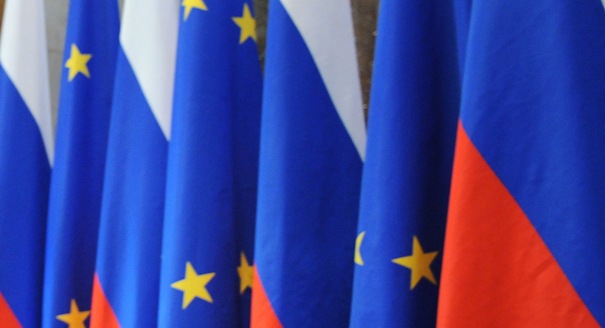
Source: Getty
European leaders should pull together and impose tougher sanctions on Russia. That would give important reforms in Ukraine a greater chance of succeeding.
As European leaders gathered for a summit in Brussels on July 16, U.S. Treasury Secretary Jack Lew announced a fresh package of sanctions against Russia.
Lew imposed measures that prohibit U.S. firms from providing financing to two major Russian banks: GazpromBank, the financial arm of energy giant Gazprom, and Vnesheconombank, or VEB, a state-owned corporation. Similar sanctions have been extended to Russian firms Rosneft, one of the world’s largest oil producers, and Novatek, a major natural-gas supplier.
The aim of the measures is to put more pressure on parts of the Russian economy and the elite in such a way that Russian President Vladimir Putin will eventually be deterred from further undermining Ukraine and its sovereignty. That, in turn, will allow the government in Kiev to carry out much-needed reforms that would benefit both Ukraine and the West.
But will these sanctions be enough to stop Russia’s continuing interference in eastern Ukraine?
As it is, some 12,000 Russian troops are now on the border with Ukraine, according to the Pentagon. NATO has been consistently outspoken over the way in which Russia has been providing military assistance and personnel to rebel fighters in eastern Ukraine. In other words, Putin is in a position to stop supplying the rebels if he wanted to.
As German Chancellor Angela Merkel said just before the start of the EU summit, “the Russian contribution for peace in Ukraine is not sufficient.” That’s putting it mildly.
Putin has fallen short of invading eastern Ukraine, knowing full well that the response by the United States and Europe would be tough. Instead, he is invading by stealth in such a way that Russia’s support for the rebels continues to chisel away at Ukraine’s sovereignty and stability.
Petro Poroshenko, Ukraine’s president, has taken a firm hold over the armed forces in a bid to rid them of corruption and quickly train and equip them to regain control over eastern Ukraine. He has had some success. Earlier in July, the army retook some towns from the separatists. But even then, the rebels were able to shoot down Ukrainian military aircraft, which shows just how well they are armed.
As the fighting continues and casualties rise—over 1,000 people have been killed since April—this is not the time for the Europeans to wobble. Yet that is exactly what they are doing. Austria and Italy, Slovakia and Bulgaria, to name just a few EU countries, oppose further sanctions against Russia.
That’s not just because these countries have lucrative energy deals with Moscow or are dependent on Russia for their gas. It’s also because they don’t seem to realize how Russia’s annexation of Crimea and its continuing strategy to destabilize Ukraine are dangerous for Europe.
Indeed, the more Putin receives support from several EU leaders, the more he can gain succor from Europe’s inability to unite over an issue that should be fundamental to European values and interests. Those values are about supporting citizens who want democracy and stability. And those interests are about Europe having safe, stable, and predictable neighbors.
Failure to uphold values and interests and an inability to unite over Russia will cost European governments dearly.
For one thing, the longer the instability in Ukraine continues, the more difficult it will be for Poroshenko to introduce reforms. Of course, this suits Putin. The last thing he wants to see is a prosperous, democratic, and Western-oriented Ukraine. Instead of recognizing the benefits of having such a neighbor, he sees and fears contagion.
But a weak, corrupt, and dysfunctional Ukraine is not in Europe’s interests. Those are the very characteristics that the pro-democracy demonstrations on Kiev’s Maidan in February wanted to get rid of, once and for all.
With EU assistance, Ukraine’s new civil society wants to push ahead with reforms. Otherwise, their own efforts in ousting former president Viktor Yanukoych and last month’s signing of an association agreement with the EU will have been squandered. For reforms in Ukraine to succeed, tougher sanctions on Russia must be applied.

Nonresident Senior Fellow, Carnegie Europe
Judy Dempsey is a nonresident senior fellow at Carnegie Europe
Recent Work
Judy Dempsey
Judy Dempsey
Carnegie does not take institutional positions on public policy issues; the views represented herein are those of the author(s) and do not necessarily reflect the views of Carnegie, its staff, or its trustees.
As we close out another season of Strategic Europe, it is worth taking stock of the deep shifts underway.

Rym Momtaz
The EU had to compromise to adopt a twenty-first sanctions package against Russia, exposing growing cracks in the union’s resolve. Is this latest, weaker round worth it to keep pressure on Moscow?
Rym Momtaz, ed.
Trump is distracted and Ukraine wants Europe to step up. The continent’s leaders must find their voice and assert it in talks with Russia.
Alissa de Carbonnel

Mounting economic strain and battlefield losses will not necessarily make the Kremlin less dangerous. They could instead push Moscow toward a more aggressive hybrid campaign designed to test NATO’s Eastern flank, exploit allied hesitation, and fracture European resolve.

Maksym Beznosiuk
Over the past ten years, NATO has held almost as many summits as it did during the entirety of the Cold War. Are they still useful, or is it time to stop holding annual meetings?
Rym Momtaz, ed.