

Commentary
Judy Dempsey
{
  "authors": [
    "Judy Dempsey"
  ],
  "type": "commentary",
  "blog": "Strategic Europe",
  "centerAffiliationAll": "",
  "centers": [
    "Carnegie Endowment for International Peace",
    "Carnegie Europe"
  ],
  "collections": [],
  "englishNewsletterAll": "",
  "nonEnglishNewsletterAll": "",
  "primaryCenter": "Carnegie Europe",
  "programAffiliation": "",
  "programs": [],
  "projects": [],
  "regions": [
    "Western Europe",
    "Germany",
    "Europe"
  ],
  "topics": [
    "Security"
  ]
}
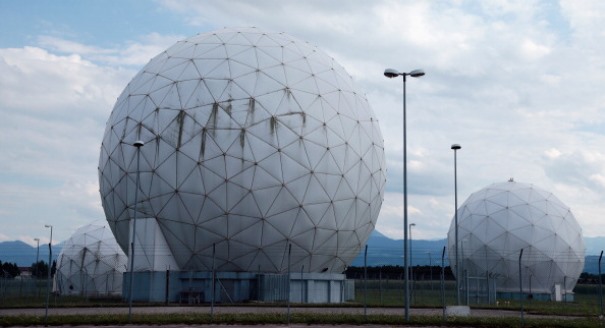
Source: Getty
Revelations that a German intelligence agent spied for the United States are a serious and dangerous setback for the transatlantic relationship. Russia must be delighted.
Germany’s latest spying scandal is certain to further damage Berlin’s relations with Washington and weaken transatlantic bonds.
The scandal centers on a domestic German employee of the Bundesnachrichtendienst or BND, Germany’s foreign intelligence agency. For two years, the thirty-one-year-old has been passing classified documents to the U.S. Central Intelligence Agency (CIA).
After this story broke on July 3, the U.S. ambassador to Berlin was officially called into the German Foreign Office. Chancellor Angela Merkel didn’t go on record herself, but she made it clear she was disgusted with the whole affair. Germany’s interior and foreign ministers gave scathing interviews.
The German public had already been seething over the U.S. National Security Agency (NSA) affair that erupted over a year ago. The NSA had listened in on Merkel’s mobile phone and conducted a host of other spying activities in Germany, according to information made public by former NSA contractor Edward Snowden.
That anger soon turned into an extraordinary welling of support for Snowden, with some German parliamentarians now wanting to offer him political asylum if he chooses to leave his present refuge, Russia. One German university even granted Snowden an honorary doctorate on the grounds that he was defending basic freedoms.
Prior to the latest affair, Merkel had tried, with some success, to keep the NSA scandal from turning into a poisonous anti-American campaign. The new scandal could jeopardize those efforts to maintain business as usual.
According to German officials and media reports, the BND agent sold some 200 highly sensitive documents to the United States. The most recent information allegedly contained details of the German parliament’s closed inquiry into NSA surveillance programs.
“If the suspicion of a targeted attack on a German constitutional body is confirmed, just one year after the first Snowden disclosures, that would set the level of trust back to zero and result in political consequences,” said Christian Flisek, a Social Democrat lawmaker and co-chairman of the NSA inquiry.
German President Joachim Gauck, no stranger to speaking his mind about his country, waded into the debate. He told the state broadcaster ZDF on July 5 that if the reports were true, “one really has to say ‘enough is enough.’”
More recently, the agent also offered his services to Russia, according to media reports. It was then that his superiors learned to their shock and dismay that he was in fact working for the Americans. It is still not clear if he was an agent for Russia, too.
Obama, for his part, has done little to take the sting out of the NSA affair. Apart from offering platitudes that Merkel’s mobile phone will not be listened to again, the NSA’s activities have not been curtailed. Nor has the agency been restructured, an omission that is very shortsighted when it comes to dealing with loyal and important allies.
Yet neither Merkel nor Obama can afford to allow the U.S.-German relationship to deteriorate further. Despite big differences in style, the two leaders cooperate closely on several issues, including the Ukraine crisis, sanctions against Russia, and negotiations on a transatlantic free-trade deal. On all three dossiers, Merkel has had to contend with considerable German skepticism. Obviously, this new spy scandal will make it even more difficult for her to garner support for cooperating with Washington.
Indeed, an opinion poll published on July 6 by the polling organization TNS Forschung for the weekly newsmagazine Der Spiegel confirms a worrying trend. The poll found that 57 percent of respondents wanted Germany to be more independent of the United States (whatever that means), while 69 percent said their trust in the alliance with America had declined. Now that Germany’s postwar political and economic reliance on the United States is waning year by year, many Germans seem to be chafing under those bonds.
This spying scandal plays into the hands of Vladimir Putin, the Russian president. Given the Ukraine crisis, it is very much in Putin’s interest to see the West divided and weakened—preferably to the extent to which Europeans and Americans will be unable to agree on economic sanctions against Russia.
Yet Germany’s position vis-à-vis the United States and Russia is crucial for shaping Europe’s foreign and security policy, as the Ukraine crisis has shown. With Merkel under so much pressure from a public that is disenchanted with America, it’s time for Obama to help bail her out and win back the Germans. If not, one of the big winners will be Russia.

Nonresident Senior Fellow, Carnegie Europe
Judy Dempsey is a nonresident senior fellow at Carnegie Europe
Recent Work
Judy Dempsey
Judy Dempsey
Carnegie does not take institutional positions on public policy issues; the views represented herein are those of the author(s) and do not necessarily reflect the views of Carnegie, its staff, or its trustees.

While the EU and European governments are embracing the much-lauded middle-power moment, this entails three difficult conundrums.

Richard Youngs

Much has been said of the changes Brussels is trying to make to the EU enlargement process. Here’s why gradual integration might—or might not—be the answer.

Dimitar Bechev

The European Commissioner for Trade is headed to China. But after President Xi’s bridge-building visit to Washington, can a more isolated EU overcome Beijing’s stranglehold on critical raw materials? Who will blink first?

Rym Momtaz, ed.

The domestic impacts of how long it is taking to end the war in Ukraine have pushed the French electorate to the political extremes and compromised the country’s diplomatic capacity.
Rym Momtaz

Before the next wave of EU enlargement takes place, the union needs to grapple with thorny questions of how power is distributed among its members.


Emil Sondaj Hansen, Ditte Brasso Sørensen