

Article
Bruno Maçães
{
  "authors": [
    "Bruno Maçães"
  ],
  "type": "commentary",
  "blog": "Strategic Europe",
  "centerAffiliationAll": "",
  "centers": [
    "Carnegie Endowment for International Peace",
    "Carnegie Europe"
  ],
  "collections": [],
  "englishNewsletterAll": "",
  "nonEnglishNewsletterAll": "",
  "primaryCenter": "Carnegie Europe",
  "programAffiliation": "",
  "programs": [],
  "projects": [
    "European External Strategy Project"
  ],
  "regions": [
    "Western Europe",
    "Europe"
  ],
  "topics": [
    "Foreign Policy",
    "EU"
  ]
}
Source: Getty
The EU needs to strengthen its foreign policy by preserving, not eradicating, national differences, writes Portugal’s state secretary for Europe.
European foreign policy is by nature hybrid. EU member states have common values and democratic principles. But there are gaps. There is inconsistency over foreign policy goals and a lack of coordination.
The crisis in Ukraine is a case in point. This is arguably the most challenging foreign policy crisis on European soil since the end of the Cold War. Yet EU member states, while not divided in principle, have found it hard to act early and promptly. The EU’s Southern neighborhood presents the union with equally serious challenges.
The big problem besetting EU foreign policy is that each member state has its own historical footprint and its own bilateral ties—including trade relations—with third countries. This will probably never change, no matter how integrated the EU becomes in other areas.
The way to strengthen EU foreign policy is to preserve national differences. The best strategy is to articulate these policies to make them fit better together and so create a common space where national policies can complement each other rather than clash and retreat.
The big question is how to do this. One way is to reinforce the EU’s intergovernmental dimension. If member states work better together, they will be more likely to think of themselves as a unitary actor.
At the same time, ideas are being circulated on how to strengthen the supranational aspects of EU foreign policy. Proposals include combining the European Commission’s trade, enlargement, development, and neighborhood portfolios in a cluster led by the EU’s foreign policy high representative.
But it seems doubtful whether such ideas can be implemented in the current climate. Without the member states’ political will and engagement, EU foreign policy will lack drive, and the risk of a retreat to nationally defined foreign policies will mount. Some even argue that member states’ sense of ownership in EU foreign policy has declined in recent years. How can the EU best merge nations’ different capacities rather than build a parallel supranational track?
The risk in combining the specific, added weight of different stakeholders is fragmentation. In a dynamic system, the trick is not to build unity once and for all but to design a mechanism that can continuously create agreement out of diversity while being careful not to eliminate the sources of that diversity.
Institutions such as private and public companies, and even central banks, try to solve this problem by balancing a general council and an executive board. The board reduces the risk of fragmentation and dissent and fulfills essential management duties. But it must report to the council, which may well appoint it.
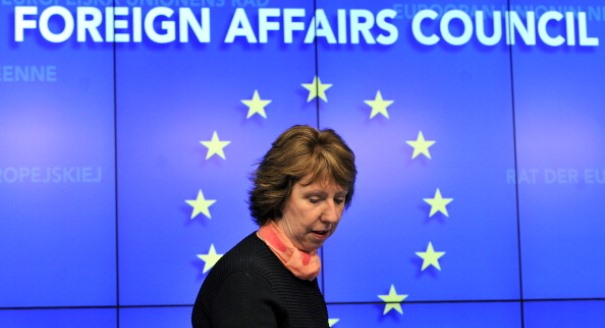
Maybe there could be room within the EU’s foreign affairs council for smaller, informal, executive configurations. After all, smaller, more manageable groups of foreign ministers have a certain historical appeal within EU foreign policy.
In the past, a trio of the foreign ministers of the three member states holding the EU’s successive rotating presidencies sought to provide some level of continuity to foreign policy. That principle operated under the plausible assumption that such continuity is even more necessary in foreign policy than in other areas.
More recently, groups like the Weimar Triangle of France, Germany, and Poland, the Visegrád Group of the Czech Republic, Hungary, Poland, and Slovakia, or the Mediterranean countries have provided new impetus to the idea of smaller foreign policy configurations, while also raising important concerns.
Of course, one should be cautious to avoid promoting the creation of smaller, informal groups consisting only of the larger states. That would be an open road to fragmentation. Indeed, the whole point of bringing different foreign policies together is to combine different perspectives, a goal that would quickly be undermined if such smaller configurations consisted solely of countries with a similar outlook.
If foreign ministers are to work in small teams, the groupings must be diverse and composite. That means combining larger and smaller states, and countries closer to the issue at stake and those further away. There should be an effective division of labor, and these teams could work on different briefs or different regions or issues in European foreign policy.
To ensure that these teams take balanced decisions, each group could include one large state, one country with special relations with a particular region or issue, and one country with a more detached perspective. For example, for a strategic partner like Brazil, the trio could consist of Germany, Portugal, and Bulgaria. For a region such as the Sahel, the troika could comprise the UK, Italy, and Denmark.
This arrangement would maintain the hybrid distinctiveness of EU foreign policy but would also make it more effective and decisive in handling relations with the country or region in question. The trio would be chosen by and would act in the name of the foreign affairs council, and it would be led by the high representative.
The EU needs to deepen the political space of communication among its member states. Foreign policy should not be an exception. By being forced to work together on different issues, national foreign ministries would be placed in closer contact. Smaller teams have the potential to be uniquely efficient, providing expertise, experience, and direction and making interaction simpler. Such a setup would also increase member states’ accountability for the success or failure of EU foreign policy.
Bruno Maçães is Portugal’s secretary of state for Europe.
Former Nonresident Associate, Carnegie Europe
Maçães was a nonresident associate at Carnegie Europe. His research focuses on EU integration and foreign policy, trade policy, and broader globalization trends.
Recent Work
Bruno Maçães
Bruno Maçães
Carnegie does not take institutional positions on public policy issues; the views represented herein are those of the author(s) and do not necessarily reflect the views of Carnegie, its staff, or its trustees.

The EU can impose sanctions but struggles to enforce them without the United States. With Washington increasingly disinterested in backing European interests, the bloc must now fend for itself.


Nicu Popescu, Tiago Antunes

Russia is testing the waters of NATO’s mutual defense clause. What do strikes in Romanian territorial waters mean for the alliance’s posture toward Moscow?

Dimitar Bechev

With its public finances in shambles, the far right polling at 35 percent ahead of the 2027 presidential election, and a growing protest movement, is France’s crisis a threat to the EU’s geopolitical awakening?

Rym Momtaz, ed.

Ahead of a tough winter for Ukraine, Donald Trump’s swing back toward Russia bodes ill. But instead of panicking, Kyiv’s European allies are focusing on action.
Rym Momtaz

While the EU and European governments are embracing the much-lauded middle-power moment, this entails three difficult conundrums.

Richard Youngs