

Commentary
Judy Dempsey
{
  "authors": [
    "Judy Dempsey"
  ],
  "type": "commentary",
  "blog": "Strategic Europe",
  "centerAffiliationAll": "",
  "centers": [
    "Carnegie Endowment for International Peace",
    "Carnegie Europe"
  ],
  "collections": [
    "Transatlantic Cooperation",
    "Europe’s Southern Neighborhood"
  ],
  "englishNewsletterAll": "",
  "nonEnglishNewsletterAll": "",
  "primaryCenter": "Carnegie Europe",
  "programAffiliation": "",
  "programs": [],
  "projects": [],
  "regions": [
    "North America",
    "United States",
    "Middle East",
    "Iraq",
    "Syria",
    "Western Europe",
    "Europe"
  ],
  "topics": [
    "Security",
    "Military"
  ]
}
Source: Getty
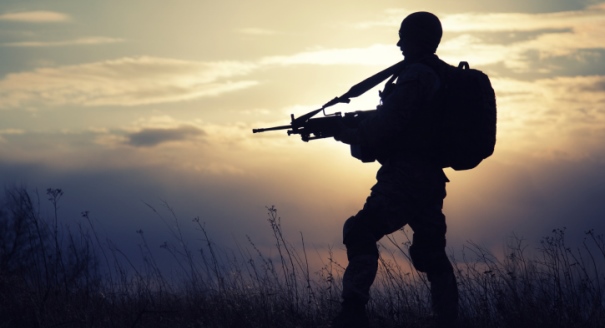
NATO has been almost completely absent in the debate about how to deal with the Islamic State. That is down to a number of fundamental differences among members of the alliance.
The deal was done on September 5 during the NATO summit in Wales.
U.S. President Barack Obama got the backing he wanted to confront the Islamic State, or IS. A group of European countries agreed to provide some kind of military support to the United States as it prepared to carry out aerial bombardments of IS targets. But NATO as a military alliance was not going to get involved. It was going to stay at home. Coalitions would take its place.
First, the use of force. Many NATO countries are scarred by the interventions in Iraq, Afghanistan, and Libya. There is a huge uncertainty if not skepticism about the efficacy of force and the goals it can achieve. Such skepticism, verging on fear, was evident on September 26, when Britain’s House of Commons held a special session to decide whether or not to support Obama’s fight against IS.
Conservative parliamentarian Ken Clarke spoke for many of his colleagues. “What happened in all those cases was that the military deployment produced a situation at least as bad as it had been before, and largely worse,” he said. Despite the skepticism, UK Prime Minister David Cameron won a comfortable majority to send a few fighter jets to bomb IS targets in Iraq, but not in Syria, where IS has made substantial gains. London’s military support is considered paltry.
Nevertheless, Cameron wanted to show solidarity with the United States—thereby making amends for the time in 2013 when the House of Commons opposed the prime minister’s plan to support Obama in bombing Syria. In the end, Obama retreated. The prospect of another war was just too unpopular for the American public, as it was for the British.
In the case of the Islamic State, security analysts have repeatedly argued that it is hard to see how aerial bombardments alone will destroy the movement. Moreover, NATO countries have bitter experiences of how air power often hit civilians in Afghanistan. As for European countries sending troops to fight IS, that has been ruled out.
Instead, some European nations will help the United States train local forces, or arm them, as Germany has decided to do by sending weapons to the Kurds in northern Iraq.
Germany’s move to arm the Kurds is a major shift in the country’s thinking. Berlin has had no qualms in exporting weapons to unsavory, undemocratic countries, such as Saudi Arabia. But the fact that Germany is now sending weapons to the stateless Kurds shows its dilemma. Berlin wants to be seeing to be trying to stop the Islamic State, support the United States, and save civilians from the brutality of IS. Yet at the same time, it is arming a nonstate actor.
The role of nonstate actors is the second issue NATO must face, and it has wider repercussions for NATO’s strategy in the Middle East and North Africa.
For several years, well before the Arab Spring began in 2011, the alliance had been building partnerships across the region with what were then nondemocratic regimes. These partnerships involved, for example, training courses and exercises.
Today, NATO has to reassess what countries it can partner with in the Middle East and North Africa. Syria is out of the question. Libya lurches from one crisis to the next. Iraq is now involved in a war on several fronts: from dealing with IS to containing sectarian conflicts between Sunnis and Shias. Afghanistan’s new leadership is marred by bitter infighting after this year’s presidential election. That hardly bodes well for NATO, which has agreed to take on a military training mission in the country now that its combat operation there is over.
At the same time, the Islamic State is adding to an increasing catalogue of nonstate actors, which makes NATO reluctant to fight the jihadists. But if Turkey, a leading NATO member that is dealing with a huge influx of refugees fleeing the fighting in Syria, were to be attacked, NATO could hardly remain on the sidelines. And what if Israel were targeted?
The third task for Stoltenberg will be to weave into the alliance a shared and common perception of threats. Despite Russia annexing Crimea and sending troops and weapons to help the pro-Russian rebels in eastern Ukraine, NATO is not united over the threat. At the Wales summit in early September, members agreed to increase the defenses of Poland, the Baltic states, and Romania only after much cajoling by NATO’s top brass.
Nor is the alliance united over the threat that IS poses or, more importantly, how to deal with it—as if there were clear answers. Indeed, until a culture of a shared threat perception takes hold in NATO, the alliance is not going anywhere in the near future.

Nonresident Senior Fellow, Carnegie Europe
Judy Dempsey is a nonresident senior fellow at Carnegie Europe
Recent Work
Judy Dempsey
Judy Dempsey
Carnegie does not take institutional positions on public policy issues; the views represented herein are those of the author(s) and do not necessarily reflect the views of Carnegie, its staff, or its trustees.
Europe has an interest in supporting Armenian leader Nikol Pashinyan as he tries to make peace with neighbors and loosen ties with Russia. But it is depersonalized support in the long term, not quickfire flash, that will win the day.

Thomas de Waal
Following Ursula von der Leyen’s gaffe equating Turkey to Russia and China, relations with Ankara risk deteriorating even further. Without better, more consistent diplomatic messaging, how can the EU pretend to be a geopolitical power?

Sinan Ülgen
Closer EU-UK ties could help address urgent European concerns. But is the EU ready for rapprochement with the United Kingdom?

Rym Momtaz, ed.
Europe has been standing by while its Southern neighborhood is being redrawn by force. To establish a path to peace between Israel and Lebanon, it’s time for Europeans to get involved with hard power.
Rym Momtaz
In Ukraine, Gaza, and Iran, AI warfare has come to dominate, with barely any oversight or accountability. Europe must lead the charge on the responsible use of new military technologies.

Raluca Csernatoni