

Article
Marc Pierini
{
  "authors": [
    "Marc Pierini"
  ],
  "type": "commentary",
  "blog": "Strategic Europe",
  "centerAffiliationAll": "",
  "centers": [
    "Carnegie Endowment for International Peace",
    "Carnegie Europe"
  ],
  "collections": [],
  "englishNewsletterAll": "",
  "nonEnglishNewsletterAll": "",
  "primaryCenter": "Carnegie Europe",
  "programAffiliation": "",
  "programs": [],
  "projects": [],
  "regions": [
    "Eastern Europe",
    "Western Europe",
    "Europe"
  ],
  "topics": [
    "Foreign Policy",
    "EU"
  ]
}
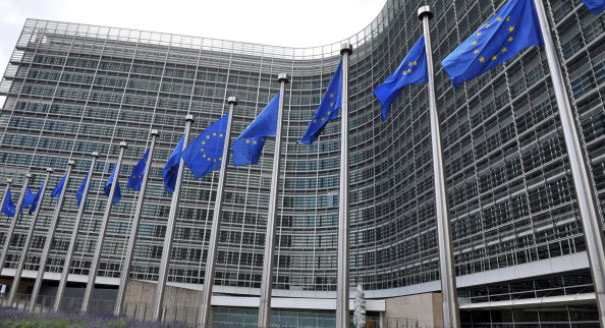
Source: Getty
The incoming president of the European Commission, Jean-Claude Juncker, hopes to improve foreign policy coordination among the EU institutions. That is a laudable aim.
By all accounts, the dysfunctional relationship between the European Commission of outgoing President José Manuel Barroso and EU foreign policy chief Catherine Ashton was one of the worst frustrations in the years since the introduction of the Lisbon Treaty, which sought to streamline EU decisionmaking.
On September 10, the EU executive’s incoming president, Jean-Claude Juncker, announced the new lineup of commissioners and introduced a few innovations in the field of foreign policy. In doing so, he signaled that he wants to fix the institution’s problems. Will his plans work?
In the foreign policy field, Federica Mogherini, a junior politician, had already been appointed as the next EU high representative and therefore one of the commission’s vice presidents. Juncker’s task was to streamline the foreign policy functions within the commission. He did so by introducing two major innovations.
First, he seems intent on making those commissioners whose portfolios include foreign policy responsibilities work together as a real group. Under Juncker’s and Mogherini’s guidance, these external relations commissioners are to produce initiatives that align with the EU’s foreign policy goals. This will concern primarily the commissioners for trade (a portfolio that includes sanctions), neighborhood policy and enlargement negotiations, international cooperation and development, migration and home affairs, humanitarian aid and crisis management, and potentially a few others, such as those for climate action and energy or transport and space.
Juncker’s second innovation is a series of “mission letters” he has sent to each member of the commission, detailing their mutually agreed commitments. The letter addressed to Mogherini gives her clear leadership to encourage the relevant commissioners to work in a consistent and coordinated fashion: “As Vice-President of the European Commission, you will be responsible for steering and coordinating the work of all Commissioners with regard to external relations.” These mission letters constitute early signs of leadership from Juncker—in contrast to the outgoing Barroso commission, which was sometimes considered rudderless.
Hopefully, these new directions, emanating from a seasoned EU politician such as Juncker, will fix the commission’s recent glaring shortcomings once and for all. The five years since the introduction of the Lisbon Treaty have been characterized by a lack of harmony and synergy among the many sizable instruments in the toolbox that the EU could put at the disposal of a well-considered policy if it wanted to. The corridors of power in Brussels still echo with the uncoordinated initiatives, if not outright conflicts, between the high representative and a number of commissioners on, say, Ukraine, Albania, Tunisia, or Syria.
The Juncker methodology unveiled on September 10 has a further meaning. It seems to reflect the dissatisfaction of a majority of EU governments over the way in which the “big three” member states of France, Germany, and Britain hijacked EU foreign policy during the Ashton years.
It was the Lisbon Treaty that made the daring promise of seamless coordination between pure foreign policy actions (Ashton wearing her high representative hat) and the commission’s toolbox in more technical fields (Ashton wearing her commission vice president hat). That promise wasn’t fulfilled, and Juncker has taken the first steps to change course.
Old habits die hard, goes the saying. So, optimism should be guarded. But maybe the Juncker commission, endowed with so much political experience, really will make recent errors a thing of the past. Maybe national governments will also realize that with the EU’s neighborhood on fire, smarter use of Brussels’s foreign policy resources will be to the benefit of all.

Senior Fellow, Carnegie Europe
Marc Pierini is a senior fellow at Carnegie Europe, where his research focuses on developments in the Middle East and Turkey from a European perspective.
Recent Work
Marc Pierini
Marc Pierini
Carnegie does not take institutional positions on public policy issues; the views represented herein are those of the author(s) and do not necessarily reflect the views of Carnegie, its staff, or its trustees.

European Commission President Ursula von der Leyen is about to give her annual address on the state of the EU. Here’s what she won’t—but should—say.

Rym Momtaz

The aftermath of the Ceuta crisis shows Europe has drawn the wrong lessons. Rather than doubling down on failed migration policies, the EU needs to address the underlying roots of such episodes.

Richard Youngs

An overwhelming victory by a far-right-wing party in a small state in eastern Germany will have major repercussions for Chancellor Friedrich Merz’s coalition.

Judy Dempsey

Canadian Prime Minister Mark Carney has twice inspired praise for standing up to U.S. President Donald Trump: at the 2026 World Economic Forum in Davos and on Canada-U.S. trade negotiations. Is Carney showing a third way better than the EU has in dealing with the Trump administration?
Rym Momtaz, ed.

The EU’s responses to two recent incidents expose the gulf between European perceptions and capabilities. Unless the union can bridge that gap, it will never become a real geostrategic power.
Rym Momtaz