

Commentary
Judy Dempsey
{
  "authors": [
    "Judy Dempsey"
  ],
  "type": "commentary",
  "blog": "Strategic Europe",
  "centerAffiliationAll": "",
  "centers": [
    "Carnegie Endowment for International Peace",
    "Carnegie Europe"
  ],
  "collections": [
    "Europe’s Eastern Neighborhood"
  ],
  "englishNewsletterAll": "",
  "nonEnglishNewsletterAll": "",
  "primaryCenter": "Carnegie Europe",
  "programAffiliation": "",
  "programs": [],
  "projects": [],
  "regions": [
    "Europe",
    "Eastern Europe",
    "Western Europe",
    "Germany"
  ],
  "topics": [
    "Foreign Policy"
  ]
}
Source: Getty
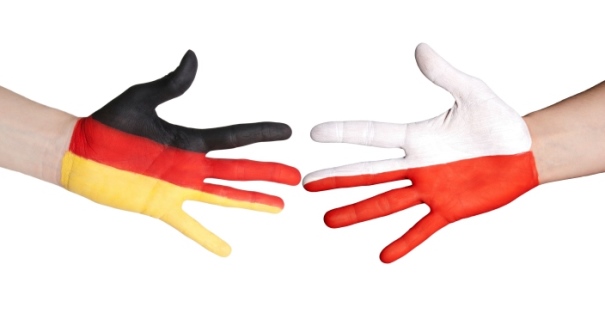
The Ukraine crisis shows that Poland’s special foreign policy toward its Eastern neighbors is needed more than ever—together with support from Berlin.
Over the past few days, the spotlight in Europe has been on the collapse of the Berlin Wall in November 1989. Reams have been written about whether the reunited Germany now has a foreign policy commensurate with its economic size and political influence in Europe.
The focus on Berlin is understandable. But what is more fascinating is to see how, since 1989, Poland has become one of the few European countries to have developed a distinct and long-term strategy toward its Eastern neighbors.
That strategy has become so consistent that it has helped change many EU member states’ perceptions of Eastern Europe. Today, Poland’s approach is needed more than ever—with Germany’s support.
That in itself was remarkable given Poland’s history and location in this part of Europe. Before and during World War II, Poland and Ukraine suffered hugely at the hands of Nazis and the Red Army. The Holocaust and the violent ethnic wars between Ukraine and Poland and throughout the region ended centuries of mixed communities, religions, cultures, and languages in these borderlands of Europe.
World War II brutally changed Poland’s borders. Half of the country’s prewar territory was lost to the Soviet Union in 1939. Later, in 1945, a third was gained from Germany. Hardly anything remained of Poland’s previously rich cultural mosaic.
After 1989, instead of using nationalism and the politics of revenge to seek redress for lost territories, Warsaw sought reconciliation with its Eastern neighbors. It reached out to Ukraine, Lithuania, and Belarus.
Such overtures took place when it was still unclear how Moscow would react to these countries breaking away from the Soviet Union. Despite the uncertainty of those months, Solidarity leaders and Skubiszewski traveled to Moscow and Vilnius, Minsk and Kiev. They were determined to convince Poland’s neighbors that Warsaw would accept existing borders and respect the rights of the minorities on both sides.
#Poland's approach toward Eastern Europe is needed more than ever.Tweet This
It was, however, Poland’s policy of supporting Ukraine’s independence that has proved the most enduring and important. No matter which government was in power in Poland, Warsaw has pursued a policy based on building strong and democratic countries in its Eastern neighborhood.
That became even more imperative when Poland joined the European Union in 2004. Poland did not want that enlargement to create new divisions between the EU and Eastern Europe. Once inside the EU, Warsaw used the opportunity to put the Eastern neighborhood high on the EU’s agenda.
Poland’s reconciliation and openness toward its non-Eastern neighbors was matched with practical measures. Poland has invested heavily in helping to support reformers in Georgia, Moldova, and Ukraine with practical advice. It supports Belsat TV, which broadcasts from Warsaw into Belarus. It supports young Belarusians who want to study in Poland.
All the time, Poland did not ignore Russia. Poland’s former prime minister Donald Tusk and former foreign minister Radek Sikorski made every effort to build a new relationship with Russia, with some success—until the Ukraine crisis.
Despite the frustrations of Poland’s top diplomats over Ukraine’s squandered revolutions, Warsaw has steadfastly believed in and supported a Ukraine anchored to the West. Indeed, Russia’s annexation of Crimea in March 2014 and its blatant military backing of the pro-Russian rebels in eastern Ukraine has convinced Poland that the EU should not turn its back on Eastern Europe.
That is why Poland needs more than ever the support of Germany to help bring Eastern Europe closer to the EU.
There is no doubt that over the past few years, political, trade, social, and cultural relations between Berlin and Warsaw have blossomed. German Chancellor Angela Merkel and Tusk, who resigned as prime minister to become the first Polish president of the European Council on December 1, forged a warm friendship.
Warsaw and Berlin, along with Paris, worked closely together after last November’s failed Eastern Partnership summit in Vilnius, where then Ukrainian president Viktor Yanukovych turned down a political and economic Association Agreement with the EU.
That decision sparked antigovernment and pro-Western demonstrations in Kiev and other Ukrainian cities. Yanukovych was ousted from power, which led Russian President Vladimir Putin to annex Crimea and turn parts of eastern Ukraine into a frozen conflict.
#Poland knows that to falter now on #Ukraine would mean a new Iron Curtain.Tweet This
Poland knows that to falter now on Ukraine would mean exactly what Warsaw has long feared: a new Iron Curtain.
“We do not want to see a repeat of the Cold War; we do not want a new Iron Curtain – even if moved to the Bug or Dnieper rivers. Europe deserves peace in the 21st century and should avoid making the same mistakes as in the 20th century,” Poland’s new foreign minister, Grzegorz Schetyna, said in a speech to the Polish parliament on November 6.
Yet for all the closeness between Warsaw and Berlin, Polish diplomats say they have been sidelined over the Ukraine crisis. This is because the so-called “Normandy format,” which consists of the French, German, Russian, and Ukrainian leaders, now deals with Ukraine.
The format hasn’t yielded much—indeed, there are reports of Russia sending more military equipment to eastern Ukraine. It is Berlin that is the most important player in the Ukraine crisis.
That is all the more reason for Berlin not to marginalize Warsaw. Poland’s long-held belief in anchoring Eastern Europe to the West needs Germany’s political weight and economic influence. Berlin also needs Warsaw as a partner. Like Germany, Poland has set great store by reconciliation with its neighbors. Those efforts should not be wasted.

Nonresident Senior Fellow, Carnegie Europe
Judy Dempsey is a nonresident senior fellow at Carnegie Europe
Recent Work
Judy Dempsey
Judy Dempsey
Carnegie does not take institutional positions on public policy issues; the views represented herein are those of the author(s) and do not necessarily reflect the views of Carnegie, its staff, or its trustees.

The aftermath of the Ceuta crisis shows Europe has drawn the wrong lessons. Rather than doubling down on failed migration policies, the EU needs to address the underlying roots of such episodes.

Richard Youngs

An overwhelming victory by a far-right-wing party in a small state in eastern Germany will have major repercussions for Chancellor Friedrich Merz’s coalition.
Judy Dempsey

Canadian Prime Minister Mark Carney has twice inspired praise for standing up to U.S. President Donald Trump: at the 2026 World Economic Forum in Davos and on Canada-U.S. trade negotiations. Is Carney showing a third way better than the EU has in dealing with the Trump administration?

Rym Momtaz, ed.

The EU’s responses to two recent incidents expose the gulf between European perceptions and capabilities. Unless the union can bridge that gap, it will never become a real geostrategic power.
Rym Momtaz
In supporting Europe’s far-right, MAGA and Russia both want the same thing: a weaker EU. Europe must defend itself without abandoning the openness these forces exploit.

Armida van Rij