

Commentary
René Nyberg
{
  "authors": [
    "René Nyberg"
  ],
  "type": "commentary",
  "blog": "Strategic Europe",
  "centerAffiliationAll": "",
  "centers": [
    "Carnegie Endowment for International Peace",
    "Carnegie Europe"
  ],
  "collections": [],
  "englishNewsletterAll": "",
  "nonEnglishNewsletterAll": "",
  "primaryCenter": "Carnegie Europe",
  "programAffiliation": "",
  "programs": [],
  "projects": [],
  "regions": [
    "Russia",
    "Europe",
    "Western Europe"
  ],
  "topics": [
    "Foreign Policy",
    "EU"
  ]
}
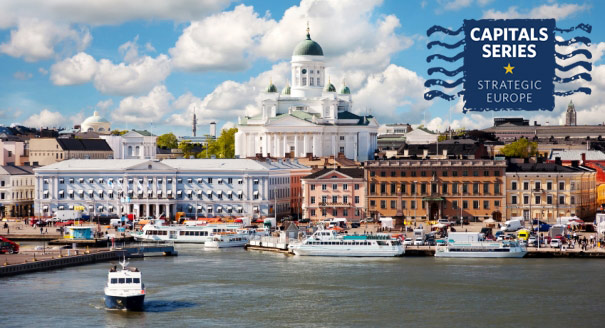
Source: Getty
Finland has found a way to reconcile with Russia. Yet this great-power neighbor remains Helsinki’s insoluble security dilemma.
Strategic Europe continues its series devoted to explaining the foreign and security policy ambitions of the 28 EU member states. We have asked our contributors from each capital to give a candid assessment of their country’s perception of security and strategy, with a ranking on a scale from 0 (the laggards) to 5 (the ambitious). This week, the spotlight is on Finland.
*
The demise of the Soviet Union almost a quarter of a century ago was all but bloodless; but with the current war in Ukraine, history has caught up with Russia. Empires do not implode without violence. The destruction brought to eastern Ukraine and the destabilization of the country have wider implications for Russia—implications that are more severe than the ongoing low-intensity conflict in the North Caucasus. Russia cannot prosper as an angry island, however large it may be.

The war in Ukraine is the most serious threat to peace in Europe since the Soviet invasion of Czechoslovakia in 1968. Russia’s March 2014 annexation of Crimea, its use of armed force, and its attempts to limit Ukraine’s sovereignty are violations of the European security order. That order was established by the Helsinki Accords in 1975 and confirmed by the Paris Charter in 1990.
Now, there is no way back to business as usual without a settlement in Ukraine. This remains the precondition for lifting the sanctions imposed on Russia by the European Union and the United States.

The contrast with the national narratives of Finland or of modern Germany could not be starker. Neither of them has territorial claims on other states, and both live at peace with their neighbors.
Finland defines itself not through the loss of Viipuri (now Vyborg) or Karelia, territories ceded to the Soviet Union during World War II, but through survival. Helsinki’s achievement is having emerged from the war without being occupied and with its parliamentary democracy intact. This is illustrated by the fact that no Finnish grandmother, mother, or young girl ever encountered a Red Army soldier.
Finland remains the only country that said no to Stalin and got away with it. The reconciliation that describes modern Finland’s relationship with its great-power neighbor is a historic feat.
#Finland has experienced the full spectrum of relations with Russia.Tweet This
For Germany, the loss of the German Reich, East Prussia, or Silesia does not define the German national narrative. Rather, that narrative centers on the success of building a society based on the rule of law, the ability to face the past, and the peaceful reunification of the nation, which is now surrounded by friends and allies. The German historian Heinrich August Winkler wrote about his country’s Long Road West in a book with the same name.
Finland has experienced the full spectrum of relations with its Eastern neighbor, from belligerence to passive submission. In good times or bad, Russia always presents a security policy quandary for Finland. When confrontational threats from Russia emerge, as they do from time to time, they can often be managed through skillful diplomacy. But Finns always have to be prepared for the worst.
Finland cannot afford to turn its back on Russia. Even when provoked, Helsinki must not give in to such provocation. Instead, Finland has to filter out the excesses of Russian nationalist propaganda through its own cultural experience.
Russia’s predicament is its inability to deal with its neighbors. The maxim of defining security as having total control of one’s perimeter and attempting to direct the policies of one’s neighbors is no solution to the problems of modern Europe. Such an approach provides neither security nor stability.
Over the past twenty years, Russia has had problems with all of its neighbors, with one notable exception—Finland. And this is a Finnish rather than a Russian achievement. Vladimir Zhirinovsky, who relishes his role as Moscow’s court jester, underlined this at the 2014 Sochi Winter Olympics, when he claimed that the Finns hate the Russians because of the Winter War. He was speaking after the Finnish ice hockey team had beaten Russia, with President Vladimir Putin in attendance.
#Russia remains #Finland's insoluble security dilemma.Tweet This
Who in the West remembers the short war fought in the harsh winter months of 1939–1940, when Hitler was still an ally of Stalin? The Russians do, because the Finnish footnote to history is the debacle suffered by the Red Army when it tried to invade Finland. This episode had profound consequences for the war, opening Stalin’s eyes to the deficiencies of the Red Army and making Hitler draw the wrong conclusions about the Wehrmacht’s superiority.
Russia is well aware that Finland is and will remain part of the West. Helsinki’s enhanced partnership with NATO, of which it is not a member, and tight military cooperation with fellow nonmember Sweden are facts. The emergence of an intensified security relationship between Finland and Sweden is a historic achievement. However, joining NATO would raise more issues for Finland than it could ever resolve. Russia remains Finland’s insoluble security dilemma.
René Nyberg is a former Finnish ambassador to Russia and Germany.
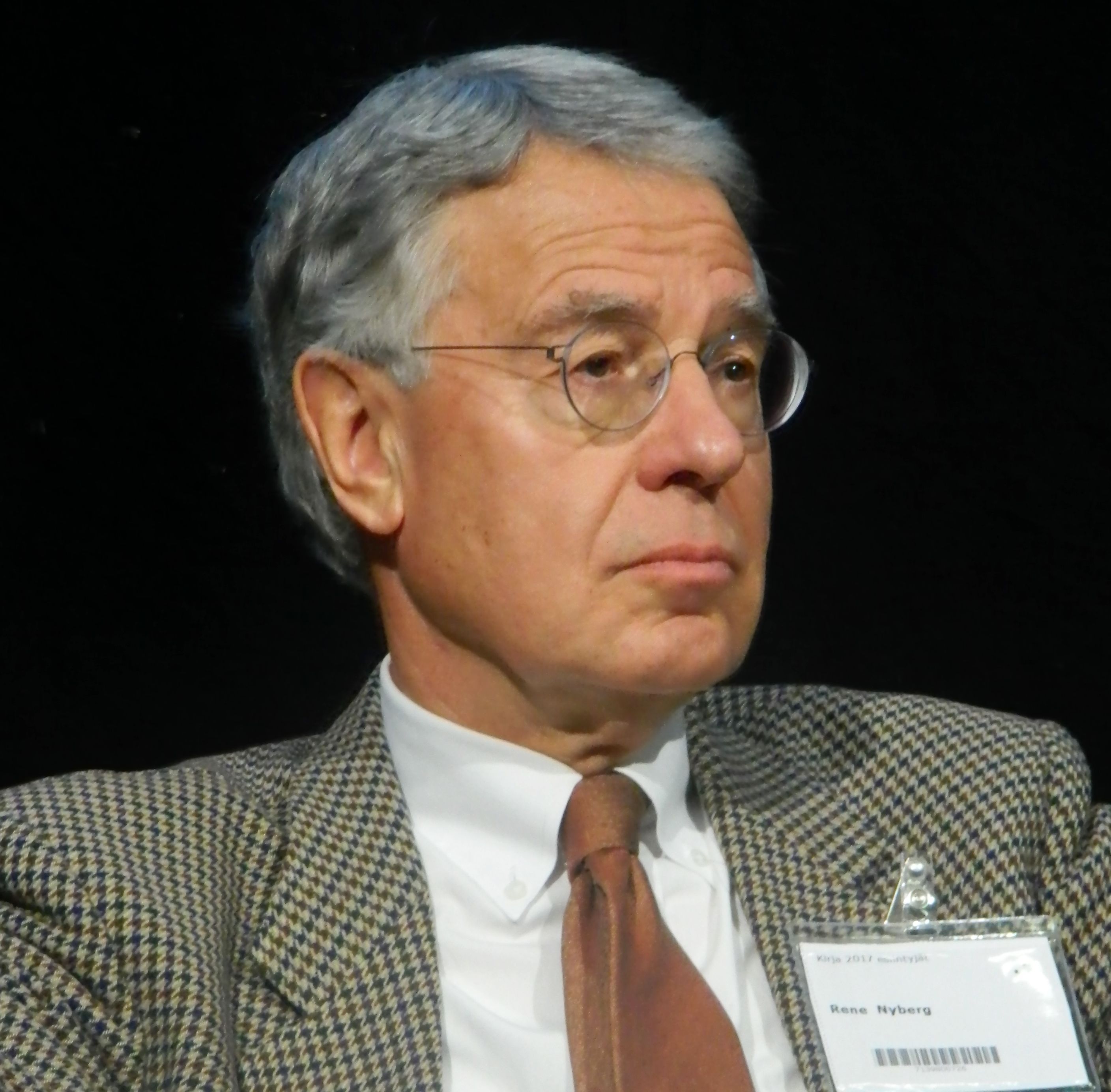
Former Finnish Ambassador to Russia
René Nyberg is the former Finnish Ambassador to Russia.
Recent Work
René Nyberg
René Nyberg
Carnegie does not take institutional positions on public policy issues; the views represented herein are those of the author(s) and do not necessarily reflect the views of Carnegie, its staff, or its trustees.

Are Germany’s economic, industrial, and political struggles becoming a liability for the EU’s ability to rise to the geopolitical moment?

Rym Momtaz, ed.

European Commission President Ursula von der Leyen is about to give her annual address on the state of the EU. Here’s what she won’t—but should—say.
Rym Momtaz

The aftermath of the Ceuta crisis shows Europe has drawn the wrong lessons. Rather than doubling down on failed migration policies, the EU needs to address the underlying roots of such episodes.

Richard Youngs

An overwhelming victory by a far-right-wing party in a small state in eastern Germany will have major repercussions for Chancellor Friedrich Merz’s coalition.

Judy Dempsey

Canadian Prime Minister Mark Carney has twice inspired praise for standing up to U.S. President Donald Trump: at the 2026 World Economic Forum in Davos and on Canada-U.S. trade negotiations. Is Carney showing a third way better than the EU has in dealing with the Trump administration?
Rym Momtaz, ed.