

Commentary
Judy Dempsey
{
  "authors": [
    "Judy Dempsey"
  ],
  "type": "commentary",
  "blog": "Strategic Europe",
  "centerAffiliationAll": "",
  "centers": [
    "Carnegie Endowment for International Peace",
    "Carnegie Europe"
  ],
  "collections": [
    "EU Integration and Enlargement"
  ],
  "englishNewsletterAll": "",
  "nonEnglishNewsletterAll": "",
  "primaryCenter": "Carnegie Europe",
  "programAffiliation": "",
  "programs": [],
  "projects": [],
  "regions": [
    "Europe",
    "Western Europe"
  ],
  "topics": [
    "EU"
  ]
}
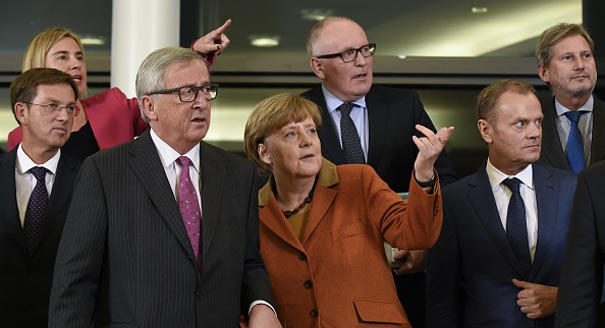
Source: Getty
European leaders should forget about wanting vision. Instead, they need to discover strategy.
The world cannot get enough of her leadership.
On November 22, Angela Merkel will celebrate her tenth anniversary as chancellor of Germany. No mean feat for a leader who grew up in Communist East Germany and made her way up through a male-dominated Christian Democratic Union party. Aware of the resentment toward her ascent to power, Merkel has so far managed to see off many potential challengers.
As if that were not enough, Merkel, as Europe’s most important leader, has had to cope with the global financial crisis, rescue the eurozone and Greece from collapse, and deal with Russia’s proxy war in eastern Ukraine.
From the outside, Merkel cannot be praised enough by Forbes, the Economist, and many other influential publications. Forbes recently listed her as the world’s second most powerful person, ahead of U.S. President Barack Obama. First place went to Russian President Vladimir Putin. The Economist put her on its November 6 cover with the title “The indispensable European.”
These publications all share the same opinion: Merkel has leadership and vision. The implication is that the two go hand in hand. That’s all very well, but what are leadership and vision without strategy?
In fact, leadership and vision can be a toxic combination—even though there is a widely held belief that if a leader has both, it is a good thing. This is a misconception. Vision often implies ideology. And ideology has a built-in intolerance and a sense of infallibility.
The former U.S. president George W. Bush and the former British prime minister Tony Blair had leadership and vision. Both fervently believed that the U.S.-led invasion of Iraq in 2003 was morally and politically right. But that leadership and vision, driven by ideology, had no strategy.
That’s why Merkel’s policy toward the refugees is so interesting. Outsiders praise her policy because it displays leadership and vision, particularly at a time when other leaders have been hesitant—to say the least—in accepting refugees.
The leadership aspect is understandable. Merkel opened the door to the refugees because she believed it was morally and humanely the right thing to do. But it had nothing to do with vision. If Merkel has a vision about what impact the refugees will have on German society, she has never explained it. And if she has a strategy about how her refugee policy could change Germany’s dire demographic trend, she has never articulated it.
As it is, Germans do not like this vision thing, understandably. It has been drummed into them that vision carries huge risk, if not the seeds of destruction.
As for leadership, that is different. Previous German chancellors have shown real leadership. Germany’s first postwar conservative chancellor, Konrad Adenauer, began a rapprochement with Moscow and with Israel. And he understood the existential importance of the European Coal and Steel Community, the precursor of today’s EU. This was Western Europe’s peace ticket, a ticket that was later extended to Germany’s Eastern European neighbors.
And don’t forget Europe’s security umbrella. Amid much controversy, Germany was admitted to NATO in 1955 because Adenauer—and the Americans—saw it as another anchor for Europe’s and Germany’s security.
Helmut Kohl was another impressive German chancellor. He grasped the opportunity for German reunification. But for the sake of European unity, he was prepared to pay a very high price by getting rid of the deutsche mark in favor of a common European currency.
None of the above was about vision. It was based on realpolitik and necessity. Germany needed these anchors. It needed these rapprochements. It needed security. It needed Europe.
As for Merkel, Europe needs her, especially at a time when there is a dearth of leaders to guide the European Union through the many challenges it faces. But Europe also needs leaders who think and act strategically. Maybe, as Merkel enters her eleventh year in office, her leadership will mutate into the strategy that so far has eluded Germany and Europe.

Nonresident Senior Fellow, Carnegie Europe
Judy Dempsey is a nonresident senior fellow at Carnegie Europe
Recent Work
Judy Dempsey
Judy Dempsey
Carnegie does not take institutional positions on public policy issues; the views represented herein are those of the author(s) and do not necessarily reflect the views of Carnegie, its staff, or its trustees.

Trump is distracted and Ukraine wants Europe to step up. The continent’s leaders must find their voice and assert it in talks with Russia.

Alissa de Carbonnel

Mounting economic strain and battlefield losses will not necessarily make the Kremlin less dangerous. They could instead push Moscow toward a more aggressive hybrid campaign designed to test NATO’s Eastern flank, exploit allied hesitation, and fracture European resolve.

Maksym Beznosiuk

Over the past ten years, NATO has held almost as many summits as it did during the entirety of the Cold War. Are they still useful, or is it time to stop holding annual meetings?

Rym Momtaz, ed.
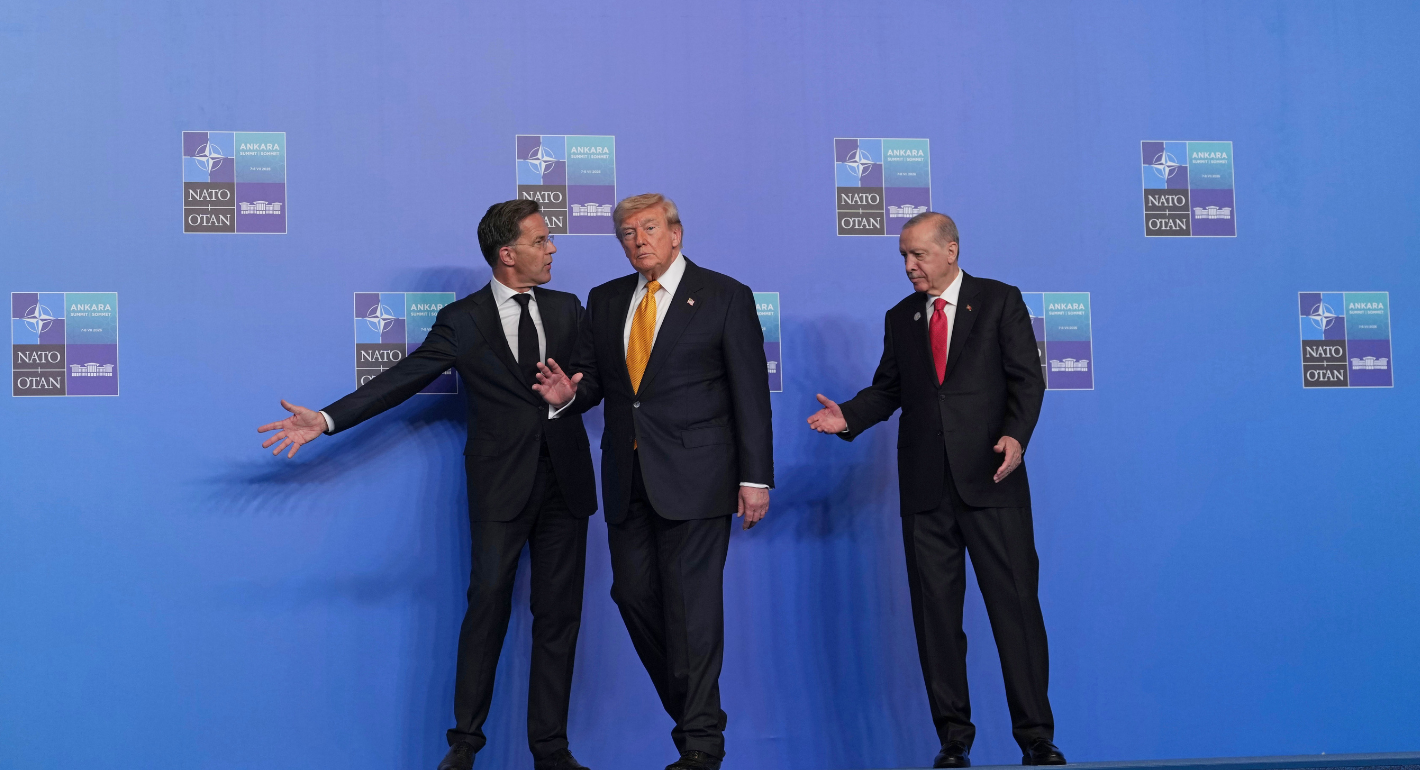
Nearly a year and a half after Europeans leaned into sucking up to Trump, the strategy has produced some benefits when it comes to Ukraine.
Rym Momtaz
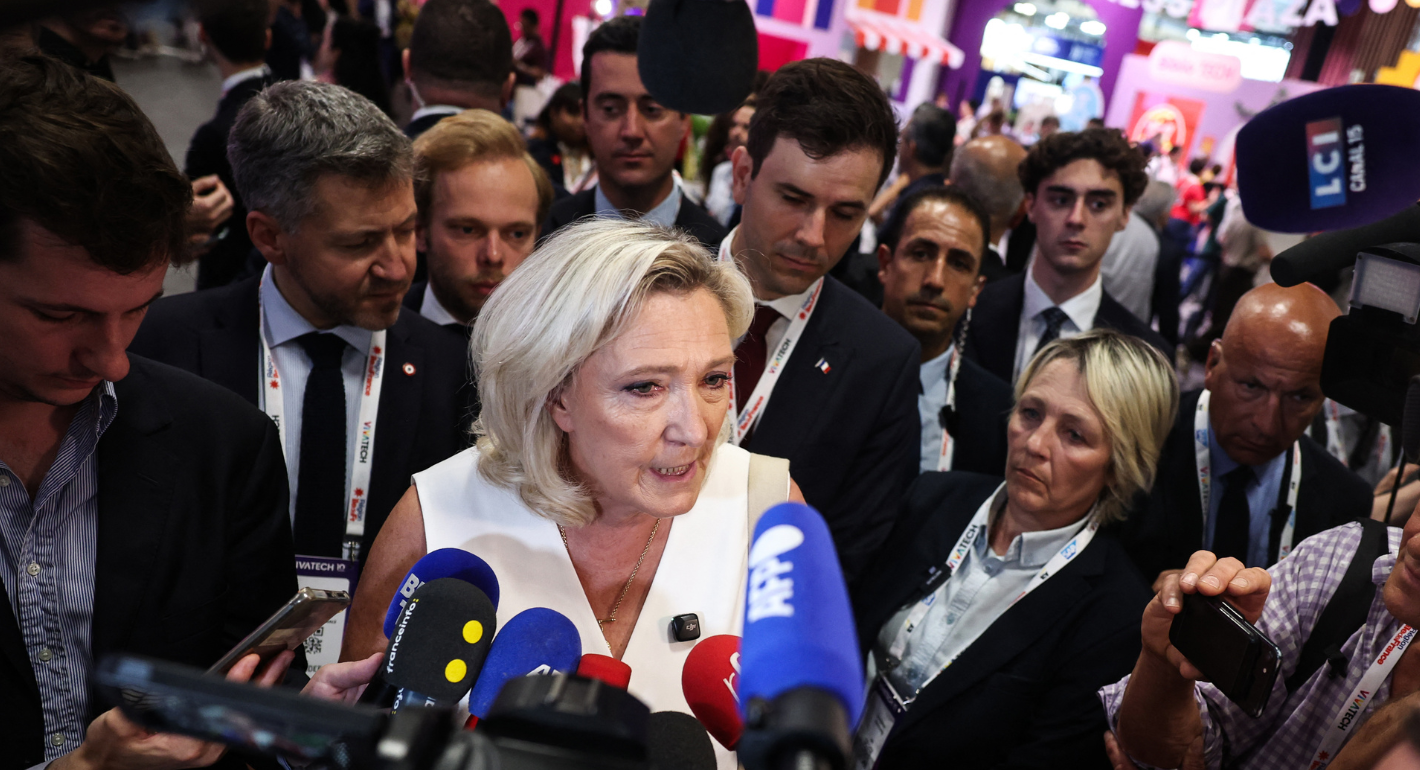
Far-right leader Marine Le Pen can—and will—run in France’s next presidential election. What does the outcome of her appeal against a 2025 embezzlement conviction mean for the country’s political future?
Catherine Fieschi