

Commentary
Judy Dempsey
{
  "authors": [
    "Judy Dempsey"
  ],
  "type": "commentary",
  "blog": "Strategic Europe",
  "centerAffiliationAll": "",
  "centers": [
    "Carnegie Endowment for International Peace",
    "Carnegie Europe"
  ],
  "collections": [
    "Europe’s Eastern Neighborhood"
  ],
  "englishNewsletterAll": "",
  "nonEnglishNewsletterAll": "",
  "primaryCenter": "Carnegie Europe",
  "programAffiliation": "",
  "programs": [],
  "projects": [],
  "regions": [
    "Russia",
    "Europe",
    "Eastern Europe",
    "Caucasus",
    "Azerbaijan",
    "Armenia",
    "Georgia",
    "Ukraine",
    "Belarus",
    "Moldova"
  ],
  "topics": [
    "Foreign Policy",
    "EU"
  ]
}
Source: Getty
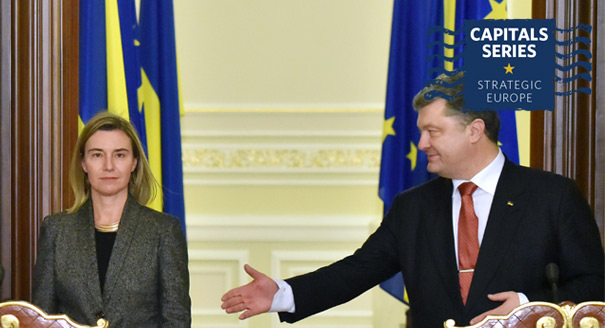
To the EU’s detriment, its policy toward its Eastern neighbors is neither creating an arc of stability nor encouraging democracy.
Between November 6 and December 11, 2015, Carnegie Europe continued its Capitals Series. In this second phase, the focus was on the EU’s Eastern neighbors, which the bloc has so often zigzagged over in trying to establish a coherent policy toward them collectively or bilaterally.

Re-reading the series—independently of the refugee crisis, which is likely to make Europe turn even more inward—one finds little scope for optimism for the lands between the EU and Russia.

When it comes to Eastern Europe, the EU is making fatal mistakes that leave the region without a perspective and render it even more unstable than it already was. Yet these shortcomings could be easily remedied with political will.
The biggest shortcoming is the lack of a long-term strategy toward any of these countries. Even in Ukraine, the EU has no idea what perspective to offer this big country whose political and economic stability has enormous consequences for Europe.Even more worrying, the EU is not applying sufficient pressure on Ukrainian President Petro Poroshenko to implement reforms. Nor is it doing what it has persistently failed to do in both old and new members as well as candidate countries: reach out, as Mikhail Minakov from Kiev wrote, “to local governments and pro-reform NGO networks.”
If the EU wants to have an impact, it is not going to achieve this by talking to the governing elites while failing to engage genuinely independent civil society movements. Didn’t it learn anything from its misguided policies in the Middle East prior to the Arab Spring? Seemingly not.
Look at the EU’s policy toward Azerbaijan. As Emin Milli from Baku wrote, “European countries allowed Azerbaijan to chair the Council of Europe in 2014 while back home the authorities shut down the country’s few remaining independent NGOs and jailed many of their leaders as well as various journalists, politicians, activists, and human rights defenders,” He added that “instead of human rights and democracy, European politicians now speak vaguely of economic engagement.” The ranking of inadequate is generous.
The EU is also fumbling in Belarus. There, the EU’s approach is either to “leave the country in a state of political isolation or to engage with it regardless of its brutal political regime,” wrote Andrei Yahorau from Minsk.
Yet where the EU does engage intensively, it doesn’t have much to show. Over the past several years, Brussels has consistently propped up successive governments in Moldova, believing the pro-European rhetoric of the country’s political elites but at the same time blind or unwilling to address the endemic corruption among those elites. That corruption, exemplified by a huge recent banking scandal, has left the elites intact but the citizens disgusted and disillusioned with their leaders and the EU. No wonder Moldova is rich pickings for Russia.
The EU has the tools to adjust its policies toward its Eastern neighbors.Tweet This
The EU could adjust its policies toward its Eastern neighbors. It has the tools to do so. One is leverage. Why couldn’t the EU introduce smart and targeted sanctions on some key figures in the Azeri government if Brussels is that committed to defending human rights activists?
Another option would be to reach out in a much more systematic way to civil society, be it movements or individuals. That would mean engaging civil society in the allocation of EU funds and supporting independent media. It would also mean the EU breaking out of its obsession of dealing with political elites and being entrenched in the capitals while ignoring the provinces and local activists.
Then there’s the role of student and postgraduate exchanges as well as focusing on building up a strong and independent judiciary, as Nino Lejava from Tbilisi argues. The hunger for access to education through the EU’s Erasmus student exchange program is immense, with both sides coming out as winners.
Above all—and this is the EU’s fundamental failing in Eastern Europe—neither the institutions in Brussels nor the member states have considered the future status of the region. Most of the countries in the Eastern neighborhood do not want to remain the lands in between. They want to be somewhere and something, instead of being stuck in a perpetual but uneven tug-of-war between Russia and the EU. The longer this precarious status continues, the greater the instability will be.

Nonresident Senior Fellow, Carnegie Europe
Dempsey is a nonresident senior fellow at Carnegie Europe
Recent Work
Judy Dempsey
Judy Dempsey
Carnegie does not take institutional positions on public policy issues; the views represented herein are those of the author(s) and do not necessarily reflect the views of Carnegie, its staff, or its trustees.

In Ukraine, Gaza, and Iran, AI warfare has come to dominate, with barely any oversight or accountability. Europe must lead the charge on the responsible use of new military technologies.

Raluca Csernatoni
Montenegro and Albania are frontrunners for EU enlargement in the Western Balkans, but they can’t just sit back and wait. To meet their 2030 accession ambitions, they must make a strong positive case.


Dimitar Bechev, Iliriana Gjoni
Donald Trump has repeatedly bashed NATO and European allies, threatening to annex Canada and Greenland and deploring their lack of enthusiasm for his war of choice in Iran. Is this latest round of abuse the final straw?

Rym Momtaz, ed.
Donald Trump’s repudiation of NATO goes against the Make America Great Again vision of a U.S.-centered foreign policy. If the goal is to preserve the alliance by boosting Europe’s commitments, leaning into France’s vision is the most America First way forward.
Rym Momtaz
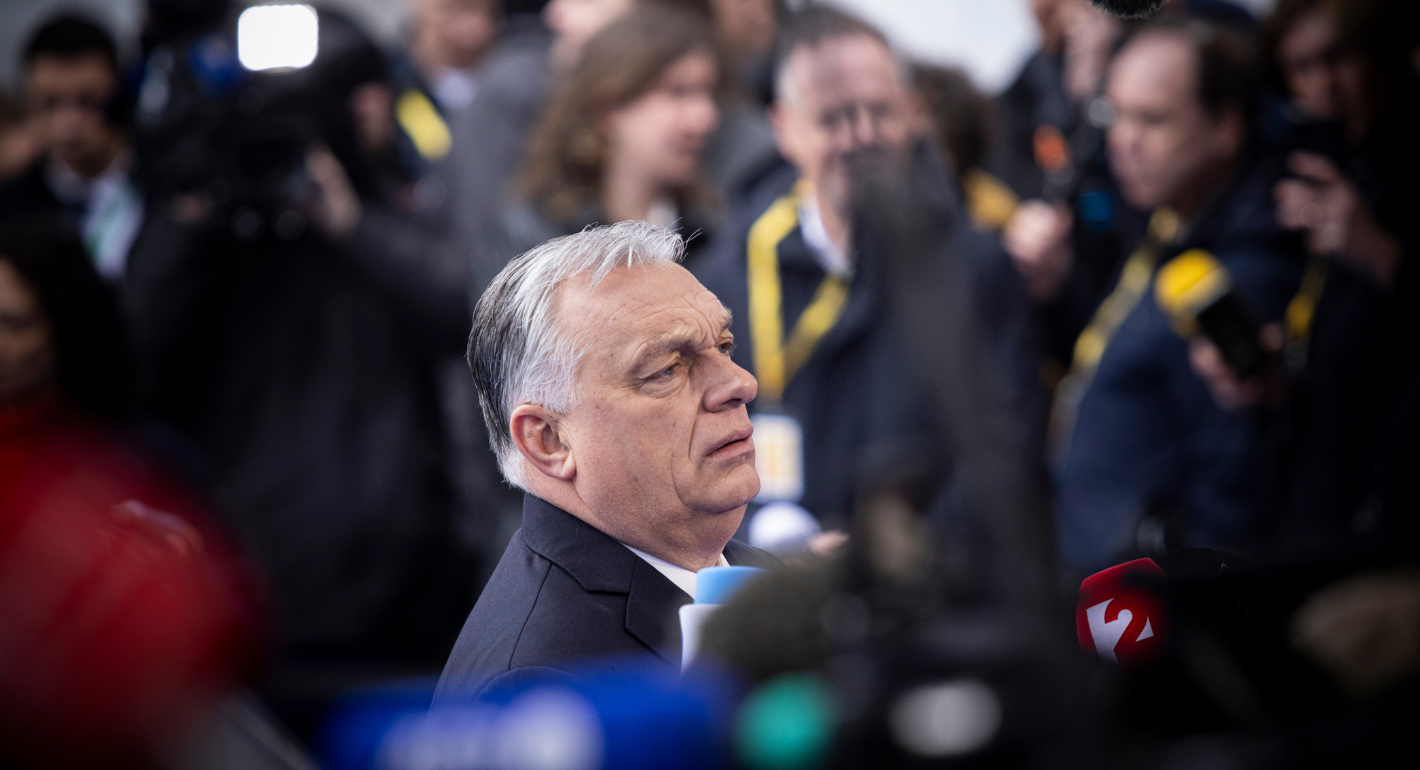
Hungarians head to the polls on April 12 for an election of national and European consequence. Three different outcomes are on the cards, each with their own implications for the EU.

Zsuzsanna Szelényi