

Commentary
Judy Dempsey
{
  "authors": [
    "Judy Dempsey"
  ],
  "type": "commentary",
  "blog": "Strategic Europe",
  "centerAffiliationAll": "",
  "centers": [
    "Carnegie Endowment for International Peace",
    "Carnegie Europe"
  ],
  "collections": [
    "EU Integration and Enlargement"
  ],
  "englishNewsletterAll": "",
  "nonEnglishNewsletterAll": "",
  "primaryCenter": "Carnegie Europe",
  "programAffiliation": "",
  "programs": [],
  "projects": [],
  "regions": [
    "Europe",
    "Western Europe"
  ],
  "topics": [
    "EU"
  ]
}

Source: Getty
At a time when the EU needs a real sense of unity and commitment, member states are increasingly going their own way, often focusing on banal issues.
If anyone wants to understand what is wrong with the European Union, a speech that Jean-Claude Juncker delivered in The Hague on March 3 is a must-read. The president of the European Commission is not known to mince his words. Ever since taking up this executive post in 2014, Juncker has had to take a lot of flak from EU member states and from an increasingly Euroskeptic public that blames the commission for everything that is wrong with the EU.
“The Commission received an unending stream of criticism from many countries, which is understandable,” Juncker said. “They need the Commission to be a scapegoat when they are unable to do what they promised their electorate.”
Juncker wasn’t trying to exonerate the commission. Instead, what he set out to do in this blistering if sometimes bitter indictment of Europe was to imply how the member states were on the path to destroying the EU. It’s as if they have taken for granted the peace that has reigned over Europe since World War II—even though on Europe’s border, there is a proxy war taking place in eastern Ukraine, which Russia invaded in 2014.
In one extreme example, in November 2015, as Juncker said in his speech, the member states decided “how fast Christmas candles should burn.” Yes, how fast candles should burn, how high the flame should be, how the candle should stand straight, and where the candles should be placed. It’s as if, in the middle of the refugee crisis, governments across Europe had nothing better to discuss.
Those in Britain campaigning to pull the country out of the EU can only feel vindicated by this absurd decision, which is now a piece of EU legislation. And no doubt, the commission will be blamed again for regulation that has reached an absurd level. But as Juncker reminded his audience, it wasn’t the commission that made this decision. “In fact it was the 28 Member States, acting at the behest of the candle industry. Only the United Kingdom and the Netherlands abstained.”
Lobbies and interests are nothing new as each EU country tries to defend its turf inside the union. But what is different now, when the EU needs a real sense of unity and commitment, is the growing power of intergovernmentalism. It is the member states, not the commission, that are now wielding power—and with such vigor.
Look at how the Polish government is going its own way over curbing the judiciary and the media. Finland criticized the European Commission for speaking out against the changes in Poland, claiming that this “was not Europe’s business but purely a matter for the Poles themselves.” But as Juncker reminded his audience, “the Treaty clearly calls on the Commission to watch over this kind of thing.”
Increasingly, too, governments are resorting to referenda to distance themselves from Brussels—meaning the commission. Hungary will hold a referendum on whether the country should accept refugees under an EU quota scheme. The Netherlands will vote on whether to accept the EU’s Association Agreement with Ukraine. The British will decide in June whether to remain in the EU.
As Brussels becomes more unpopular, referenda could be the legitimating tool for Euroskeptic governments to go their own way, although this is already happening without these plebiscites. To keep refugees from entering their countries, several governments reimposed border controls within the Schengen passport-free travel zone, while making sure they can continue to reap the enormous benefits of EU membership.
This shortsighted power of the member states has already caused immense damage to Europe’s reputation. For leaders such as Russian President Vladimir Putin, a weak and divided Europe serves his interests, something that German Chancellor Angela Merkel knows all too well.
It is hard to know what will jolt the member states out of their belief that the defense of their own national interests (if you can call how long to can burn a candle a national interest) serves Europe.
The terrorist attacks in France in November 2015 and the determination of refugees and migrants to reach Europe should have been enough to convince all the member states why they need a strong common security policy and viable asylum legislation. Instead, the opposite is happening. This is not sustainable for Europe’s future.

Nonresident Senior Fellow, Carnegie Europe
Judy Dempsey is a nonresident senior fellow at Carnegie Europe
Recent Work
Judy Dempsey
Judy Dempsey
Carnegie does not take institutional positions on public policy issues; the views represented herein are those of the author(s) and do not necessarily reflect the views of Carnegie, its staff, or its trustees.
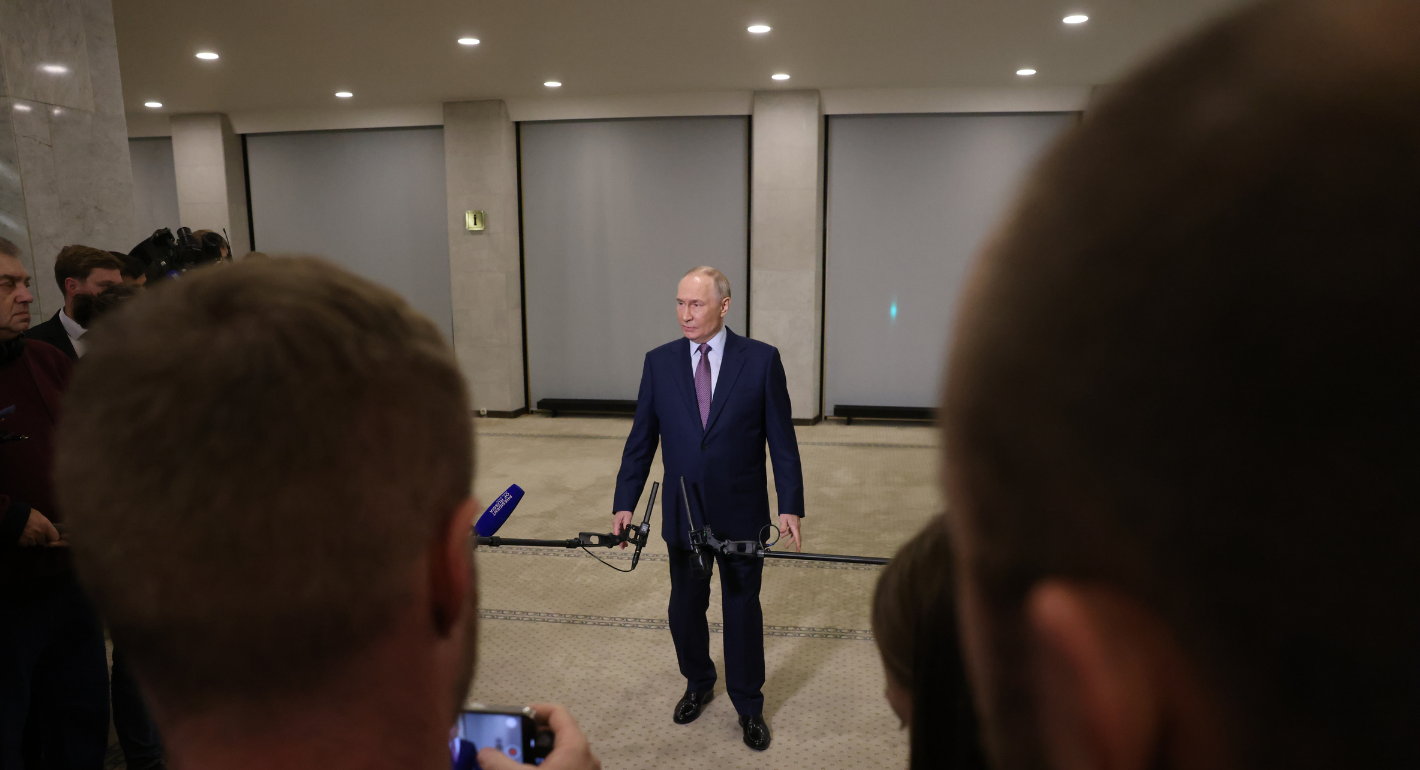
The EU had to compromise to adopt a twenty-first sanctions package against Russia, exposing growing cracks in the union’s resolve. Is this latest, weaker round worth it to keep pressure on Moscow?

Rym Momtaz, ed.

Trump is distracted and Ukraine wants Europe to step up. The continent’s leaders must find their voice and assert it in talks with Russia.

Alissa de Carbonnel

Mounting economic strain and battlefield losses will not necessarily make the Kremlin less dangerous. They could instead push Moscow toward a more aggressive hybrid campaign designed to test NATO’s Eastern flank, exploit allied hesitation, and fracture European resolve.

Maksym Beznosiuk

Over the past ten years, NATO has held almost as many summits as it did during the entirety of the Cold War. Are they still useful, or is it time to stop holding annual meetings?
Rym Momtaz, ed.
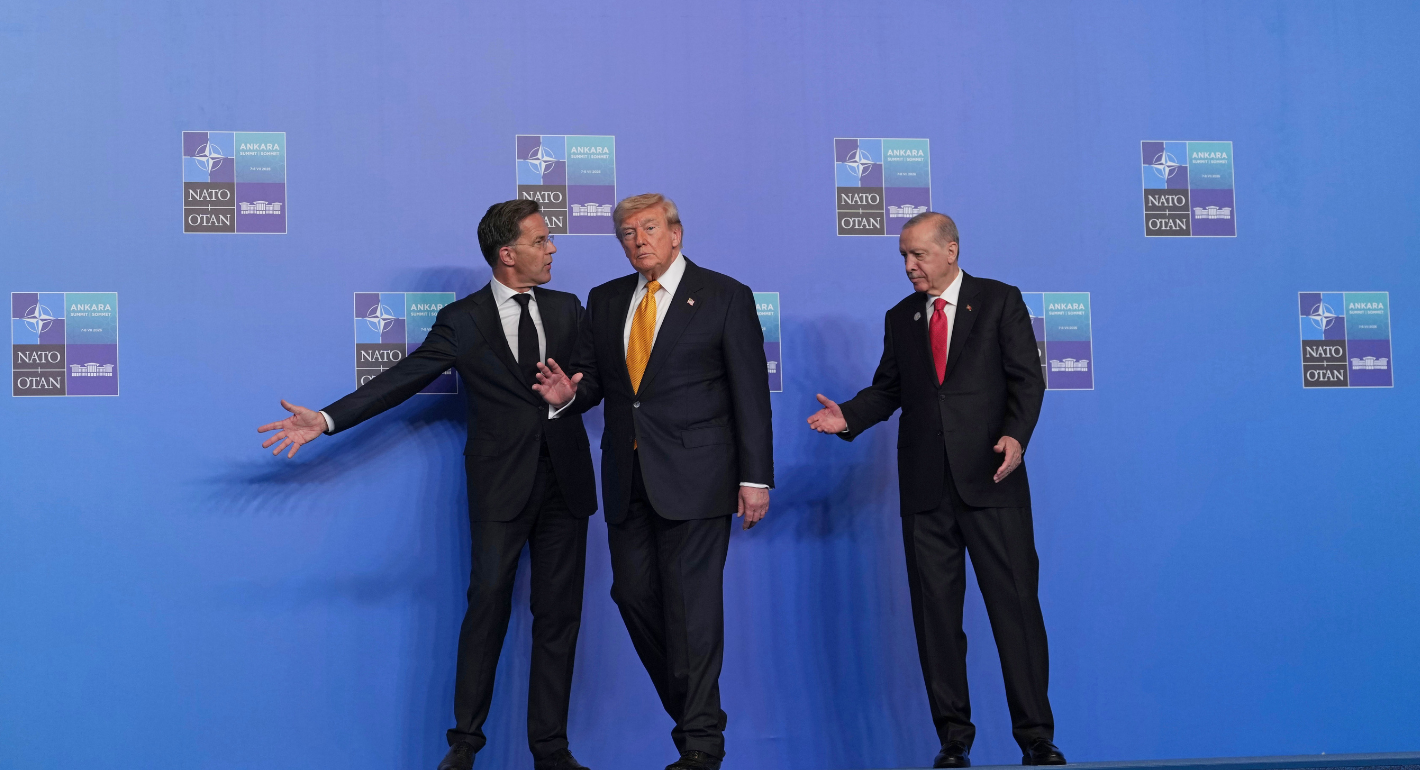
Nearly a year and a half after Europeans leaned into sucking up to Trump, the strategy has produced some benefits when it comes to Ukraine.
Rym Momtaz