

Article
Thomas de Waal
{
  "authors": [
    "Thomas de Waal"
  ],
  "type": "commentary",
  "blog": "Strategic Europe",
  "centerAffiliationAll": "",
  "centers": [
    "Carnegie Endowment for International Peace",
    "Carnegie Europe"
  ],
  "collections": [
    "Turkey’s Transformation",
    "Europe’s Eastern Neighborhood"
  ],
  "englishNewsletterAll": "",
  "nonEnglishNewsletterAll": "",
  "primaryCenter": "Carnegie Europe",
  "programAffiliation": "",
  "programs": [],
  "projects": [],
  "regions": [
    "Europe",
    "Türkiye",
    "Eastern Europe",
    "Middle East",
    "Caucasus",
    "Armenia",
    "Russia"
  ],
  "topics": [
    "Democracy"
  ]
}
Source: Getty
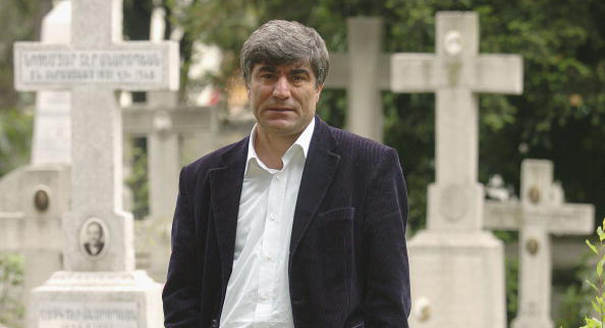
A new English-language biography offers a fresh insight into the inspiring life of the assassinated Armenian-Turkish editor and civil rights leader Hrant Dink.
After a decade of unprecedented opening up to the world, Turkey is closing down again. Journalists and academics are persecuted. President Recep Tayyip Erdoğan has gone to war once more with the militants of the Kurdistan Workers’ Party (PKK), disavowing a peace process he himself launched. Erdoğan rails against so-called terrorists in language reminiscent of the military men of the 1980s he fought hard to weaken, labeling almost anyone who sympathizes with the Kurdish cause a terrorist by association.
It is all a painful contrast with the first years of Erdoğan’s leadership in the mid-2000s, when there was talk of minority rights, media freedom, and EU accession. The regression of the last decade can be summed up as Turkey’s leaders spurning the legacy of Hrant Dink.
One day in Istanbul a little over nine years ago, there was a moment of tragedy that also said much about the hopes of that period. Hrant Dink, an Armenian-Turkish editor and civil rights leader, was assassinated on January 19, 2007, by a teenage nationalist radical. Four days later, in revulsion at the killing, thousands of ordinary Turkish citizens marched through Istanbul in Dink’s funeral procession carrying placards that read “We are all Hrant Dink” and “We are all Armenian.”
It was not just a popular outcry. Erdoğan strongly condemned the assassination, and Turkish ministers attended the funeral. Ahmet Davutoğlu, now Turkey’s prime minister, has consistently praised Dink as a man of courage and peace.
Yet now, Davutoğlu’s government is not only fighting the Kurds again but also laying claim to the Armenian church in the Kurdish-majority city of Diyarbakır, which the local municipality had restored to the Armenian community as a place of worship.
Repressive policies against the Kurds mirror policies of intolerance practiced throughout the history of the Turkish Republic against the country’s much smaller Christian minorities: the remaining Armenians, Assyrians, and Greeks who survived the campaigns by the last Ottoman regime to destroy them.
In Turkey (and not just there), an unexamined past legitimizes an intolerant present. Dink did more than any single individual to tackle the injustices of both past and present. He seized the moment to speak up for Istanbul’s tiny and timid Armenian minority—and not only for them. Straightforward, eloquent, and courageous, he encapsulated thoughts that others could not utter—or were too afraid to—while all the time understanding Turkey’s vulnerabilities as well. On the legacy of the 1915 Armenian Genocide, for example, he memorably said, “Turks and Armenians and the way they see each other constitute two clinical cases: Armenians with their trauma, Turks with their paranoia.”
Dink was a hero in Turkey. Now, finally, the English-language reader gets to read about him, with the publication of the English version of Tuba Çandar’s magnificent 2010 biography.
The English subtitle is An Armenian Voice of the Voiceless in Turkey. Çandar’s brilliant method is to make this a book of voices. It is a sound tapestry consisting of dozens of voices of Dink’s family, friends, and colleagues, a biography as a polyphonic oral history. Dink’s personal evolution proceeds in parallel with a history of modern Turkey. The book begins with the austerity of provincial life in the 1950s. Dink comes of age as a leftist amid the turbulence of the political clashes of the 1970s. He, along with many other civil rights activists, is jailed and tortured after Turkey’s 1980 coup d’état. Here, the polyphony becomes a cacophony as Dink and his cellmates take part in what he calls a “magnificent toilet choir” in jail, singing the Turkish national anthem loudly to avoid a beating from the guards.
The English-language reader can get lost, even when provided with a glossary and chronology and despite a beautiful translation by Maureen Freely. The blizzard of names and references is hard to navigate for anyone unfamiliar with the story of modern Turkey.
But it is worth sticking with. Dink’s personal life story is worthy of a nineteenth-century novel. He was a street child, student, radical, father, prisoner, businessman, gambler. All of these vividly humanize the hero before the reader comes to his public persona as the editor of the Armenian-Turkish newspaper Agos.
Agos was more than just a newspaper. It was also, as one voice in the book says, “a civil society hub” and, as one chapter calls it, a “world” in which many people were able to express for the first time the issues that concerned them.
In Çandar’s book, a fellow Istanbul Armenian, Etyen Mahçupyan, says:
Doors opened in both print and broadcast media, paving the way for a living debate on identity. And through those doors came Hrant, with his warm, sincere voice. And he made the Armenian issue into something that people could hear. By now, he occupied the far-seeing perspectives of a multicultural world of multiple identities. During those last few years, he was no longer talking about the Armenian issue. He spoke out about the Alevis and the Kurds. He was on the side of the girls wearing headscarves when universities refused to admit them on account of their headscarves.
As Dink foresaw, Turkey’s retreat from democracy has also diminished the Turkish state’s willingness to come to terms with its history and with the minorities who suffered from that history. That in turn has hardened parts of the Armenian diaspora against Turkey and perpetuates a cause that exasperated Dink: the international recognition of genocide. In his view, battering Turkey from abroad on the Armenian issue had little effect, and he commented, “I have a hard time accepting the imprisonment of human experience inside a legal term [genocide] that is itself designed to produce a political outcome.”
For Dink, having one foot in the Turkish world and one in the Armenian world was an awkward privilege. One of the voices in the book recounts, “Sometimes, he reminded me of a child struggling to find a way to bring together two sides of an estranged family.” Çandar’s book is a reminder of how badly that vision is missed in Turkey.

Senior Fellow, Carnegie Europe
Thomas de Waal is a senior fellow at Carnegie Europe, specializing in Eastern Europe and the Caucasus.
Recent Work
Thomas de Waal
Thomas de Waal
Carnegie does not take institutional positions on public policy issues; the views represented herein are those of the author(s) and do not necessarily reflect the views of Carnegie, its staff, or its trustees.

Mounting economic strain and battlefield losses will not necessarily make the Kremlin less dangerous. They could instead push Moscow toward a more aggressive hybrid campaign designed to test NATO’s Eastern flank, exploit allied hesitation, and fracture European resolve.

Maksym Beznosiuk

Over the past ten years, NATO has held almost as many summits as it did during the entirety of the Cold War. Are they still useful, or is it time to stop holding annual meetings?

Rym Momtaz, ed.
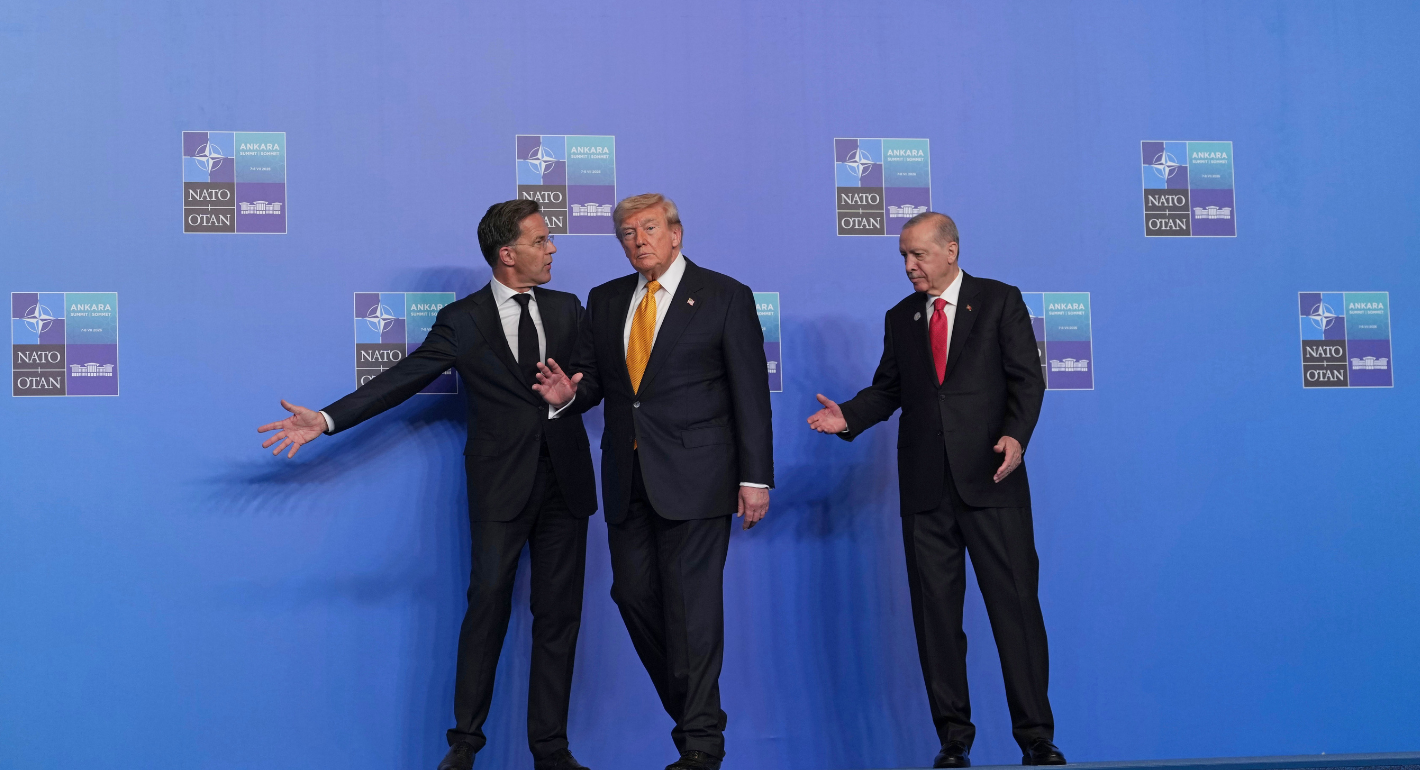
Nearly a year and a half after Europeans leaned into sucking up to Trump, the strategy has produced some benefits when it comes to Ukraine.
Rym Momtaz
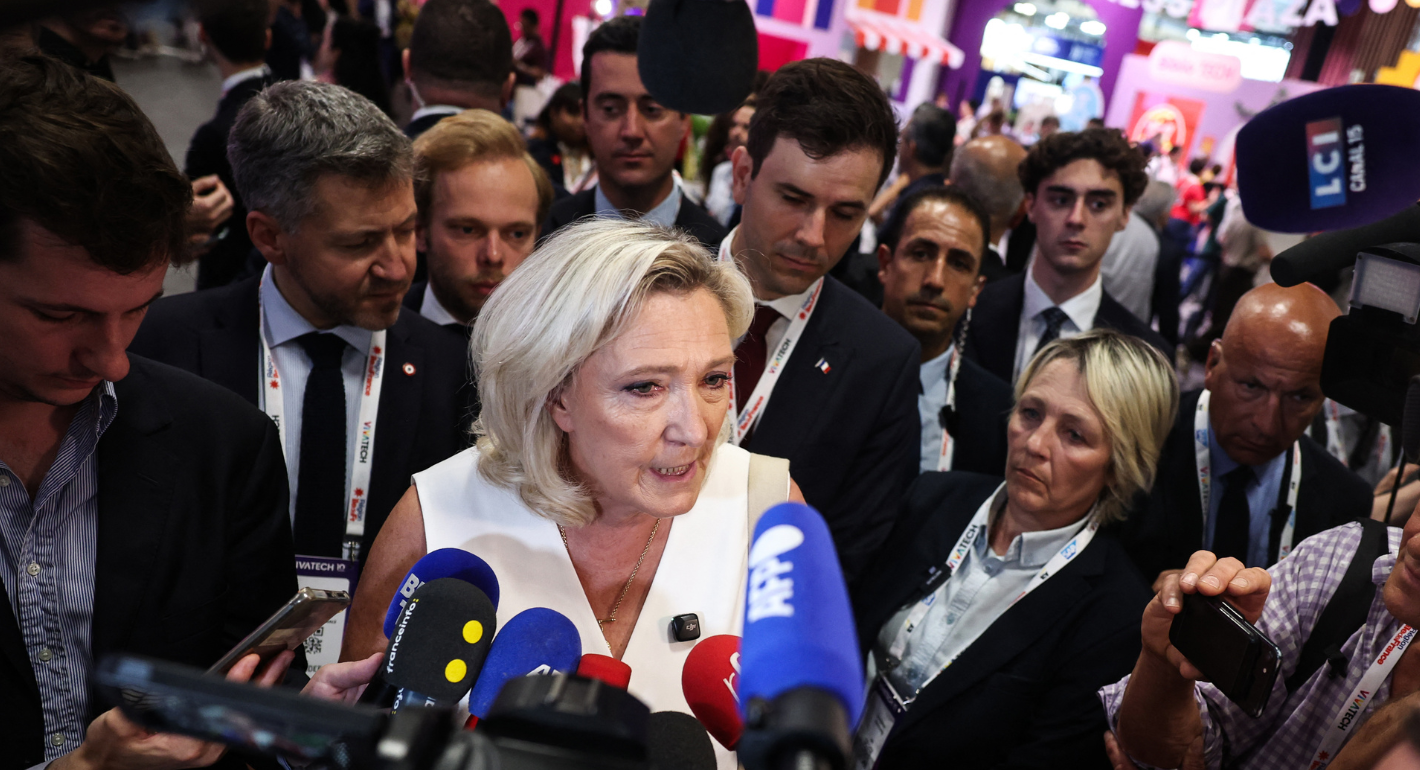
Far-right leader Marine Le Pen can—and will—run in France’s next presidential election. What does the outcome of her appeal against a 2025 embezzlement conviction mean for the country’s political future?
Catherine Fieschi
While Russia is not ready to sue for peace on Europe’s terms, it could still either seek a ceasefire in Ukraine or try escalation. Brussels needs to prepare for both and prioritize that preparation over normative discussions.
Kadri Liik