

Commentary
As we close out another season of Strategic Europe, it is worth taking stock of the deep shifts underway.
Rym Momtaz
{
  "authors": [
    "Gerald Knaus"
  ],
  "type": "commentary",
  "blog": "Strategic Europe",
  "centerAffiliationAll": "",
  "centers": [
    "Carnegie Endowment for International Peace",
    "Carnegie Europe"
  ],
  "collections": [
    "Turkey’s Transformation"
  ],
  "englishNewsletterAll": "",
  "nonEnglishNewsletterAll": "",
  "primaryCenter": "Carnegie Europe",
  "programAffiliation": "",
  "programs": [],
  "projects": [],
  "regions": [
    "Europe",
    "Türkiye",
    "Middle East",
    "Western Europe"
  ],
  "topics": [
    "EU",
    "Migration"
  ]
}

Source: Getty
The current priorities in EU asylum policy are all about implementing the March 2016 refugee deal with Turkey in good faith.
On September 9, 2015, the president of the European Commission, Jean-Claude Juncker, made an emotional appeal to members of the European Parliament: “Europe is a continent where nearly everyone has at one time been a refugee.” Evoking the fate of Spanish republicans, Hungarian revolutionaries, and Czech and Slovak refugees from Communism, he stressed that the EU needed to do more to enforce its high standards for treating asylum seekers: “We Europeans should know and should never forget why giving refuge and complying with the fundamental right to asylum is so important.”
These were uplifting words at a time when the EU was in the middle of the biggest refugee movement it had faced in decades. To put this into perspective: In 2013, an average year, the EU border agency counted 107,400 irregular crossings of people; 431,000 asylum applications were submitted, of which some 132,000 were accepted in the whole EU. In 2015, by contrast, eight times as many people crossed from Turkey into Greece alone, almost 1.3 million asylum applications were submitted, and protection was given to about 300,000, with hundreds of thousands more in Germany waiting to seek refuge.
Unfortunately, though, while Juncker’s speech in the European Parliament was strong on history, it fell flat when it came to policy proposals in this crisis. Juncker made four concrete suggestions. First, to use infringement procedures to ensure that the member states would respect common standards of asylum law already in force. Second, to establish a European border service. Third, to draw up a common European list of safe countries of origin. And fourth, most ambitiously and controversially, to share the burden of refugees within the EU through an unprecedented internal relocation scheme, moving 160,000 asylum seekers from one state to another as a gesture of solidarity and a first step toward a permanent system.
That same week in September 2015, while Juncker spoke emphatically about refugees, another European leader, Hungarian Prime Minister Viktor Orbán, spoke of an unprecedented threat—and a golden opportunity. The threat was the alleged invasion of Europe by the world’s Muslim poor, to which the only remedy was building insurmountable fences. The opportunity Orbán saw was that this development might force the EU finally to turn its back on any commitment to universal human rights.
In September, such rhetoric still seemed to isolate Orbán. Half a year later, he had become an inspiration for many European leaders, even as his rhetoric had grown ever shriller. On March 15, 2016, he explained: “In Brussels they are constructing schemes to transport foreigners [to Hungary] as quickly as possible and to settle them here among us. . . . The purpose of settling these people here is to redraw the religious and cultural map of Europe and to reconfigure its ethnic foundations, thereby eliminating nation states.” This was the language of war. Orbán continued: “Mass migration is like a slow and steady current of water which washes away the shore. It appears in the guise of humanitarian action, but its true nature is the occupation of territory; and their gain in territory is our loss of territory.”
What helped Orbán gain influence was the simple fact that none of the policies proposed by other European leaders had worked. Take Juncker’s September proposals. There was no progress on building a European border service, and it remained unclear how such a service would have made any difference in the Aegean crisis in any case. There was no EU list of safe countries, which again would not have applied to those people who had crossed the sea. There were a few infringement procedures, but not once did the commission take a member state to court over standards, which kept eroding. Finally, the flagship EU relocation scheme turned into a farce. By mid-March 2016, fewer than 1,000 out of 160,000 people had been moved, while hundreds of thousands continued to cross the Aegean Sea, even in harsh conditions.
Fortunately for the EU, this was not the end of the story. On March 6, German Chancellor Angela Merkel—Orbán’s nemesis during this crisis—and Turkish Prime Minister Ahmet Davutoğlu agreed on a deal. It foresaw the return to Turkey of those who reached Greece, on the basis of existing EU asylum law, and it proposed—once numbers had fallen—a large-scale voluntary resettlement in the EU of Syrian refugees from Turkey.
The goal of the deal was “to break the business model of the smugglers and to offer migrants an alternative to putting their lives at risk.” This arrangement entered into force as an EU-Turkey agreement on March 20. Immediately, the numbers of people crossing the Aegean dropped, from more than 1,150 each day in the first twenty days of March to less than 160 a day in the first two weeks of April.
The EU has a second chance to live up to its promises on #refugees.Tweet This
This direct impact creates a huge opportunity for the EU, including the commission and its president, offering the union a second chance to live up to its promises of September 2015. Today, the first, second, and third priorities in EU asylum policy are all about implementing the EU-Turkey agreement in good faith.
The first priority is to control the inflow of people across the Aegean, a route that has cost thousands of lives. To do so, the EU has committed that everyone arriving on the Greek islands will be offered a chance to apply for asylum. Those judged to be safe in Turkey will, following an interview and a chance to appeal, be sent back to that country. This applies to Syrians who already have, or are able to receive, protection in Turkey and to others who can apply for conditional refugee status there. To allay doubts whether it really is safe to return these people to Turkey is not hard: the EU could give the UN refugee agency a list of everyone it is returning, and Turkey should invite the agency to report regularly on what happens to these people, offering full access and transparency.
With rapidly falling numbers of people arriving in Greece, all this is feasible. But Greece cannot deal with all asylum claims alone if it also wants to avoid detaining for long periods and under bad conditions the people arriving on the Greek islands. To preempt this, the European Commission should urgently put together a credible asylum support mission so that asylum procedures are both fast and fair. Such an EU asylum support mission, which would send case workers to a frontline state to ensure it can implement EU law, would be an important precedent.
Second, it then becomes essential to successfully resettle large numbers of Syrian refugees from Turkey, as the EU has promised. This is not something the European Commission can do: it will take a coalition of willing member states led by Germany to do this. But the commission can make the case for the plan and help develop methods to safely resettle unprecedented numbers as part of this deal. The EU needs to learn from the failure of relocation and make resettlement a central element of any future EU asylum policy.
The EU needs to get better at helping #refugees rebuild their lives.Tweet This
Finally, the EU needs to get better at helping refugees rebuild their lives where they are. Part of the EU-Turkey deal is an unprecedented grant of €6 billion ($6.8 billion) over three years to help refugees in Turkey. Spending this money well, and to maximum effect, would be a major contribution to improving conditions in the country that hosts the most refugees in the world today.
If the EU pulled all of this off, it would achieve several effects. It would improve the lives of hundreds of thousands of refugees in Turkey and in the EU. It would put the EU in a credible position to appeal to other rich countries to take in serious numbers of refugees through resettlement. And it would return Orbán to well-deserved isolation. Last but not least, it would show that the EU can help solve problems its citizens care about without selling its soul.
Gerald Knaus is the chairman of the European Stability Initiative, a Berlin-based think tank that has written extensively on the current refugee crisis.
Gerald Knaus
Former Visiting Researcher, Moscow Center
Knaus was a visiting researcher at the Carnegie Moscow Center. He is the founder of the European Stability Initiative (ESI), a Berlin-based think tank working on South East Europe, Turkey, the Caucasus, and EU enlargement.
Carnegie does not take institutional positions on public policy issues; the views represented herein are those of the author(s) and do not necessarily reflect the views of Carnegie, its staff, or its trustees.

As we close out another season of Strategic Europe, it is worth taking stock of the deep shifts underway.

Rym Momtaz
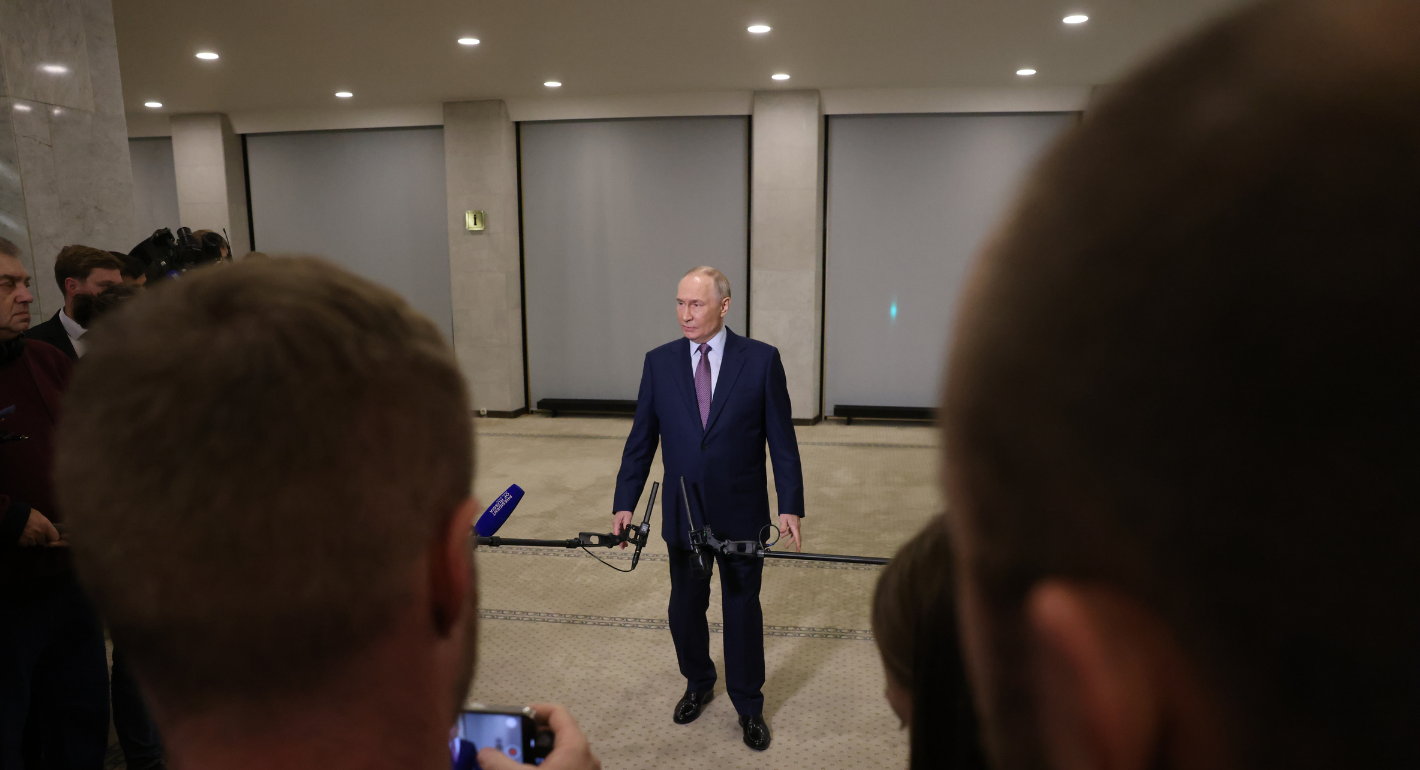
The EU had to compromise to adopt a twenty-first sanctions package against Russia, exposing growing cracks in the union’s resolve. Is this latest, weaker round worth it to keep pressure on Moscow?
Rym Momtaz, ed.

Trump is distracted and Ukraine wants Europe to step up. The continent’s leaders must find their voice and assert it in talks with Russia.

Alissa de Carbonnel

Mounting economic strain and battlefield losses will not necessarily make the Kremlin less dangerous. They could instead push Moscow toward a more aggressive hybrid campaign designed to test NATO’s Eastern flank, exploit allied hesitation, and fracture European resolve.

Maksym Beznosiuk

Over the past ten years, NATO has held almost as many summits as it did during the entirety of the Cold War. Are they still useful, or is it time to stop holding annual meetings?
Rym Momtaz, ed.