

Commentary
With its public finances in shambles, the far right polling at 35 percent ahead of the 2027 presidential election, and a growing protest movement, is France’s crisis a threat to the EU’s geopolitical awakening?
Rym Momtaz, ed.
{
  "authors": [
    "Stratos Pourzitakis"
  ],
  "type": "commentary",
  "blog": "Strategic Europe",
  "centerAffiliationAll": "",
  "centers": [
    "Carnegie Endowment for International Peace",
    "Carnegie Europe"
  ],
  "collections": [],
  "englishNewsletterAll": "",
  "nonEnglishNewsletterAll": "",
  "primaryCenter": "Carnegie Europe",
  "programAffiliation": "",
  "programs": [],
  "projects": [],
  "regions": [
    "Europe",
    "Western Europe"
  ],
  "topics": [
    "EU",
    "Economy",
    "Climate Change"
  ]
}
Source: Getty
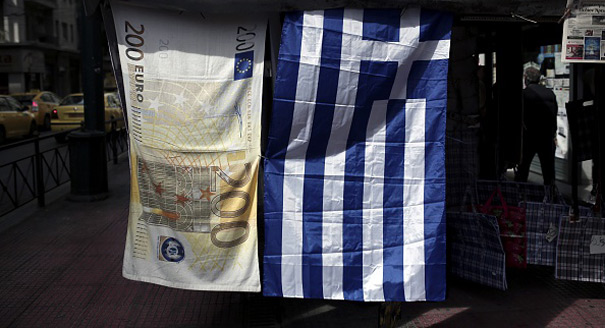
An agreement on debt relief for Greece would be a step in the right direction. But it should be combined with measures to alleviate the country’s fiscal constraints.
Two Eurogroup meetings of eurozone finance ministers may save the day—and, most likely, the summer holidays—for many bureaucrats in European capitals. On May 9, Greece and its creditors agreed on a number of measures that are expected to pave the way for a successful review of the country’s program under the European Stability Mechanism, the eurozone bailout fund, and for the start of discussions on Greek debt relief. That deal raised the prospects of an agreement on such debt relief at the next meeting on May 24. Widespread concerns about the future of the Greek economy have been replaced by the solace that no repeat of the Greek drama that shook the world’s markets in summer 2015 will take place this year.
There is no denying that there has been some good news for Greece. But a closer look reveals that the process to reach an agreement has taken a heavy toll on the country, while discussions on debt relief have been misleading.
The hostile rhetoric adopted by most parties to the debt talks had cast a shadow over the negotiations and given rise to speculation about a new stalemate that could bring Greece to the verge of collapse. Once again, all sides had been hampered by their counterproductive negotiation tactics. Having retreated multiple times from its fading redlines, the Greek government now faces an eroding level of popularity.
Meanwhile, the German leadership appears determined to avert any plan for a debt haircut, ruling out any discussion on the issue—at least for now. This position stems not only from Germany’s dogmatic economic orthodoxy but also from political calculations as support for German Chancellor Angela Merkel’s Christian Democratic Union has been in free fall due to the unfolding refugee crisis. The IMF, by contrast, has dragged its feet, rejecting any agreement that would not include debt relief.
Despite the gloomy prospects, things are not as bad as some had predicted. An agreement will almost certainly be inked at the next Eurogroup meeting, while the prospects for a discussion on the sustainability of Greek debt appear more promising than ever. Furthermore, the Greek government recently passed a number of pain-inflicting measures that have been characterized as preconditions for an agreement.
All in all, the Greek prime minister deserves credit for keeping his legislative team tightly disciplined despite the government’s fragile parliamentary majority and his previous anti-austerity rhetoric. In the long run, an agreement on future debt relief might bring some positive benefits to the Greek economy, as it could boost investors’ confidence and would pave the way to Greece’s inclusion in the European Central Bank’s quantitative easing program.
Remarkably, the Greek government and, to a lesser extent, EU leaders appear overoptimistic about an agreement on debt relief, trying to brand it as a groundbreaking success in the making. One needs to keep in mind, however, that debt relief is by no means a game changer in the Greek crisis as the structure of Greek debt makes it manageable at least until 2023.
In fact, even the need for debt relief is contested, with some analysts suggesting alternative calculations that lead to different conclusions. The European Stability Mechanism claims that a proper sustainability assessment should take into consideration the structure and favorable lending terms of Greek debt. The body has also argued that if the net present value of Greece’s 2012 debt restructuring is subtracted, then the value of the debt falls by 49 percent, suggesting that the debt is actually not that high.
What is more, the IMF’s decision to adopt a threshold for Greece’s debt sustainability of 15 percent instead of 20 percent due to Greece’s weak policy framework can be challenged if analysts adopt a more positive scenario for the country’s prospects. Columnist Hugo Dixon criticized the IMF’s approach, stressing that the fund has been treating Greece as an emerging country.
Greeks should not expect more from their creditors than a declaration of good intentions or some vague promises to start discussions on debt relief in the near future. After all, the terms of Greece’s loans will remain concessionary until 2023, while no debt relief action is expected to take place before 2018. But even if it is promised, the much-discussed debt relief should not be taken for granted. The ongoing power game between Germany and the IMF as well as Greece’s weak policy framework do not leave much room for optimism for a concrete plan that all sides will firmly support. It is possible that Berlin and capitals in the German sphere of influence will impede future debt relief even if there is an initial agreement.
That would not be the first time that promising words from Greece’s European partners turned out to be hot air. The former Greek prime minister Antonis Samaras still laments the unfulfilled promises he received in 2012 of debt relief in the event of primary surpluses. To make matters worse, it remains doubtful that Athens would be able to fulfill all its obligations stemming from a debt relief agreement.
This leads to the elephant in the room, which is the sustainability of the program adopted by the coalition government of the far-left Syriza party and the right-wing Independent Greeks. The Greek economy will have to achieve a primary budget surplus target of 3.5 percent of GDP for years. Athens will be operating under the sword of Damocles of new cuts in public spending and tax hikes if this aim is not met.
Expecting the country to meet such ambitious goals is close to utopian from a political and economic perspective, especially when the measures introduced do not address the root causes of the problem. In particular, Greece’s primary surpluses are projected to be achieved mainly through tax rises and reduced social security contributions. After many years of painful austerity, the tax-paying capacities of most Greeks have been exhausted, while the burden of skyrocketing social security contributions and imposed capital controls have made entrepreneurship near to impossible. A poll in March 2016 showed that approximately 9,000 small and medium-sized enterprises in Greece were considering transferring their headquarters abroad.
Even if Greece is granted debt relief, the economy will remain uncompetitive with deep structural problems that cover a wide array of social, political, and economic aspects. The Greek public sector remains very inefficient, the higher education system has been undergoing a great leap backward, and the private sector is still inward looking and dependent on public spending.
Despite sporadic laws put forward by the current and previous governments, no political leadership in Greece has attempted to convince people of the necessity of painful changes. This is not only because the political cost is high but also because Greek elites do not believe in these changes in the first place. Instead, they prefer to impose new taxes and reduce public expenses horizontally.
While a unanimously accepted agreement on debt relief would be a step in the right direction, it should be combined with a downward revision of Greece’s fiscal constraints. Most importantly, however, debt relief should stop being the rug under which the Greek government sweeps its aging problems.
Stratos Pourzitakis is a PhD candidate at the Department of Government and International Studies at Hong Kong Baptist University, under the scholarship of the EU Academic Program in Hong Kong.
Stratos Pourzitakis
Greek Ministry of Finance
Carnegie does not take institutional positions on public policy issues; the views represented herein are those of the author(s) and do not necessarily reflect the views of Carnegie, its staff, or its trustees.

With its public finances in shambles, the far right polling at 35 percent ahead of the 2027 presidential election, and a growing protest movement, is France’s crisis a threat to the EU’s geopolitical awakening?

Rym Momtaz, ed.

Ahead of a tough winter for Ukraine, Donald Trump’s swing back toward Russia bodes ill. But instead of panicking, Kyiv’s European allies are focusing on action.
Rym Momtaz

While the EU and European governments are embracing the much-lauded middle-power moment, this entails three difficult conundrums.

Richard Youngs

Much has been said of the changes Brussels is trying to make to the EU enlargement process. Here’s why gradual integration might—or might not—be the answer.

Dimitar Bechev

The European Commissioner for Trade is headed to China. But after President Xi’s bridge-building visit to Washington, can a more isolated EU overcome Beijing’s stranglehold on critical raw materials? Who will blink first?
Rym Momtaz, ed.