

Commentary
The EU can impose sanctions but struggles to enforce them without the United States. With Washington increasingly disinterested in backing European interests, the bloc must now fend for itself.
Nicu Popescu, Tiago Antunes
{
  "authors": [
    "Daniel Keohane"
  ],
  "type": "commentary",
  "blog": "Strategic Europe",
  "centerAffiliationAll": "",
  "centers": [
    "Carnegie Endowment for International Peace",
    "Carnegie Europe"
  ],
  "collections": [
    "Transatlantic Cooperation",
    "EU Integration and Enlargement",
    "Brexit and UK Politics"
  ],
  "englishNewsletterAll": "",
  "nonEnglishNewsletterAll": "",
  "primaryCenter": "Carnegie Europe",
  "programAffiliation": "",
  "programs": [],
  "projects": [],
  "regions": [
    "Europe",
    "North America",
    "United States",
    "Western Europe",
    "United Kingdom",
    "France"
  ],
  "topics": [
    "EU",
    "Security",
    "Military"
  ]
}
Source: Getty
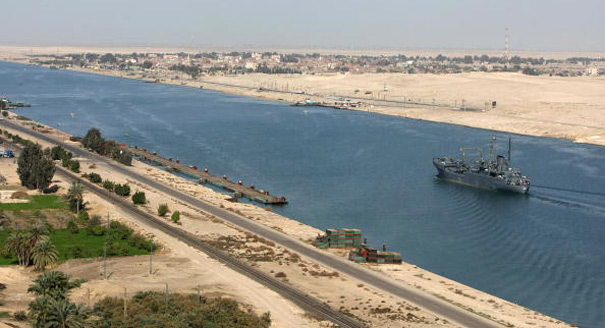
The 1956 Suez Crisis created a rift between London and Paris that has hampered European defense ever since.
Almost exactly sixty years ago, France and the UK invaded an area along the Suez Canal. Egypt’s leader, Gamal Abdel Nasser, had nationalized the canal a few months before, and for a variety of reasons London and Paris wanted to reverse this move. But the Franco-British military operation was halted within days, because the United States cut off emergency loans to the UK (France had to oblige because its troops were under British command).
The Suez Crisis had a number of very significant knock-on effects, ranging from the first deployment of UN peacekeepers to the promotion of pan-Arab nationalism. Plus, if there was any prior doubt, the episode proved that the United States was the undisputed leader of the Western world.
Suez also created a rift between London and Paris that has cursed NATO and the EU ever since, and that the impending British exit from the EU may only reinforce. Given the multitude of security challenges currently confronting transatlantic allies—from an unpredictable Russia to wars in the Middle East to a more assertive China—the West can ill afford diverging strategic outlooks between France and the UK, Europe’s leading military powers.
Since Suez, France and Britain have often fundamentally differed, in large part because they took diametrically opposing strategic lessons from that affair. The UK learned to never leave the side of the United States, giving the special relationship a renewed lease of life. The French learned to never trust the British nor rely on the Americans.
Former British prime minister Harold Macmillan later suggested that Britain should resemble the Athenians advising the Roman Empire. Charles de Gaulle, the former French president, adopted an attitude like that of the Spartans defying the Persian Empire. The general subsequently blocked British entry into the European Economic Community (which later became the EU), developed an independent nuclear deterrent, and took France out of the NATO military command.
Much has happened since then, with multiple nuances and contradictions for historians to research. But the Franco-British rift has never fully healed, and current (sometimes divisive) debates about NATO and EU defense policy reflect these fluctuations from entente cordiale to entente glaciale.
The EU could develop a defense policy only because France and the UK agreed that it should, at Saint-Malo in 1998. But the momentum behind this initiative was stopped by the 2003 Iraq War, which bitterly divided Paris and London. As a result, EU-NATO cooperation was hampered for years.
New leadership in both countries brought fresh ideas and a desire to repair relations. Former French president Nicolas Sarkozy reversed de Gaulle’s decision and rejoined the NATO military command in 2009, and he and former British prime minister David Cameron signed the Lancaster House treaties in 2010 to deepen bilateral military cooperation.
Moreover, London and Paris not only agreed on paper but were also prepared to act together, leading the charge for what became NATO’s intervention in Libya in early 2011. For a moment, it seemed that the curse of Suez had lifted.
But Paris could still not convince London of the merits of EU defense, and that policy floundered. Cameron, increasingly under pressure from Euroskeptic members of parliament to hold an EU membership referendum, could not be seen to approve anything that smacked of a Euro-army, such as an EU headquarters for operations.
Since the Brexit decision in June, Suez-legacy instincts are being reinforced. In a speech on October 6, French President François Hollande said, “There are countries – European countries – that think the United States will always be there to protect them. . . . Those European countries must be told . . . that if they don’t defend themselves they will no longer be defended.” Hollande continued: “The United States no longer has the same idea of defence protection [and] Europeans must realize that . . . they must also be a political power with a defence capability.”
In contrast, British Defense Secretary Michael Fallon said on September 5, “That Trans-Atlantic link remains fundamental to the UK and to the whole of Europe. . . . Given the overlap in NATO and EU membership, it’s surely in all our interests to ensure the EU doesn’t duplicate existing structures. . . . Our Trans-Atlantic alliance works for the UK and for Europe making us stronger and better able to meet the threats and challenges of the future.”
If these Franco-British positions harden and cause a political rift in transatlantic relations, it seems that NATO and the EU will continue to be burdened with the curse of Suez for the foreseeable future. But it need not be such a binary choice. Similar to the way former U.S. president Dwight Eisenhower ended the Franco-British adventure in 1956, the attitude of the next U.S. president will be decisive—whoever she or he is.
The United States needs allies that are able both to contribute more to NATO (like the UK) and to act autonomously if necessary (like France via the EU or in other ways). As Jeremy Shapiro from the European Council on Foreign Relations has noted, “Europeans would be wise to take more proactive measures to visibly increase the burdens they bear within the alliance and their capacity for independent and cooperative action under the next US president.”
The next U.S. president, therefore, would be wise to encourage a rapprochement of views between the UK and France on the relationship between EU defense policy and NATO. Washington should also push London and Paris to jointly lead monitoring of the implementation of the EU-NATO cooperation program agreed to at NATO’s Warsaw summit in July 2016. This would help ensure that the union and the alliance work more closely and effectively together.
In the end, the curse of Suez will be lifted only when France and the United Kingdom realize that they are both right.
Daniel Keohane is a senior researcher at the Center for Security Studies at ETH Zürich.
Daniel Keohane
Carnegie does not take institutional positions on public policy issues; the views represented herein are those of the author(s) and do not necessarily reflect the views of Carnegie, its staff, or its trustees.

The EU can impose sanctions but struggles to enforce them without the United States. With Washington increasingly disinterested in backing European interests, the bloc must now fend for itself.


Nicu Popescu, Tiago Antunes

Russia is testing the waters of NATO’s mutual defense clause. What do strikes in Romanian territorial waters mean for the alliance’s posture toward Moscow?

Dimitar Bechev

With its public finances in shambles, the far right polling at 35 percent ahead of the 2027 presidential election, and a growing protest movement, is France’s crisis a threat to the EU’s geopolitical awakening?

Rym Momtaz, ed.

Ahead of a tough winter for Ukraine, Donald Trump’s swing back toward Russia bodes ill. But instead of panicking, Kyiv’s European allies are focusing on action.
Rym Momtaz

While the EU and European governments are embracing the much-lauded middle-power moment, this entails three difficult conundrums.

Richard Youngs