

Commentary
Judy Dempsey
{
  "authors": [
    "Judy Dempsey"
  ],
  "type": "commentary",
  "blog": "Strategic Europe",
  "centerAffiliationAll": "",
  "centers": [
    "Carnegie Endowment for International Peace",
    "Carnegie Europe"
  ],
  "collections": [
    "Europe’s Eastern Neighborhood"
  ],
  "englishNewsletterAll": "",
  "nonEnglishNewsletterAll": "",
  "primaryCenter": "Carnegie Europe",
  "programAffiliation": "",
  "programs": [],
  "projects": [],
  "regions": [
    "Russia",
    "Europe",
    "Eastern Europe",
    "Ukraine"
  ],
  "topics": [
    "Democracy",
    "Political Reform",
    "EU",
    "Civil Society"
  ]
}
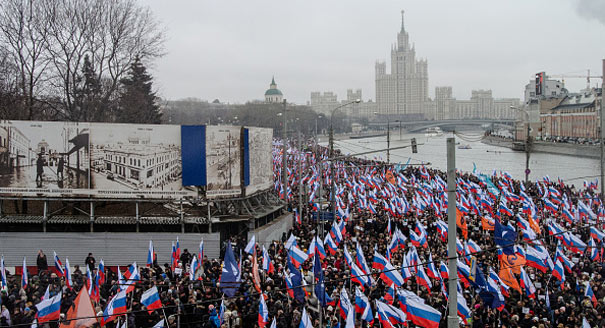
Source: Getty
With sufficient numbers, individuals and civil society movements can bring about change and dismantle corrupt institutions—but it demands huge courage.
Ilya Yashin is a fearless campaigner for human rights and the rule of law. As deputy chairman of Russia’s small People’s Freedom Party and leader of the country’s Solidarity movement, Yashin worked alongside Boris Nemtsov, an ardent critic of Russian President Vladimir Putin who was assassinated in February 2015.
Besides campaigning for fair elections and democratic reforms and writing about Russia’s war in eastern Ukraine, Yashin has recently focused on how corruption underpins Putin’s United Russia party. For Yashin and his supporters, that kind of state-sponsored corruption is destroying the fabric of Russian society.
Yashin’s new report, “Criminal Russia Party,” which he presented to the German Council on Foreign Relations in Berlin on October 10, documents in impressive detail how “organized crime groups supported by the ruling party establish control over Russia and simply steal the national wealth.”
Yashin believes the West could and should impose targeted sanctions on more and more Russian individuals, given how these people amass great wealth through corruption only to spend it in the West. But ultimately, he believes it will be civil society and movements of individuals that will break this kind of political system.
Yashin and his colleague Ilya Zaslavsky, an activist who in Berlin presented a report on the role of oligarchs in the Russian economy and developments in the business community, have no illusions about how long it will take to change Russia.
“At the moment, society is apathetic,” Yashin said. “But the good news is that tens of thousands of people have read my report, which we distributed, and hundreds of thousands have read it online. Change is not yet there. I appeal to young people to compete with the state propaganda.”
It is going to demand courage for people like Yashin to challenge a regime that holds most of the instruments of power, especially the economy, the media, and the security services.
Indeed, because people feel powerless to end corruption or change the system, some choose to emigrate. A recent report by the International Monetary Fund argued that those who leave unwittingly give the corrupt elites a lifeline. The report made the point that the weaker the institutions are back in their home countries, the more likely the young and educated are to feel powerless to change the situation, so they leave to seek better opportunities abroad. In short, if emigration leads to the exit of those who could be agents of change, it could also slow the improvement of institutions.
As for the elites and oligarchs in power, they are pleased to see the back of their critics, even though this exodus also leads to a brain drain when the time comes to build new and democratic institutions.
Yet what is happening in Ukraine shows that if there is sufficient courage and strength in numbers, people power can make a difference. The sheer pressure of individuals and civil society movements across most of Ukraine is leading to reforms. This is despite the continuing ubiquitous power of the oligarchs, who, as Yashin and Zaslavsky point out in their studies, are agile at adapting to new circumstances, especially Western sanctions.
In the case of Ukraine, the European Union, the United States, and international financial institutions have played an immensely important role by linking political, economic, and social reforms to financial assistance and by being present on the ground. There is little doubt that if that pressure and scrutiny were lifted, the momentum for reform and real change would be lost. The negative consequences for Ukraine—and the West—would be enormous.
In Russia, by contrast, civil society and independent organizations have been targeted for being so-called foreign agents by virtue of the fact that some receive grants from European governments or donors to survive. The scope for change is for the moment limited.
In a completely different case, take recent events in Poland. The conservative Law and Justice government had proposed tightening the country’s abortion laws, which are already among the strictest in Europe. The government completely underestimated the reaction. Tens of thousands of women, dressed in black, took to the streets in Warsaw and other cities to oppose the new measures. Old and young women were not going to tolerate the state interfering in their private lives. The government caved in. The proposals were dropped.
This protest movement was spontaneous and widespread. Of course, the political constellation and strong democratic institutions in Poland (despite being challenged by Law and Justice) bear no comparison with those in Russia. But the case shows that people’s power, when mobilized, can make a difference.
It was people’s power that brought down the Communist systems across Central and Eastern Europe and the Baltic states in 1989. It was people’s power that changed the systems in Georgia and Ukraine, although both show how difficult it is to dislodge oligarchic structures. Yashin, who keeps defying the Kremlin at considerable risk, remains unconvinced about the permanence of corrupt regimes.

Nonresident Senior Fellow, Carnegie Europe
Dempsey is a nonresident senior fellow at Carnegie Europe
Recent Work
Judy Dempsey
Judy Dempsey
Carnegie does not take institutional positions on public policy issues; the views represented herein are those of the author(s) and do not necessarily reflect the views of Carnegie, its staff, or its trustees.
French President Emmanuel Macron has unveiled his country’s new nuclear doctrine. Are the changes he has made enough to reassure France’s European partners in the current geopolitical context?

Rym Momtaz, ed.
European reactions to the war in Iran have lost sight of wider political dynamics. The EU must position itself for the next phase of the crisis without giving up on its principles.

Richard Youngs
Europe isn’t as weak in the new geopolitics of power as many would believe. But to leverage its assets and claim a sphere of influence, Brussels must stop undercutting itself.

Dimitar Bechev
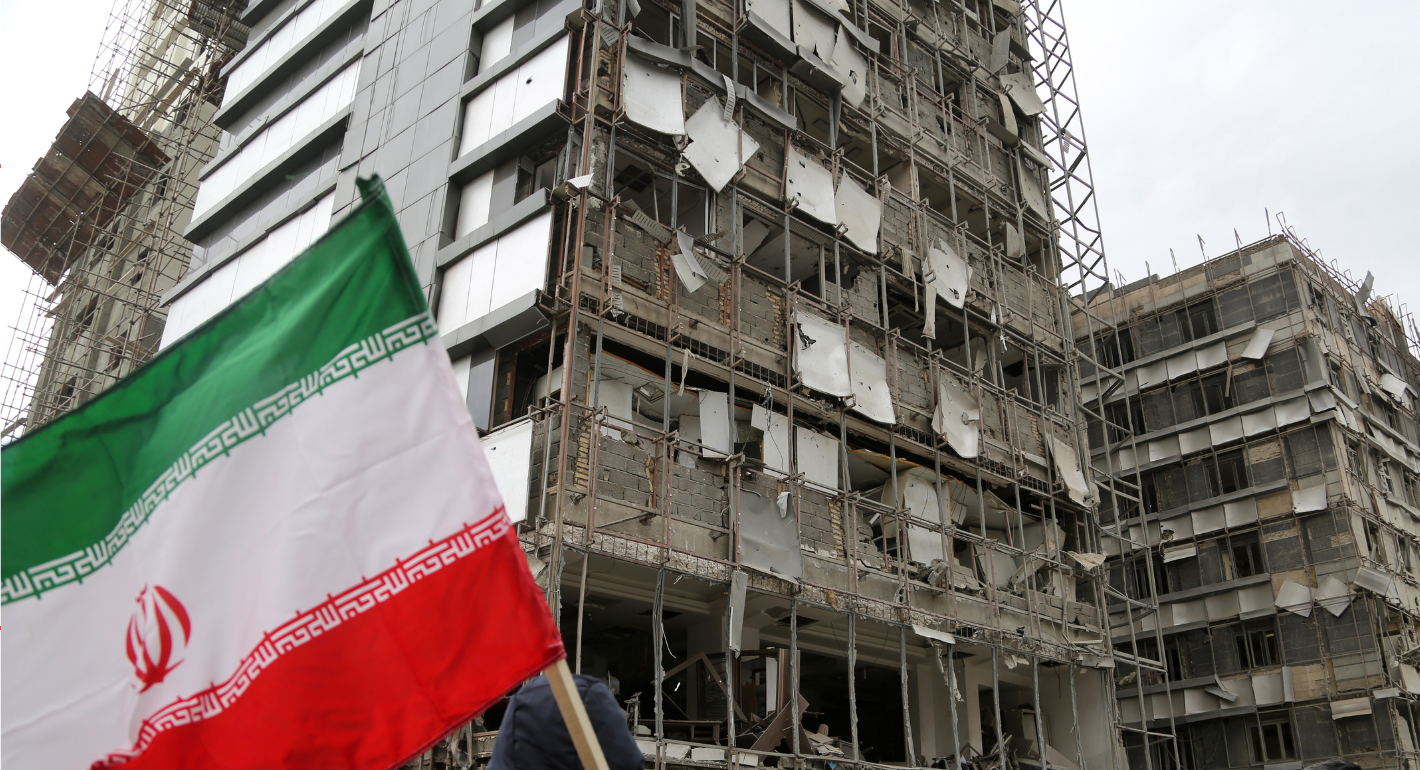
Europe’s reaction to the war in Iran has been disunited and meek, a far cry from its previously leading role in diplomacy with Tehran. To avoid being condemned to the sidelines while escalation continues, Brussels needs to stand up for international law.

Pierre Vimont
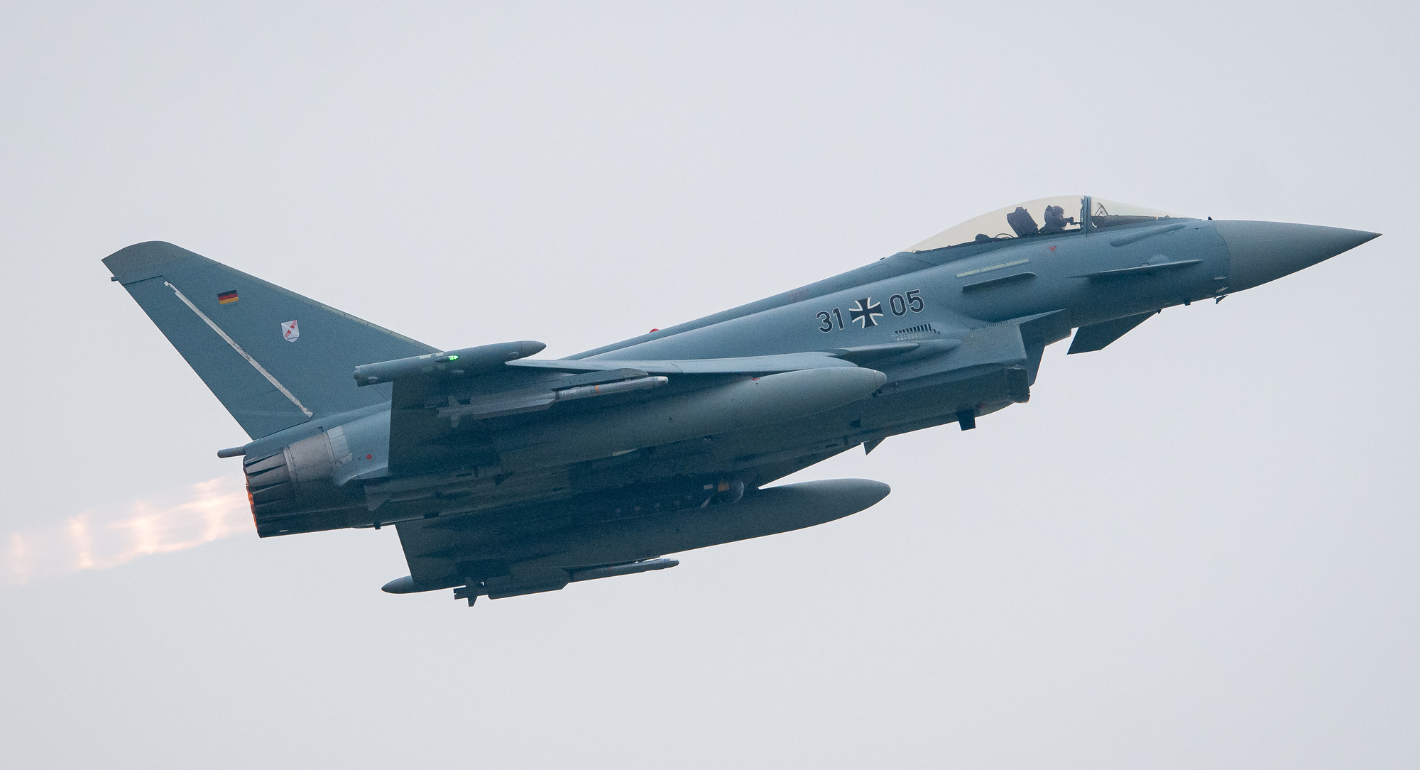
France and Germany’s failure to agree on the Future Combat Air System (FCAS) raises questions about European defense. Amid industrial rivalries and competing strategic cultures, what does the future of European military industrial projects look like?
Rym Momtaz, ed.