

Commentary
Judy Dempsey
{
  "authors": [
    "Judy Dempsey"
  ],
  "type": "commentary",
  "blog": "Strategic Europe",
  "centerAffiliationAll": "",
  "centers": [
    "Carnegie Endowment for International Peace",
    "Carnegie Europe"
  ],
  "collections": [
    "Transatlantic Cooperation"
  ],
  "englishNewsletterAll": "",
  "nonEnglishNewsletterAll": "",
  "primaryCenter": "Carnegie Europe",
  "programAffiliation": "",
  "programs": [],
  "projects": [],
  "regions": [
    "Europe",
    "North America",
    "Western Europe"
  ],
  "topics": [
    "Foreign Policy",
    "Security",
    "Military",
    "EU"
  ]
}
Source: Getty
Money is not the problem with Europe’s defense. It is duplication and inefficiency, which undermine efforts for an integrated security policy.
The election of Donald Trump as the next U.S. president has again put the spotlight on the parlous state of European defense structures. Recent reports consistently show how duplication, inefficiency, and excessive spending on personnel eat into the €200 billion ($214 billion) that EU member states collectively spend each year on defense. If all these issues were tackled, EU countries as a whole could make savings of up to €26 billion ($28 billion).
Here is a brief and by no means exhaustive list of Europe’s defense inefficiencies.
First are high personnel costs. Greece tops the list. Greece’s defense budget amounts to an estimated 2.38 percent of the country’s GDP for 2016. In practice, that should make Athens a shining example for other NATO members when it comes to meeting the target set by NATO at its 2014 summit in Wales that all allies should spend at least 2 percent of GDP on defense. Alas, of its total defense budget of €4.2 billion ($4.6 billion), Greece spends almost 70 percent on personnel.
Belgium, which spends a miserly 0.85 percent of its GDP on defense, dedicates a whopping 80.80 percent of that amount to personnel. Portugal and Slovenia are up there too, shelling out 77.98 percent and 81.60 percent of their respective defense budgets on personnel. In contrast, the United States and Britain allocate about 37 percent of their defense expenditures to personnel.
It’s easy to see how such high personnel costs have an impact on overall EU spending on defense investment. A 2013 report by the European Parliament on this subject is still relevant today. It pointed out that between 2007 and 2011, research and development expenditure in the EU had decreased by more than 19 percent, while research and technology spending had fallen by more than 20 percent. NATO statistics confirm these trends.
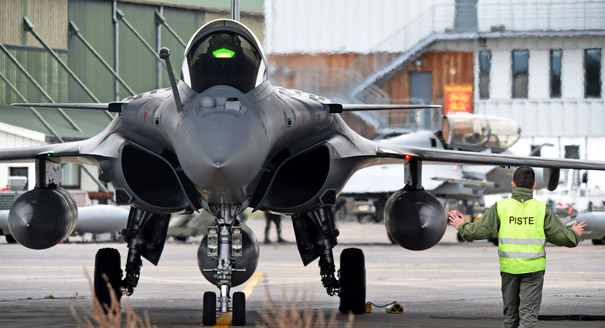
Then there’s the issue of different and expensive military systems. Europe has three separate fighter aircraft—Eurofighter, Gripen, and Rafale—let alone all the different helicopters. The European Parliament report spelled out the big disadvantages of such different systems. Production chains are differentiated and incompatible. There is no economy of scale. Interoperability remains difficult, training is different for each model, and separate logistics are needed for different missions.
The lack of interoperability—the ability of military (and civilian) staff from different countries to work together—is a major and growing problem. It affects cooperation not only between the United States and its European allies, particularly as U.S. military technology becomes more sophisticated, but also among Europeans.
As NATO and EU officials point out, the two organizations have different doctrines, logistics, command-and-control structures, and cultures. The EU also encountered difficulties among member states in setting up its border agency Frontex, designed to protect the bloc’s external frontiers. There is no common European training handbook for member states’ police forces.
Some countries are beginning to tackle these problems by building clusters and forging closer ties to reduce duplication and improve interoperability. The defense ministries of Germany and the Netherlands are sharing equipment and carrying out joint exercises. Germany, Denmark, and Poland are working closely together too. The Nordic states, which consist of NATO and non-NATO countries as well as EU and non-EU countries, have clusters too. If not all EU member states can pool and share military equipment, at least the development of clusters is a practical option.
This brings up the need for a common doctrine. Before Britain voted on June 23 to leave the EU, it had blocked the EU from establishing its own military headquarters. Now that Britain has opted to leave, several member states have seized on this chance to finally have one. In practice, the EU needs a military headquarters. But for it to be effective, EU member states would have to deal with all the inefficiencies that dog the bloc’s defense structures.
It is hard to see a military headquarters as such dealing with these shortfalls, especially because member states are determined to protect their own defense industries—not to mention the issue of national sovereignty when it comes to defense. Trump’s election, however, might be the catalyst for European leaders to ask how they are going to defend the EU and its citizens. It’s a big might.

Nonresident Senior Fellow, Carnegie Europe
Judy Dempsey is a nonresident senior fellow at Carnegie Europe
Recent Work
Judy Dempsey
Judy Dempsey
Carnegie does not take institutional positions on public policy issues; the views represented herein are those of the author(s) and do not necessarily reflect the views of Carnegie, its staff, or its trustees.

A summer of escalation in the Black Sea has hurt Ukraine economically and is exacerbating world food security. A truce is needed—as is a broader reframing of Europe’s Ukraine strategy.

Thomas de Waal

Are Germany’s economic, industrial, and political struggles becoming a liability for the EU’s ability to rise to the geopolitical moment?

Rym Momtaz, ed.

European Commission President Ursula von der Leyen is about to give her annual address on the state of the EU. Here’s what she won’t—but should—say.
Rym Momtaz

The aftermath of the Ceuta crisis shows Europe has drawn the wrong lessons. Rather than doubling down on failed migration policies, the EU needs to address the underlying roots of such episodes.

Richard Youngs

An overwhelming victory by a far-right-wing party in a small state in eastern Germany will have major repercussions for Chancellor Friedrich Merz’s coalition.
Judy Dempsey