

Commentary
Hungarians head to the polls on April 12 for an election of national and European consequence. Three different outcomes are on the cards, each with their own implications for the EU.
Zsuzsanna Szelényi
{
  "authors": [
    "Wojciech Konończuk"
  ],
  "type": "commentary",
  "blog": "Strategic Europe",
  "centerAffiliationAll": "",
  "centers": [
    "Carnegie Endowment for International Peace",
    "Carnegie Europe",
    "Carnegie Russia Eurasia Center"
  ],
  "collections": [
    "Europe’s Eastern Neighborhood"
  ],
  "englishNewsletterAll": "",
  "nonEnglishNewsletterAll": "",
  "primaryCenter": "Carnegie Endowment for International Peace",
  "programAffiliation": "",
  "programs": [],
  "projects": [],
  "regions": [
    "Europe",
    "Eastern Europe",
    "Ukraine"
  ],
  "topics": [
    "Democracy",
    "Political Reform",
    "EU"
  ]
}
Source: Getty
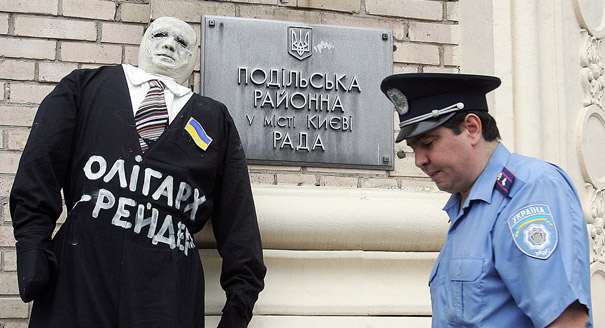
Neither the Euromaidan revolution nor reform efforts have succeeded in undermining Ukraine’s oligarchic system, which still shapes the country’s politics.
After being elected president of Ukraine in June 2014, Petro Poroshenko said, “The key position that I am starting from is the deoligarchization of the economy. We’re trying to build order in the country, but [oligarchs] are the chaos.” This was one of many political promises to remove oligarchs’ influence over the country. However, this rhetoric was not followed by any real steps.
The Ukrainian oligarchic system, which arose in the late 1990s as a result of a pathological symbiosis between power and big business, has once again demonstrated its extraordinary vitality and capacity to adapt to changing political circumstances. As a consequence, oligarchic groups did not disappear after the 2013–2014 Euromaidan antigovernment protests but simply evolved to find fresh common ground with the new authorities.
Oligarchs have managed to retain their status as important players in Ukraine’s politics and economy due to a number of factors. Four of these are crucial.
First, oligarchs’ dominance of certain strategic sectors of the economy, their financial capabilities, and their organizational strength contrasted sharply with the weakness of central government bodies, which did not make up a coherent political camp and often had divergent interests. The oligarchs took advantage of these divisions, and in a poorly managed state with an ineffective and corrupt bureaucracy, they became the best-organized group.
The key source of the oligarchs’ power is the wealth they have concentrated in their hands. To understand this phenomenon, it is enough to pay attention to a few numbers. According to Deloitte’s Central Europe Top 500 report, which surveyed the largest companies in Central and Eastern Europe, up to 64 percent of Ukrainian firms are controlled by local private capital. In no other country in the region is local capital as strong as in Ukraine. For instance, it controls 29.4 percent of the largest companies in Poland, 23.2 percent in the Czech Republic, and 3 percent in Hungary. At the same time, the share of foreign capital in the ownership structure of Ukrainian companies is the weakest among Central and Eastern European countries, at just 12 percent (compared with 18.1 percent in Croatia, 54.4 percent in Poland, and 83.2 percent in Hungary).
Second, oligarchic groups still possess powerful instruments to defend their positions, in particular control over dozens of members of parliament and ownership of nearly all major television stations. The TV channels owned by just four oligarchs—Ihor Kolomoyskyi, Dmytro Firtash, Viktor Pinchuk, and Rinat Akhmetov—together cover almost 80 percent of the Ukrainian TV market.
Third, any deoligarchization of Ukraine to genuinely strip the strongest oligarchs of influence, including by prosecuting them, would have been difficult to carry out in the conditions of the ongoing war with Russia. Such efforts would inevitably have led to open political conflict because of possible retaliatory action by those oligarchs who control many sectors of the economy, which would have seriously destabilized Ukraine’s internal situation.
Fourth and most importantly, the oligarchic system has entered a tactical alliance with sections of the post-Euromaidan political elite who needed their support but were too weak or lacked the political will to effectively undermine the oligarchs’ positions. This has enabled the oligarchs to retain much of their political and business influence.
As a result, two and a half years after the Euromaidan revolution, oligarchs remain a permanent element of Ukrainian politics, with all the negative consequences that has for the reform process, which is only just getting under way. Gas-sector reform—one of the most successful in post-Euromaidan Ukraine, even though not yet fully implemented—eliminates the main source of corrupt income for the ruling elite but has not undermined the oligarchic system as a whole.
While the pre-Euromaidan oligarchs have preserved much of their influence, new political and business groups that can also be called oligarchic have started to emerge in parallel around the Ukrainian leadership. Due to their close links to the most senior leaders in Ukraine, members of these groups have taken control of many important state-owned companies and have been trying to build up their own financial and business bases. Their efforts have been motivated by a deep-rooted if informal principle of Ukrainian politics, according to which political power depends on the value of the business assets controlled by any given party.
The experience of the last dozen or so years proves that the oligarchic economic model cannot provide a viable alternative to an effectively functioning market, because it cannot create stable sources of growth. On the contrary, the oligarchs, who have taken over entire branches of the economy, have been interested mainly in maximizing their profits and have cared little about the development and modernization of their businesses.
The oligarchs are strong because the state is weak. They are the beneficiaries of all the shortcomings of Ukraine—systemic corruption, the lack of an independent judiciary, and an inefficient administration. The success of any efforts to weaken their influence will depend primarily on whether Ukraine’s present-day facade institutions can be replaced with institutions that are robust and independent. That is the most important goal of the reform process.
The presence of oligarchic groups remains a crucial obstacle impeding the modernization of the Ukrainian state. The fragmentary reforms carried out so far have not curbed their influence to any significant degree. This means that for the foreseeable future, oligarchs will continue to act as important stakeholders in Ukrainian politics. Only consistent reforms—including deregulation of the economy, an effective fight against corruption, introduction of independent and transparent institutions, and effective implementation of the EU’s Association Agreement—can undermine the oligarchs’ clout.
It is doubtful that this process will be quick. The Ukrainian ruling elite has too little political will, and the oligarchic groups still have potent instruments for defending their assets and political positions. Hence, only radical reforms can change the current antidevelopment model and finally bring Ukraine’s post-Communist transition to an end.
It seems that the negative phenomenon of Ukrainian oligarchy has not been fully recognized in the West, and has therefore been ignored and remains poorly studied. However, without unraveling the behind-the-scenes workings of the oligarchs, it is impossible to understand the real mechanisms at work in Ukrainian politics.
Wojciech Konończuk is a senior fellow at the Center for Eastern Studies (OSW) in Warsaw.

Wojciech Konończuk
Carnegie does not take institutional positions on public policy issues; the views represented herein are those of the author(s) and do not necessarily reflect the views of Carnegie, its staff, or its trustees.
Hungarians head to the polls on April 12 for an election of national and European consequence. Three different outcomes are on the cards, each with their own implications for the EU.
Zsuzsanna Szelényi
The far right failed to win big in France’s municipal elections. But that’s not good news for the country’s left wing, which remained disunited while the broader right consolidated its momentum ahead of the 2027 presidential race.
Catherine Fieschi
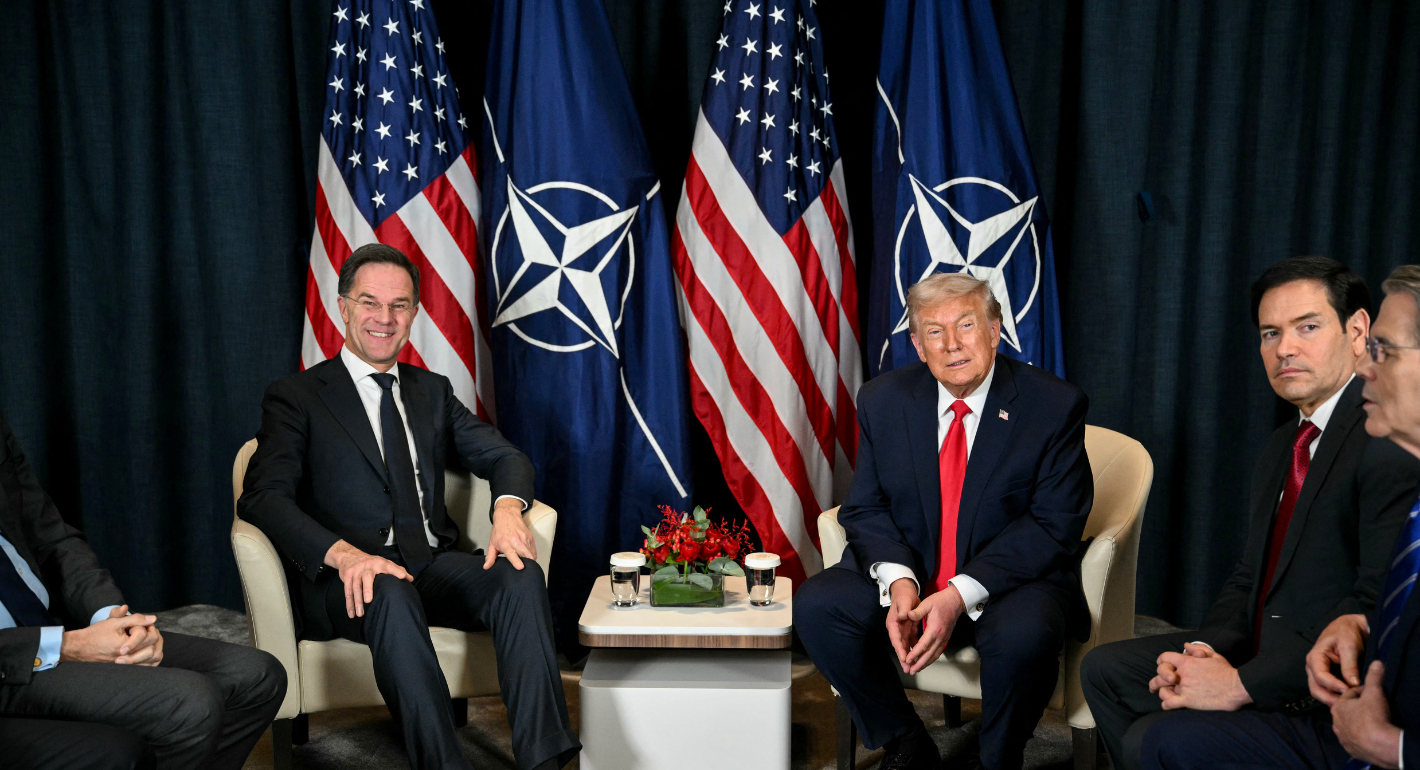
Donald Trump has demanded that European allies send ships to the Strait of Hormuz while his war of choice in Iran rages on. He has constantly berated NATO while the alliance’s secretary-general has emphatically supported him.

Rym Momtaz, ed.
The EU is structurally incapable of reacting to today’s foreign policy crises. The union must fold the EEAS into the European Commission and create a security council better prepared to take action on the global stage.

Stefan Lehne
The war in Ukraine is costing Russia its leverage overseas. Across the South Caucasus and Middle East, this presents an opportunity for Europe to pick up the pieces and claim its own sphere of influence.

William Dixon, Maksym Beznosiuk