

Commentary
Peter Kellner
{
  "authors": [
    "Peter Kellner"
  ],
  "type": "commentary",
  "blog": "Strategic Europe",
  "centerAffiliationAll": "",
  "centers": [
    "Carnegie Endowment for International Peace",
    "Carnegie Europe"
  ],
  "collections": [
    "Brexit and UK Politics"
  ],
  "englishNewsletterAll": "",
  "nonEnglishNewsletterAll": "",
  "primaryCenter": "Carnegie Europe",
  "programAffiliation": "",
  "programs": [],
  "projects": [],
  "regions": [
    "Europe",
    "Western Europe",
    "United Kingdom"
  ],
  "topics": [
    "EU"
  ]
}
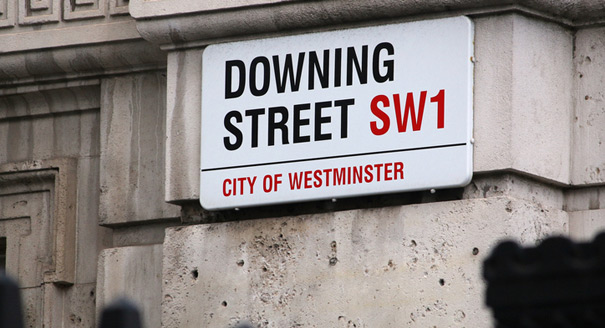
Source: Getty
The complexity of the looming Brexit negotiations is more troubling than the recent resignation of the UK’s EU ambassador.
In early December 2016, Theresa May told Britain’s Spectator magazine what concerned her about the civil service. As the country’s prime minister, she was disappointed by “a tendency in the system to try to interpret what they think you want, and to deliver that.” Instead, she said, “what [officials] owe to the minister, and what the minister expects, is the best possible advice.” Her instructions to them were clear: “Don’t try to tell me what you think I want to hear. I want your advice, I want the options. Then politicians make the decisions.”
Sir Ivan Rogers took her at her word. Until January 3, he was the UK’s permanent representative—ambassador, in all but name—to the EU. His sudden resignation came as a complete surprise, not least to May and her colleagues in Downing Street. Their shock was compounded by his parting e-mail to his staff in Brussels, in which he made his feelings crystal clear. In effect, he advised them to continue the battle that he had fought and lost:
I hope you will continue to challenge ill-founded arguments and muddled thinking and that you will never be afraid to speak the truth to those in power. I hope that you will support each other in those difficult moments where you have to deliver messages that are disagreeable to those who need to hear them.
Rogers had tried to speak truth to power and suffered for it. Specifically, in a leaked memo before Christmas, he said a settlement on Britain’s exit from the EU might take ten years—eight years longer than the timetable envisaged by Article 50 of the EU treaty. Pro-Brexit ministers in London felt that Rogers was being too negative. In return, he felt they had been seduced by weak arguments and unclear thinking. In the end, over his Christmas break in the UK, he decided that he had to go. Formally, that choice was his, but when private-sector executives depart in comparable circumstances, they can sue their employers for constructive dismissal.
Is Rogers right to feel aggrieved? Has he spent the past few months pointing out genuine challenges for ministers preparing to negotiate Brexit—or was he, as people such as Nigel Farage, the former leader of the Euroskeptic UK Independence Party (UKIP), insist, a fanatical pro-European trying to disrupt a relatively straightforward process of securing the UK’s future relationship with the EU?
Here are two reasons why Rogers is probably right and his critics wrong. The first is that he has been a smart and loyal official throughout his career. He has been praised by ministers and ex-ministers from the Labour, Conservative, and Liberal Democrat parties. I know him a little and have always found him to be judicious and well-informed. Far from belonging to the ranks of Eurofanatics, he has always seemed to me to be wary of them. His loyalty to successive British governments was plain to see. The notion that he would do anything other than help negotiate a smart Brexit is absurd.
Second, there is one sentence in his farewell e-mail that rings completely true: “We do not yet know what the government will set as negotiating objectives for the UK’s relationship with the EU after exit.” This statement, which came almost six months after May became prime minister and appointed her key Brexit ministers, chimes with leaks from cabinet committee meetings that have discussed Britain’s exit. May has been troubled by the inherent complexity of the process; most meetings adjourn without any decisions having been reached. Whatever Rogers has been telling ministers, he cannot have tried to block their route to Brexit, because that route has not been decided on.
In the long run, the complexity that May has discovered is more troubling than Rogers’s resignation. His memo has told the world of the problems the UK faces in the years ahead and added to evidence of uncertainties at the heart of Britain’s government. But those problems and uncertainties would have been just the same had Rogers kept his counsel and his job.
What now? Sir Tim Barrow succeeds Rogers as the UK’s permanent representative at a fraught moment. His reputation as a tough negotiator will stand him in good stead—in his dealings both with ministers in London and with his counterparts from the other 27 EU member states.
Barrow will doubtless have pondered his predecessor’s e-mail. Whether he will be encouraged by Rogers’s injunction to speak truth to power or deterred by the fate that befell Rogers for doing precisely that will be seen in due course. But as he considers his strategy for dealing with ministers back in London, Barrow will be conscious that he holds an immensely powerful card. Having lost one permanent representative, May and her ministers cannot afford to lose a second. Barrow can—and, I expect, will—say precisely what he thinks, however uncomfortable to ministerial ears, knowing that as long as he is scrupulously professional, he will be impossible to sack.
Peter Kellner is a journalist, political commentator, and former president of YouGov.
Former Nonresident Scholar, Carnegie Europe
Kellner was a nonresident scholar at Carnegie Europe, where his research focused on Brexit, populism, and electoral democracy.
Recent Work
Peter Kellner
Peter Kellner
Carnegie does not take institutional positions on public policy issues; the views represented herein are those of the author(s) and do not necessarily reflect the views of Carnegie, its staff, or its trustees.
The EU had to compromise to adopt a twenty-first sanctions package against Russia, exposing growing cracks in the union’s resolve. Is this latest, weaker round worth it to keep pressure on Moscow?

Rym Momtaz, ed.

Trump is distracted and Ukraine wants Europe to step up. The continent’s leaders must find their voice and assert it in talks with Russia.

Alissa de Carbonnel

Mounting economic strain and battlefield losses will not necessarily make the Kremlin less dangerous. They could instead push Moscow toward a more aggressive hybrid campaign designed to test NATO’s Eastern flank, exploit allied hesitation, and fracture European resolve.

Maksym Beznosiuk

Over the past ten years, NATO has held almost as many summits as it did during the entirety of the Cold War. Are they still useful, or is it time to stop holding annual meetings?
Rym Momtaz, ed.
Nearly a year and a half after Europeans leaned into sucking up to Trump, the strategy has produced some benefits when it comes to Ukraine.
Rym Momtaz