

Commentary
Trump is distracted and Ukraine wants Europe to step up. The continent’s leaders must find their voice and assert it in talks with Russia.
Alissa de Carbonnel
{
  "authors": [
    "John Kotsopoulos",
    "Camilla Adelle"
  ],
  "type": "commentary",
  "blog": "Strategic Europe",
  "centerAffiliationAll": "",
  "centers": [
    "Carnegie Endowment for International Peace",
    "Carnegie Europe"
  ],
  "collections": [],
  "englishNewsletterAll": "",
  "nonEnglishNewsletterAll": "",
  "primaryCenter": "Carnegie Europe",
  "programAffiliation": "",
  "programs": [],
  "projects": [],
  "regions": [
    "Southern, Eastern, and Western Africa",
    "Europe"
  ],
  "topics": [
    "Foreign Policy",
    "EU"
  ]
}
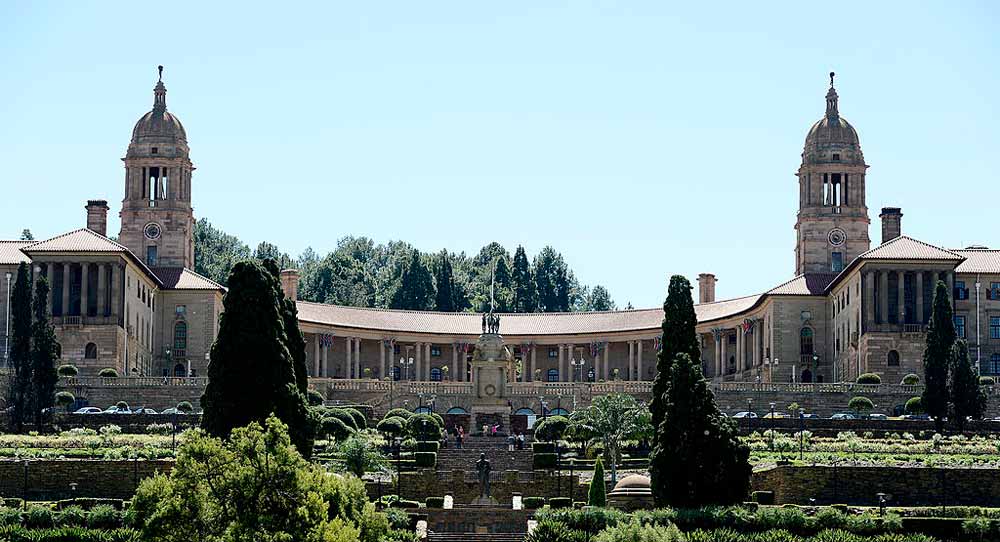
Source: Getty
South Africa is experiencing a period of political and economic turmoil that has consequences for the country’s previously firm relationship with the European Union.
Strategic Europe continues its Capitals Series exploring how EU foreign policy is viewed by major non-European countries. We have asked each of our contributors to give a frank assessment of their country’s relations with the EU and rank five key issues in order of their importance in those relations. This week, the spotlight is on South Africa.
*
South Africa is experiencing a period of political and economic turmoil that has consequences for the country’s focus and consistency in its international relations, including with respect to the EU.

At the same time, the African National Congress (ANC), which has enjoyed unbroken rule since the first democratic elections in 1994, is beginning to look vulnerable for the first time. Instances of corruption dominate the news, with many linked all the way up to the president. The party’s stewardship of the economy has also been questioned. In April, some ratings agencies downgraded South Africa’s sovereign credit rating to “junk status” immediately after a controversial cabinet reshuffle. Middle-class voters have been leaving the party with demonstrable effects. In 2016, the ANC relinquished control of the Johannesburg and Pretoria metropolitan areas in municipal elections for the first time.
South African President Jacob Zuma has responded by sacking most of his perceived enemies and shoring up support from his rural base. He has also embraced a less discrete populism, blaming undefined “outside”—that is, international—forces for sowing unrest and pointing the finger at “white monopoly capital” for his administration’s failure to provide sufficient economic transformation for the majority of the population.

Each successive administration has, at least rhetorically, shifted away from the West. Mbeki spearheaded the African Renaissance initiative, which sought to carve out a role for South Africa as the continent’s champion. Zuma has moved further, bolstering ties with Brazil, Russia, India, and China in the BRICS group and consistently voting against Western-backed initiatives during South Africa’s two most recent terms on the UN Security Council.
Despite this, South Africa’s relationship with the EU stands firm on more practical grounds, particularly in areas such as trade and, more recently, climate change. Irritants remain in the political sphere, where South Africa’s domestic turmoil can sometimes lead to fingers being pointed toward the West, as well as in the field of development, where the EU’s designation of South Africa as a middle-income country has had repercussions on funding.
On a positive note, the EU and South Africa enjoy a strategic partnership—the EU’s only one with an African partner—which is now in its tenth year. The partnership has broadened areas of cooperation, touching less-heralded domains such as science and technology, education, information and communication, and more.
However, the political dimension of the partnership, which envisioned annual summits and comprehensive bureaucratic engagement, has suffered in recent years. There has not been a high-level summit in nearly four years. This barren period, in combination with Zuma’s decision not to attend the last EU-Africa summit in 2014, underlines the politically ambivalent space that the EU occupies in South Africa.
Nonetheless, the EU (with its member states) remains South Africa’s biggest trading partner, although China is the largest single-country partner. In June 2016, South Africa and its neighbors signed the EU–Southern Africa Development Community Economic Partnership Agreement (EPA), the first success for the EU’s somewhat notorious EPA initiative in Africa. Significant foreign direct investment also emanates from the EU, although the impending exit of the UK—South Africa’s largest investor—from the union will curtail these numbers. Europe’s continuing economic presence underlines the somewhat uncomfortable line that South Africa straddles as a country that professes discomfort with the neoliberal (read: Western) global order but nevertheless remains deeply engaged with it.
Positive stories are notable in other areas. After a rocky start, the EU and South Africa became important allies in the UN climate change negotiations that culminated in the Paris Agreement in December 2015. In the Copenhagen climate change conference in 2009, South Africa sided with Brazil, China, and India and contributed to the spectacular failure of the EU’s global climate change ambitions. In the years that followed, however, South Africa played a far more conciliatory role, sharing some important preferences with the EU and acting as a bridge builder between the EU and other African countries.
As for development, the EU has provided a significant source of aid to South Africa since the end of apartheid. However, this role is decreasing as the EU phases out aid to middle-income countries by 2020. Even though the EU still considers itself South Africa’s most important development partner, providing 70 percent of all external assistance funds, South Africa is far from dependent on international funds, which make up only 1.3 percent of the government’s budget and 0.3 percent of the country’s gross national income.
The end of 2017 promises more domestic drama in South Africa, with an election for the president of the ANC scheduled to take place. Strong rhetoric about Western influence can be expected. Whether that will precipitate a change in the EU-South Africa relationship, however, is another, more unlikely matter.
John Kotsopoulos and Camilla Adelle are senior research fellows at the Centre for the Study of Governance Innovation at the University of Pretoria. They are also executive members of the European Studies Association of Sub-Saharan Africa (ESA-SSA).

John Kotsopoulos

Camilla Adelle
Carnegie does not take institutional positions on public policy issues; the views represented herein are those of the author(s) and do not necessarily reflect the views of Carnegie, its staff, or its trustees.

Trump is distracted and Ukraine wants Europe to step up. The continent’s leaders must find their voice and assert it in talks with Russia.

Alissa de Carbonnel

Mounting economic strain and battlefield losses will not necessarily make the Kremlin less dangerous. They could instead push Moscow toward a more aggressive hybrid campaign designed to test NATO’s Eastern flank, exploit allied hesitation, and fracture European resolve.

Maksym Beznosiuk

Over the past ten years, NATO has held almost as many summits as it did during the entirety of the Cold War. Are they still useful, or is it time to stop holding annual meetings?

Rym Momtaz, ed.
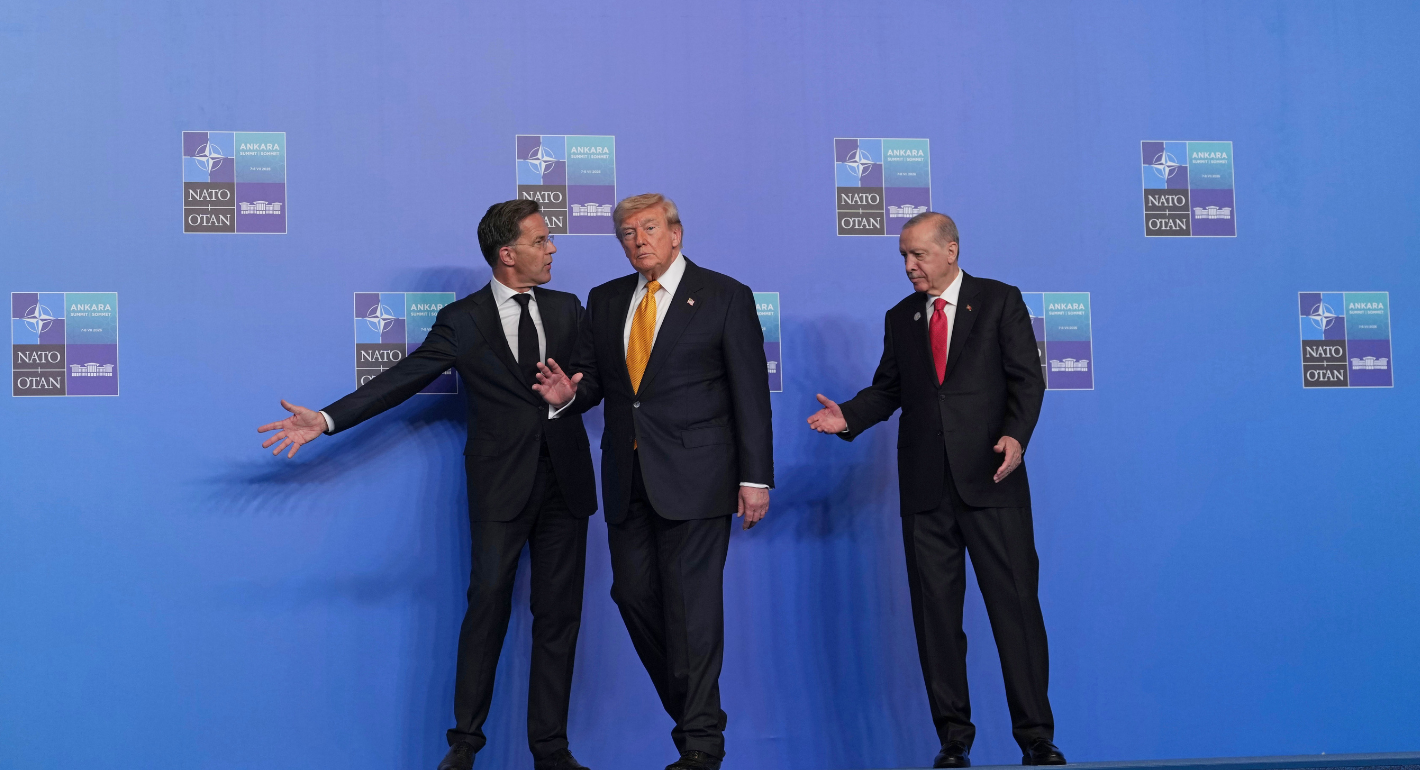
Nearly a year and a half after Europeans leaned into sucking up to Trump, the strategy has produced some benefits when it comes to Ukraine.
Rym Momtaz
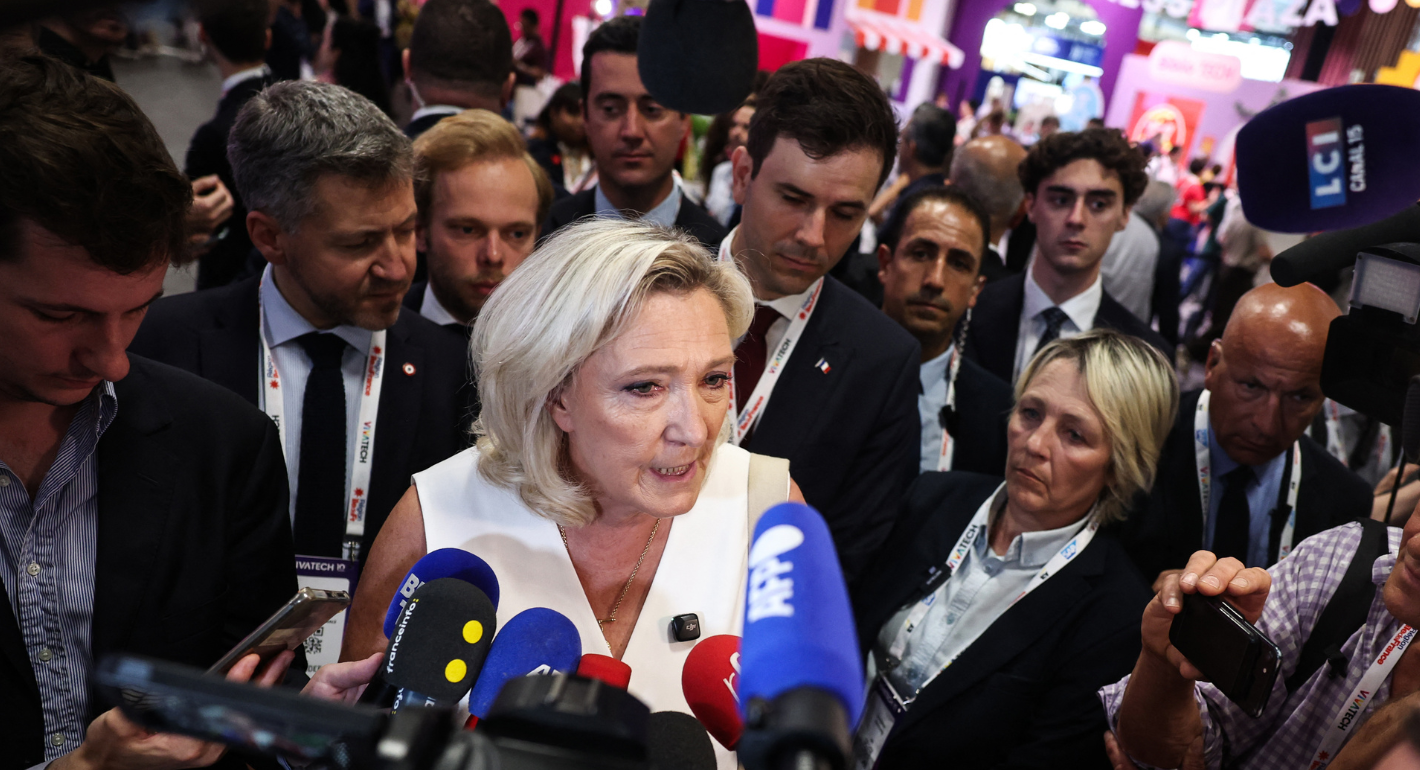
Far-right leader Marine Le Pen can—and will—run in France’s next presidential election. What does the outcome of her appeal against a 2025 embezzlement conviction mean for the country’s political future?
Catherine Fieschi