

Commentary
French President Emmanuel Macron has unveiled his country’s new nuclear doctrine. Are the changes he has made enough to reassure France’s European partners in the current geopolitical context?
Rym Momtaz, ed.
{
  "authors": [
    "Yannos Papantoniou"
  ],
  "type": "commentary",
  "blog": "Strategic Europe",
  "centerAffiliationAll": "",
  "centers": [
    "Carnegie Endowment for International Peace",
    "Carnegie Europe"
  ],
  "collections": [],
  "englishNewsletterAll": "",
  "nonEnglishNewsletterAll": "",
  "primaryCenter": "Carnegie Europe",
  "programAffiliation": "",
  "programs": [],
  "projects": [],
  "regions": [
    "Europe",
    "Western Europe"
  ],
  "topics": [
    "EU",
    "Economy",
    "Climate Change"
  ]
}
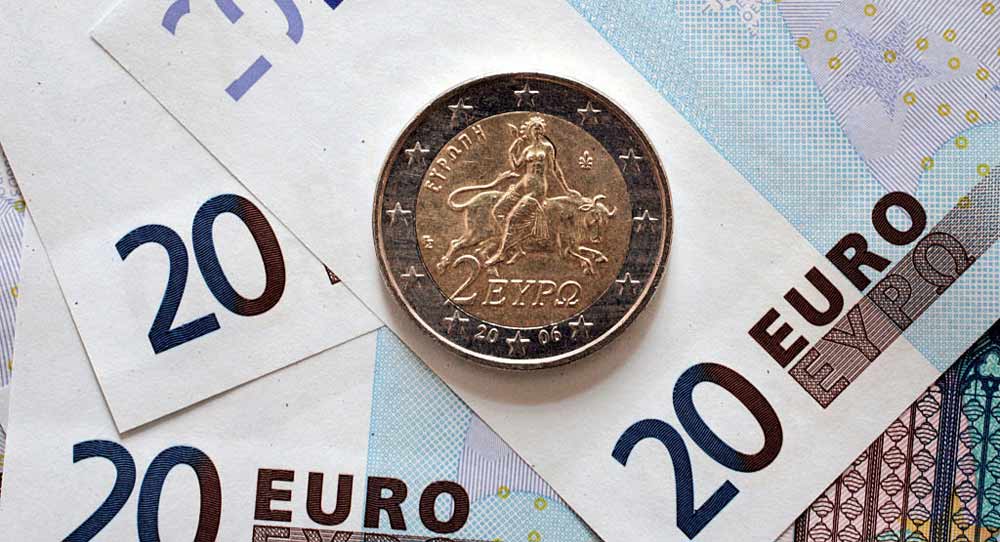
Source: Getty
If Greece is to recover from its eight-year-long debt crisis, the country will need massive investment and a systematic effort to rebuild institutions and retrain labor.
A recent agreement between Greece and its lenders to review the country’s bailout program might seem to offer a perspective of ending the extraordinary ordeal of the eight-year-long Greek debt crisis. Having lost one-quarter of its GDP and with unemployment still standing at 23 percent of its labor force, the country has regressed by close to two decades and suffered serious damage to its economic and social infrastructure, not to mention the considerable capital outflows and brain drain that have accompanied this demise.
Recovering from such a disaster requires massive investment as well as a systematic effort to rebuild institutions and retrain labor to take advantage of new opportunities as they arise from innovation processes and technological improvements.
Fiscal stabilization is a positive factor in the overall picture, but it is far from sufficient for generating sustainable growth. A huge debt burden, equal to 177 percent of GDP, still hangs over the economy, but relief decisions that markets deem critical for restoring trust in the country’s future are being continually postponed. Even worse, Greece is being forced to achieve excessively high primary budget surpluses, equal to 3.5 percent of GDP, over the next five to ten years. Given the country’s low competitiveness and elliptical supply structures, foreign demand will prove unable to support the rates of growth that are necessary to even partly recover lost output. Fiscal targets will not be easily attainable, creating conditions for a renewed financial crisis and further bailout assistance.
Problems are compounded by the fact that the banking system, despite successive recapitalizations, contains a record number of nonperforming loans—close to 50 percent of total loans, according to recent IMF estimates, compared with an EU average of 5.7 percent in 2016—severely limiting banks’ capacity to extend lending. Gross fixed capital formation as a percent of GDP has been halved from an average of 24.1 percent over the pre-crisis period of 2000–2008 to 11.6 percent in 2015.
Perhaps the most binding constraint is that although the crisis offered an opportunity for introspection, giving rise to efforts to correct past mistakes and achieve improvements in the functioning of institutions and the organization of markets, time has been wasted.
Reforms are implemented inefficiently, so they do not produce the expected beneficial outcomes for either the structure of the economy or the investment environment and, more broadly, the conduct of economic activity. Privatizations proceed very slowly. Deregulation is stumbling. The state of the administration, the health and education systems, and justice is worse than at any time in the recent past. Inadequate funding is only part of the problem. Bad management as well as clientelism in the time-honored tradition of expanding political influence are mainly to blame. The main improvement in Greece’s competitiveness derives from a sharp fall in real wages—by 20.3 percent over 2009–2015—owing to the deep and prolonged recession.
Confidence is unlikely to return in an environment punctuated by fiscal tightness, unsustainable public and private debts, and deficient institutions. The timid recovery forecast for the European and the global economy will be of some help, particularly in the tourism sector, but will not provide a game changer. This can only come from within, if the political process produces new leadership inspiring people to engage in collective efforts that promote the common good.
The 2017 presidential election in France is an example of such an outburst of creative energy. Against a morose climate of retrogressive and claustrophobic populism dominated by the extreme Right, a centrist candidate espousing open markets, globalization, further European integration, and a more inclusive society won by a decisive majority. Emmanuel Macron now seems poised, after a period of lethargic governance, to introduce overdue changes in the way the French economy is organized.
For the time being, Macron remains just a hope, and Greece is no France (or, indeed, anything but itself). However, change usually comes uninvited and in unexpected ways. Nations have their ups and downs. After a military dictatorship that lasted for seven years and ended in catastrophic conditions, in 1974 Greece entered a period of democratic renewal.
Venturing historic predictions is unwise. A ray of hope seems to lie only in more thoughtful modes of social reactivity. At the same time, Greece’s existing political personnel lacks vitality and ambition, let alone passion. New leaders might emerge from unexpected quarters.
Yannos Papantoniou is the president of the Center for Progressive Policy Research, an independent think tank.

Yannos Papantoniou
Carnegie does not take institutional positions on public policy issues; the views represented herein are those of the author(s) and do not necessarily reflect the views of Carnegie, its staff, or its trustees.
French President Emmanuel Macron has unveiled his country’s new nuclear doctrine. Are the changes he has made enough to reassure France’s European partners in the current geopolitical context?

Rym Momtaz, ed.
European reactions to the war in Iran have lost sight of wider political dynamics. The EU must position itself for the next phase of the crisis without giving up on its principles.

Richard Youngs
Europe isn’t as weak in the new geopolitics of power as many would believe. But to leverage its assets and claim a sphere of influence, Brussels must stop undercutting itself.

Dimitar Bechev
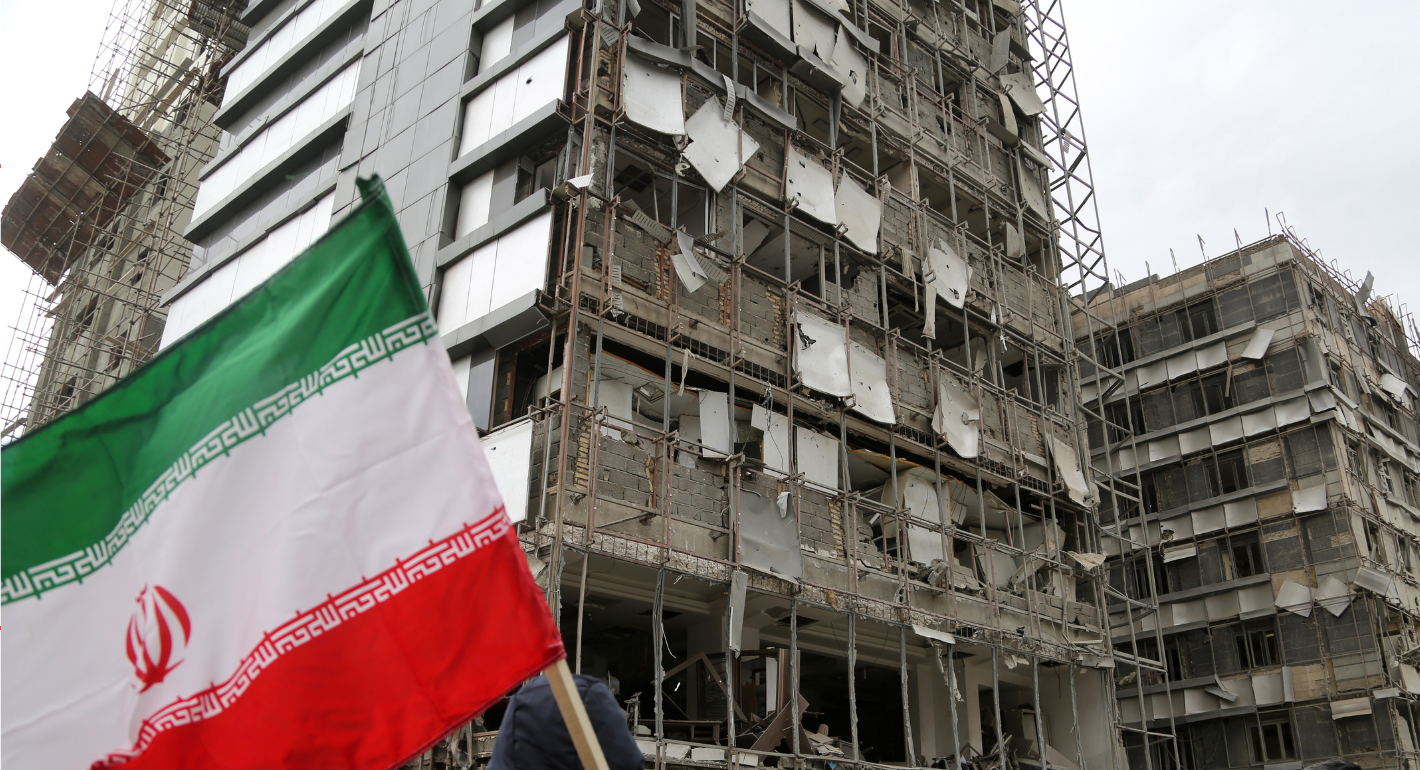
Europe’s reaction to the war in Iran has been disunited and meek, a far cry from its previously leading role in diplomacy with Tehran. To avoid being condemned to the sidelines while escalation continues, Brussels needs to stand up for international law.

Pierre Vimont
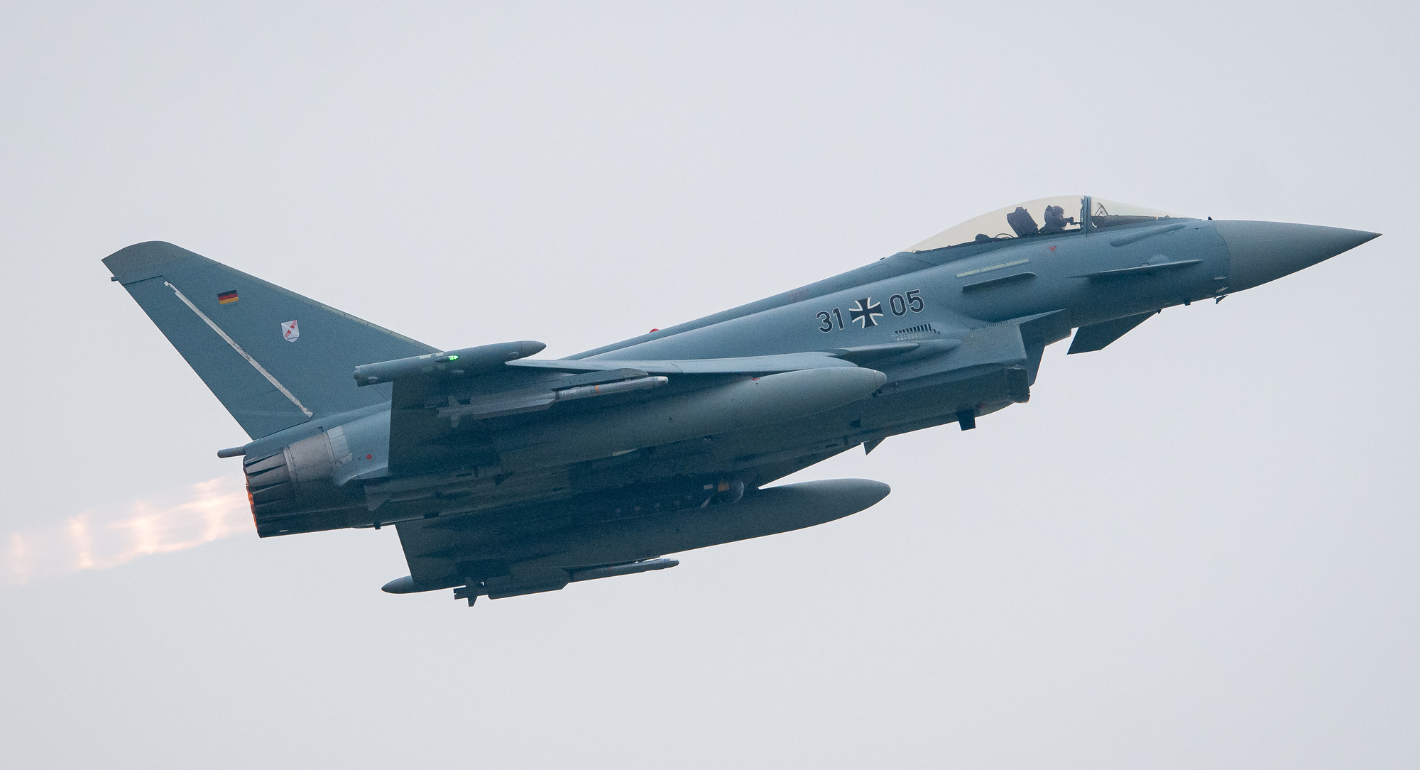
France and Germany’s failure to agree on the Future Combat Air System (FCAS) raises questions about European defense. Amid industrial rivalries and competing strategic cultures, what does the future of European military industrial projects look like?
Rym Momtaz, ed.