

Commentary
As we close out another season of Strategic Europe, it is worth taking stock of the deep shifts underway.
Rym Momtaz
{
  "authors": [
    "Steven Denney"
  ],
  "type": "commentary",
  "blog": "Strategic Europe",
  "centerAffiliationAll": "",
  "centers": [
    "Carnegie Endowment for International Peace",
    "Carnegie Europe"
  ],
  "collections": [],
  "englishNewsletterAll": "",
  "nonEnglishNewsletterAll": "",
  "primaryCenter": "Carnegie Europe",
  "programAffiliation": "",
  "programs": [],
  "projects": [],
  "regions": [
    "Asia",
    "Europe",
    "East Asia",
    "South Korea",
    "Western Europe"
  ],
  "topics": [
    "Foreign Policy",
    "EU"
  ]
}
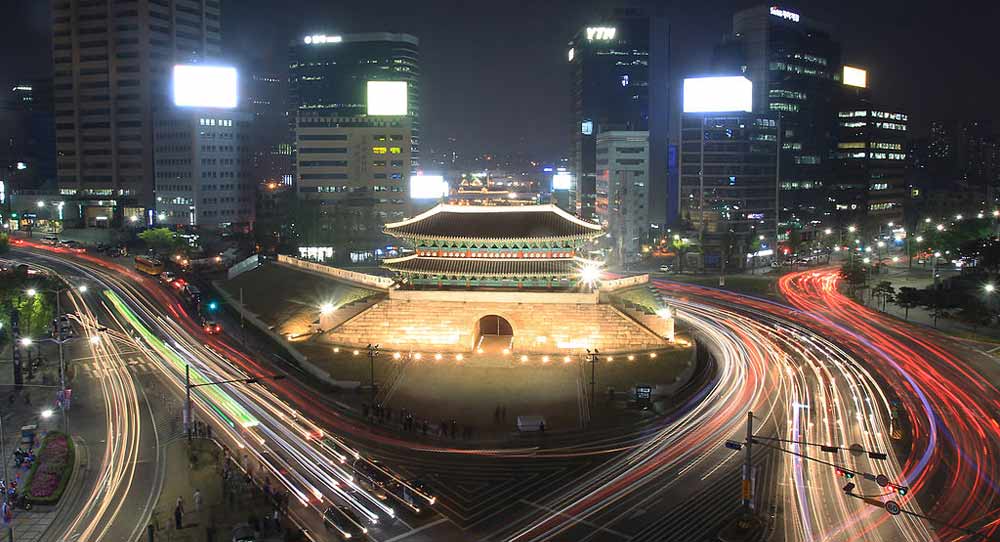
Source: Getty
Recent changes to the world order may allow the EU to play a more prominent role on the Korean Peninsula, especially when it comes to security.
Strategic Europe continues its Capitals Series exploring how EU foreign policy is viewed by major non-European countries. We have asked each of our contributors to give a frank assessment of their country’s relations with the EU and rank five key issues in order of their importance in those relations. This week, the spotlight is on South Korea.
*
The relationship between South Korea and the EU has grown closer over the years, primarily on the economic front. But changing geopolitical conditions and a new agreed framework for EU–South Korean relations may mean a more prominent role for the EU in other areas, including security.

Remittances were a boon to South Korea’s poverty-stricken economy (in 1962, the country’s GDP per capita was approximately $100), and so was the financial aid for labor it received from West Germany.
Things have changed. Today, South Korea ranks in the top fifteen economies by GDP (at purchasing power parity) and has a GDP per capita in excess of $35,000. In 2010, Seoul joined the Development Assistance Committee of the Organization for Economic Cooperation Development, the first member to make the transition from aid recipient to donor. Thanks to the country’s export-oriented economy, more than 3 percent of the world’s total exports originate in South Korea.

EU–South Korean trade relations were boosted by the 2009 signing of a free-trade agreement, which eliminated tariffs on industrial and agricultural goods. The deal, which took effect in 2011, was the first such agreement between the EU and an Asian country.
A year after the free-trade agreement was signed, the EU and South Korea upgraded their bilateral relationship to a strategic relationship. According to the framework agreement that went into effect in 2014, this meant strengthening EU–South Korean economic relations, political ties, and cooperation in the areas of security and international development. Specific items of concern included proliferation of weapons of mass destruction, human rights, climate change, and development assistance. Additionally, a framework participation agreement was signed in early 2014. On ratification, this accord will allow closer EU–South Korean military cooperation, which is especially important for joint counterpiracy operations.
On the ever-important security front, the United States and China feature prominently on the Korean Peninsula, but the EU member states play a vital secondary role. The EU opposes North Korea’s nuclear weapons and ballistic missile programs and strongly protests the human rights abuses occurring there. Most EU states are members of the Proliferation Security Initiative, an organization that North Korea views as antagonistic, and the EU has enacted sanctions in line with UN Security Council resolutions.
Although the EU supports the U.S.-led sanctions regime against the North, it maintains a policy of critical engagement with Pyongyang. This policy sets the EU apart from the United States and, oddly enough, from South Korea. Currently, neither the United States nor South Korea maintains formal diplomatic relations with North Korea, yet 26 of the 28 EU member states do, and seven have embassies in Pyongyang.
The EU incurred financial losses and political frustrations when the 1994 Agreed Framework on North Korea’s nuclear program collapsed in 2003. Yet the union is situated to play a significant role in de-escalating crises on the peninsula as a close political, security, and economic partner of South Korea with strong diplomatic ties to North Korea. That the EU hasn’t fulfilled this potential is seen by some as lamentable.
This may yet change. The election of liberal Moon Jae-in to the South Korean presidency in May 2017 is likely to open avenues for constructive cooperation on the security front. It’s too early to say what exactly will happen, but there is reason to believe Moon will seek to improve inter-Korean relations through economic and diplomatic engagement. With a U.S. administration that seems unwilling to engage Pyongyang, and Sino–South Korean relations on ice due to the installation of a U.S. missile defense system, the EU may have an opportunity to work with South Korea in improving the security environment on the peninsula.
The idea of EU-supported, or even EU-led, dialogue between North and South Korea is appealing, and lessons learned from Germany’s reunification put the EU in a favorable position to build a more meaningful relationship with Seoul and engage the peninsula and region more broadly. Given the notable changes to the world order since Britain’s vote to leave the EU and the election of U.S. President Donald Trump, one might be right to believe that the EU could lead on all fronts.
Steven Denney is a political scientist at the University of Toronto and a graduate fellow in the Asian Institute at the Munk School of Global Affairs.

Steven Denney
Carnegie does not take institutional positions on public policy issues; the views represented herein are those of the author(s) and do not necessarily reflect the views of Carnegie, its staff, or its trustees.

As we close out another season of Strategic Europe, it is worth taking stock of the deep shifts underway.

Rym Momtaz
The EU had to compromise to adopt a twenty-first sanctions package against Russia, exposing growing cracks in the union’s resolve. Is this latest, weaker round worth it to keep pressure on Moscow?
Rym Momtaz, ed.

Trump is distracted and Ukraine wants Europe to step up. The continent’s leaders must find their voice and assert it in talks with Russia.

Alissa de Carbonnel

Mounting economic strain and battlefield losses will not necessarily make the Kremlin less dangerous. They could instead push Moscow toward a more aggressive hybrid campaign designed to test NATO’s Eastern flank, exploit allied hesitation, and fracture European resolve.

Maksym Beznosiuk

Over the past ten years, NATO has held almost as many summits as it did during the entirety of the Cold War. Are they still useful, or is it time to stop holding annual meetings?
Rym Momtaz, ed.