

Commentary
Judy Dempsey
{
  "authors": [
    "Judy Dempsey"
  ],
  "type": "commentary",
  "blog": "Strategic Europe",
  "centerAffiliationAll": "",
  "centers": [
    "Carnegie Endowment for International Peace",
    "Carnegie Europe"
  ],
  "collections": [
    "EU Integration and Enlargement"
  ],
  "englishNewsletterAll": "",
  "nonEnglishNewsletterAll": "",
  "primaryCenter": "Carnegie Europe",
  "programAffiliation": "",
  "programs": [],
  "projects": [],
  "regions": [
    "Europe",
    "Eastern Europe",
    "Western Europe"
  ],
  "topics": [
    "Foreign Policy",
    "EU",
    "Democracy"
  ]
}
Source: Getty
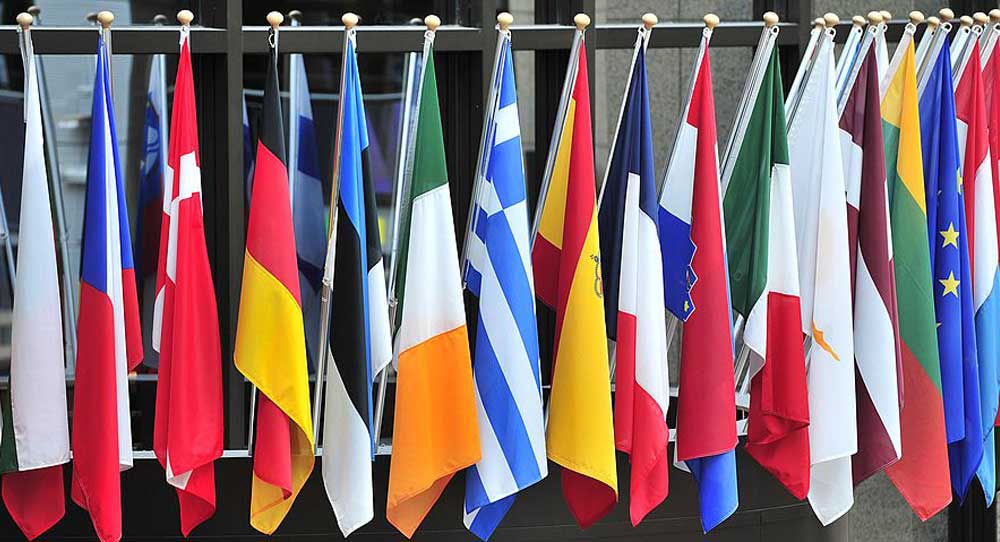
The EU’s political contours are being redrawn, as Western Europe’s renewed influence is poised to eclipse the union’s Eastern members.
After a marathon of elections, Emmanuel Macron is now set to put his country on a new course. In the June 18 second round of France’s parliamentary election, the French president won an absolute majority of seats in the National Assembly. The Socialist Party was decimated, and the far-right National Front was already losing energy after its leader, Marine Le Pen, failed to form a strong opposition in the first round of the election on June 11. And even though the voter turnout was at a record low of 42 percent, Macron has a mandate to reset France’s economic and political compass.
Ever since Macron was catapulted into the Élysée Palace on May 7, the focus, beside his reforms, has been on the revival of the Franco-German relationship. This, argue analysts, will be the axis that will give Europe the push it needs for further integration.
But something else is happening beyond these two countries. The highly controversial austerity programs that Germany insisted the heavily indebted eurozone countries implement in return for financial assistance are bearing fruit. Ireland, Portugal, Spain, and even Greece are recording growth—albeit at an immense cost to public-sector employees, pensioners, and youth employment figures. And with economic growth comes political confidence.
This is exactly what is going on in Spain. Never write off this big EU country—the fourth largest once Britain leaves. When countries in Central and Eastern Europe were completing their negotiations to join the EU back in the early 2000s, it was Spain, then under the conservative leader José María Aznar, that fought a long battle to ensure that the enlargement of the EU by ten new members would not reduce Spain’s share of structural funds.
This was a fierce battle. But Spain and France were able to strike hard bargains because their economies were strong. Over the past dozen years, the political influence of both countries waned as their economics declined. But now Madrid is back in business.
It is worth reading the June 14 Financial Times interview with Spain’s economy minister, Luis de Guindos. He called for a radical reform of the eurozone area. That would include the establishment of a European treasury or European monetary fund. German’s Finance Minister Wolfgang Schäuble would balk at that. But the point is that Madrid now has the confidence to speak out about Europe’s future because its economy is becoming stronger. Expect also other eurozone governments to speed up the debate about the need to further integrate Europe.
The growing confidence of Southern eurozone countries—with the exception of Italy—is underpinned by voters’ rejection of Euroskeptic parties. Recent electoral trends give some solace to Macron and to the extraordinary political survival records of Spain’s conservative Prime Minister Mariano Rajoy and Dutch Prime Minister Mark Rutte, not to mention Ireland’s new leader, Leo Varadkar, who is a similar age to Macron. But populism and the need for inclusive politics are not going to go away, just as globalization is here to stay. These leaders will ignore them at their peril.
This reemergence of Old Europe coincides with the eclipse of the political influence of New Europe. Poland under the former center-right Civic Platform–led coalition was hell-bent on strengthening the EU’s foreign, security, and defense policies. It also played a major role in promoting an EU energy security policy in addition to galvanizing support for Eastern Europe, particularly Ukraine and Belarus. The coalition’s biggest mistake was to take its power for granted—one of the reasons it was roundly defeated in Poland’s 2015 parliamentary election.
Since then, under the conservative-nationalist Law and Justice Party, Warsaw has retreated in ways that are completely anathema to Poland’s size. It’s not that the country’s economy is doing badly—it is estimated to grow by 3.5 percent this year compared with 2.6 percent in 2016—but that its governing elite is focused more on the past and revenge than on giving Poland influence it can wield inside the EU. Poland will be the fifth-largest EU member once Britain leaves but is not a member of the eurozone, which is why Warsaw fears a two-speed EU dominated by Old Europe.
Poland’s eclipse has an impact on the other countries of Central Europe. Slovakia is marred by corruption, and Hungary is saddled with a prime minister who like Russian President Vladimir Putin is afraid of activists and EU principles but wouldn’t dare bite the hand that feeds him through structural funds that amount to 3 percent of Hungary’s GDP. In the Czech Republic, politics has become entrenched in power struggles and corruption. Former Czech president Václav Havel’s legacy is almost forgotten. A weakened Poland leaves the Central European countries if not isolated in the EU then certainly much weaker.
The hopes and energies of New Europe, which were a wonderful boon to Old Europe after Central and Eastern Europe joined the EU in 2004, are not only being dissipated. They are also being replaced by an Old Europe that may finally be breaking out of its comfort zone. It’s far too early to say whether it will succeed, or indeed how it is going to deal with what is happening on the other side of the Atlantic. But at least the debate and the energy are now out there.

Nonresident Senior Fellow, Carnegie Europe
Judy Dempsey is a nonresident senior fellow at Carnegie Europe
Recent Work
Judy Dempsey
Judy Dempsey
Carnegie does not take institutional positions on public policy issues; the views represented herein are those of the author(s) and do not necessarily reflect the views of Carnegie, its staff, or its trustees.

Before the next wave of EU enlargement takes place, the union needs to grapple with thorny questions of how power is distributed among its members.


Emil Sondaj Hansen, Ditte Brasso Sørensen

A summer of escalation in the Black Sea has hurt Ukraine economically and is exacerbating world food security. A truce is needed—as is a broader reframing of Europe’s Ukraine strategy.

Thomas de Waal

Are Germany’s economic, industrial, and political struggles becoming a liability for the EU’s ability to rise to the geopolitical moment?

Rym Momtaz, ed.

European Commission President Ursula von der Leyen is about to give her annual address on the state of the EU. Here’s what she won’t—but should—say.
Rym Momtaz

The aftermath of the Ceuta crisis shows Europe has drawn the wrong lessons. Rather than doubling down on failed migration policies, the EU needs to address the underlying roots of such episodes.

Richard Youngs