As the chair and host of the July 7–8 G20 summit, Germany has a particular responsibility. Chancellor Angela Merkel will only be able to establish herself as a fair but decisive broker for controversial global negotiations if her country is perceived as a credible contributor to global public goods.
Undeniably, Germany has a good reputation for contributing to global goods like climate policies, reception of refugees, or development. However, there is one major perceived shortcoming: the country is accused of selfish macroeconomic policies. U.S. President Donald Trump is not alone in his accusations that Germany is playing foul with its twin surplus—in both its current account and its general government budget. Many European politicians and economists, including good friends of Germany’s in France and Italy, side with Trump on this issue, albeit not with respect to the risky policy conclusions Trump is drawing.
This is an old and unsettled economic debate. The arguments made by Germany’s critics typically follow Keynesian models that assume that proper management of global demand could make a major contribution to economic convergence in Europe and the world. As a consequence, these critics call for more government spending or higher wages from Germany.
Defenders of the German position, by contrast, tend to stress structural issues like deficit countries’ lack of export competitiveness or point to the mismatch between the European Central Bank’s monetary policy and Germany’s needs. Given that the intellectual debate on the German surpluses will hardly be resolved in the foreseeable future, the key question is whether there is a strategy that could satisfy both sides.
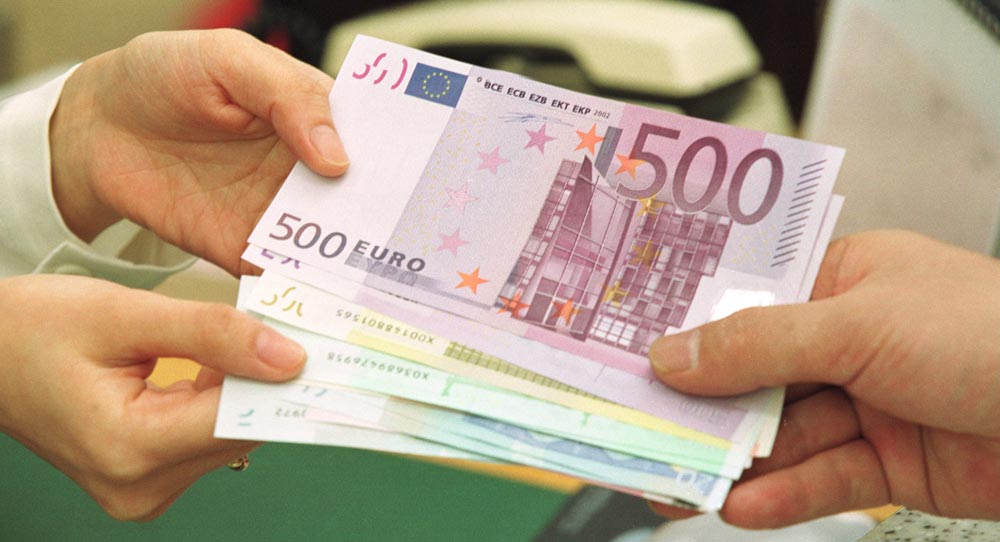
A look at the 2016 Sustainable Governance Indicators report for Germany helps identify such a strategy, which would be a courageous new start for German tax policies. Like other economic policies, German tax policy suffers from severe reform fatigue. The deficiencies of the tax system have been identified over and over again by academia and international organizations. The European Commission’s 2017 country-specific recommendations repeat a familiar message: Germany should reduce disincentives to work for second earners, reduce the high tax wedge for low-wage earners, and improve the efficiency and investment friendliness of the tax system.
The German government could make a credible contribution to higher investment, employment, consumption, and growth through a range of measures. First, a one-off reform of the income-tax code should target lower marginal tax rates for average earners. A one-off measure must, however, be combined with a permanent precaution against inflationary bracket creep, which has shifted normal wage earners into top marginal income-tax rates over the decades.
Furthermore, in terms of efficiency and fairness, it is hard to understand why actual wage income is the major driver of health-insurance contributions. The status quo implies a redistribution from people with a high work effort to those who prefer leisure. For social-security contributions, the most promising way toward lower marginal contribution rates is through stronger elements of flat-rate payments, which detach health-insurance contributions from actual wage income.
Another measure concerns corporate taxation. Germany should introduce general tax credits for corporate research and development expenditures. Here, Germany lags behind its peers and exclusively uses problematic research and development programs on the expenditure side of the budget to incentivize innovation spending.
Also, the general level of the corporate-tax base should be reconsidered. Since 2008, the global tax environment has changed substantially. The current U.S. corporate tax reform will put European tax systems under new competitive pressure. Moreover, there has been a gradual corporate-tax increase in Germany through manifold municipal rises in trade tax. All these developments indicate that new adjustment pressure has built up and that a lower overall corporate-tax rate in Germany would be wise.
Even with compensating measures, it is unlikely that such a comprehensive tax reform will be revenue neutral in the short run. The German government will have to accept a temporary deterioration of its budgetary position. But given the current fiscal leeway and international accusations, the year 2018 is excellent timing for such a tax reform. This reform would convincingly refute international criticism of Germany’s twin surplus in a fully responsible way.
Such a tax-reform package would calm Berlin’s trade partners through its short-term contribution to more global demand. At the same time, the reform would increase Germany’s growth and employment potential and avoid long-term damage to the country’s fiscal sustainability.
Friedrich Heinemann is the head of the Corporate Taxation and Public Finance Department at the Mannheim Centre for European Economic Research and a professor of economics at the University of Heidelberg.