

Commentary
With its public finances in shambles, the far right polling at 35 percent ahead of the 2027 presidential election, and a growing protest movement, is France’s crisis a threat to the EU’s geopolitical awakening?
Rym Momtaz, ed.
{
  "authors": [
    "Daniel Keohane"
  ],
  "type": "commentary",
  "blog": "Strategic Europe",
  "centerAffiliationAll": "",
  "centers": [
    "Carnegie Endowment for International Peace",
    "Carnegie Europe",
    "Carnegie Russia Eurasia Center"
  ],
  "collections": [
    "Transatlantic Cooperation",
    "Brexit and UK Politics"
  ],
  "englishNewsletterAll": "",
  "nonEnglishNewsletterAll": "",
  "primaryCenter": "Carnegie Endowment for International Peace",
  "programAffiliation": "",
  "programs": [],
  "projects": [],
  "regions": [
    "Europe",
    "Western Europe",
    "United Kingdom",
    "Germany"
  ],
  "topics": [
    "Security",
    "Military"
  ]
}
Source: Getty
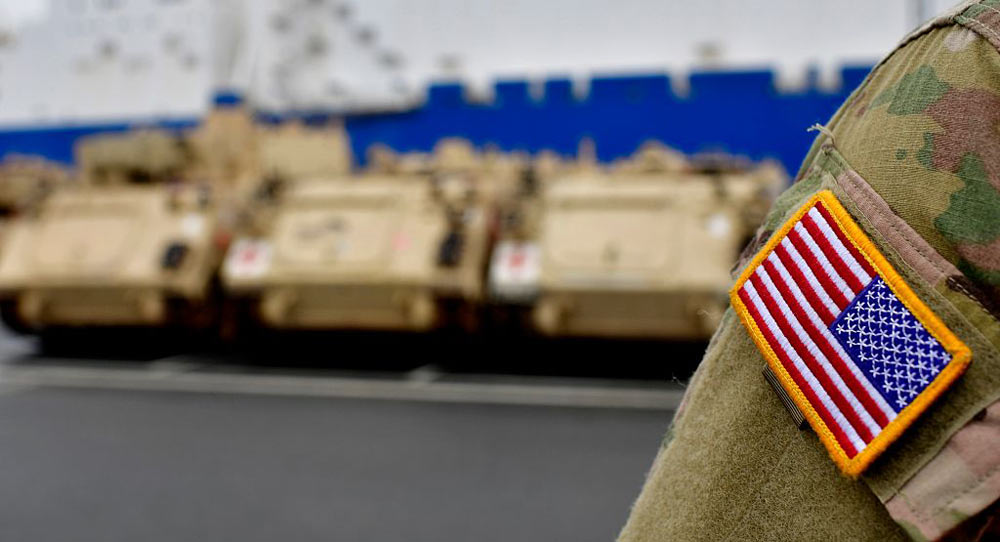
Germany and the UK are likely to remain dependent on U.S. defense, because the alternatives are currently too daunting for Berlin and London.
It is obvious that the European members of NATO depend on the United States for their defense. And why wouldn’t they want that dependence to continue? Only Russia currently poses a direct military threat to Europe. However, for all its meddling—both military and nonmilitary—in European NATO members, Russia would hardly want to risk a shooting war with the United States, the world’s only military superpower. Plus, American protection allows Europeans to spend relatively less on defense and more on other things.
Yet, because of U.S. President Donald Trump’s vacillating rhetorical commitment to NATO’s mutual defense, it is becoming fashionable for some European politicians to argue that Europeans will increasingly have to look after themselves. Explaining the rationale behind the need for the EU to expand its military role, European Commission President Jean-Claude Juncker told an audience in Prague on June 9 that the United States was “no longer interested in guaranteeing Europe’s security in our place.”
It is understandable that some European politicians use Trump’s wavering words to garner support for deepening EU military cooperation, which is welcome if it results in Europeans taking more responsibility for their own security. However, greater responsibility is not the same thing as strategic autonomy, and few European governments seem serious about reducing their military dependence on the United States. Apart from the speculative musings of some think tankers, there is no official proposal to develop a full-blown plan B, meaning a collective European military alliance distinct from NATO. (Despite Brexit, to have any military credibility, such an alliance would have to include the UK because it is the largest European defense spender in NATO.)
To illustrate: consider the strategic outlooks of the three biggest European spenders in NATO. France is the exception that proves the rule, having often suggested before Trump took office that Europeans should be more able to look after themselves. Paris has also been the most militarily active European member of NATO in recent years—including by acting alone. The French would generally prefer not to act alone, but the French ambassador to the United States noted on July 4 that “Europeans can’t think of building a future without the Americans.”
The other two leading European military powers, Germany and the UK, show no signs of reducing their strategic dependence on the United States. Take Germany, which Trump has singled out for not contributing enough to NATO. Chancellor Angela Merkel, who remains committed to the transatlantic alliance, has said that she wants Germany to meet NATO’s headline goal of spending 2 percent of GDP on defense (currently, Berlin devotes only 1.2 percent). Even if Germany spent that amount, which would make it the largest European spender in NATO, there is no guarantee that it would become concomitantly militarily active. German public opinion is generally more pacifist than in many other European countries.
Furthermore, Merkel’s opponent in September’s federal election, Social Democrat Martin Schulz, has used Trump’s urgings as a reason not to spend more on defense. Many German Social Democrats also support the idea of a European army; but without U.S. protection, such an army would require Germans (and others) to spend a lot more on defense—not to mention the military tasks that army might have to carry out.
The UK, in contrast, is more prepared to invest in and use military force than Germany, and has long had a close strategic relationship with the United States. Referring to the recent maiden sail of the first of the UK’s two new aircraft carriers, the pseudonymous British defense blogger Sir Humphrey neatly explained: “This is a useful reminder for the UK to the US that it is serious about playing its part in supporting US navy carrier deployments.”
Few officials or politicians in the UK are willing to discuss publicly how Europeans would defend themselves without the Americans. If anything, the British exit from the EU will push London even closer to Washington. Michael Fallon, the British defense secretary, said in March, “Our defense relationship with the US is unprecedented in its depth and scope. As we leave the EU, our bilateral relationships matter more than ever, so we’ll be enhancing our cooperation and investing more in our joint F-35 fast jet programme.”
For different reasons, Germany and the UK will likely remain addicted to U.S. defense. The alternatives are currently too daunting for Berlin and London. Germany cannot imagine itself as Europe’s leading military power, while the Brexit-bound UK appears to have no geopolitical options other than aligning itself ever more closely with the United States.
Moreover, U.S. actions speak louder than the president’s tweets. The Pentagon wishes to spend some $1.4 billion more in 2018 on defending Europe over this year’s $3.4 billion. Even Trump has started to feed the Anglo-German addiction: the day Juncker spoke in Prague, Trump said at a press conference with the Romanian president that he was committed to NATO’s collective defense. The U.S. president may repeat that sentiment today in Warsaw.
Anti-Trumpism alone will not convince Europeans to go their own way on defense. For one, most Europeans expect their relations with the United States to remain stable, according to a June 2017 Pew opinion poll, which suggests that Europeans still prefer to stick with the devil they know. For another, most Europeans are nowhere near psychologically prepared to defend themselves without U.S. protection. French exceptionalism aside, if Germany and the UK are unwilling to curb their addiction to American defense, why would other, militarily less capable Europeans do so?
Daniel Keohane is a senior researcher at the Center for Security Studies at ETH Zürich.
Daniel Keohane
Carnegie does not take institutional positions on public policy issues; the views represented herein are those of the author(s) and do not necessarily reflect the views of Carnegie, its staff, or its trustees.

With its public finances in shambles, the far right polling at 35 percent ahead of the 2027 presidential election, and a growing protest movement, is France’s crisis a threat to the EU’s geopolitical awakening?

Rym Momtaz, ed.

Ahead of a tough winter for Ukraine, Donald Trump’s swing back toward Russia bodes ill. But instead of panicking, Kyiv’s European allies are focusing on action.
Rym Momtaz

While the EU and European governments are embracing the much-lauded middle-power moment, this entails three difficult conundrums.

Richard Youngs

Much has been said of the changes Brussels is trying to make to the EU enlargement process. Here’s why gradual integration might—or might not—be the answer.

Dimitar Bechev

The European Commissioner for Trade is headed to China. But after President Xi’s bridge-building visit to Washington, can a more isolated EU overcome Beijing’s stranglehold on critical raw materials? Who will blink first?
Rym Momtaz, ed.