

Commentary
Judy Dempsey
{
  "authors": [
    "Judy Dempsey"
  ],
  "type": "commentary",
  "blog": "Strategic Europe",
  "centerAffiliationAll": "",
  "centers": [
    "Carnegie Endowment for International Peace",
    "Carnegie Europe"
  ],
  "collections": [
    "EU Integration and Enlargement"
  ],
  "englishNewsletterAll": "",
  "nonEnglishNewsletterAll": "",
  "primaryCenter": "Carnegie Europe",
  "programAffiliation": "",
  "programs": [],
  "projects": [],
  "regions": [
    "Europe",
    "Western Europe",
    "Germany"
  ],
  "topics": [
    "EU",
    "Political Reform"
  ]
}
Source: Getty
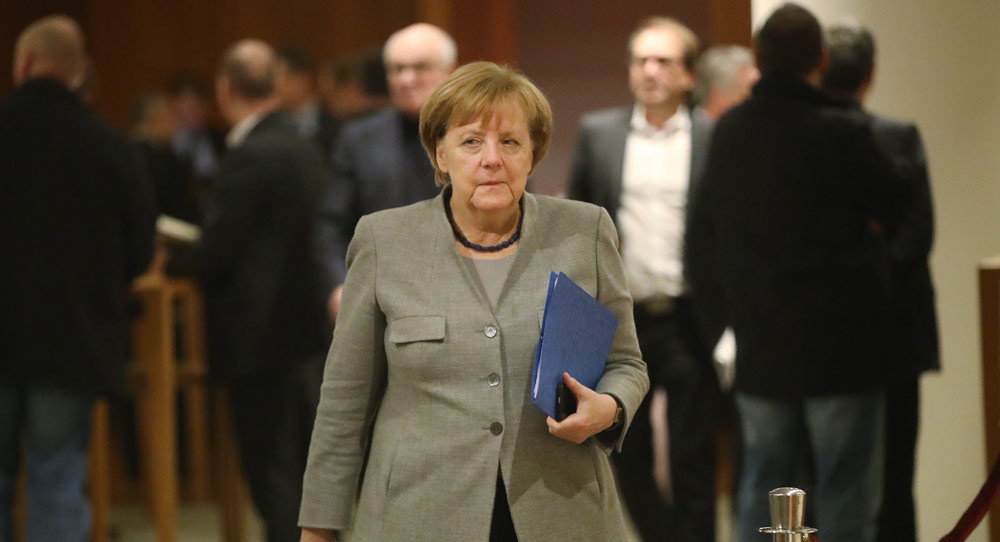
The collapse of coalition talks in Berlin will have serious repercussions for the rest of the EU.
Attempts by Angela Merkel to form a coalition government and secure her fourth term as German chancellor broke down late Sunday night after the pro-business Free Democrats walked out of the talks.
“Today there was no progress but rather there were setbacks because specific compromises were questioned,” Free Democrat leader Christian Lindner said. “It is better not to rule than to rule the wrong way. Goodbye!”
Merkel, long known for her skills at forging compromises, was visibly taken aback by Lindner’s decision.
“It’s a day at the very least for a profound examination of Germany’s future,” Merkel told reporters after the talks ended. “As chancellor, as caretaker chancellor, I will do everything to make sure this country continues to be well governed through the tough weeks ahead,” she added.
No matter what Merkel does next, Germany has become Europe’s latest problem. The expectation that the country, under Merkel’s helm, would be predictable and stable is no longer a given.
The EU has been dealt a severe blow at a time when Brexit talks remain bogged down, when the eurozone is in need of reform, and when French President Emmanuel Macron had been waiting for Merkel to head a new government so that both leaders could press ahead with shaping Europe. For the moment, Macron is alone in his quest to change the EU.
It was never going to be easy for Merkel to forge a coalition of the Christian Democrats (CDU), the Christian Social Union (CSU), the Free Democrats, and the Greens.
The “Jamaica coalition” (so-called because of the symbolic colors of the parties are also the colors of the Jamaican flag) was beset by major differences right from the beginning of the negotiations.
The refugee and asylum issue was just one of the contentious issues in the coalition talks.
The heavy losses suffered by the conservative bloc during September’s federal election were blamed on Merkel’s “open door” policy, which led to more than one million refugees entering the country in 2015. As a result, the far-right, anti-migration party Alternative for Germany (AfD) won more than 12 percent of this year’s vote—and entered the Bundestag for the first time with 94 seats. That result made it the third largest party in the parliament.
During the coalition negotiations, Horst Seehofer, leader of the CSU, which is based in Bavaria, was persistent about a cap on asylum seekers, in addition to opposing family unification. Seehofer was desperate to be as tough as possible so as to roll back the popularity of the AfD ahead of next year’s state elections. In short, his sights over the past four weeks were about milking the talks as much as possible in order to shore up the CSU in Bavaria.
As for the Greens, they wanted more stringent measures introduced on environment policy.
But it was the Free Democrats that were the most innovative in their proposals. Lindner wanted the new government to embrace digitization, modernize asylum laws, and introduce a long overdue tax reform. He also wanted to phase out the special “Soli” tax for eastern German states that was introduced after reunification. Unwilling to go back on his electoral promises, Lindner threw in the towel just before midnight.
‘‘A chance has been missed to go beyond ideological boundaries and agree realistic solutions,” Eric Schweitzer, head of Germany’s DIHK chamber of industry and commerce, told the Deutsche Presse-Agentur newswire. “But the DIHK is confident that all responsible parties will ultimately be capable of finding sensible compromises.” At least that’s what he hopes.
It is difficult to see Lindner returning to the negotiating table unless there’s a major shift by the parties. Besides, any trust built up over the past few weeks among these four very different political groups has been all but destroyed.
Merkel’s options are limited.
She could form a minority government, which would be unprecedented in Germany’s post-1945 era. But stability would not be guaranteed.
She could ask the Social Democrats to join another grand coalition. But there is little appetite for the SPD to prop up Merkel, which they did from 2013 to 2017 as the junior partner in her governing coalition. The SPD decided to go into the opposition after a miserable election result last September.
Merkel’s other option rests with President Frank-Walter Steinmeier, who could call new elections. But it’s hard to see Merkel’s conservative block or the other parties, with the exception of the AfD, relishing such a prospect. Indeed, Steinmeier urged all the parties to return to the talks, saying they had an obligation to their voters to do so. Besides, there is concern outside Germany about the idea that Europe's biggest economy might not be able to form a new government.
It’s also hard to see Merkel’s critics inside her own party remaining silent about their leader’s future. And here is the issue facing Merkel’s Germany. Governing the country is one thing. Leading it—with a compass and projecting new ideas—is another. What happens over the next few hours or days is anyone’s guess. One thing is certain: Europe is weaker and Germany has become unpredictable.
This article has been updated to note the German president’s urging that parties resume coalition talks.

Nonresident Senior Fellow, Carnegie Europe
Dempsey is a nonresident senior fellow at Carnegie Europe
Recent Work
Judy Dempsey
Judy Dempsey
Carnegie does not take institutional positions on public policy issues; the views represented herein are those of the author(s) and do not necessarily reflect the views of Carnegie, its staff, or its trustees.
French President Emmanuel Macron has unveiled his country’s new nuclear doctrine. Are the changes he has made enough to reassure France’s European partners in the current geopolitical context?

Rym Momtaz, ed.
European reactions to the war in Iran have lost sight of wider political dynamics. The EU must position itself for the next phase of the crisis without giving up on its principles.

Richard Youngs
Europe isn’t as weak in the new geopolitics of power as many would believe. But to leverage its assets and claim a sphere of influence, Brussels must stop undercutting itself.

Dimitar Bechev
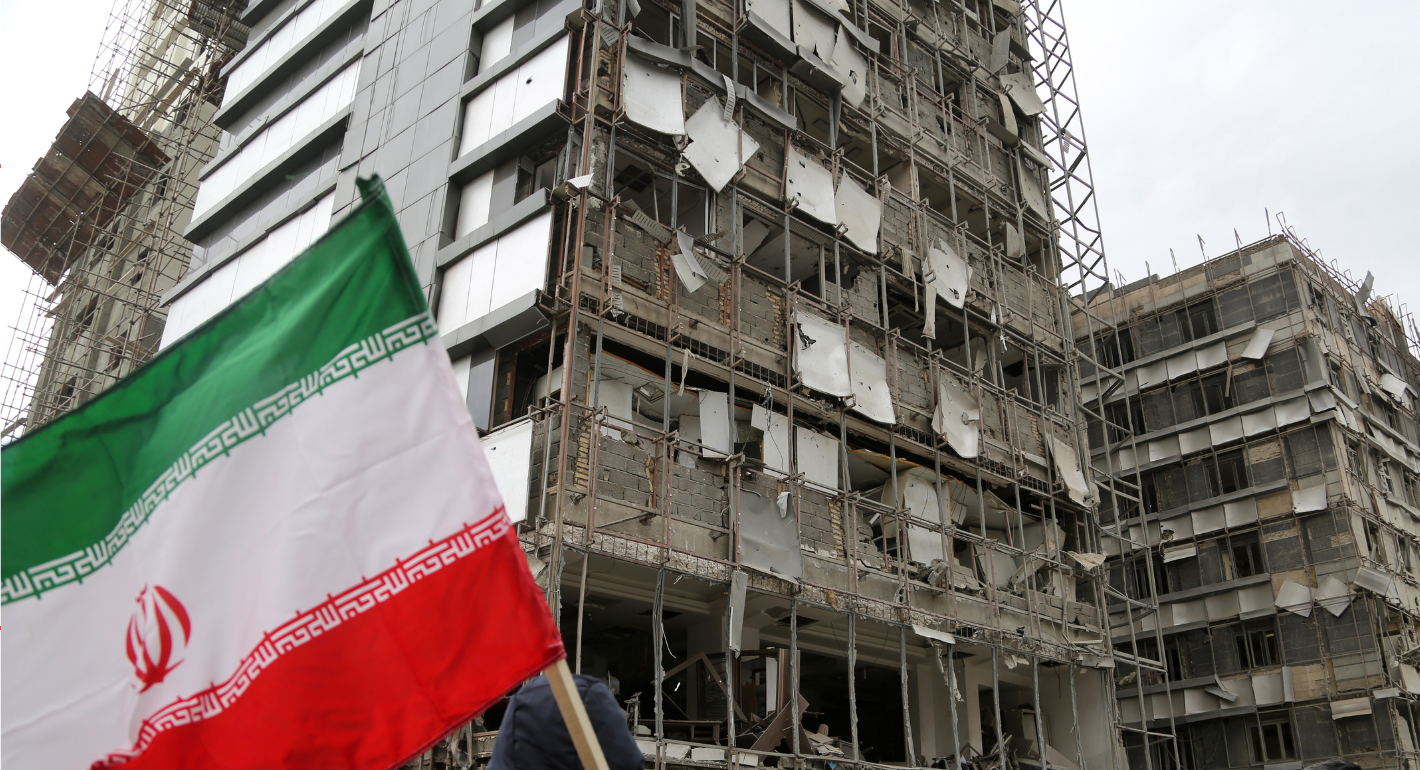
Europe’s reaction to the war in Iran has been disunited and meek, a far cry from its previously leading role in diplomacy with Tehran. To avoid being condemned to the sidelines while escalation continues, Brussels needs to stand up for international law.

Pierre Vimont
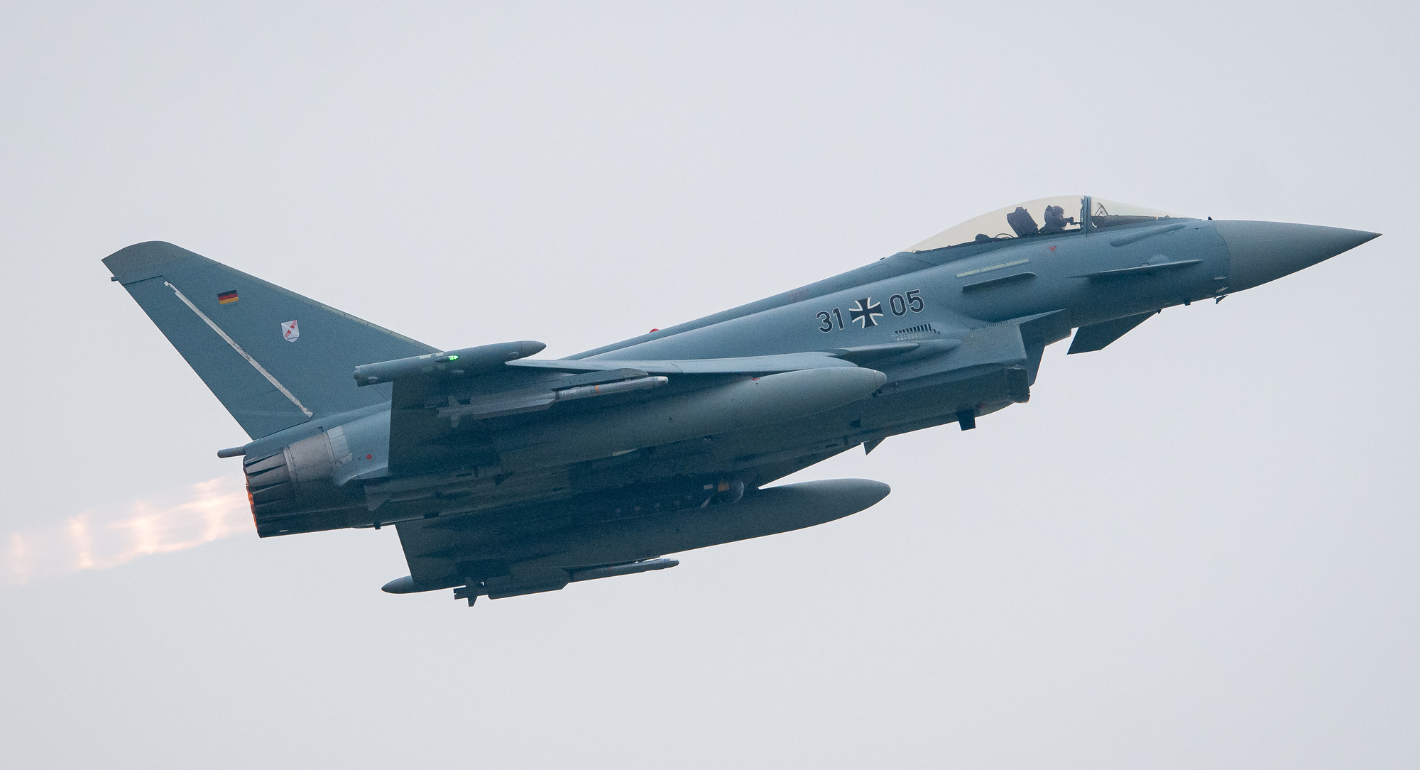
France and Germany’s failure to agree on the Future Combat Air System (FCAS) raises questions about European defense. Amid industrial rivalries and competing strategic cultures, what does the future of European military industrial projects look like?
Rym Momtaz, ed.