

Commentary
Judy Dempsey
{
  "authors": [
    "Judy Dempsey"
  ],
  "type": "commentary",
  "blog": "Strategic Europe",
  "centerAffiliationAll": "",
  "centers": [
    "Carnegie Endowment for International Peace",
    "Carnegie Europe"
  ],
  "collections": [
    "Transatlantic Cooperation",
    "Brexit and UK Politics"
  ],
  "englishNewsletterAll": "",
  "nonEnglishNewsletterAll": "",
  "primaryCenter": "Carnegie Europe",
  "programAffiliation": "",
  "programs": [],
  "projects": [],
  "regions": [
    "Europe",
    "North America",
    "Western Europe"
  ],
  "topics": [
    "Foreign Policy",
    "EU",
    "Security"
  ]
}
Source: Getty
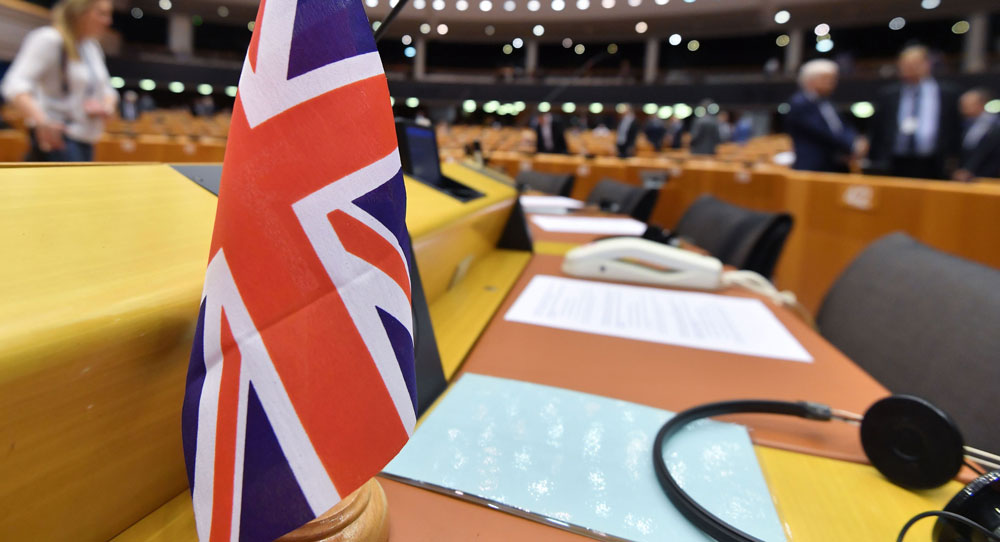
The Brexit saga is exposing the inadequacy of the EU’s foreign and security policy. If only Germany would provide the leadership the union now needs.
Britain’s decision to leave the European Union, assuming it will happen, coincides with fundamental geostrategic shifts that will have a profound impact on Europe’s future. Germany’s role will be critical for shaping the bloc’s response to these transformations. It’s not certain, however, that Berlin will provide the leadership needed to cope with such changes.
The shifts are threefold. First is the fraying of the transatlantic relationship.
It’s easy to blame U.S. President Donald Trump for undermining the special security pact that has made Europe strong, democratic, and prosperous since 1945. But even before Trump entered the White House, the Europeans were criticized for not pulling their weight inside NATO. They took America’s security guarantee for granted.The issue is not just about the need for the European allies to spend more on defense. The issue is about how to come to terms with the end of the post-1945 era. The multilateral institutions that the Americans built—which were also about the West setting global norms and standards—need a radical overhaul. Just consider the paralysis of the UN Security Council or the World Trade Organization. Neither is equipped to deal with the growing role of China or Russia’s disruptive foreign policy in Europe and the Middle East.
The Trump administration is increasingly focused on what it sees as China becoming a security and political competitor to the United States. Yet instead of trying to redefine U.S. relations with Europe, Trump has embarked on a trade war with the EU, whether it’s over German car exports to the United States or subsidies for Airbus. This does little to foster a united Western response to Beijing.
Some European leaders believe the response to Trump is to move the EU toward “strategic autonomy”—an ambition as unrealistic as Europe’s ability to forge a serious foreign and security policy. Indeed, Brexit has exposed why calls for strategic autonomy amount to a naïve response to the changes taking place in America’s own foreign and security policy. This is because Germany remains reluctant to give Europe the kind of leadership the union now needs.
This is the second shift taking place in Europe: the fraying of the Franco-German relationship, which Chancellor Angela Merkel’s center-right coalition has in substance neglected. The relationship used to be the engine for European integration, something that Emmanuel Macron has been pushing for—especially on the economic and political fronts—since becoming French president nearly two years ago.
Even if his views are anathema to Merkel (who fears more integration would in fact lead to different speeds inside the bloc), surely she could have offered some ideas about how she sees Europe’s future. The response by her chosen heir—Annegret Kramp-Karrenbauer, who is now leader of the Christian Democrats—to Macron’s proposals were shallow and even insulting. As chancellor, it should have fallen to Merkel to respond.
The weakness of the Franco-German relationship may well please some other EU governments, including Poland and also some of the Northern European member states. They see Brexit giving Berlin and Paris more clout inside the EU at the expense of smaller countries.
But if Berlin and Paris aren’t going to work together to give the EU the direction it needs to respond to geostrategic shifts at the global level, and also to begin to fill the dangerous gaps in Europe’s security and defense policy, then which countries will step in? The EU is weaker as a result of Berlin and Paris being out of step. And the current drift in the Franco-German relationship plays right into the hands of Russia and China.
The third shift is the debilitating impact that Brexit is having on Europe. For the past two years the issue has devoured the attention of the bloc’s leaders. This will not change in the coming weeks or months. Moreover, the EU will be consumed by the European Parliament elections and all the horse trading that will ensue from those results when it comes to selecting the new leaders of the EU institutions.
Surely this should be a great opportunity to choose strong personalities to lead the bloc’s top positions. But the growing trend in Germany—and in other member states—toward defending national interests instead of strengthening the role of the European Commission and creating a genuine, coherent foreign policy does not bode well for those wanting firm and credible leaders in the institutions in Brussels.
In short, all the above shifts are part of the EU’s own making. Blaming Brexit or Trump for Europe’s woes amounts to passing the buck.

Nonresident Senior Fellow, Carnegie Europe
Judy Dempsey is a nonresident senior fellow at Carnegie Europe
Recent Work
Judy Dempsey
Judy Dempsey
Carnegie does not take institutional positions on public policy issues; the views represented herein are those of the author(s) and do not necessarily reflect the views of Carnegie, its staff, or its trustees.

The EU can impose sanctions but struggles to enforce them without the United States. With Washington increasingly disinterested in backing European interests, the bloc must now fend for itself.


Nicu Popescu, Tiago Antunes

Russia is testing the waters of NATO’s mutual defense clause. What do strikes in Romanian territorial waters mean for the alliance’s posture toward Moscow?

Dimitar Bechev

With its public finances in shambles, the far right polling at 35 percent ahead of the 2027 presidential election, and a growing protest movement, is France’s crisis a threat to the EU’s geopolitical awakening?

Rym Momtaz, ed.

Ahead of a tough winter for Ukraine, Donald Trump’s swing back toward Russia bodes ill. But instead of panicking, Kyiv’s European allies are focusing on action.
Rym Momtaz

While the EU and European governments are embracing the much-lauded middle-power moment, this entails three difficult conundrums.

Richard Youngs