

Commentary
Rosa Balfour
{
  "authors": [
    "Rosa Balfour"
  ],
  "type": "commentary",
  "blog": "Strategic Europe",
  "centerAffiliationAll": "",
  "centers": [
    "Carnegie Endowment for International Peace",
    "Carnegie Europe"
  ],
  "collections": [
    "EU Integration and Enlargement",
    "Coronavirus"
  ],
  "englishNewsletterAll": "",
  "nonEnglishNewsletterAll": "",
  "primaryCenter": "Carnegie Europe",
  "programAffiliation": "",
  "programs": [],
  "projects": [],
  "regions": [
    "Europe",
    "Western Europe"
  ],
  "topics": [
    "Foreign Policy",
    "EU",
    "Political Reform"
  ]
}
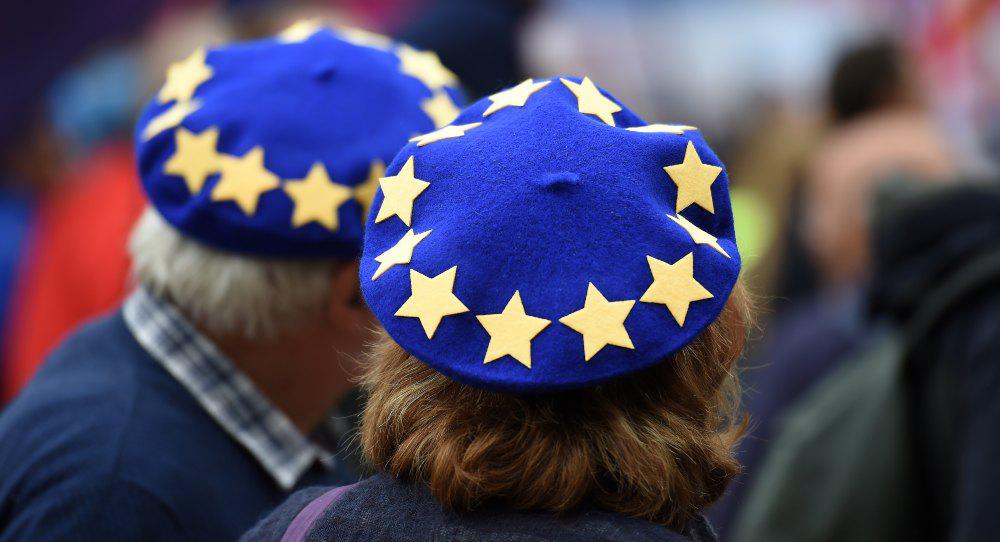
Source: Getty
Europe is well placed to push for reforms of global cooperation and governance after the coronavirus pandemic. But to do that, Europe itself must change first.
This has been a period of wartime rhetoric aplenty.
The spread of the new coronavirus was met with exhortations to the population to bring out its wartime spirit and fight the virus.
Meanwhile, a dangerous and divisive war of words has been escalating between the U.S. administration and China’s leadership. And on March 31, 2020, UN Secretary General António Guterres warned that the pandemic is the greatest crisis since World War II, posing great risks of “enhanced instability, enhanced unrest, and enhanced conflict.”This dangerous space, bereft of leadership, is one where a greater involvement of Europe would matter.
The commemoration of the end of World War II in Europe on May 8 reminded the world of the devastation of nationalism, authoritarianism, and war—and of the achievements of peace thanks to U.S. commitments and through integration in Europe.
The other story of this pandemic is one of solidarity, cooperation, mutual support, and empathy. This story is shaped everyday through individual compassion and mobilization to support those more in need, through bottom-up entrepreneurship and creativity in making up for the failings of leaders and governments. There are similar stories across the globe.
The pull toward nationalism and authoritarianism and the push for greater international cooperation are both being accentuated by the coronavirus. The debate on how the world will emerge from the pandemic has taken on some binary connotations: descent into nationalism versus the need for cooperation.
On May 8, the UN failed to agree to promote an international ceasefire of all conflicts because of differences between the United States and China. If this is what global leadership has to offer, the world is in urgent need of alternative narratives and politics.
With the specter of such instability, can Europe offer a different narrative?
European rhetoric always offers its own history of interdependence as a model for the future. At a minimum, the EU is joining forces with other countries to lead attempts to strengthen the World Health Organization, to drive the international financing of medical research, and to support debt relief for the world’s poorest countries. But past achievements are not enough; citizens are disenchanted with how the EU works, and the EU’s peace project has failed to promote peace outside its borders.
If Europe wants to take on some leadership in shaping the post-pandemic world, it too needs to change. The past decade has rattled Europe, each crisis leaving it weaker and more divided than before. Its search for a global role oscillates between commitments to multilateralism and calls to become more “geopolitical” and “speak the language of power.”
In practice, it manages to do too little, squeezed by competition between other actors and too often divided itself, disappointing the idealists and the realists at the same time. Europe needs to step out of this binary logic of nationalism versus international cooperation and demonstrate that things can be done differently.
Rethinking Europe is on the agenda of many. French President Emmanuel Macron is among the most visionary of political leaders, but the ongoing debate has been engaging public intellectuals, think tanks, academics, and civil society for years. Initiatives, new policy ideas, and reform proposals abound. The Conference on the Future of Europe, supposed to be launched on May 9 but postponed to September, is expected to further promote that debate.
The coronavirus pandemic has put the importance of people and public goods under a new light—these can become key principles for how Europe can move forward. To this goal, the EU must reconnect with Europeans to rebuild the legitimacy of the EU, on the one hand, and renew Europe’s global role in collaboration with citizens around the world, on the other.
The pandemic has shown that the better the cooperation between different levels of government, the better the health and safety of the public as well as the prospects for economic recovery. Europe’s track record is checkered, after a faulty start, but by comparison with the United States, its coordination is remarkable.
The European Union is also far better equipped than nations to harness the positive stories of cooperation during the pandemic and reform its system of governance.
For the EU to move toward a people-centered model of governance, it needs to break out of the intergovernmental modus operandi which has dominated decisionmaking in the past decade and connect with the different levels of government within Europe—the EU, the national, the regional, and the local. This is both a means to design people-first policies and to bring citizens closer to European politics and decisionmaking.
Internationally, the dual impact of the coronavirus and the absence of global leadership is driving fragmentation and risks of further political and civil unrest. The need for international stabilizing and tension-diffusing initiatives is acute, while the space for them is very narrow. Reforming the institutions of international governance is unlikely to happen with blocking rival powers.
But the crisis has also brought forward new understandings of what global public goods are: the environment, health, good governance. These can restart a conversation among coalitions and alliances of states, organizations, and global civil society with the goal of doubling down on efforts to rethink international cooperation.
Europe still matters. Not just because its collaborative past brought peace and democracy to a war-torn continent, but because it can coalesce the positive stories of the pandemic and contribute to global efforts to reform cooperation and governance.
To achieve that, Europe will need political imagination—and confidence.

Director, Carnegie Europe
Rosa Balfour is the director of Carnegie Europe. Her fields of expertise include European politics, institutions, and foreign and security policy.
Recent Work
Rosa Balfour

Rosa Balfour, Stefan Lehne, Elena Ventura
Carnegie does not take institutional positions on public policy issues; the views represented herein are those of the author(s) and do not necessarily reflect the views of Carnegie, its staff, or its trustees.

French President Emmanuel Macron has unveiled his country’s new nuclear doctrine. Are the changes he has made enough to reassure France’s European partners in the current geopolitical context?

Rym Momtaz, ed.
European reactions to the war in Iran have lost sight of wider political dynamics. The EU must position itself for the next phase of the crisis without giving up on its principles.

Richard Youngs
Europe isn’t as weak in the new geopolitics of power as many would believe. But to leverage its assets and claim a sphere of influence, Brussels must stop undercutting itself.

Dimitar Bechev

Europe’s reaction to the war in Iran has been disunited and meek, a far cry from its previously leading role in diplomacy with Tehran. To avoid being condemned to the sidelines while escalation continues, Brussels needs to stand up for international law.

Pierre Vimont
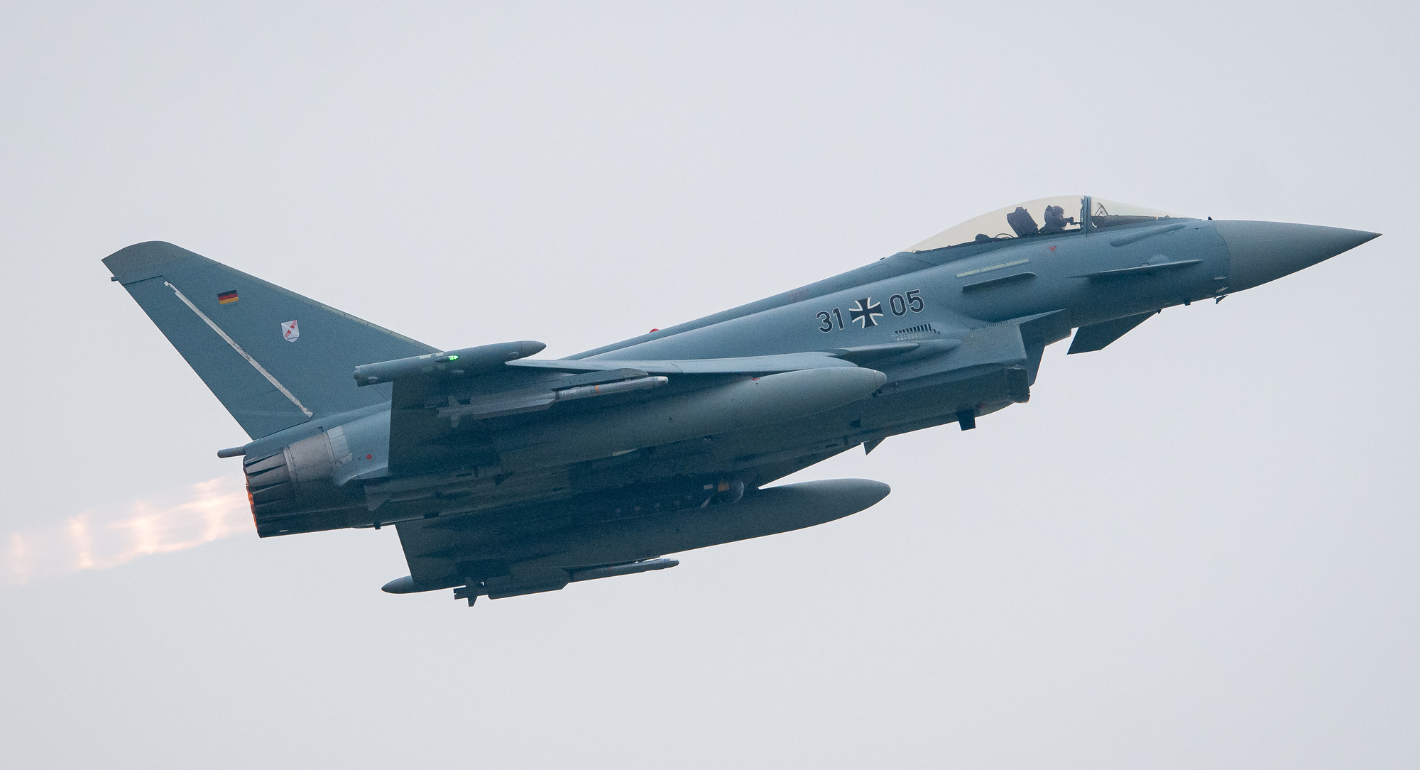
France and Germany’s failure to agree on the Future Combat Air System (FCAS) raises questions about European defense. Amid industrial rivalries and competing strategic cultures, what does the future of European military industrial projects look like?
Rym Momtaz, ed.