

Commentary
Judy Dempsey
{
  "authors": [
    "Judy Dempsey"
  ],
  "type": "commentary",
  "blog": "Strategic Europe",
  "centerAffiliationAll": "",
  "centers": [
    "Carnegie Endowment for International Peace",
    "Carnegie Europe"
  ],
  "collections": [
    "EU Integration and Enlargement"
  ],
  "englishNewsletterAll": "",
  "nonEnglishNewsletterAll": "",
  "primaryCenter": "Carnegie Europe",
  "programAffiliation": "",
  "programs": [],
  "projects": [],
  "regions": [
    "Europe",
    "Western Europe"
  ],
  "topics": [
    "EU",
    "Democracy"
  ]
}
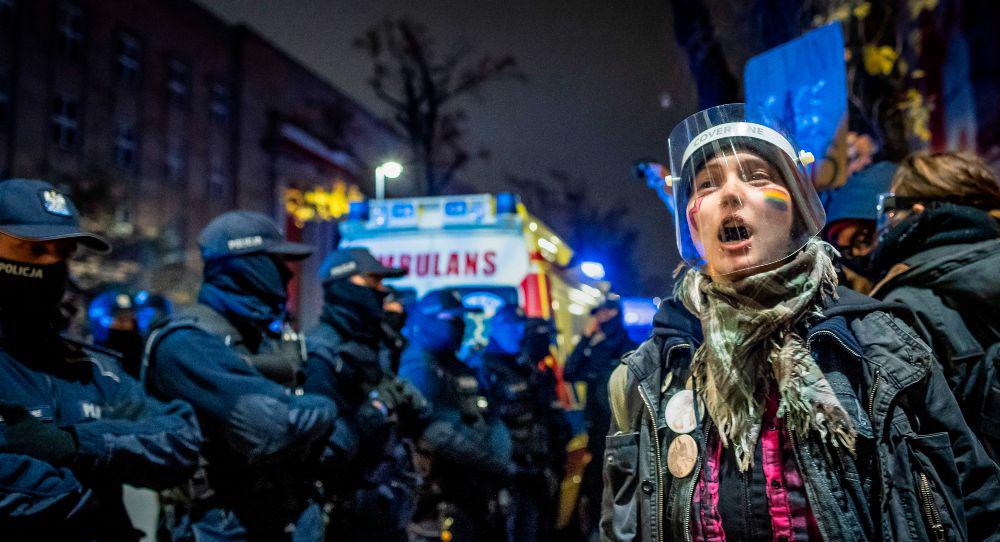
Source: Getty
If the European Union does not protect its rule of law and tackle corruption, the democratic backsliding of Hungary and Poland will deal a devastating blow to Europe’s achievements since World War II.
The European Union has reached the crossroads. Either its leaders choose to protect the values that the bloc stands for. Or they can discard them and turn their back on the achievements chalked up by the EU since its foundation after 1945. At stake is Europe’s commitment to democracy.
Those achievements were hard-earned. They were fundamentally about bringing peace and stability to a Europe of which large parts were devastated by World War II.
They were about ending so many years of enmity between France and Germany. And especially for Germany, they were about coming to terms with the destruction of European Jewry in the Holocaust.
A later achievement was the EU’s enlargement policy. Strongly supported by the United States, enlargement was about expanding democracy, the market economy, the rule of law, the separation of powers, and solidarity between European countries.The accession of Greece, Portugal, and Spain to the bloc in the 1980s gave these countries the chance to build democracy after years of living under fascist or military dictatorships. The big bang of 2004, when the EU admitted most of the former communist countries of Central and Eastern Europe, was about Europe becoming whole, free, and united. What achievements!
But now, that unity, freedom, and democracy is under severe strain—indeed, under threat—as two countries that joined in 2004, Hungary and Poland, are doing their utmost to undermine so much of what the EU stands for.
The leaders of Hungary and Poland, so far, are determined to block the EU’s €1.8 trillion budget package, consisting of the seven-year budget for 2021–2027 and the one-off Next Generation EU instrument aimed at helping the bloc’s economies recover from the coronavirus pandemic.
After many years of turning a blind eye to or mildly chastising Hungary and Poland for undermining the rule of law, many deputies in the European Parliament and most of the member states have had enough.
They have made the disbursal of EU funds conditional on abiding by the EU’s treaties. Article 2 of the Treaty on European Union couldn’t be clearer. It states that the union is founded on the values of respect for human dignity, freedom, and democracy.
Just as important, in July 2020, the European Council agreed that the protection of the union’s financial interests along with the respect for the rule of law is important.
In the case of Poland, it has become so obvious how Jarosław Kaczyński, leader of the governing Law and Justice Party, has been dismantling the independence of the Polish judiciary. This assault on the rule of law endangers democracy and accountability, not only in Poland, but also for the rest of the EU. It erodes the separation of powers, one of the fundaments of democratic institutions and practices.
In Hungary, Prime Minister Viktor Orbán has gotten away with using EU funds to build a semi-authoritarian system based on cronyism and increasingly centered on himself. That is why the July European Council also stressed the importance of protecting EU funds against fraud and irregularities.
Hungary and Poland are standing firm.
A joint declaration by their prime ministers on November 26 in Budapest was meant as a threat to the other member states. “Our objective is to prevent a mechanism which would not strengthen, but undermine the Rule of Law within the Union by degrading it to a political instrument.” They even added that the “proposed conditionality circumvents the Treaty” and met again on November 30 in Warsaw to further coordinate their positions.
Most of the other EU governments have had enough of the blackmail.
Spain and Italy, which have been particularly hard hit by the pandemic, desperately need the budget and recovery funds. The northern member states, particularly the Netherlands, are in no mood to compromise. The rule of law and the budget have become indivisible. German Chancellor Angela Merkel’s attempts to end the impasse by proposing compromises, watering down the conditionality, have so far not been accepted by Budapest and Warsaw.
But the EU can bypass the two countries in a number of ways.
Several analysts suggest enhanced cooperation, which would allow a group of countries to move ahead with the budget, circumventing the EU’s requirement of unanimity voting on financial matters. Others suggest a special framework for eurozone countries, with an exemption for non-eurozone countries to join. These options are technical and complex but doable.
But ultimately, it’s the bigger picture that matters.
The EU prides itself on internal solidarity and the rule of law. By blocking crucial funds, the leaders of Hungary and Poland are damaging that solidarity in order to defend their own hold on power, in turn undermining the EU’s commitment to democracy at home and abroad.
It is this commitment that is now in danger. If not averted soonest, Europe’s slide away from democracy cannot be underestimated.

Nonresident Senior Fellow, Carnegie Europe
Dempsey is a nonresident senior fellow at Carnegie Europe
Recent Work
Judy Dempsey
Judy Dempsey
Carnegie does not take institutional positions on public policy issues; the views represented herein are those of the author(s) and do not necessarily reflect the views of Carnegie, its staff, or its trustees.
French President Emmanuel Macron has unveiled his country’s new nuclear doctrine. Are the changes he has made enough to reassure France’s European partners in the current geopolitical context?

Rym Momtaz, ed.
European reactions to the war in Iran have lost sight of wider political dynamics. The EU must position itself for the next phase of the crisis without giving up on its principles.

Richard Youngs
Europe isn’t as weak in the new geopolitics of power as many would believe. But to leverage its assets and claim a sphere of influence, Brussels must stop undercutting itself.

Dimitar Bechev
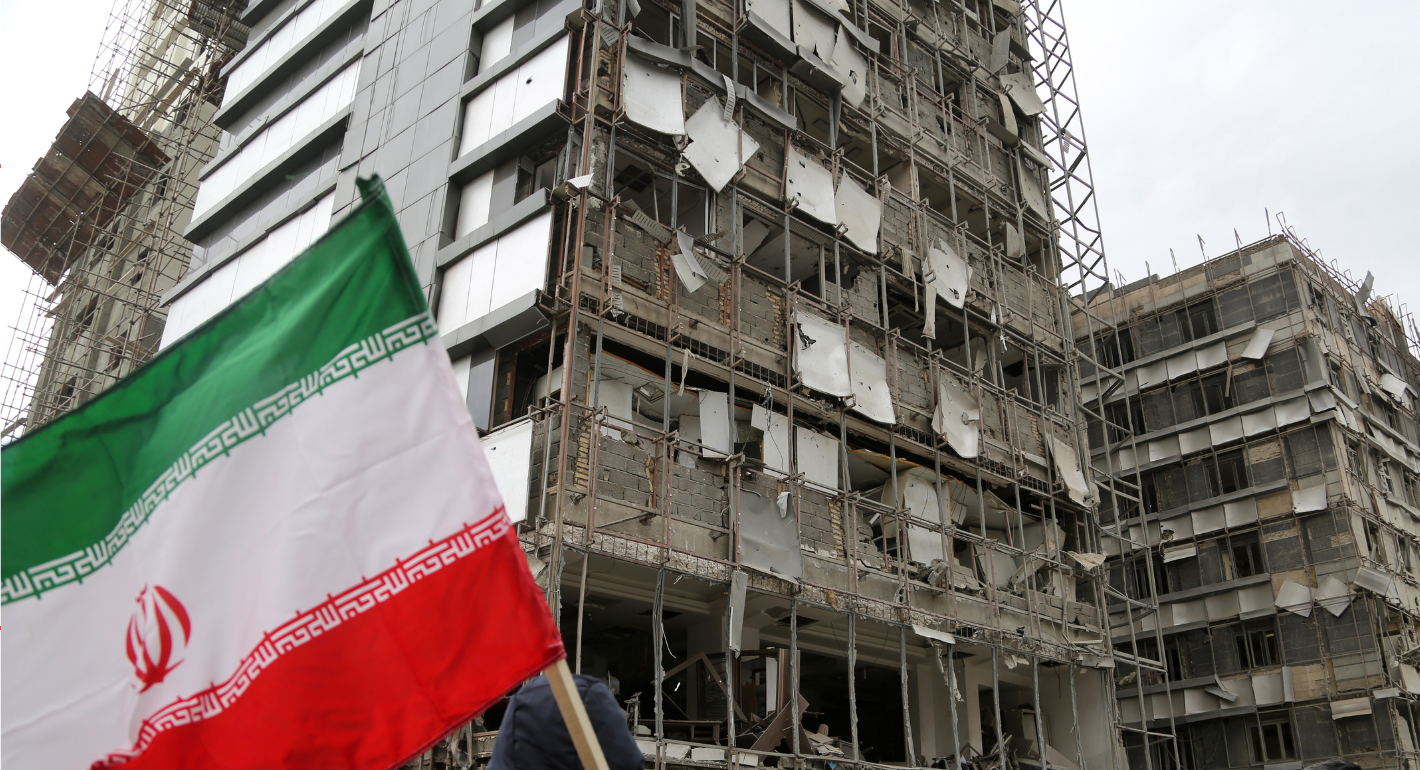
Europe’s reaction to the war in Iran has been disunited and meek, a far cry from its previously leading role in diplomacy with Tehran. To avoid being condemned to the sidelines while escalation continues, Brussels needs to stand up for international law.

Pierre Vimont
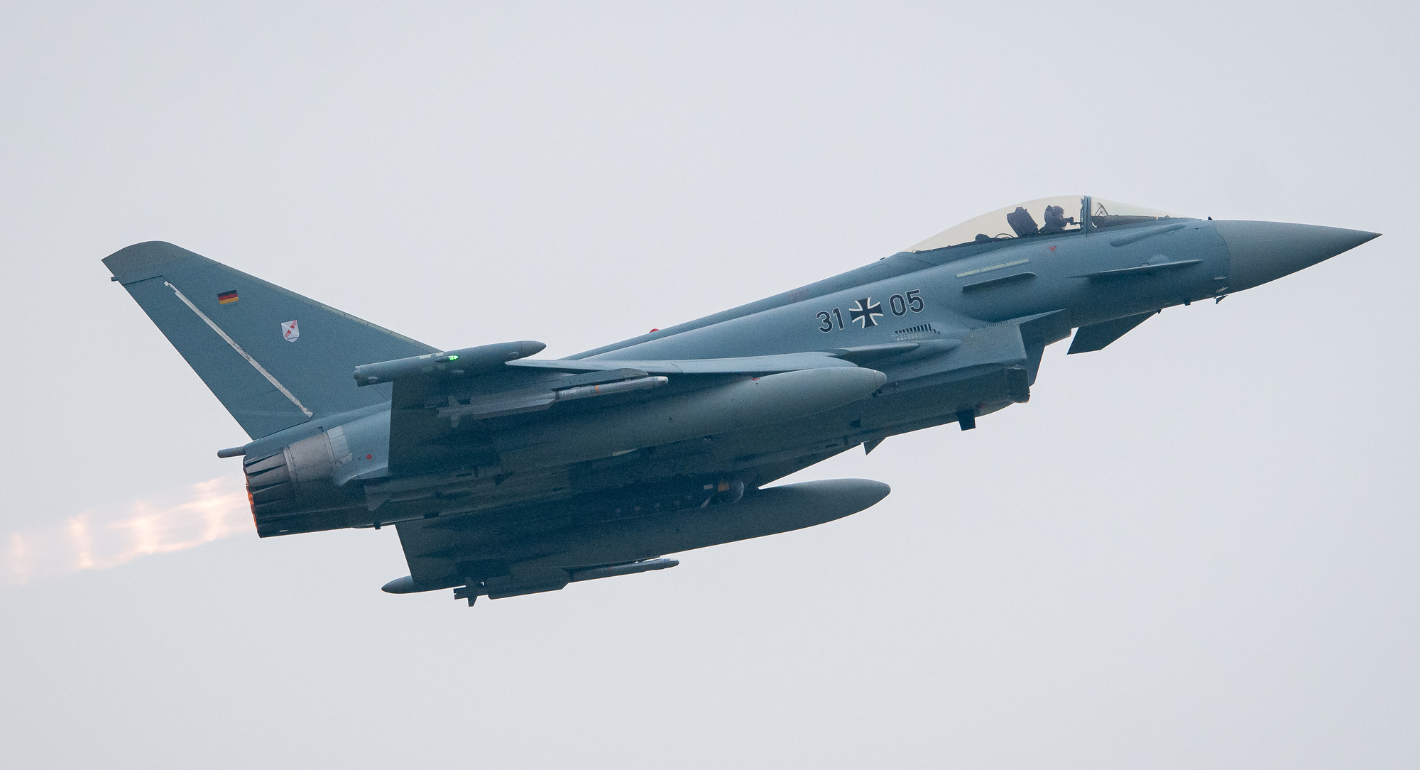
France and Germany’s failure to agree on the Future Combat Air System (FCAS) raises questions about European defense. Amid industrial rivalries and competing strategic cultures, what does the future of European military industrial projects look like?
Rym Momtaz, ed.