

Commentary
Gwendolyn Sasse
{
  "authors": [
    "Gwendolyn Sasse"
  ],
  "type": "commentary",
  "blog": "Strategic Europe",
  "centerAffiliationAll": "",
  "centers": [
    "Carnegie Endowment for International Peace",
    "Carnegie Europe"
  ],
  "collections": [
    "Europe’s Eastern Neighborhood"
  ],
  "englishNewsletterAll": "",
  "nonEnglishNewsletterAll": "",
  "primaryCenter": "Carnegie Europe",
  "programAffiliation": "",
  "programs": [],
  "projects": [],
  "regions": [
    "Russia",
    "Europe",
    "Eastern Europe",
    "Western Europe"
  ],
  "topics": [
    "Foreign Policy",
    "EU"
  ]
}
Source: Getty
The German chancellor’s legacy with regard to Russia and Ukraine is mixed, if not contradictory. Still, her successor is unlikely to show the same level of interest, commitment, or clout in their relations with Kiev and Moscow.
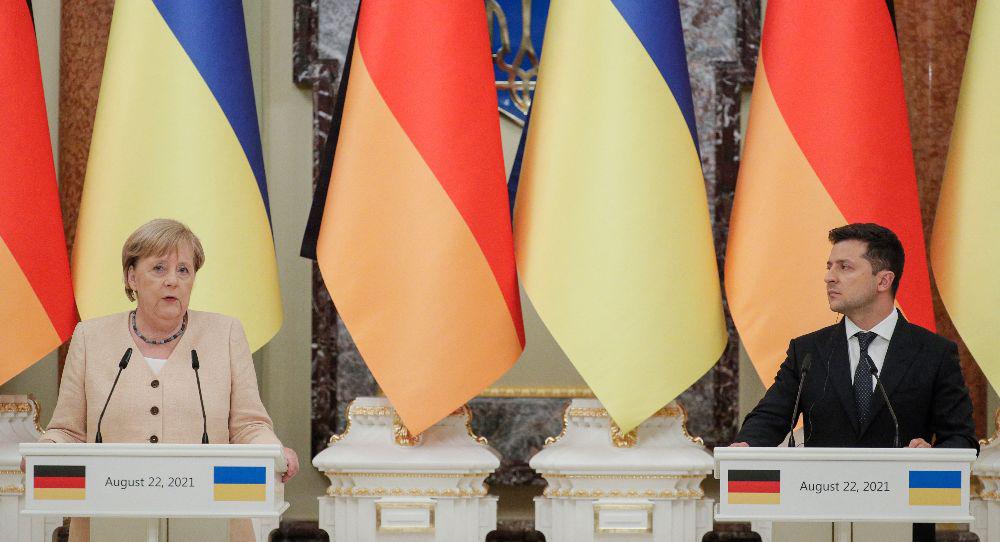
Shortly before the end of her term in office, German Chancellor Angela Merkel made a conscious choice to schedule separate trips to Moscow and Kiev in quick succession.
The signal she sent to both capitals but also to her potential successors currently competing in the German election is that both Ukraine and Russia have been and need to remain a priority in German and EU foreign policy.
Merkel’s trip to Moscow may well have marked the end of an era, as it has been she who time and again sought the direct contact to President Vladimir Putin amid steadily worsening EU-Russian and German-Russian relations.
She was the only one in the EU who would and could do this, maintaining at least a direct channel of communication in an increasingly confrontational relationship.
Merkel and Putin know each other well and they used their last bilateral meeting to restate their positions without expecting any narrowing of the distance between them.
The current situation in Afghanistan may have been the most productive topic of their discussion. Russia has an interest in stability and preventing a spillover of security risks into the North Caucasus and Central Asia. Its relations with the Taliban and Pakistan may constitute one of the few remaining means to influence the situation on the ground.
Merkel must have also sounded out Putin with regard to her proposal to schedule a new summit of the Normandy Format, which, together with the leaders of France, Russia, and Ukraine, she set up to de-escalate and end the war in eastern Ukraine, where Russia has supported local separatists since 2014.
The encounter between Merkel and Ukrainian President Volodymyr Zelenskiy two days later was visibly strained.
Zelenskiy thanked Merkel for Germany’s assistance but also took a clear stand against the highly controversial Nord Stream 2 gas pipeline. He emphasized that Nord Stream 2 was not only an economic problem for the Ukrainian budget, which relies on the income generated from the transit of Russian gas, but above all a security concern, which had been ignored by the German government.
Neither the recent U.S.-German compromise deal, which lifted U.S. sanctions on companies involved in Nord Stream 2 and formulated a commitment to invest in Ukraine’s renewable energy sector, nor Merkel’s attempts to preserve part of the gas transit through an agreement with Moscow, can alleviate these security concerns.
Zelenskiy would have preferred Merkel to visit Kiev a day or two later than she did.
A day after her visit, on August 23, Ukraine’s Crimea Platform was officially launched. Instead of Merkel or Foreign Minister Heiko Maas, Economy Minister Peter Altmaier was the German government representative in attendance.
This new consultation and coordination forum aims to focus domestic and international attention on the consequences of Russia’s annexation of Crimea and work toward a long-term reintegration of the peninsula into the Ukrainian state.
While the EU’s sanctions regime in response to the annexation—in the consolidation of which Merkel played a critical role—is still in existence, the issue as such has slipped off the list of European priorities in recent years.
The Crimea Platform has the potential to add more substance to the standard phrase about the non-recognition of the annexation, in particular through the dissemination of more detailed information on the situation of the Crimean Tatars, human rights violations, and socioeconomic developments.
Zelenskiy’s renewed focus on Crimea is consistent with remarks he made during his election campaign, when he called for increased efforts to make the populations of Crimea and the self-declared Donetsk and Luhansk people’s republics feel part of Ukraine.
The fact that he is concentrating on this issue now, however, is also related to the fact that his promise to end the war in eastern Ukraine has proven impossible to deliver on.
His second election promise, to intensify the fight against corruption, has also generated a mixed track record to date. In the end, his Crimea Platform cannot compensate for the lack of concrete results in other policy areas. Moreover, the Crimea issue is too important to serve as a political stopgap. If the new initiative is not filled with life, this will play directly into Russia’s hands.
The other date Zelenskiy would have liked Merkel’s visit to coincide with was the thirtieth anniversary of Ukrainian independence on August 24. The official celebration was accompanied by a military parade showcasing new military equipment. Thus, the image conveyed was that of a country committed to fight for its independence.
A lot has happened in the last thirty years since Ukrainian independence. President Putin keeps reopening the question of Ukrainian independence, but the annexation of Crimea and the Russia-sponsored war in eastern Ukraine have strengthened rather than weakened the resolve of Ukrainian political elites and, even more importantly, the Ukrainian population.
Merkel’s trips to Moscow and Kiev have underlined the inherent contradictions in Germany’s policy on Russia and Ukraine. Prioritizing bilateral economic relations with Russia at the expense of EU energy and climate policies and Central and Eastern European security interests reduces the sanctions regime against Russia and assistance to Ukraine to half measures.
Nevertheless, at the moment it is hard to imagine that any of the three main contenders for the post of German chancellor—Christian Democrat leader Armin Laschet, the Social Democrat Olaf Scholz, or the Greens’ leader Annalena Baerbock—would exhibit the same level of interest, commitment, or clout in their respective relations with Kiev and Moscow.
This is the most powerful message of Merkel’s two trips—to Germany and to the EU as a whole.
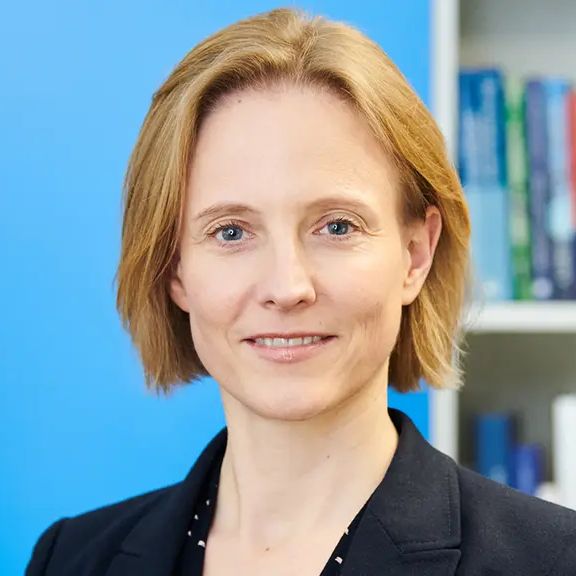
Gwendolyn Sasse is a non-resident senior fellow and director of the Centre for East European and International Studies (ZOiS) in Berlin.
Nonresident Senior Fellow, Carnegie Europe
Sasse is a nonresident senior fellow at Carnegie Europe. Her research focuses on Eastern Europe, with a particular focus on Ukrainian politics and society, EU enlargement, and comparative democratization.
Recent Work
Gwendolyn Sasse
Gwendolyn Sasse
Carnegie does not take institutional positions on public policy issues; the views represented herein are those of the author(s) and do not necessarily reflect the views of Carnegie, its staff, or its trustees.
French President Emmanuel Macron has unveiled his country’s new nuclear doctrine. Are the changes he has made enough to reassure France’s European partners in the current geopolitical context?

Rym Momtaz, ed.
European reactions to the war in Iran have lost sight of wider political dynamics. The EU must position itself for the next phase of the crisis without giving up on its principles.

Richard Youngs
Europe isn’t as weak in the new geopolitics of power as many would believe. But to leverage its assets and claim a sphere of influence, Brussels must stop undercutting itself.

Dimitar Bechev
Europe’s reaction to the war in Iran has been disunited and meek, a far cry from its previously leading role in diplomacy with Tehran. To avoid being condemned to the sidelines while escalation continues, Brussels needs to stand up for international law.

Pierre Vimont
France and Germany’s failure to agree on the Future Combat Air System (FCAS) raises questions about European defense. Amid industrial rivalries and competing strategic cultures, what does the future of European military industrial projects look like?
Rym Momtaz, ed.