

Commentary
Before the next wave of EU enlargement takes place, the union needs to grapple with thorny questions of how power is distributed among its members.
Emil Sondaj Hansen, Ditte Brasso Sørensen
{
  "authors": [
    "Marc Pierini",
    "Francesco Siccardi"
  ],
  "type": "commentary",
  "blog": "Strategic Europe",
  "centerAffiliationAll": "",
  "centers": [
    "Carnegie Endowment for International Peace",
    "Carnegie Europe"
  ],
  "collections": [],
  "englishNewsletterAll": "",
  "nonEnglishNewsletterAll": "",
  "primaryCenter": "Carnegie Europe",
  "programAffiliation": "",
  "programs": [],
  "projects": [],
  "regions": [
    "Russia",
    "Europe",
    "Türkiye",
    "Middle East"
  ],
  "topics": [
    "Foreign Policy",
    "Security",
    "Democracy",
    "Political Reform",
    "EU"
  ]
}
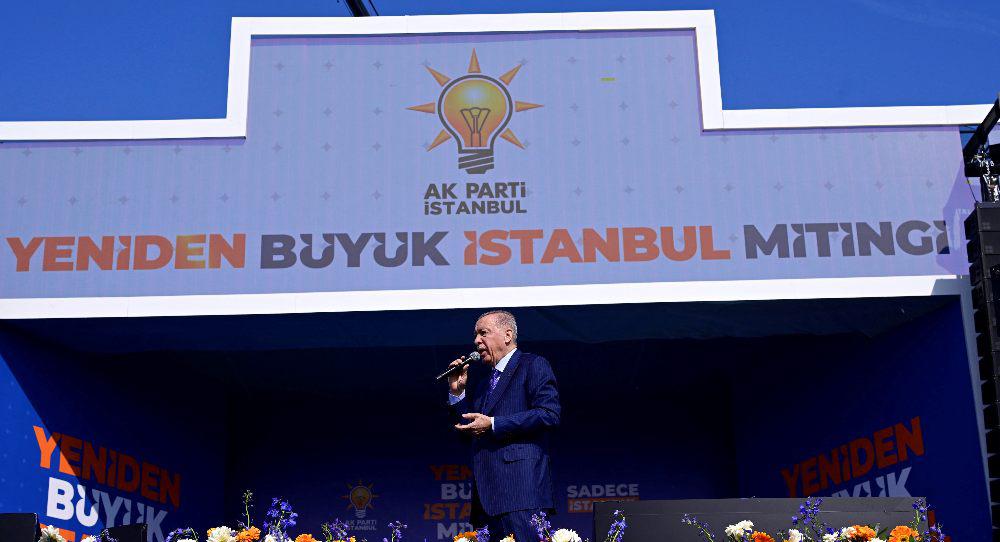
Source: Getty
The outcome of Turkey’s vote will impact the country’s economy, governance, and international posture. A large victory of the ruling party would reinforce Erdogan’s personal power and strengthen his ties to Putin.
On March 31, the citizens of Turkey will vote to choose municipal councilors and mayors.
Local elections do not usually generate much interest on the international stage. This time, however, policymakers across EU institutions, NATO, and European capitals will pay extra attention for a simple reason. This vote constitutes the first popularity test for Turkish President Recep Tayyip Erdoğan after his May 2023 reelection and takes place at a time when one of his closest partners—Russian President Vladimir Putin—has triggered the highest tensions in decades between Russia and the West. Amid these tensions, Ankara plays a crucial role.
But there are more reasons for the West to keep an eye on how the elections unfold.
A large victory of the ruling Justice and Development Party (AKP) will consolidate President Erdoğan’s power, bringing him closer to President Putin’s authoritarian style of government and widening the gap with NATO allies. This will inevitably have an impact on Turkey’s international posture more broadly.
Domestically, the March 31 ballot will have an impact on the country’s economy and governance model. Policy changes on these fronts will be a useful indicator of Turkey’s future direction.
Economically, Turkey’s leadership has been torn between getting easy “political money” from Russia and a tight monetary policy adjustment required to revive its ailing economy. Economic relations between Ankara and Moscow have grown spectacularly since Russia invaded Ukraine in February 2022.
The increase in trade and investment flows between the two countries has gone hand in hand with the West’s criticism of Ankara’s refusal to implement sanctions against Russia. Suspicions that Turkey is helping Russia evade these sanctions have been raised. The Kremlin, for its part, has provided Turkey with substantial financial support amid the latter’s dire economic crisis since 2021.
At home, President Erdoğan reelection in 2023 was followed by a U-turn on the government’s interest-rate policy. This measure, designed to put a halt to the country’s spiraling inflation crisis, had been recently put on hold by the Central Bank presumably to avoid a backlash from citizens impacted by economic hardships. But the corrective monetary policy was resumed on March 21 with a view to taming inflation and helping Turkey attract more foreign direct investment and short-term funding.
On the governance front, this year’s local elections are about more than a few metropolitan municipalities. President Erdoğan has been actively involved in the electoral campaign because the loss of Ankara and Istanbul in 2019 remains one of the deepest scars in his political career.
What is really at stake on March 31 is the destiny of Turkey’s authoritarian system of government, under construction since 2017. As aptly noted by political analysts Sinem Adar and Hürcan Aslı Aksoy, “the political, economic and emotional consequences of an AKP victory in these two cities (and beyond) would support Erdoğan’s goal of consolidating the Turkish presidential system and his power in it.”
Today, it is enough to look at the state of fundamental freedoms in Turkey or at the limits imposed by the Turkish government on civil society and the judiciary to notice that Turkey’s rule-of-law architecture is closer to the Kremlin’s playbook than to that of any EU government or NATO country.
Internationally, a widespread victory of the AKP in Istanbul, Ankara, and other major cities, coming on the heels of President Putin’s overwhelming victory in Russia’s presidential election, would inevitably be publicly hailed by the Russian president. This would be seen in Moscow as a sign of their political affinity and would also be used in Ankara to justify a close relationship with Russia in the eyes of the Turkish public. For Turkey’s Western partners, this affinity is a cause for concern. Conversely, an opposition victory in a majority of the nine or ten largest Turkish cities would have a dampening effect on President Erdoğan’s prestige at home.
Yet the decisive factor determining Turkey’s future trajectory—and the fate of its relations with Western partners—remains the war in Ukraine.
In the medium term, the course of the conflict may complicate Ankara’s balanced policy between NATO and Russia, especially when it comes to threat perception, the procurement of new military hardware from the United States, and the issue of secondary sanctions.
Going forward, Russian threats against the West are bound to increase as the latter provides more military support to Ukraine. Turkey’s acquisitions of new military gear from NATO countries will raise more than one eyebrow in Moscow—and so will Ankara’s continued development of a self-sustaining defense industry, which will require the continued support of some Western companies. Additionally, the presence of Russian-made S-400 systems in Turkey—a permanent flashpoint in Turkey-U.S. relations—will become increasingly thorny in a context of heightened tensions between Moscow and NATO powers. Inevitably, the future of this program will become a contentious issue among Ankara, the Kremlin, and the White House.
A potential Russian operation aimed at disrupting Western policies in theaters outside of Ukraine would further complicate matters. These could include actions against NATO air assets in the international airspace over the Black Sea; an intervention in favor of Azerbaijan against Armenia, or in favor of Transnistrian separatists against Moldova; or an increase in Russia’s support to the Syrian regime.
In all these cases, the stance taken by Ankara would be closely observed in NATO and EU headquarters, as it could deepen Turkey’s disagreements with Western partners or, on the contrary, put Ankara in an uneasy situation with Russia.
The extent to which President Erdoğan can exercise his personal power at home will be a crucial factor that determines Turkey’s international behavior. For this reason, policymakers in Europe and across the Atlantic should pay attention to Turkey’s local elections.

Senior Fellow, Carnegie Europe
Marc Pierini is a senior fellow at Carnegie Europe, where his research focuses on developments in the Middle East and Turkey from a European perspective.
Deputy Director, Carnegie Europe
Francesco Siccardi is deputy director at Carnegie Europe.
Carnegie does not take institutional positions on public policy issues; the views represented herein are those of the author(s) and do not necessarily reflect the views of Carnegie, its staff, or its trustees.

Before the next wave of EU enlargement takes place, the union needs to grapple with thorny questions of how power is distributed among its members.


Emil Sondaj Hansen, Ditte Brasso Sørensen

A summer of escalation in the Black Sea has hurt Ukraine economically and is exacerbating world food security. A truce is needed—as is a broader reframing of Europe’s Ukraine strategy.

Thomas de Waal

Are Germany’s economic, industrial, and political struggles becoming a liability for the EU’s ability to rise to the geopolitical moment?

Rym Momtaz, ed.

European Commission President Ursula von der Leyen is about to give her annual address on the state of the EU. Here’s what she won’t—but should—say.
Rym Momtaz

The aftermath of the Ceuta crisis shows Europe has drawn the wrong lessons. Rather than doubling down on failed migration policies, the EU needs to address the underlying roots of such episodes.

Richard Youngs