

{
  "authors": [
    "Ednan Karabayev",
    "James F. Collins"
  ],
  "type": "event",
  "centerAffiliationAll": "dc",
  "centers": [
    "Carnegie Endowment for International Peace"
  ],
  "collections": [],
  "englishNewsletterAll": "ctw",
  "nonEnglishNewsletterAll": "",
  "primaryCenter": "Carnegie Endowment for International Peace",
  "programAffiliation": "russia",
  "programs": [
    "Russia and Eurasia"
  ],
  "projects": [],
  "regions": [
    "Kyrgyz Republic"
  ],
  "topics": [
    "Political Reform",
    "Democracy",
    "Economy"
  ]
}
Kyrgyzstan and Its Role in the Region
Fri, September 28th, 2007
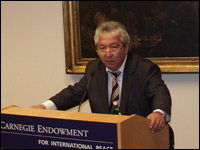
IMGXYZ789IMGZYXIn an event introduced by Ambassador James F. Collins, director of the Russia and Eurasia Program, Kyrgyz Foreign Minister Ednan Karabayev presented his views on the current state of Kyrgyzstan, the progress it has made, and the way forward for his country. He said that Kyrgyzstan has made substantial economic and political progress in recent years and that it was fully committed to promoting Central Asian regional cooperation and closer ties with the United States. In addition, H.E. Karabayev said, the Kyrgyz Republic has pursued leadership in building civil society and democracy domestically as well as promoting the concept of parliamentarism regionally.
Kyrgyzstan, H.E. Karabayev said, has seen an unprecedented rate of economic growth in the past year. In the first nine months of 2007, Kyrgyzstan has enjoyed 9.2 percent GDP growth, compared to 2.6 percent over the same period last year. Additionally, the growth of capital investment into the country has accelerated, increasing by 43 percent over the previous year. Meanwhile, H.E. Karabayev said, Kyrgyzstan has sought to create a unified regional social safety net to enable protection of human rights.
A key point in Kyrgyzstan's program of regional cooperation is ensuring sustainable and mutually agreeable use of water resources, he said. H.E. Karabayev added that the coordination of water usage issues in a regional framework is crucial in establishing the proper balance between individual states' interests and delegating part of national sovereignty to manage resources. He noted that Kyrgyzstan and the European Union had recently participated in a forum on water energy with the purpose of encouraging Kyrgyz capacity to independently tackle domestic problems.
He noted that terrorism constituted another point of interest for Kyrgyzstan, Central Asia, and international partners and that the topic of international security was the dominant theme of the Shanghai Cooperation Organization (SCO) summit in Bishkek, the capital of Kyrgyzstan, this August. He concluded by stressing the importance of promoting the principle of parliamentarism within the framework of the SCO, which he said reflects Kyrgyzstan's commitment to the institution of the legislature as a measure of human rights and democracy and a defense against terrorism and extremism.
In the question-and-answer session, several topics were discussed, including Kyrgyzstan's relations with the United States and European Union, the development of Kyrgyzstan's hydroelectric sector, and the SCO summit.
H.E. Karabayev stressed his desire to expand the scope of bilateral relations between Kyrgyzstan and the United States beyond the issue of the Manas Air Force Base and look more closely at issues such as trade, development, and education. He encouraged U.S. companies to look more closely at the investment environment in Kyrgyzstan. He noted that a major hydroelectric power project underway in Kyrgyzstan is open to foreign investors and urged U.S. investors to participate.
He also made clear, however, that he favored a "multi-vectoral" approach wherein a number of actors, including states and international organizations, would have major roles in Kyrgyzstan's foreign relations. In this vein, he praised the SCO as an organization that bases itself on this principle, as well as trust, equality, and the balance of national interests.
Carnegie does not take institutional positions on public policy issues; the views represented herein are those of the author(s) and do not necessarily reflect the views of Carnegie, its staff, or its trustees.
Event Speakers
Ednan Karabayev
Nonresident Senior Fellow, Russia and Eurasia Program; Diplomat in Residence
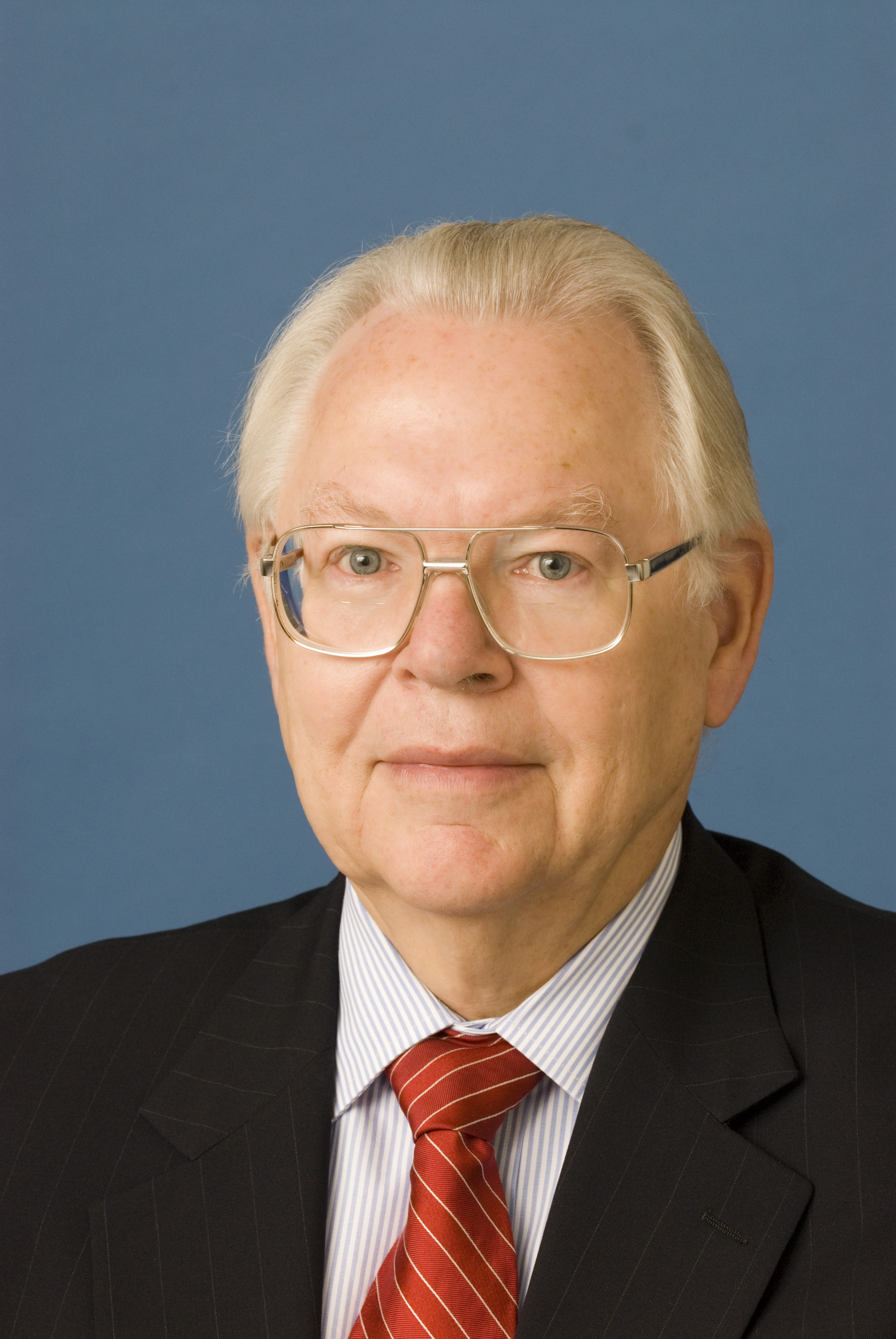
Ambassador Collins was the U.S. ambassador to the Russian Federation from 1997 to 2001 and is an expert on the former Soviet Union, its successor states, and the Middle East.