

{
  "authors": [
    "Arun K. Singh",
    "Tanvi Madan",
    "Anit Mukherjee"
  ],
  "type": "event",
  "centerAffiliationAll": "",
  "centers": [
    "Carnegie Endowment for International Peace",
    "Carnegie India"
  ],
  "englishNewsletterAll": "",
  "nonEnglishNewsletterAll": "",
  "primaryCenter": "Carnegie India",
  "programAffiliation": "",
  "projects": [
    "Security Studies"
  ],
  "regions": [
    "India",
    "United States"
  ],
  "topics": [
    "Foreign Policy",
    "Security"
  ]
}
Navigating Turbulence: The Current Moment in India-U.S. Relations
Tue, August 11th, 2026
Carnegie India
Bilateral relationships have their ebbs and flows. Nevertheless, very few analysts could have predicted the current moment in India-U.S. relations. Over the last year, the relationship has been marked by significant turbulence—with disputes over tariffs, trade, and their respective relations with other countries (most notably Pakistan and Russia). Simultaneously, there are questions about evolving U.S. priorities in the Indo-Pacific. The discussion examined the resilience of the India-U.S. partnership across trade, defense, technology, foreign policy, and multilateral engagement, exploring how both countries balance strategic convergence with recurring economic and geopolitical frictions.
Carnegie India hosted a private roundtable discussion on the current moment in India-U.S. relations with Arun K. Singh and Tanvi Madan. The discussion was moderated by Anit Mukherjee.
Discussion Highlights
Historical Development of India-U.S. Relations: Participants reflected on the trajectory of the India-U.S. relationship, emphasizing that the current partnership is the product of more than twenty-five years of sustained diplomatic and economic engagement. The discussion traced a gradual shift from the tensions following India’s nuclear tests in 1998 to a broad-based partnership spanning defense, technology, trade, and regional security. Participants highlighted the role of successive U.S. administrations in advancing the relationship with changes in leadership. President Clinton’s visit to India began a new phase of the partnership, and under the Bush Administration, discussions on the civil nuclear cooperation deal were initiated. Participants identified China as a key competitor, creating a point of convergence. Under the Obama administration, the partnership gained greater prominence through high-level political engagement, including Prime Minister Manmohan Singh’s state visit and President Obama’s attendance at the Republic Day celebrations in 2015. President Obama also declared support for India’s permanent membership at the United Nations Security Council and recognized New Delhi as a major defense partner. During President Trump’s first presidency, joint initiatives and collaboration under the Quad were revived with a focused strategy for the Indo-Pacific, while also renaming the U.S. Pacific Command (USPACOM) to U.S. Indo-Pacific Command (USINDOPACOM). Furthermore, the Biden administration advanced bilateral ties through the Initiative on Critical and Emerging Technology (iCET) led by the National Security Advisors of the two countries. Participants recognized the continued cooperation between New Delhi and Washington across multiple administrations. They noted that the evolution of the partnership is driven less by alignment on all issues but more through a recognition that cooperation serves mutual long-term interests.
Evolving Dynamics of the Relationship: Participants described the current phase of the India-U.S. relationship as one characterized by both fragility and resilience, and recognized factors shaping this trajectory. First, while shared convergences on China drive cooperation between Washington and New Delhi, India’s importance increases when the U.S. administration views the world through the China prism. However, the softening of language towards Beijing and a reduction in military exercises with Taiwan under the present U.S. administration are notable for India. Participants also acknowledged that in the absence of the China prism, the U.S. may assess countries based on their utility in West Asia, their relevance to President Trump, and other American priorities. Second, there is a growing influence of domestic politics on bilateral relations, including how future congressional composition and shifts in political leadership could affect the trajectory of the partnership. Third, immigration and people-to-people ties are an important dimension of the relationship. Concerns around immigration and future implications for American universities, research institutions, and innovation ecosystems that rely heavily on Indian talent were discussed. Moreover, it was argued that talent mobility remains a critical pillar of the relationship, with educational and professional exchanges contributing significantly to building trust.
Cooperation Amid Disruption and the Path Forward: Despite the disruption in India-U.S. relations, participants noted that cooperation continues at the functional and private-sector levels. While there has been limited movement at the government level on initiatives including Transforming the Relationship Utilizing Strategic Technology (TRUST) and India-U.S. Defense Accelerator Ecosystem (INDUS-X), recent investments in India demonstrate that commercial ties remain strong. Functional cooperation continues through defense exercises, maritime security and surveillance in the Indo-Pacific, real-time information sharing, and cooperation under the Quad. The two countries are also collaborating on law enforcement initiatives related to fentanyl, online scams, and drug trafficking, among other areas. Participants highlighted that private-sector engagement continues, particularly in areas such as undersea cables, data centers, technology, and energy. Defense cooperation remains an important pillar, with a shift in India’s defense trade from Russia towards the U.S. India must deepen its engagements with the U.S. across defense, technology, trade, pharmaceuticals, and other sectors, while simultaneously diversifying its partnerships and hedging to preserve its strategic autonomy. Participants emphasized the need to maximize opportunities for cooperation while ensuring that India’s critical red lines are respected.
This summary was prepared by Mugdha Satpute, Research Assistant and Program Coordinator, Security Studies Program and Smrithy Manoj, Young Ambassador, Technology and Society Program, at Carnegie India.
Carnegie does not take institutional positions on public policy issues; the views represented herein are those of the author(s) and do not necessarily reflect the views of Carnegie, its staff, or its trustees.
Event Speakers
Senior Fellow, Carnegie India
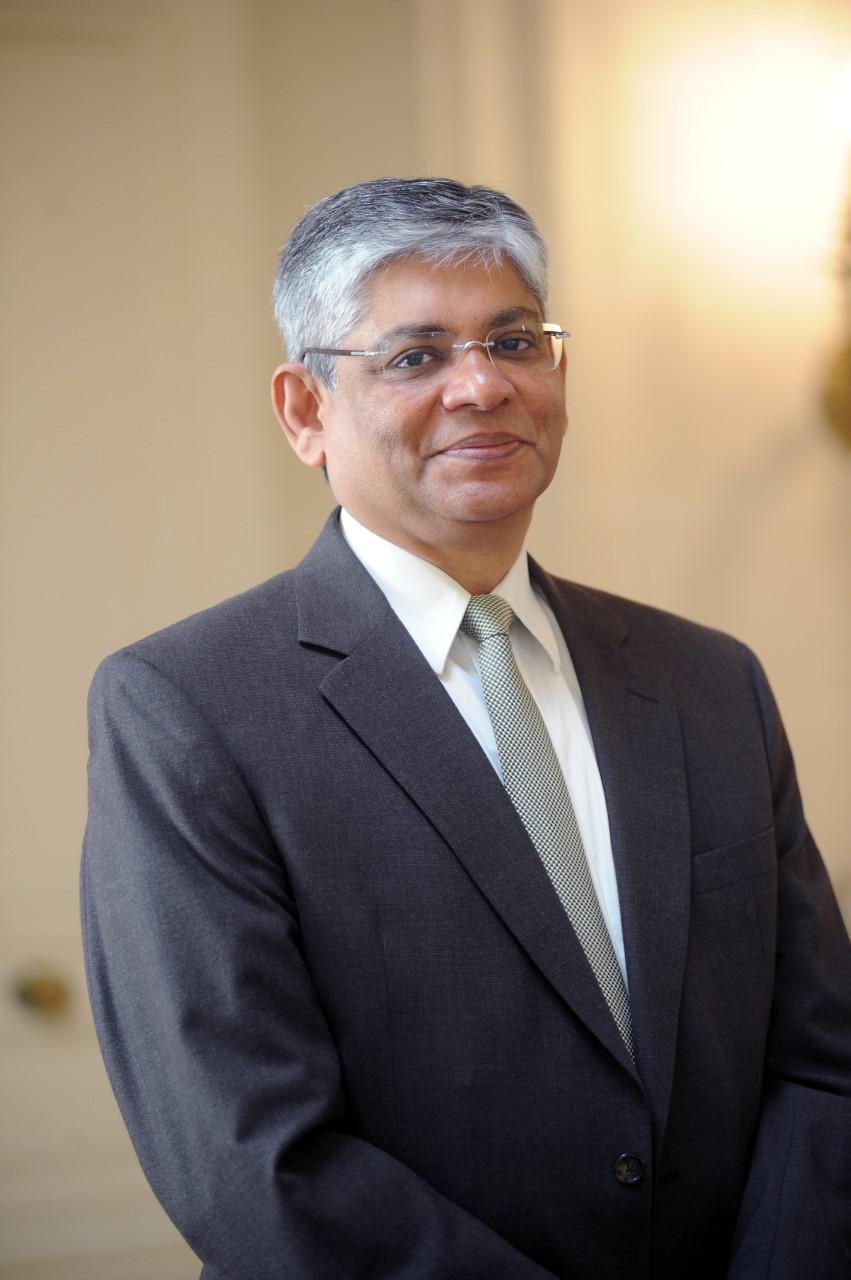
Arun K. Singh is a senior fellow at Carnegie India. He has extensive experience across the globe, including as India’s ambassador to the United States, Israel, and France.
Tanvi Madan
Senior Fellow, Brookings Institution

Tanvi Madan is a senior fellow in the Center for Asia Policy Studies in the Foreign Policy program at the Brookings Institution. She explores India’s role in the world and its foreign policy, focusing in particular on India’s relations with China and the United States.
Director, Carnegie India

Anit Mukherjee is the director of Carnegie India.