• Research
  • Emissary
  • About
  • Experts
Carnegie Global logoCarnegie lettermark logo
DemocracyIran
  • Donate
Podcast Episode

A Sixth of Humanity and the Dreams of a Nation

Scholars Devesh Kapur and Arvind Subramanian return to the podcast to discuss their new book, A Sixth of Humanity: Independent India's Development Odyssey, an in-depth look at how India undertook a series of pivotal transformations within its economy, society, and political landscape

Link Copied
By Milan Vaishnav, Devesh Kapur, Arvind Subramanian
Published on Oct 21, 2025

Subscribe on

Apple PodcastsOvercastSpotifyYoutube

A Sixth of Humanity: Independent India's Development Odyssey is a landmark new book by the scholars Devesh Kapur and Arvind Subramanian.

The book is an audacious attempt to trace how India—uniquely and daringly—attempted four concurrent transformations—building a state, creating an economy, changing society, and forging a sense of nationhood under conditions of universal suffrage.

It is the joint product of one of India’s most respected political scientists and one of its best known economists. The book includes insights from politics, economics, history, and literature and provides a developmental history of India that is big, bold, engaging, and utterly unique.

To talk more about their book and the lessons it holds for India’s next 75 years, Arvind and Devesh return to Grand Tamasha to speak with Milan.

Devesh Kapur is the Starr Foundation professor of South Asia Studies at Johns Hopkins University School of Advanced International Studies.

Arvind Subramanian is senior fellow at the Peterson Institute for International Economics, in Washington, DC. He previously served as former chief economic adviser to the government of India.

The trio discuss the vision for the book, India’s checkered history of upholding the rule of law, and what we get wrong about India’s tryst with central planning. Plus, they discuss India’s stellar record as an export powerhouse, the long shadow of vested interests, the pressures on India’s model of fiscal federalism, and ongoing challenges with nation-building.

Watch the video version of this episode here.

Episode notes:

1. Arvind Subramanian, “Can India reverse its manufacturing failure?” Financial Times, November 10, 2024.

2. Josh Felman and Arvind Subramanian, “Is India Really the Next China?” Foreign Policy, April 8, 2024.

3. “The Future of India's Fiscal Federalism (with Arvind Subramanian),” Grand Tamasha, October 16, 2024.

4. Amit Ahuja and Devesh Kapur, eds., Internal Security in India: Violence, Order, and the State (New York: Oxford University Press, 2023).

5. “Opening the Black Box of India’s Internal Security State (with Amit Ahuja and Devesh Kapur),” Grand Tamasha, May 10, 2023.

6. Devesh Kapur, “Why Does the Indian State Both Fail and Succeed?” Journal of Economic Perspectives 34, no. 1 (Winter 2020): 31-54.

7. Rohit Lamba and Arvind Subramanian, “Dynamism with Incommensurate Development: The Distinctive Indian Model,” Journal of Economic Perspectives 34, no. 1 (Winter 2020): 3-30.

8. Yamini Aiyar, “New GST regime: A grand bargain reduced to imperfect compromise,” Hindustan Times, October 7, 2025.

9. “A Blueprint for India’s State Capacity Revolution (with Karthik Muralidharan),” Grand Tamasha, May 23, 2024.

Invalid video URL

Hosted by

Milan Vaishnav
Director and Senior Fellow, South Asia Program
Milan Vaishnav

Featuring

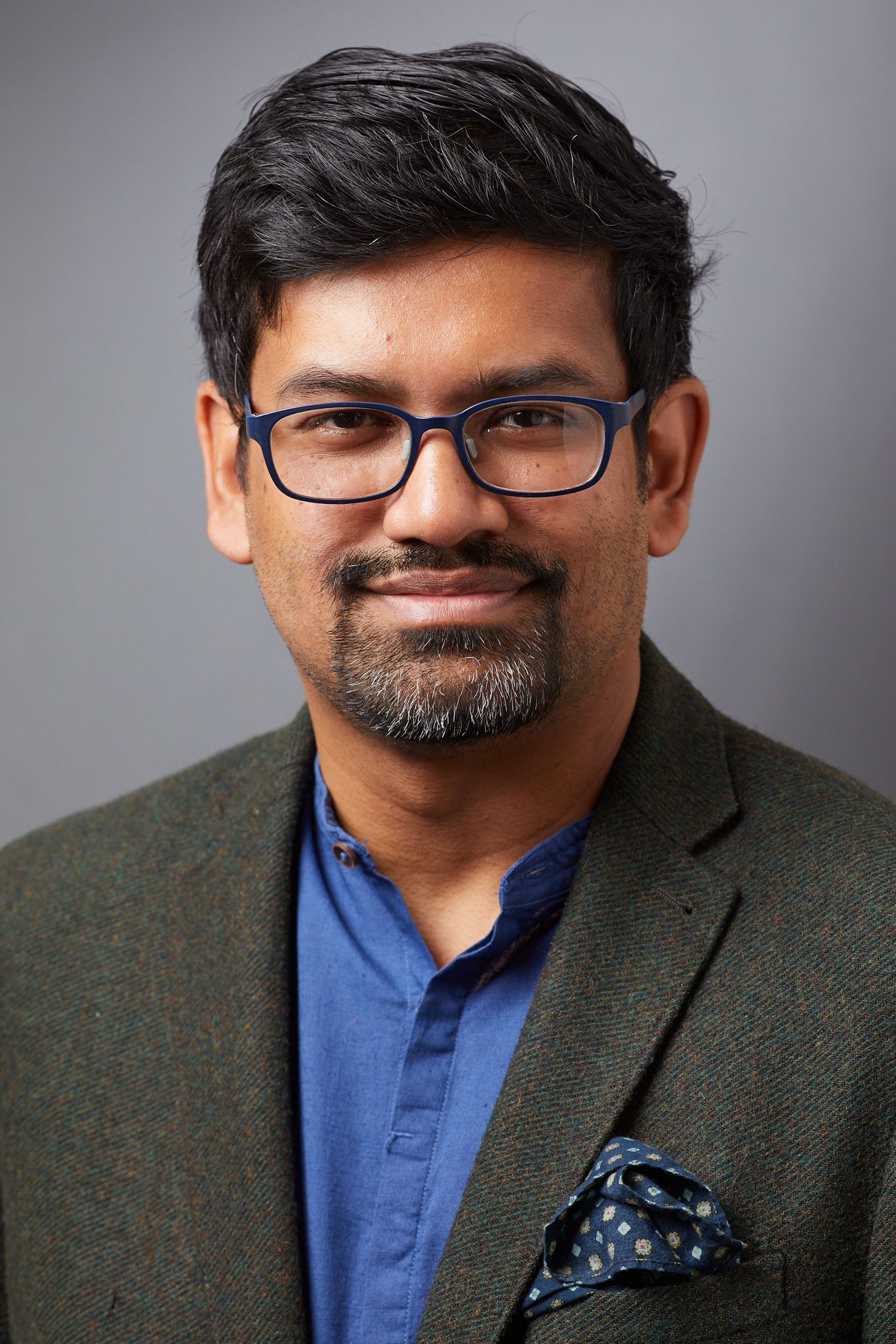
Devesh Kapur
Starr Foundation Professor, Johns Hopkins (SAIS)
Devesh Kapur
Arvind Subramanian
Arvind Subramanian

Carnegie does not take institutional positions on public policy issues; the views represented herein are those of the author(s) and do not necessarily reflect the views of Carnegie, its staff, or its trustees.

More Work from Grand Tamasha

  • Podcast Episode
    Europe’s Discovery of India

    Over the past year, Europe–India relations have entered a markedly upbeat phase. What was once a diffuse partnership now looks far more purposeful. To unpack what’s driving this convergence Milan is joined on the show this week by German Marshall Fund senior fellow Garima Mohan to discuss the geopolitical drivers that are bringing the EU and India closer together, Europe’s views on the limits to India’s potential, and the key takeaways from the EU-India FTA.

      Milan Vaishnav, Garima Mohan

  • Podcast Episode
    India’s Return to the Trade Game

    After years of trade skepticism, India appears to be back in the deal-making business—signing new agreements, reviving stalled talks, and announcing ambitious frameworks with key bilateral partners. To help make sense of what’s changed—and what hasn’t—Milan is joined by Mark Linscott, a nonresident senior fellow on India at the Atlantic Council who previously served as the assistant US trade representative for South and Central Asian Affairs from 2016 to 2018.

      • Mark Linscott

      Milan Vaishnav, Mark Linscott

  • Podcast Episode
    How India Lost the Neighborhood

    Over the past few years, South Asia has witnessed a striking wave of mass protests toppling governments and upending long-standing political arrangements in countries ranging from Bangladesh to Nepal and Sri Lanka. University of Pennsylvania Fellow Muhib Rahman joins Milan to discuss India’s illiberal hegemony in its neighborhood, the downturn in Bangladesh-India ties, and the enabling role of the United States.

      Milan Vaishnav, Muhib Rahman

  • Podcast Episode
    Can the U.S. Salvage Its Relationship with India?

    U.S.-India relations were once described as one of Washington’s MOST important strategic bets in the twenty-first century. But over the past year, that partnership has come under serious strain—buffeted by trade disputes, sharp rhetoric, and deep disagreements over Pakistan and Kashmir. Lisa Curtis joins Milan for a conversation on India’s relationship with the U.S.

      Milan Vaishnav, Lisa Curtis

  • Podcast Episode
    The State of Indian Politics in 2026

    Milan and Sunetra discuss the prevailing political winds in Delhi, the BJP’s surprising new president, and the long shadow of the 2025 Bihar assembly elections. Plus, the two discuss the upcoming state elections, the inner turmoil within the Congress Party, and the ECI’s controversial “special intensive review.”

      • Sunetra Choudhury

      Milan Vaishnav, Sunetra Choudhury

Get more news and analysis from
Carnegie Endowment for International Peace
Carnegie global logo, stacked
1779 Massachusetts Avenue NWWashington, DC, 20036-2103Phone: 202 483 7600Fax: 202 483 1840
  • Research
  • Emissary
  • About
  • Experts
  • Donate
  • Programs
  • Events
  • Blogs
  • Podcasts
  • Contact
  • Annual Reports
  • Careers
  • Privacy
  • For Media
  • Government Resources
Get more news and analysis from
Carnegie Endowment for International Peace
© 2026 Carnegie Endowment for International Peace. All rights reserved.