For decades, India’s growth story has rested on the spectacular rise of its middle class. But a new book argues that this very group—roughly 40 million income-tax–paying households—is now under acute strain.
Facing a convergence of job disruption, wage stagnation, and rising debt, the middle class may no longer be the engine of growth it once was. This is the argument made in a new book titled, Breakpoint: The Crisis of the Middle Class and the Future of Work. It is authored by Saurabh Mukherjea, along with Nandita Rajhansa and Sapana Bhavsar
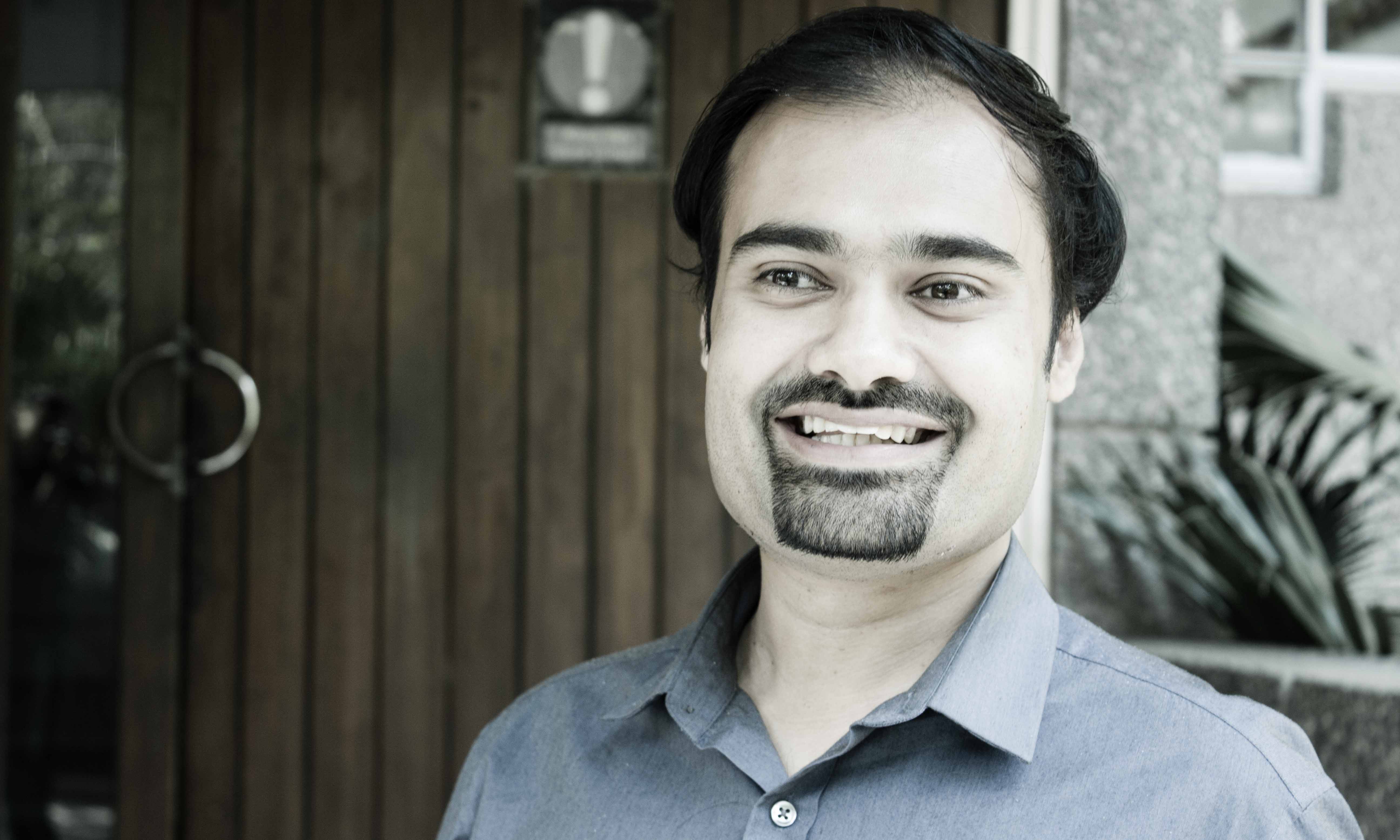
Saurabh is the founder of Marcellus Investment Managers and the author of six previous books. Prior to setting up Marcellus, Saurabh was the CEO of Ambit Capital. He is also a Founding Director of the Association of Portfolio Managers in India
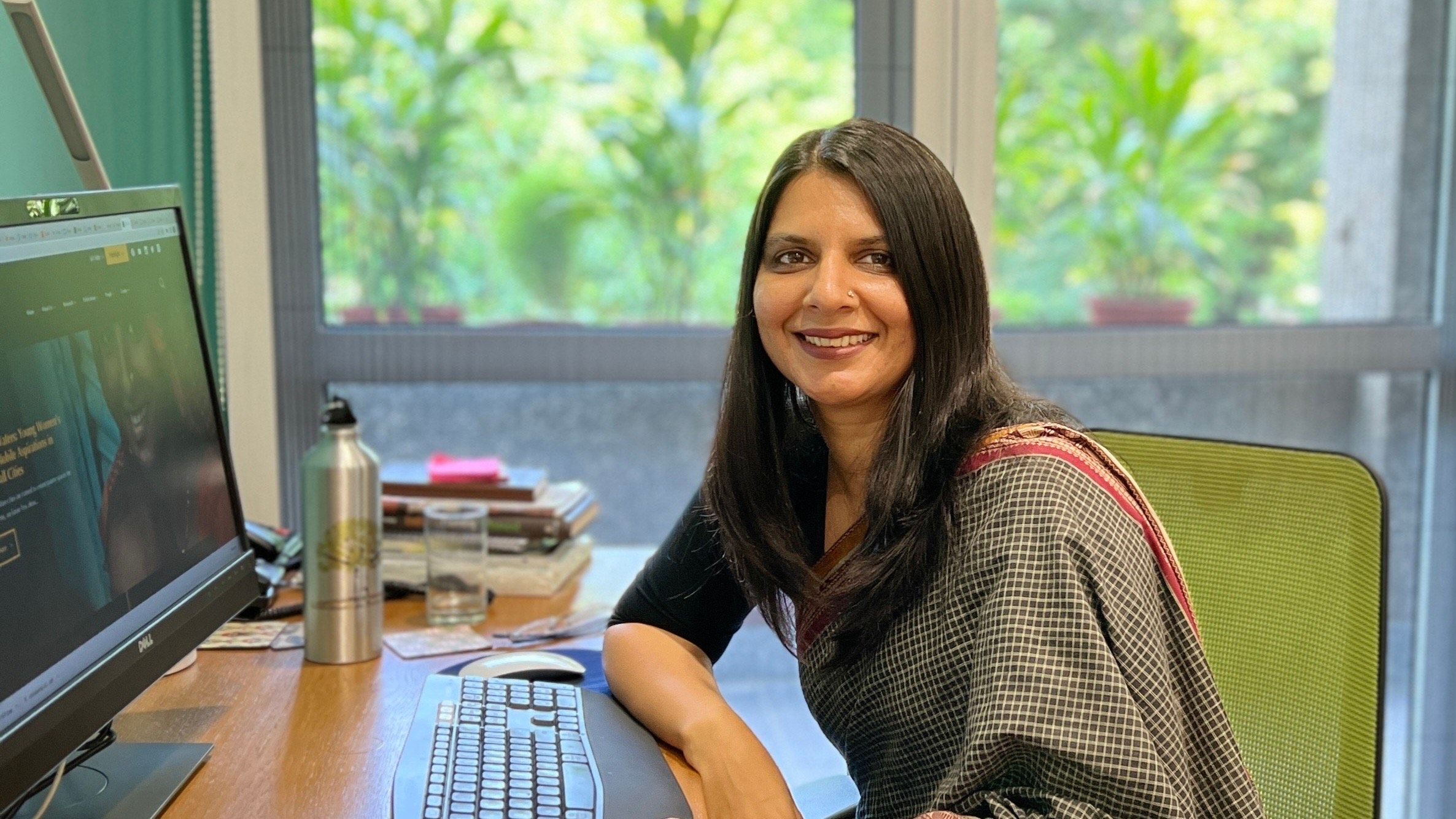
Nandita is an economist and a small and midcap analyst at Marcellus. She’s the co-author of a national bestseller, Behold the Leviathan: The Unusual Rise of Modern India, which was published in 2024.
Milan speaks with Saurabh and Nandita about the Indian middle class’s most vulnerable moment since 1991, the hollowing out of middle-skill jobs, the structural challenges with India’s education system, the worrying trend in declining placement rates and salaries, and the explosion in household debt. Plus, the trio discuss how AI and automation are remaking the Indian economy—both for good and for ill.
Episode notes:
- Saurabh Mukherjea and Nandita Rajhansa, “Educated and employed but still struggling: India's middle class under strain,” BBC, March 30, 2026.
- “A Sixth of Humanity and the Dreams of a Nation (with Devesh Kapur and Arvind Subramanian),” Grand Tamasha, October 22, 2025.
- Saurabh Mukherjea, Nandita Rajhansa and Sapana Bhavsar, “Graduate and unemployed: India’s middle-class rulebook for career & success no longer works,” ThePrint, March 23, 2026.
Transcript
Note: this is an AI-generated transcript and may contain errors
Milan Vaishnav Welcome to Grand Tamasha, a co-production of the Carnegie Endowment for International Peace and the Hindustan Times. I'm your host, Milan Vaishnav. For decades, India's growth story has rested on the spectacular rise of its middle class. But a new book argues that this very group—roughly 40 million income taxpaying households—is now under acute strain. Facing a convergence of job disruption, wage stagnation, and rising debt, the middle class may no longer be the engine of growth it once was. This is the argument made in a new book titled Breakpoint, The Crisis of the Middle Class and the Future of Work. It is authored by Saurabh Mukherjea, along with Nandita Rajhansa and Sapana Bhavsar. Saurabh is the founder of Marcellus Investment Managers and the author of six previous books. Prior to setting up Marcellus, he was the CEO of Ambit Capital. He's also a founding director of the Association of Portfolio Managers in India. Nandita is an economist and a small and mid-cap analyst at Marcellus. She is the co-author of a national bestseller, Behold the Leviathan, which was published in 2024. I am pleased to welcome both of them to the podcast for the very first time. Saurabh, Nandita, congrats on the book and thank you so much for taking the time.
Saurabh Mukherjea Thank you for hosting us, Milan.
Nandita Rajhansa Thanks, Milan.
Milan Vaishnav So, Saurabh, let me just begin with you to help us frame the argument for our listeners. The book opens up with a pretty big and audacious claim, which is that India's middle class is facing its most vulnerable moment since 1991, which, of course, is the dawn of liberalization. I think it's a good place to start. Could I just ask you maybe to tell us, what makes the current moment a crisis? And what do you see as the core forces driving this sense of calamity?
Saurabh Mukherjea The reason we said this is the most vulnerable moment since 1991, and we weighed up all the other crises that India had faced. For example, at the turn of the century when the dot-com bust happened, it hit India pretty hard because already by the year 2000, there was plenty of IT workers in India. Similarly, Lehman Brothers hit India pretty hard. The stock market fell twice as much as Wall Street fell. But this time round, Milan, we are seeing three sets, three very different sets of forces, unfortunately, coming together, colliding to create a multifaceted crisis for the middle class. And I'll quickly sort of run through those forces. The first is around supply demand dynamics in the white collar labor market. Right? So, as you were mentioning, there's only about 40 million income taxpayers in India who earn, and this range is important, between 500,000 rupees at the lower end and 10 million rupees at the higher end. So, in the context of a 1.5 billion strong economy, 40 million is obviously a very modest number, but that is what it is. That's how many middle-class income taxpayers we have in our country. Now, for this small cohort of people who drive the Indian economy, for them, the IT services sector was the mainstay of job creation. So, until about 2015, the IT service sector was adding a million jobs, sometimes 1.5 million jobs a year, right? Around 2016-17, that growth started sputtering. In the last three years, growth of jobs in the IT services sector has disappeared, right? And with that has gone the mainstay of new white-collar job creation for the Indian middle class. Now, it might not sound like a catastrophe until you realize that India now adds 8 million graduates a year. Because this is a young country getting younger gradually, each year the number of graduates increases. So today versus a decade ago, India now produces 25% more graduates today than it did 10, 15 years ago. So, eight million graduates a year joining the labor force, but very few jobs getting created. Naturally, real wages are getting crushed. As real wages get crushed in what is already a relatively low-income country, it has an obvious impact on quality of life. So that's the first force. The second force is a very idiosyncratic application of social media in India. So, the world over social media cross knots of different issues which have been discussed extensively. There are three unique dimensions to how social media has worked out in India. Firstly, we're the only country in the world, only large economy where mobile data is basically free. So, compared to Europe and America, our mobile data costs are 140th to 150th, right? Secondly, we are a very young country, right. So, a decade ago when mobile data became free in India, the median Indian was a teenager, and there's plenty of research to show that social media has a far greater impact on younger people than on older people. And the last piece is we have a very unequal society. So, if on social media you're showing people the lifestyles of billionaires, Indian billionaires Bollywood stars, then the vast majority of Indians who don't have access to that level of income are also seeing what we call an industrialization of aspirations. So, it's a country where the first dynamic, the supply demand dynamics mean real wages are under pressure. Second dynamic around ubiquitous access to social media and the curation, very clever curation of content mean that hundreds of millions of people who have, who don't have the financial means are being shown a lifestyle relentlessly, which they simply cannot afford. And the third layer of what's happened is through its own genius, through the hard work of policy makers across multiple administrations, India has created a unique tech ecosystem. We call it the Jan Dhan Aadhar Mobile Ecosystem. I'm sure you've covered it in various podcasts for those who haven't heard about it.
Milan Vaishnav The JAM ecosystem as it's often referred to.
Saurabh Mukherjea Absolutely. And effectively, just in simple terms, what it means is almost every Indian has a bank account, has a mobile phone and a unique ID, which means they can go online and borrow. They can borrow 30, 40, 50, 60, 70. We've met people who've got 700 open loans courtesy of JAM, right? So that's the technology which was meant deliver social security benefits to people. The technology was meant to democratize access to financial services. That technology, ironically, has been so successful that the Indian middle class, crushed as it is by pressures in the job market, influenced by social media, the Indian middle class has ended up becoming one of the most indebted in the world through this unique medium of Jan Dhan Aadhar Mobile. So, these three forces, they're very different for sets of forces, right? Had they happened sequentially or one of them had happened would have been fine. I think all three coming together is what made us write the book and hence the word breakpoint, a very, very specific point is India's evolution, where both modern technology and just brutal force of the free market economics are conspiring against the middle class.
Milan Vaishnav So, thank you. That was an excellent synopsis of the book and most of the conversations can be spent diving into those drivers. But before we get into, you know, the question of jobs and skills, which is where I want to go first, let me just ask you about this definitional issue of the middle class. I mean, as you point in the book, basically, if you meet 100 economists, you'll get 100 definitions of what the middle class is in India, right? And you have a very detailed empirical discussion of the different definitions, their pros, their cons, and the definition that you end up coalescing around, which is really to focus on, again, the 40 million or so income tax paying households, which as you mention, are a small portion of the overall country, but are people who you feel like are truly representative. Tell us a little bit about just your thinking as you two writing the book in terms of how you're thinking evolved and how you settled on this definition of who is the middle class and who is not.
Saurabh Mukherjea So the historical thinking on this has been that obviously by definition the middle class should be in the middle, but hey, a lot of people in India have said the middle is say 500,000 rupees per annum earnings at the lower end and say 3 million at the upper end. Some people have said 2.5 million, some people have said 3 million, but that's broadly been the scale. So, in dollar terms, this is meant, say, $6,000 at the lower end. And say five times that $30,000 at the upper end, right? That's been the traditional thinking. Now, as we got into the second year of researching this subject, we realized there's a flaw in this definition, which is that if in a very poor country, if India remains one of the poorest countries in the world in per capita income terms, we're amongst the 40 poorest nations in the word. If in a very poor country, you take a relatively low middle class sliver, then obviously by definition few years hence you'll say, that sliver has got richer, hey presto, we're doing really well, right? So, we felt that we needed more rigor around the subject. And as we thought about it, we said, hey, the middle class should not just be in the middle, the middle-class should account for the majority of the income earned in the country. Because otherwise what's the point of focusing on the middle class? The middle- class should be the engine of earning and development. And if the middle class is to be the engines, Milan, we said the simple extra axiom we're adding is not only is the middle class in the middle, it should also account for the majority of income earned in the country. Now had India been a reasonably equal society, this exercise would have been very easy. Basically, you take the 25th to the 75th percentile and you're done, right? But as everybody watching this knows, we are one of the most unequal societies in the world. In fact, the city and the time I live in, Mumbai, has the fourth most number of dollar billionaires in the word. And you can imagine what that does. Because you've got a few people earning crazy sums of money, if you want to have 50% of the income covered, you start at 500,000 at the lower end. You don't stop at 3 million. You don't stop at 4 million. You go all the way to 10 million. And that's how we settled upon the Indian middle class is those 40 million income taxpayers who earn between 500,00 at the lower end, 500, 000 rupees per annum, to 10,000,000 rupees per annum. A lot of people are shocked at that because they believe people earning 10,00,000 aren't the middle class. But they don't have any sense as to how much the billionaires in Bombay earn, because Bombay itself, Mumbai itself has 200 or 250 dollar billionaires, a number surpassed, I think, only by three or four global money centers.
Milan Vaishnav It's fascinating to hear you talk about this, because it also tells us that, you know, most of us have read these reports put out by various, whether it's investment banks, consulting companies, think tanks, so on and so forth about, you know, the rise of India's middle class. And one gets the sense when you read those reports of this really large tidal wave of people who are joining the middle class, and the takeaway from your book is it's actually a much smaller grouping than maybe we had been led to believe.
Saurabh Mukherjea Right. And not only is it the takeaway from our book, we're basing this on the government's income tax data, because a lot of this whole subject, right, it's a difficult subject because, for example, if you work for an investment bank and you're asked how big the Indian middle class is, it's almost like asking a barber, do I need a haircut? Right?. And, and, and similarly, if you ask a policymaker, right, how big the middle class is the similar metaphor applies, right. At one level, the metaphor is nothing wrong about it. You know, boosterism, cheerleading, economics, hey, what's wrong with that? The whole world does it. But in the context of where we are living in India, with the amount of borrowing we are seeing, borrowing we're seeing from ordinary families who simply have no hope in hell of repaying those monies. But the behaviors we're seeing about speculative investing in the stock market, speculative investing, which is costing ordinary people 10, 11, 12 billion dollars a year. We felt that we owed it to the country we live in, to have a more sober analysis, based in the government of India's data on who exactly is the middle class and our submission in the book. And we've given plenty of data in break point that you start at 500,000, you stop at around 10 million. That's 40 million families. That's all there is to it. We can't just manufacture more. And interestingly, Milan, this is data going back to the financial year ending March 2024. Because since then, the refreshed data on the subject hasn't been made public.
Milan Vaishnav So Nandita, I want to come to you in a second, but before I do that let me to ask you one follow up because in the book you say look the middle class is certainly small in absolute terms, but it does have a larger wider economic footprint because it supports a much larger segment of society through basic services and so on and so forth. So, how do you think about that multiplier effect?
Saurabh Mukherjea So again, what we did was we took different government data sets, and broadly speaking, the picture we built up, just to disaggregate it quickly, billion voters in India, 1 billion voters, the most in the world, famously. Out of those billion voters, 500 million are in agriculture. So, they're not part of the tax-paying economy. Agriculture is tax-free in India. Only about 500 million in the non-agri economy, out of which only 150 million earn a salary. Might not be white collar, could be blue collar, 150 million earn a salary, and out of which only 40 million are part of the income tax ecosystem, right? Then as we dug further in, we said, we know 500 million Indians are part of the normal economy, the non-agri economy. We know that 150 million are in salary jobs, but hey, what are the other 350 million doing? And then we looked back and said, the other 350 million, out of that other 350 million, roughly half are working for the taxpayers. And then how are they working? We broke it into two categories. The first was the anecdotal about our own lives. Each of us who pay taxes, we have someone cooking for us, someone cleaning for us, someone driving our car. That's the direct employment. You said each income taxpayer roughly employs 2.5 million people in the economy directly. And then there is the indirect employment. The security guard in the building that I'm speaking to you from, the airline pilot who's going to fly me to say Chennai tomorrow, the bus conductor, and so on. So, 40 million people, middle class income taxpayers, each of them accounting for five more jobs in the country. So out of the 350 million Indians who are in the non-salaried working sector, majority of them, roughly 200 million by our estimate, actually report are earning their income courtesy of the 40 million income taxpayers. And that's what makes these 40 million income taxpayers very influential. They are force multipliers. Each of them is creating five jobs in India.
Milan Vaishnav So I'm glad that you ended on this question of jobs, because that's really the first big puzzle that you get to and Nandita, I want to bring you in here. You know, one of the central hypotheses or theses actually of the book is that India's labor market has been hollowing out middle skill jobs for decades. And one of things I wanted to ask you is, you know, this is a longer-term shift. In fact, you say it kind of dates back to liberalization. This is, you know, there have been years when AI was not even part of our vocabulary. So, tell us a little bit about why these middle skill jobs have been so hollowed out over time.
Nandita Rajhansa So Milan, you're absolutely right. AI is a pretty recent thing. This has been happening for a few years now, few decades if I have to put it that way. And there are three waves in which it has happened. But before I go to those three waves, which are very particular to India, let me just go back and talk about the research that world over has happened on this middle scale jobs getting hollowed out. So, someone, an economist by the name of David Otter with his colleagues, Merlin and Levi, came out with this paper in 2003, I think, 20 years ago, roughly, that middle skilled jobs, the supervisory jobs on factory shop floors, basically, are getting hollowed out because of automation. The basic blue collar wage worker will be required, the CXO levels will be required, but the supervisory jobs are absolutely not required and will going forward also not be required. So, this was what David Otter did 20 years before. Building on that, there's another economist called Daniel Susskind who came out with this book called A World Without Work. It's a fabulous book, by the way. So, he built on this theory and said that this has indeed happened in the last 20 years in the Western context. So, this is very true for Western countries. Now, coming to India, when we read all of this, we thought that maybe it hasn't happened in India or maybe it has, we don't know. So, we actually dug out research which has been done in India on this aspect of the labor market. And what we came to know was astounding even to me because I hadn't heard of this. So, as it turns out, there's a research paper by this economist called Sudipa Sarkar and she has taken out NSSO data from the 1980s until 2016-17 when she published this paper, and she has shown that this has happened in India as well. So, India is in a very different economic paradigm as compared to the Western world and yet we see the same kind of issue happening there. Then we said, okay, this is a secular trend, we probably need to go deeper and try to understand. And then we went in deeper, this is where we came out with these three waves that have come into India's labor market which has led to following out of this middle skill jobs. So, the first wave started roughly 20 years ago. What happened was India's factories saw increasing automation. Now with the kind of labor cost that India commands, we are 3X as it's more expensive than Bangladesh in terms of labor costs. So that should put things into perspective. It's definitely not cost effective for our entrepreneurs to hire more labor. What they do is they basically substitute labor with capital. They start bringing in machines, they start bringing in automation. One of the instances that I remember whilst researching for this book and the stuff that I cover in my day job is that I went to the small town just outside of my hometown, which is Pune, and I was doing some primary data check where I came across this small unit of furniture manufacturer. It doesn't even have to be a very large company. It was a small manufacturer, barely 600, 700 square feet worth of area for his factory. And he employed all but three employees. His annual turnover was rupees 100 crores. That's a massive turnover for someone at that scale, and he's employing only three employees, when I asked him, why don't you have more labor? He said that it's simply uneconomical for me to do that. I need only three people. One person will put in the plywood into the machine, the other person will take it out, pack it, and the third person will load it into the trucks which are waiting to ship it out. That's the level of automation that has happened. It has happened over the last, it started 20 years ago, and it has only increased. Now I talked about the factory worker getting replaced because of automation. What has happened is that over time, it has gone one level up. Your secretarial jobs, clerk level jobs, all these jobs have also been replaced by automation. This is what has happened over the last 20 years, and the proof is in the pudding. The data says it all. If you look at the income tax data again, over the last 10 years, we've seen that the nominal wage growth for people who earn between 5 lakhs and 1 CR, which we have defined as our middle class, has been 0.4% keger. They haven't moved at all. It's a 0 percent nominal growth, and cost of living has obviously surged. So, you can imagine the profound impact all of this has had, and this is even before AI came onto the scene. We reckon now that AI is coming onto the scene and getting better—I think it got introduced at the end of 2022—and it was horrible. It was pathetic when I started using it. But today, I think half of my workload is being taken care of by AI.
Milan Vaishnav Haha. Be careful, Nandita, what you say on this podcast.
Nandita Rajhansa No, absolutely. It's labor saving. So, the kind of work that someone I would have hired as an intern would be doing. That's what Claude is doing. So, I do not need an intern today. Unfortunately, that's the reality because the kind of productivity that I'm seeing at like one-tenth the cost, if I have to put it that way. So that's the third layer that we're talking about. The third layer is your non-routine cognitive jobs are going to get butchered because of this. Something like a software engineer or something like who works in the knowledge-driven sectors in the country. Their jobs are at a very perilous position right now.
Saurabh Mukherja And, Milan, that actually is an important point because as we were writing the book and we were looking at the data, we were asking ourselves, why hasn't anybody else written about it? And that's when it struck us that when those factory jobs were being automated, right? It wasn't really middle-class. And hence nobody could be bothered to write about the automation of the factory job, that furniture factory that Nandita described outside Pune. Finally now, as automation comes home to the core of middle- classes employment territory, the issues are coming to the fore. So just this afternoon, Oracle laid off 20,000 people worldwide, out of which 12,000 were in India. So Indian media is full of stories about Oracle workers turning up in their offices on 31st March and getting their termination notice. It's obviously tragic because laying off a worker in a country like America with a tight labor market is one thing. 12,000 Indian families, middle-class families in cities like Bangalore, Pune, losing their jobs is a different level of challenge. And now that these stories are coming home for people like us, our friends and families, jobs are on the line, I think finally a book like Breakpoint was necessary to narrate the story. So far, it was the blue-collar worker for the last two decades who was the receiving end of this replacement of labor with capital.
[…]
Milan Vaishnav So Nandita, there's another part of the story which is very important, and I want to make sure that we talk about it, which is the education story, right? Because one of the things the book does is really goes and points at deeper issues in the education system, particularly this emphasis, which has a long lineage, on rote learning, right. Tell us a little bit about how this has shaped the kind of crisis of employability as we see it today and, you know, a lot of the examples in the book kind of focus on the field of engineering. So, is it just that engineering is particularly vulnerable to this or is this kind of a broad-based crisis in higher education across domains?
Nandita Rajhansa Right, so whilst we've given a lot of examples on the engineering part of it, you're absolutely right that we've cited a lot of examples, but that's primarily because Indians generally have an affinity towards this subject. They tend to pursue this much more, so that's why the data is far richer, and the trends are easily trackable because we have these premier institutes like IITs who report their employment statistics, their weight statistics for those students who are passing out. That's the reason that you will see that the examples are very engineering heavy. But I don't think the issue is just contained to engineering students or graduates; it's a far deeper issue. I'll get to it one by one, because what has happened is if you look at the data, again, being an economist, all that I can think about is data to substantiate whatever I have to say. If you just have a look at the data, the latest report that came out, which came out actually after the book was published, is this Azim Premji's employment report, which was as recent as just last week.
Milan Vaishnav This is the state of working India report, and the 2026 edition has just come out.
Nandita Rajhansa Absolutely. And what it says is quite astounding. 40% of graduates under the age of 25 are unemployed in India today. And not only that, only 7% male graduates are getting a job into a permanent middle-class job that was the mainstay a few years ago. The other thing that we also came across is this report, I think, by PLSS, which is the data, it's a survey that the government of India does on labor market statistics. What it says is that the graduate employment [rate] on an overall level, not just under 25, is 29%, and this is nine times the number for the unemployment number for illiterates. So that's the massive division that we are seeing, that's the difference we are seeing between illiterate unemployment and the literate graduate unemployment. Now, why has this happened? We have a few theories. We've tried to unpack those in the book as well. One of the most notable things that came across while researching this book was that when we spoke to professors, when we speak to industry experts who've been in this field for far longer, 20, 30 years, what they said is that at the turn of this millennium, what happened is most of the joint entrance examination, which is the entry examination into India's premier institutes for engineering like IIT, their format changed completely. They used to have a written format where people could use their creativity, where people would understand what's going on. Yes, essay-oriented format. What happened was at the turn of the millennium that changed to MCQ format. What was prioritized was getting to the right answer. How you get to that right answer was not really focused on. That resulted in this whole rigmarole of getting into rote learning, trying to mug up answers and then just spew it on the examination paper and get through. That was happening. Now, what we think is happening is because of the advent of AI, it demands that you become more creative. It demands you use your own brain, your creativity to come up with solutions for problems. The rote learning bit is not going to work, and that's why we're seeing this massive gap in employment numbers and the graduates. This is the first aspect. The second aspect is something that also already mentioned, which is that the sheer number of graduates that India is producing, 8 million of those every year, it's simply impossible for the labor market to absorb those kind of numbers, especially when your skill level is lower because of the rote learning bit and that's been going on for the last 20 years. 20, 25 years now. That's led to low quality skilling and that has resulted in this massive gap. So, the issues are twofold. You have a large supply of low-skilled or underskilled graduates, which is coming into the labor force every year, year after year. And the other issue is that quality education was not focused on, just the numbers were focused on. And as a result, we are seeing this kind of an impact on the kind of jobs which are not getting filled, the education system being the start point of this kind of a problem.
Saurabh Mukherjea Just to amplify and clarify what Nandita is saying using the Azim Premji University data. And I stress this is Azeen Premji university data. This is not data we put in the book because it's wonderful data, but it came out after it was published. What they're saying is that out of every hundred graduates in India, in the year of graduation, only three are getting a white-collar salary job, right? So, several are getting the job, but only three are getting a white collar salaried job. Then obviously as the years go by, people have to earn a living. So, the employment rate improves with the passage of time. But in totality, in totality, the Azim Premji University data is saying one in three graduates still has no work. If you look at the stock of graduates in India, one in 3 have no work. This, this rate, this unemployment rate is higher than the 1980s. So, pre-‘91, when I grew up in India in the 80s, I thought we will never have to see that sort of period again. But hey, we're now in a situation where we are worse off than the 80s from a graduate employment perspective. And now, looping back and linking this to the supply demand issue. Like in every other country, multiple administrations in India have tried to democratize access to higher education. One of the simpler ways to do it is to lower the bar. So, you've lowered the bar, democratized access to higher education. Unfortunately, the job market has said, anywhere we need for your graduates. So, you've got an adverse supply demand situation, lower skilled graduates as it is lower demand, crushing of real wages, and the employment rate is down. So there are multiple layers to this problem, supply side and demand side, free market forces and policy intervention. And a simple way to crystallize this in our head is we've got a socialist education system in a capitalist economy, and that exacerbates the problem.
Milan Vaishnav So, let me ask you about the socialist education system in the capitalist economy. One of the interesting data points in your book comes from data from the Indian Institutes of Technology, the famous IITs, which are the best of the best in terms of providing technical education and engineering and so on. And you point out in the book that even elite institutions like the IITs are showing signs of strain with declining placement rates, salaries. I think the data that you cite in the books is around 75% of IIT Bombay students secured jobs this year. That's a drop from last year when it was 78%. The minimum wage was 6 lakh then, it's 4 lakh now. You know, as economists, Saurabh, how do you disentangle or unpack whether this is a kind of a cyclical slowing down that we're seeing versus a more longer-term kind of structural breakdown?
Saurabh Mukherjea Sure. So, I think three sets of three sets of data on that give us some clarity on what you're right to raise. Is this a two, three-year problem or this is a is this a 20 year problem? The first was data from India's IT services, industry trade bodies. It's called NASCOM and NASCOM by definition just pulls together all the data on how many IT jobs are getting created. So, if you see the NASCOM data we've cited in the book, right, provided a 15, 10, 15, 20 year time series. So, you can see the year-on-year job growth in the NASCOM data dropping from 10, 11, 12%, 15 years ago, to down to barely 1% or 2% now, right? It's a relatively easy structural downtrend to see, where there's some wriggling in the line. But over time, over a 10, 15-year period, the job growth data firmly trends down. The second set of data we used was from a private sector company called Nokri.com. It's a listed company. It's called InfoEdge. It's India's largest employment classifieds portal. They're a listed company. If anything, they would have an incentive to overstate the data, not understate the data. But in their jobs index, Milan, in their jobs index, basically the jobs index today is where it was in 2019, which means in six years, white collar job creation hasn't really moved forward. There was a downtrend because of COVID. There was a recovery from Covid. But if you sort of adjust that out between 2019 and 2025, the white-collar jobs piece doesn't seem to have moved, which again tells me somewhere around the beginning of COVID was the end of white collar job creation in India. And the third piece is real wages. If this was an ephemeral issue, if it was a cyclical issue, you would have seen years of positive growth in real wages followed by some stagnation. What we are seeing in the real wage data of India's largest companies, I stress we took the Nifty 50, which is the 50 largest listed companies. We took their wage bill. We took the number of employees. We then traced that back 10 years. And what we are finding is over the last decade in real wage terms, so nominal wages minus inflation. In real-wage terms, the largest 50 companies average employees, real earnings have diminished, which again suggests to me, that the supply-demand forces are structurally turning adverse rather than a cyclical downturn.
Nandita Rajhansa Yeah, so just to add to that, if we look at the Nifty 50 data, so what we did was we did a comparative study. We just didn't look at last 10 years. We looked at 10 years before that as well. As it turns out, real wages were actually growing in India, adjusted for inflation. You have to understand that India saw a very high inflation rate in that period. This was 2007 to 2016.
Saurabh Mukherjea So basically what they're saying, the break point is somewhere around the late teens. So 2007 to ‘16, you can see nifty 50 companies, real wages are rising. 2016 to 2025 real wages of falling, right? The, the, the Nokri data, then the Nokri data is also showing that somewhere in the late teens, job creation, white collar job creation stagnates. Now, why the late teens? Why not before? Why not after? That's something we haven't quite been able to nail down.
Milan Vaishnav So let me just circle back to this question of technology, right, particularly AI and automation. Because those two features come out very prominently in your analysis. And I want to just maybe take, read listeners into this anecdote that you tell, where at one point, I think you're somewhere in suburban Mumbai, you see a group of like 100 people sitting in a room. And it turns out that this group of a hundred people are monitoring one third of India's ATMs, which is just like such a mind-blowing number, you can't even really comprehend it. Just tell us a little bit about the scene and what impact it had on you as you kind of discovered this.
Saurabh Mukhejea So just to sort of back up a little bit, around four years ago, as we came out of COVID, we invested in a company which replenishes the cash for India's ATMs, right? So, cash and circulation divided by GDP is a big number. It's still bigger than it was 10 years ago. So we said, hey, is there so much cash? Let's invest in a company which loads the cash into bank ATMs. It is a fairly consolidated industry. We can make some money here. And then as we got to know the company, they said, well, why don't you visit our facility in suburban Mumbai? And we had some foreign investors who’d come into India at that time. So we thought it would be a great idea. All of us jumped into a, into a SUV and drove off to suburban Mumbai. And we got into this colossal industrial office complex in suburban, Mumbai. We went up a lift with, what felt like hundreds of other people. And then we enter this dark room, dark for people like us who are used to this sort of light. And then we saw that it wasn't actually dark. There were dimly lit monitors and in front of each monitor was a, basically an operator with a headset and a very sophisticated screen. And on the screen, we could see blinking images of hundreds of ATMs. And then our host explained, the host explained that, look, we realized that rather than just putting cash into ATMs, why don't we also provide ATM surveillance to the same banks? We charge the banks anyway for moving their cash around will charge them a little extra for surveilling the ATMs. And my instinctive question was, but here the security guard isn't even doing that. And their pitch to us was this is half, it costs the banks half as much as the security guard would, because once you hire us, our scanners and bots and sensors are doing the job of effectively 30,000, actually 60,000, security guards. Each ATM has a security guard for the morning and the evening. There were 30,000 ATMs being monitored. So effectively, 60,000 security guards had been replaced by these 100 workers sitting in front of screens. And these workers were not just sitting in front an ordinary screen. Behind the scenes, a lot of AI had gone in to train the machine to pick up, say, odd behavior in an ATM in rural Bihar. Odd behavior would be someone with a helmet trying to withdraw cash. So, the AI had trained the bots that if someone with a helmet tries to withdraw cash, please flash it up on the monitor in suburban Mumbai. The operator would then bark and order saying, please take off your helmet. If the guy doesn’t listen, he would press the alarm button and the local police would, would rock up. Right. So, at one level, the shareholders of this company were very happy for the company because we said, my God, you can do this. I remember blurting out, you can do this for strong rooms, you could do this for restaurants, how much money you can make. And then, two minutes later, I said, oh my God, he can make money. But what happens to those 60,000 guards and those strong room employees or the restaurant workers who will get sacked as this sort of surveillance technology, highly automated, sophisticated surveillance technology replaces human beings who are earning 400, 500,000 rupees a year. They get thrown out of jobs and in comes sophisticated tech. So, bittersweet feelings. Bittersweet feelings, even now we are invested in some of India's largest institutions who will happily tell Nandita and me. And they told us four years ago, they told us in 2022 Jan that we will shut down our call centers and our call centers will be run by bots. At that time, my understanding of this technology was fairly rudimentary. I refuse to believe it. I refuse to believe in 2022 January that by 2026 Jan, human beings will replace employees and call centers. And yet in India today, talking to a bot when you call up Amazon, is a fairly routine experience. Again, think of the human story behind that. Tens of thousands of people is getting rolled out of their jobs as bots kick in, in call centers of the largest employers in India..
Milan Vaishnav I want to flip this discussion a little bit because at the same time you point out these very disturbing trends we're seeing, you also take note of emerging opportunities right? And so you know one of those sectors where there's an emerging opportunity is at the semiconductor industry right. And you say look there is now a really widening gap between the demand for skilled semiconductor professionals and what is now highly limited supply and that has proven this demand supply mismatch has proven to be one of the principal stumbling blocks for India's semiconductor industry. So, I'm sure there are many other such examples, but I guess the question to both of you is, I mean, does this maybe fill you with a little bit of hope to offset some of the doom and gloom that there are these opportunities there? And in fact, there are, this kind of entrepreneurial renaissance you document in the book too, right? So, on the one hand, incredible job anxiety, lots of nervousness, and the other actually people who do pretty amazing job creating things despite all of this disruption.
Saurabh Mukherjea So, where the reason we're optimistic about India's future is that a, this is a fairly, fairly fluid society. This is still a young society, medium age, 28. It's a high-tech society. We have, as I said, world's cheapest mobile broadband. Almost everybody has a smartphone. Uh, and it's a society where unless you pull your wits about yourself, unless you get your act together, there is no social security net that will really save you. Right. The semiconductor example, I'll just quickly give some numbers, and in a way, it exemplifies both India's challenge and opportunity. India has around 150,000 semiconductor designers, right? So, they call it VLSI. Som semiconductor designers 150,000. The country needs thrice as much. We need basically half a million semiconductor designers not just for foreign companies like Qualcomm, but even the Tatas and the Murugappan are setting up semiconductor manufacturing in India. We will need 2x, 3x the number of semiconductor engineers we currently have. The problem is India's socialist education system ain't providing that. The socialist education is still churning out IT coders who are increasingly less relevant, given that AI is increasingly doing much of the coding. Right. So, the supply side response is lacking. Uh, even for something as lucrative as semiconductor, semiconductor design. Just to give you a sense how lucrative it is: Indian employees, we spoke to Indians who have five years’ experience of semiconductor design in Bangalore, or Hyderabad, they can earn as much as 10 million rupees a year. So just five years' experience, you can earn effectively 30x the per capita income. And yet the supply side response is not kicking in. So, the entrepreneur in me is very excited by this. The entrepreneur in he says that there are plenty of opportunities in India where there is work to be done, but the free market or the socialist aspects of India's background or legacy are not responding, are not corresponding to those free market signals. And that aspect is, I think, will be the remaking of India. We will realize that whilst the structured office jobs go away, the entrepreneurial opportunities abound, there's plenty of work, but there are very few jobs. And I think that's the psychological shift, Milan. That’s the psychological shift that millions of families like mine and Nandita's go through as we are trying to teach our kids that look, we simply, you know, when you graduate from university, don't expect to get a job. You will have to become an entrepreneur. On that note, I met someone fascinating yesterday. So, I met one of India's, that's one of the CEOs of one of Indian's largest lenders. And she had read the book. She read Breakpoint and she said, it's actually a curse if you graduate for a university in India and get a really good first job. Because if you get a really good first job, you'll get into your head the same office worker mindset, which has proved to be a liability for so many other Indians. Because the office worker is a dying breed. But if you build an office worker mindset rather than the entrepreneurial mindset, you'll not be able to respond to the sorts of supply demand signals you are discussing in the context of the semiconductor industry.
Milan Vaishnav I want to make sure that we don't disregard the final driver in this book, right, of the middle-class crisis, which is this question of debt and finance. And, Nandita, let me turn to you. I was pretty shocked to learn that Indians are some of the most indebted people across the world and that their debt, if you leave aside mortgages, as a percentage of overall GDP is bigger than that of the US and of China, right? And in the book, you document this sharp rise in household indebtedness, and you link it to broader financial vulnerabilities. Tell us a little bit about, you know, what is driving this surge of indebtedness amongst members of this middle class?
Nandita Rajhansa Right. So, we were just as shocked as you are when you first read this, when we first saw the data. It was unbelievable because from whatever I knew about India all these years ago is that India is a very high-saving country. They're extremely simple when it comes to their finances. They do not take these kinds of risks. It was the kind of thing that we were growing up with. What's happened, especially after 2020, both the pandemic and after the surge that came in, is that this rise in aspirations. And I would pin it squarely on social media because of the great equalization that Saurabh talked about. Someone who's living a pretty middle-class life also gets equated with someone who is living a billionaire lifestyle. Both of them can see each other's lifestyles. Obviously, the one who's earning less has more reason to believe that this is what the life looks like for the billionaire, so why should it not look like for me? And that's where the whole imitation game starts for that guy. Obviously, his income cannot support it, so he takes on more debt. More broadly, the issue of debt in India is quite severe because when you think about what has happened in the job market, what has happened to their real incomes of most people, it's but natural that this kind of a trend has come about. People are taking incremental debt. If your incomes are not growing, even in nominal terms, forget about real terms, your cost of living is surging even then and you don't have jobs or job security as we speak, money has to come from somewhere, right? There's an autonomous level of consumption that needs to happen. And that also is getting funded by this debt. So, if you see the kind of debt that is increased for Indians, it's not mortgage debt, you rightly said. It is the non-mortgage personal loan kind of debt that has ballooned. What are people doing with that kind of debt? We looked at a few data points and what we found was quite astounding because people are taking personal zones to finance their vacation. They think that going to the Maldives or going to five-star, seven-star resorts across the world with boutique stays, with properties is what the real life is, and that's how you show to the world that we have arrived. And that's what most people are also doing. And as a result, that’s what they're doing. That's what they believe is normal, although it's not the normal. But because of this whole echo chamber that social media creates, this is exactly what they have left to believe. That this is the life and this is how I need to live it. I do not have the means or I'll go and take on mortgages. What is fascinating is that 40% of annual income today goes towards servicing of debt for Indian, which is a massive number. It's not going towards investment, it's not doing towards consumption, it is not going toward any kind of savings, it's going towards just debt repayment. Now with the kind of cost of living that we are seeing which is doubling every 10 years, you can imagine the kind of disposable income that is actually left with people. And then you can't really blame them when you say that, hey, your consumption is not picking up. It will not, right? Because most of their income has gone into servicing these kinds of things. What's worse is that 67% of Indian families, which were surveyed by a federal credit, which were also included in the book. They've taken a personal loan, 67%, two thirds of Indian families have taken a personal loan. And more worryingly, 53% of those have been taken below the age of 30 years. So these are all young professionals in the peak of their careers, in the peak of their, you know, employment years. And they are just taking on more debt and creating this whole issue for themselves. They're not investing, they're not saving. This is the kind of situation that we see. And this is a vicious cycle, right, because their incomes are not growing, you don't have job security and you're taking on more debt, so in order to service the previous debt, you have to take on more debt, and this spiral keeps on happening. We reckon and we've explained why we think so, 5-10% of Indians today are in a debt trap, which is a substantial number when you look at India's population.
Milan Vaishnav I want to bring this conversation to a close by thinking a little bit with you about policy, right? And I felt, you know, this is my interpretation that you were quite charitable with government in terms of giving them the benefit of the doubt, despite, again, in my view, government seeming rather slow in diagnosing the issue, right? At various points you say, look, the finance ministry, the central bank, the prime minister's office, they appear to be seized by these issues and the dangers posed by the jobs and wages slow down and that's why they've taken many steps. And I think indeed, if you look at the past six months, you could point to any number of things: rationalization of GST rates, striking trade deals, the number of partners, trying to remove quality control orders and non-tariff barriers. You know, finally implementing the labor codes and so on and so forth, but I guess there's sort of two questions, right? One is obviously the speed with which you move really matters in this fast-moving world, and it's taken a while to get things going. That's you know, is that going to cost India in the long term? That's the first question. I think the second question is: is government doing enough and are there other things they should be pushing on to try and make sure that this middle class trap, if you want to call it that, is a kind of temporary blip as opposed to being the long-term embedded reality of India going forward.
Saurabh Mukherjea So I think the responsibility for giving the powers that be in India, the benefit of the doubt lies entirely with me on this one. And I'll explain why I did that. So, we thought it through. We thought it through. It helps that it helped that by the time we were putting the finishing touches to the book, the remedial, some of the remedial policy intervention was kicking in Milan. But it's my, my lived experience of seeing something like this informed my judgment of the Indian government on this. My parents migrated to suburban London when I was 15 years old and I grew up seeing the suburb of London through the 90s through the aughties and in retrospect, in retrospect I realized what had happened in that suburb London. All the back office jobs, all the back office jobs in insurance, in banking moved from suburban London, the place where I spent my teenage years to effectively Bangalore, Gurgaon and Pune, right? Now, now as that was happening through the 90s, through the early years of the century, I can't remember any media coverage of the subject. I can’t remember a single local politician commenting on it. Indeed, myself, I couldn't fathom what had happened until we were into the early of this century when I myself actually decided to play the same labor arbitrage. I came to Mumbai for the first time, hired a bunch of bright people from the IITs and IIMs and basically ramped up that arbitrage myself, right? So, it's very difficult real time to figure out what's happening. Even if you're a well-intentioned analyst, policy maker or journalist. Second thing, even in retrospect, right through 2006, the aughties, it wasn't clear what exactly should you do? What do you do that the jobs have gone to India? These are British insurers, British banks, they've shipped off all their jobs to India. What do you do with that call center work in the suburb of London? You can't train her now to become a biochemist or an insurance underwriter. And across the UK, across the Western world, the same thing is happening. So, call center jobs in the West got slaughtered through the first 10, 15 years of this century. And it wasn't apparent to Western policymakers what to do even after the jobs were gone. And the third piece is I then saw between 2015 and 2025, what happened to that town in the UK? As you'd imagine, that town voted for Brexit. And if you go to that town where my parents used to live, then I'll move to the British countryside because of what I'm now going to tell you. That town is now, the high street is basically destroyed. The shopping mall has fallen apart. All sorts of criminal elements populate the town center. Nobody wants to put up a redevelopment of the shopping mall because the jobs are gone. And as I said, that area has voted for, that part of the country has voted for Brexit. And my reckoning is MAGA America is a similar phenomenon. So, I've seen this play out through my teenage years in a far more affluent society, and that society couldn't respond. And that's one of the reasons, Milan, we wrote Breakpoint. I said, I've lived this once. I've seen the town where I grew up in my teenage years destroyed by a similar disruptive economic phenomenon. And British policymakers didn't do anything about it. Real time, arguably, they couldn't figure it out. Post facto, they didn't have a policy response, So, all we ended up was a populist measure, which was to take Britain out of the European Union, which hasn't helped the country, I would argue. So that background informed my judgment that we need to give the government of India the benefit of the doubt, especially since we can see, as you mentioned, as we describe in the book, they're cutting taxes, they are pushing forth remedial measures to address the worst of the stock market gambling that we are seeing. And hopefully in the years to come. Entrepreneurial response, the free-market response ramps up to this, and in that debate, in this sort of massive disruptive change, we wanted to make Breakpoint a constructive addition to the body of thought on what is happening and what can be done to take India forward.
Milan Vaishnav My guests on the show this week are Saurabh Mukherjea and Nandita Rajhansa. They are the authors, together with Sapana Bhavsar, of the new book, Breakpoint, The Crisis of the Middle Class and the Future of Work. I want to just congratulate both of you on a really illuminating, thought-provoking, in many ways, I think, brave book. Thank you so much for writing it, and thanks for taking the time to talk with me about it today.
Saurabh Mukherjea Thank you so much, Milan. Thank you for hosting us. We learned a lot from reading your book, When Crime Pays, a decade ago. So, I'm glad we were able to add something useful to your podcast.
Nandita Rajhansa Thank you.