After the latest round of state elections, India’s political landscape looks more lopsided than at any time in the post-2014 era. The BJP claimed big wins in West Bengal and Assam—continuing its march across eastern India and solidifying its status as a hegemonic party.
But politics at home is only part of the story.
Overseas, India is facing a turbulent moment—from the Iran war and Pakistan’s diplomatic resurgence to Trump 2.0’s approach to China and the uncertain future of the Quad.
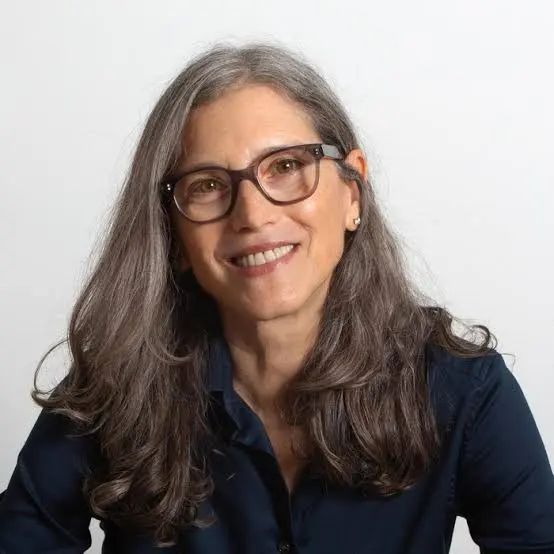
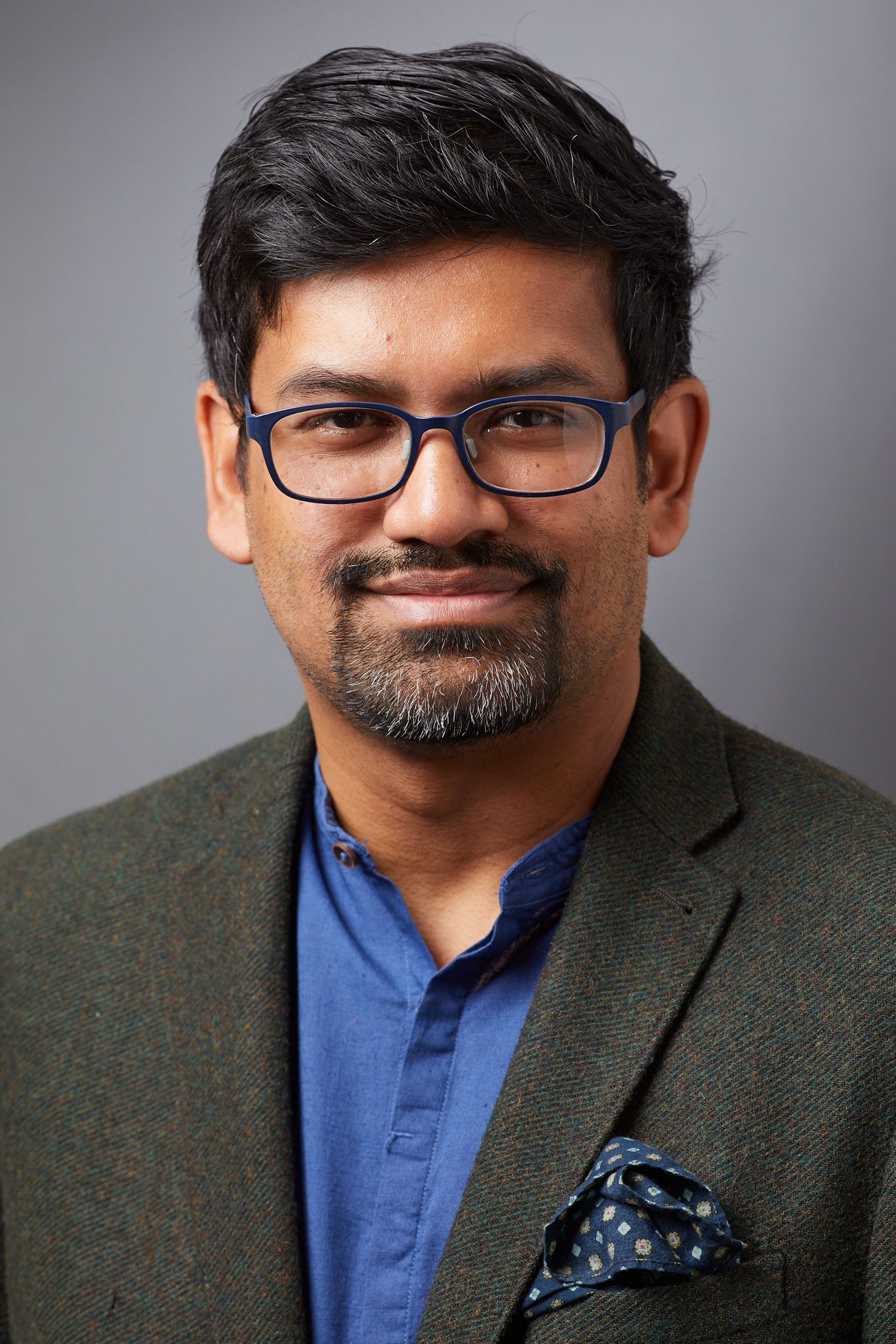
To talk about the BJP’s dominance, the opposition’s crisis, and India’s positioning in a rapidly shifting world, Milan is joined this week by Grand Tamasha regulars, Sadanand Dhume and Tanvi Madan.
Sadanand is a senior fellow for India, Pakistan, and South Asia at the Council on Foreign Relations. He is also a regular columnist for the Wall Street Journal.
Tanvi Madan is a senior fellow in the Center for Asia Policy Studies in the Foreign Policy program at the Brookings Institution.
The trio discuss whether India is becoming a “one-party state,” the current state of the opposition, and the headwinds facing the Indian economy. Plus, the three discuss Pakistan’s diplomatic moment, Trump’s recent China trip, and Marco Rubio’s visit to India.
Episode notes:
- Sadanand Dhume, “Why Would Anyone Trust Pakistan to Mediate With Iran?” Wall Street Journal, May 20, 2026.
- Sadanand Dhume, “India’s Ruling Party Beats the Odds,” Wall Street Journal, May 6, 2026.
- Sadanand Dhume, “Pakistan Has Put Itself Back on the Diplomatic Map,” Wall Street Journal, April 8, 2026.
- [Audio] “Flash Episode: India's 2026 Elections Explained (with Yamini Aiyar and Neelanjan Sircar),” Grand Tamasha, May 8, 2026.
- Tanvi Madan, “India’s China Strategy in an Uncertain Strategic Environment,” in Milan Vaishnav, ed., India and a Changing Global Order: Foreign Policy in the Trump 2.0 Era (Washington, D.C.: Carnegie Endowment for International Peace, 2026)
- [Video] “Udit Misra Explains | Forex Fears? What PM Modi’s Big Appeal Actually Says About India’s Economy,” Indian Express, May 12, 2026.
- “From UP to Karnataka: Six Routes Around the 1991 Places of Worship Act,” The Wire, May 17, 2026.
Transcript
Note: this is an AI-generated transcript and may contain errors
Milan Vaishnav Welcome to Grand Tamasha, a co-production of the Carnegie Endowment for International Peace and the Hindustan Times. I'm your host, Milan Vaishnav. After the last round of state elections, India's political landscape looks more lopsided than at any time in the post-2014 era. The BJP claimed big wins in West Bengal and Assam, continuing its march across Eastern India and further solidifying its status as a hegemonic party. But politics at home is only part of the story. Overseas, India is facing a turbulent moment, from the Iran War and Pakistan's diplomatic resurgence to Trump 2.0's approach to China and the uncertain future of the Quad. To talk about the BJP's dominance, the opposition's crisis, and India's positioning in a rapidly shifting world, I am joined this week by Grand Tamasha regulars, Sadanand Dhume and Tanvi Madan. Sadanand is the brand new senior fellow for India, Pakistan, and South Asia at the Council on Foreign Relations. He is also a regular columnist for the Wall Street Journal. Sadanand, congrats on the new job.
Sadanand Dhume Thank you, and it's good to be back.
Milan Vaishnav Tanvi Madan is a senior fellow in the Center for Asia Policy Studies and the Foreign Policy Program at the Brookings Institution. Tanvi, good to have you back.
Tanvi Madan Good to be back, Milan.
Milan Vaishnav So we have a lot to discuss today, but let me start with the politics, because I think that's on a lot of people's minds. We've had this series of recent state elections. We saw numerous headlines, including the New York Times, claiming that India is rapidly moving towards a one-party state. The BJP and its allies now have 22 chief ministers across India. Its chief national rival, the Congress, I think only has four. Sadanand, let me maybe start with you. How comfortable are you with this designation of India as a kind of virtual one-party state?
Sadanand Dhume It's a great question, and I guess it just depends on, you know, how you look at it, right? If the term one-party state brings to mind, say, a country like China or North Korea, I think it's a preposterous claim to make about India. If, on the other hand, your idea of a one- party state is to compare this moment in Indian history with previous moments in Indian history, right, so for example, between 1947 and 1967, there was this one state government, the Kerala government, that was an opposition government, which was famously dismissed in 1959. Or if you go to 1976, when Indira Gandhi dismissed the governments of Gujarat and Tamil Nadu, and effectively Congress was the only game in town, I think that India isn't quite where it was at the peak of Nehru's power or at the peak of Indira's Gandhi's power. But it's closer to that point than it has been any time since. So, I think we shouldn't worry that India is going to officially become a one-party state. But I think people who do care about Indian democracy should have concerns about one party being so overwhelmingly powerful, albeit at the same time being aware that this would not be the first time in Indian history when one party has been very powerful.
Milan Vaishnav Could I just ask you, just as a kind of follow up to that, obviously the result in West Bengal got the lion's share of attention. I think the results in Tamil Nadu, maybe second, and then Assam, Kerala, Puducherry were kind of second and third-order issues. But just on West Bengal, I mean, you have studied the BJP for a long time. You followed what folks on the right have been talking about, writing about, agitating about. Help put us in context the kind of significance of West Bengal in the kind of larger BJP sung kind of world view or kind of history.
Sadanand Dhume So, you know, I wrote a column about this, right? I mean, just in terms of like, you know, looking for a parallel, right, this is extremely dramatic, right. This is the equivalent of the Democrats winning Texas when the governorship of Texas, if Texas had never been run by the Democratic Party. But in some terms and in ideological terms, right, obviously, Bengal is a place that has had these Hindu-Muslim tensions that go back a long time. Shama Prasad Mukherjee, who was the first president of the Bharatiya Jain Sangh, which is a predecessor of the BJP, who died in mysterious circumstances in Jammu and Kashmir and is a revered figure within the Sangh ecosystem, was from West Bengal. Some people trace the intellectual roots of Hindutva, not just to Savarkar, who is, of course, from Maharashtra, but to various figures in Bengal at the end of the 19th century. And the fact that West Bengal has such a large Muslim population, roughly about 25% of the population, meant that it was often seen as an impregnable bastion for the opposition. And so, for all those reasons, the symbolic significance for the BJP of winning and that too winning emphatically in Bengal cannot be overestimated.
Milan Vaishnav Tanvi, let me kind of ask you, I think, you know, many people had argued that the BJP and Modi specifically had sort of reached the zenith of their power before 2024 and that the 2024 general elections and that outcome were a sign or a signal that it was kind of all downhill after that. And obviously, we can say now that that prediction has turned out to be mistaken. And what do you think accounts for the BJP's ability to kind of not just recover, but kind of regain and push into new territory and expand into new regions?
Tanvi Madan I think one thing it says is we should all be cautious about making very confident predictions based on one election or the other. I'd be interested, Milan, in hearing what you assess in terms of the latest in the literature but otherwise on the links or how much of the correlation there is from state elections and national elections. I'll leave that to you. But just in terms of the BJP's approach, I think this says something about their broader approach to elections, right? We've often talked about it, which is that they approach elections and politics almost in terms of a war planning, war fighting approach or strategy, which they do are lessons learned of the previous, you know, loss or even victory. And particularly if there's setbacks, and then have a campaign plan that in part, what it does is try to fix those errors. So, in this case, one of the things we heard a lot about is some of the rumblings, or grumbling rather, by within the song and the relationship between the RSS and the BJP during 2024. So, trying to address that. Or other lessons about what went wrong and what you can fix. But there are other parts of that campaign plan, right? It is about a certain level of ruthlessness about who they think should get seats. Who they should attract from who are defectors from other parties, a certain amount of divide and rule in the opposition, but also kind of, you know, whether and how to influence institutions at play or adapt to local conditions. I mean, the funny way of thinking about this is, you know, for a party that doesn't often talk about eating meat is politicians going and eating fish. At least they didn't go and, you eat potatoes in their biryani in Bengal but the fact that they will they will be take that approach where you are actually it's kind of a take no prisoners got to win this election. I sometimes wish that they had the same campaign plan strategy in thinking about second, third orders and anticipating them when it comes to policy, where sometimes I think some policies can be put out there in an ad hoc fashion. But I think there is that. Now the other part of this is it's not just what they do. Like any kind of war or conflict, your success depends on how good your opposition is. As I think in this case, you know, if you have an opposition that is not, that is kind of fighting on its own or each party is fighting on the election on their own or not in terms of that INDIA alliance which you saw in 2024, both the analogies get limited because the opposition is not behaving the same way but also it actually means that as they fight this war so to speak, they are dealing with a rival who is not united and that gives them a certain advantage as well. But of course, you know, like anything, it also depends on in the kind of how voters are thinking about them. And so, one of the things I think is if we're thinking forward, does this mean they'll always be this dominant or again, you know, is this now the peak? Or is it, you know, was that the peak of the opposition? I think it really depends on some of these elements, right? How does the opposition react? Or for instance, how are voters thinking about the economy? I think these factors still matter. I don't think you know a campaign plan can necessarily defeat those elements.
Sadanand Dhume As an aside, I think it would be great if India's war fighting was remotely as competent as the BJP's electoral war fighting.
Milan Vaishnav This is going to get us a lot of YouTube comments now. Sadanand, you know, this is one of the things you addressed in your column, and I think you would be remiss if we didn't bring it up here, which was the role of the Election Commission. And I think a lot of the campaign conversations, certainly the post-election campaign conversation has been really raising questions about the kind of evenness of the playing field and the way in which this election transpired. And, I wonder, as you sat down to write that piece. For the journal, which of course we'll link to, how did you come to think about this? So, you know, I came into it as a skeptic.
Sadanand Dhume Right? Because we've seen so many parties, you know, going back for more than 10 years, where they complain about the playing field not being level or about, you know, EVMs and so on. And I've sort of generally been quite skeptical. A lot of this is just poor losers. And so that's where I was on this too. But as I sort of got more into this, I did come to the conclusion that in this case, there were legitimate concerns about the process. This is not to say that those that, you know, we know what the outcome would have been, maybe the outcome would have still been the same. But the number of deletions and the fact that they really didn't put in place any kind of system that would allow people to appeal their exclusion from the electoral rolls, right? But it just sort of shows a kind of cavalier approach to something that ought to be sacred in a democracy, which is that people get a right to vote. And that, I think, is something that is a concern. It's a legitimate concern, and it's been drowned out, particularly on the right in India, amidst all this euphoria about the victory. I personally think that the BJP would have been much better served, even if you're looking at it from a partisan position, from their point of view. If they had won this in a way that was widely viewed as being fair, the fact that this election was tainted is just a fact. And I think that that's something that if you are a well-wisher of Indian democracy, you should hope that this is just one-off and that the courts and the Election Commission are going to find ways to make sure that this kind of thing does not happen again.
Milan Vaishnav So, we spent a lot of time talking about the BJP and the victors, but maybe just we could switch gears, Sadanand, and then I'll start with you and then see if Tanvi wants to jump in on the kind of opposition INDIA alliance, which I think it's safe to say kind of appears in tatters after this state of elections, right? Despite its many shortcomings, the Congress party still is the largest, most popular opposition party, certainly the one which has the largest and most diverse kind of expanse. 2029 is still quite a long time away. We're just in May 2026. But do you think that this of Thar of the Congress is going to have what it takes to bring this disparate set of opposition parties together to make a real play at keeping the BJP at bay in 2029?
Sadanand Dhume I mean, with all the usual caveats, right? Like I could end up with egg on my face in three years. You know, I've been saying this for a while now. I mean Congress is not a particularly functional or competent opposition party, right. Normally you would expect that, you know, the rule of anti-incumbency, the very fact that Modi has been in power for 12 years and he would have been in powerful 15 years by the time the next general election rolls around would give any opposition alliance a lot to work with. You can go to the people and say that this guy said he was going to transform your life 15 years ago. Has he really done that? I worry about the opposition, partly because the BJP is, of course, dominant partly because it's willing to use all means fair and foul, but also partly because they're just, they don't seem to be suited to meet the moment. I mean, I think Raul Gandhi is a sort of unique figure in Indian Politics, right? Like, you know, he's the Diego Maradona of losing elections. And when you have someone like this in charge of the major opposition party, I think anyone who follows politics has to look upon the prospects of Congress with a certain degree of skepticism.
Milan Vaishnav Tanvi, you want to weigh in on this one?
Tanvi Madan Well, a couple of things. One, I think part of it is they didn't fight as the INDIA Alliance, right? It was, they were functioning more like BRICS, which is, you know, a motley crew of countries who agree on one or two things. But at any given time, you know, there are some member states not talking to each other, the others are actually fighting with each other. And so, you know, I think this is one of the differences with the 2024 general election is they won. There was no India alliance as such in operation, in any sense, they were undercutting each other. I think the other question really is also with all the caveats and the points that Sadanand made about using and having the instrumentalization of institutions by the state and by the hegemon, something we've seen before, especially in the 70s and 80s. And, you know, just a random aside, anybody who hasn't read Srinath Ragavan's book on Indira Gandhi should, that was very much an aside, but you should, people should read it. But I think the point being that when you're thinking about beyond these issues, what do you as the opposition really taking on? So, at the end of the day, and we've seen this in places like Hungary or others, which is if you are, you know, it can't just be about the issue you might think you care about, which might be, you what the Election Commission is doing, what's happening with SIR, or for that matter, attacking the prime minister in terms of personal attacks, or saying he's spending too much time abroad, because these things don't, by now, we should learned that these things don't seem to stick. And so finding the issues that voters seem to care about, and we saw this in the US as well, right? Inflation was something that voters cared about; it wasn't so much the other stuff. And so finding the issue whether it is jobs whether it is uh, you know, uh meeting voters where they are versus what you think they should be worried about at the end of the day, and I don't know that we've seen that from the opposition in terms of a consistent message, because everybody seems to be on their own page in terms of what they're attacking.
Sadanand Dhume Just one very quick thing on this one. I think, you know, the fundamental, you know, just conceptually, right? Does the Congress recognize or does the Congress feel that the polity is broadly right of center on cultural issues, and they need to pivot a little bit in that direction? Or do they feel that actually the way to fight the BJP is by doubling down on a left of center perspective on some of these, you know, fraught religious and cultural issues? And that's just a fundamental question that the Congress has flip-flopped on continuously for the last 12 years, right? You had this phase where Rahul Gandhi was going through his Temple Run phase, and sometimes he's sort of trying to do that. Sometimes he's kind of doubling down on a very old-fashioned hardline Nehruvian secularism. And these are things they need to work out in a very sort of, and you could make the case for either approach. But I think the fact that this is an opposition party that still hasn't been able to figure out where it stands on something so fundamental is problematic from their point of view.
Milan Vaishnav I mean, I think what your message boils down to is you got to pick a lane and stay in it and you got be consistent. And it kind of reminds me of the thing you would often bring up Sadanand on many of our previous Grand Tamashas is like, it seems like a trivial thing, but the fact that Rahul Gandhi doesn't know what kind of facial hair he's going to have on a daily basis tells you something about the lack of consistency in image, right? Let's turn now to geopolitics, because there's a lot to talk about there as well. It seems like all of a sudden, although I know the precursors were there, but certainly when you look at the news, that India is facing the brunt of a really nasty mix of external pressures, all of which pretty much have been exacerbated by the Iran War. We have oil prices that are skyrocketing, we have supply chains that are being disrupted, We have international trade headwinds. And there obviously doesn't seem to be any definitive end in sight for the Iran war. Tanvi, let me just maybe start with you, with just kind of a big picture question, right? Which is how do you understand kind of India's status or positioning at this very tenuous geopolitical moment? And what do you think are the kind of top two or top three major concerns it faces as it looks out at the rest of the world?
Tanvi Madan I think you know the way I think about it is this is like India trying to build and expand on its house while it's being battered by storms in every direction. And so it's not like you can hunker down and you know batten down the hatches and say we're just going to sit this out. You actually want to see if there are moments where if there's opportunities to continue to grow the economy, which you need because you need job creating growth. But also because there are still some areas where there are opportunities, even in this kind of time of turbulence, while trying to think about, can you build more, you know, can you build that resilience up and then can you deal with these stops? And so what you've seen, I think, is an India that both its external rivalries have intensified in the last few years with Pakistan, with China. None of those problems have gotten solved. On top of that, some of India's closest partners have taken military actions that have complicated India's hand, whether that was Russia invading Ukraine in ‘22, whether it is the US and Israeli strikes on Iran, not just this go-around, but in the past as well and in between the Gaza conflict as well. And so, you've had kind of these external shocks that have come in addition to, on top of that, a Trump administration where you got used to having a U.S. that was, because it saw the world through a China competition prism in part, saw you as a major partner, but it was also not dealing with your other rival Pakistan. And so, you've been buffeted by these challenges, while you are, you know, trying to see, okay, how can I continue cooperation with the US on economic security, on technology, on defense cooperation? How can I do that, diversify with Europe and Japan and South Korea and Australia, who are also looking to diversify? And you're trying to, see is there a way to re-engage China economically and find moments with Russia. So, it's, it's a part of what makes this a complex I think time for India is that it is being buffeted by storms. And yes, that's that is kind of it is, I think, a geopolitically, perhaps I would say, you know, maybe after 2020, the most or maybe even above 2020, one of the most trying geopolitical moments for that the Modi government has faced since it's come to power. I only put it maybe above 2020 just because it's being buffeted by in every direction. And that's, you know, and maybe, you know, Sadanand wants to jump in on this, or you do, which is these, this is just the geopolitical stuff. But every one of these things has a fallout for you economically. And in terms of, you know, your space in kind of the international domain. So, I think I think it's just a geopolitically fraught situation for India. But it is still you do see, you know, just in terms of, if you just look at Modi and his minister's itineraries, finding spaces where you can still you know, move things forward. And you know, some of the some of the results of these crises isn't necessarily bad. If it's getting India to sign up to trade agreements that might have taken another 10 years, then you know those things aren't necessarily bad at the end of the day or if it helps India think about munitions production and you know thinking about that next generation of warfare and planning for it. That's not necessarily bad but in the short term, this is a problematic time.
Milan Vaishnav Sadanand, I want to switch gears a little bit and ask you about Pakistan, which I think is very relevant in this context. And in fact, you wrote a column a couple of weeks ago in which you really kind of highlighted the way in which Pakistan has kind of emerged or re-emerged in the kind of front lines of international diplomacy. I think we've talked before about kind of how we got here and the mix of kind of Trump's own preferences and Pakistan's very savvy game and various other things. But, how worried should India be at this reemergence? And is it possible that this is a harbinger of some kind of deeper, more structural shift? Or do you think that this a kind of ephemeral thing that it's just going to have to wait out?
Sadanand Dhume So second part first, I don't think there's a deep structural shift. I think that this is opportunistic. I think the US sees a certain value in Pakistan as a mediator. I'm writing something now about how some of that thinking may be questionable. But there is a sort of, you know, nonetheless, Pakistan has a border with Iran. It enjoys good relations with both the US and, yeah. There is some kind of logic. So, I'm not sure if there's something permanent. The thing that should be worrying more for people in India is something that Tanvi touched upon in her last response. So, to what extent does this very dramatic fall with Pakistan reflect the US that is no longer that concerned about China? That should really be very worrisome for the Indians, right? Because let's not forget that Pakistan's closest ally for a long time has been China. And that has not changed, right? So they could sort of despite the flirtation with the US particularly over the last year, China is along with North Korea, one of the two countries that is very tightly allied with China. And so if this is a reflection of the US, first of all, not particularly being particularly concerned about. India's concerns about terrorism and really India's own domestic conversation about Pakistan so far being completely out of whack with how the world sees Pakistan. That's something that should be worrying in and of itself. But I think that's amplified greatly in terms of this being seen as a reflection of something larger, which is how the US sees China. And that's what I would be more worried about if I was in New Delhi.
[…]
Milan Vaishnav I mean, Tanvi, just to stay on Pakistan for a second. We had been chatting kind of offline a few days ago that, you know, I think we've all been seeing these kind of steady stream statements from various sources, some from the RSS and the Sangh, some form the army, including retired military, some of the BJP about the need to engage Pakistan in some kind of diplomatic negotiation, unspecified. You know, there are enough crumbs there I think you can string together, like somebody trying out maybe a trial balloon. Tanvi, maybe start with you, I mean, do you take this prospect seriously? Is it, you know, are we reading too much into recent statements or do you think in fact there is an attempt to kind of test the waters on whether there should be some kind of more robust bilateral conversation going on?
Tanvi Madan I think, you know, it it's interesting that that this, you know, we've seen some of these crumbs, but I would say I don't know that they're entirely unexpected. I would caveat any discussion on these things with we don't tend there are certain things you don't intend to have visibility about in terms of India's foreign relations. And sometimes, you know, India, Pakistan, both back channels and also because some of these things tend to be pretty close hold, we don't know what's going on or what people are thinking. So what could the possibilities be about this? One, you know, it could be something as simple as that, you know, this is a strategic communication exercise to say, to convey to the world that it's not India that's being the kind of difficult party in this. So, take on some of those arguments that Pakistan has made that India is diffident and doesn't want to, you know, come to the table, could be as simple as that. It could, on the other hand, be a trial balloon to see if this is something that Pakistan would be interested in. It could be preparing the ground in terms of the public to say that, look, this might be something either that India might be interested in or for you know, when I say public I mean the Indian public, or to try to say that this is uh you know this is something that might be going on in the back background that we don't have visibility on right now. And the other, you know, the reason I think, the other thing I would just say is you do have a situation or a set of circumstances is where we have seen in the, you know, if you look back at India's history, when has it tended to try to normalize or stabilize things with a rival, or even a partner where it's had fraught, fraught ties? One is when you've seen India itself, facing a number of different, or trying to kind of move ahead with a number of headwinds. And so it's just trying to keep things stable. And so that opens, that incentivizes India to say, let's try to keep every, you know, especially our rivals, rivalries stable. But the other time has been is when India thinks its rival might be interested. And sometimes both of these things work, which is India is ready for this. And then it assesses that Pakistan actually also might want, this might be a good time for Pakistan, or they might be sending out hints that we're not seeing or that this is just an Indian assessment. And, you know, there's a lot of like, sometimes, you know, this is a kind of, oh, Pakistan's doing great. It is diplomatically, you know, everywhere. It's been sort of, you know, the President Trump talks about his favorite field marshal. But underlying that, Pakistan is facing headwinds too. It has a far less resilient economy. It has essentially broken up or the UAE has broken up with it in certain domains, Saudi is filling that gap, but then also you have in the reports coming out this week that, you know, Pakistan had to commit a certain amount of troops and platforms to Saudi as well as part of their deal. So, you, know, and that's not to mention all the foul fallout that Pakistan has to deal with, with the Gulf War. In terms of people who work there, remittances, everything. So, it might just be that this is a point where there is a sense that they might also be thinking about something like this. History will tell us it could be one of those moments where there's a lot of chatter and nothing happens. Or to start something, again, I don't think we're, you know, we've seen so many of these in India, Pakistan, that I don't think we should be talking about big breakthroughs or anything. But it's something to watch, definitely.
Sadanand Dhume So I want to just jump in on that. I mean, I take Tanvi's point about, you know, a lot of this stuff being backchannel and there not being too much visibility. But I think that actually the ask is incredibly hard in this case, right? So if you look at the rhetoric in both countries, right, and I mean you have Modi, where you're out for Operation Sindhoor, saying the same Operation Sindhoor is continuing. You have belligerent statements by the Indian army chief and by the defense minister. And also in Pakistan, where Asim Munir is by all accounts extremely unpopular, and his domestic legitimacy, to the extent that he has any, really rests on him having, being seen in Pakistan as having performed creditably in the confrontation with India last year. And so, I just don't sort of, I don't see the, I think there's always room for back channel. But I think that in terms of the atmospherics, both countries have really kind of gone out on a limb. And they're going to have to find a way to walk back quite a ways before you can sort of get to a point where public opinion in either country is going to sort of allow for something resembling normalcy to come back into the picture.
Tanvi Madan I think just on that, I think this is not like talking about some major normalization process aside. I think we're because the bar is so low, it's just kind of would you would there be a dialog? And I would say that you could argue those conditions that's Sadanand laid out in a different way, which is you have a you know, as much as you're hearing some former diplomats, you know, you've had some voices from the RSS. You've also had at the same time, the Indian military saying, you know we will if Pakistan drives anything will change the geography. So, you have that that enables you in some ways and on Pakistan's side you could have, you know, Munir saying look I've shown because everybody thinks everybody's portraying this as they came out of Sindhu or better. It is actually the time when it gives you some space because you say, we've done really well, we have shown them, that you can actually say to the politics and for a Prime Minister Modi, I'm not saying this is happening, I'm saying if it does happen, this is how I would see that the argument would be made, is that you could see a Modi saying, I've just come out of elections, I don't need to worry about my political flank, and so I need some time, where I don’t need yet another crisis upon the country and same thing with Munir. And I think the other thing to remember beyond anything else, neither side right now might be in a position to, you know, I don't know if everybody's built up their, you know, resupplied themselves, but for both countries, they get their supplies from other countries, military supplies as well. And everybody is dealing with their own, you know, Russia, Israel, US are our kind of have expended a lot of munitions and other and probably don't want to export
Sadanand Dhume But not China, but not China. Right. Pakistan's main [ally].
Tanvi Madan But do you think China wants a crisis right now? It could be. I think part of it is just, I'm not saying this is happening. I'm just saying, from what we know of history, it is actually after sometimes after a lot of belligerence that you get some of this, OK, maybe we should just buy some time. It's not necessarily leading to some grand breakthrough or even some normalization. But it's a buying time process. And maybe it's just the RSS signaling. Well, if the government decides to do that. They're going to give them some space to do it.
Milan Vaishnav I mean, since we've mentioned China a couple of times, we should maybe talk about this recent trip that Trump took to China, along with a bunch of kind of blue-chip American CEOs. Tanvi, maybe I'll turn to you first, since, you know, you have been following the China-India-US triangle, the China India-US fateful triangle for some time. What are some of the big takeaways from you from the visit as you kind of reflect on press statements, things that Trump has said on Air Force One and otherwise that you've been able to glean?
Tanvi Madan I think, you know, the initially my response was similar to a lot of folks that, you know, it especially when after the visit finished, which was the seem to be a lot of symbolism. And substantively, you didn't see major shifts, but then you did see some interviews either done during or, you know, before the president's trip or, for example, his comments during the plane ride back on Taiwan that I think, you know, if this is reflecting a shift on where the US stands on a potential Chinese move to take Taiwan by force, if we need to know more about whether this is a substantive shift, and it would be of concern if it was. I think the other thing is you did see to you that some folks have done this, which has used AI to compare the U.S. And China statements. And there are clearly gaps there. So you understand that this is not a couple of countries where competition has gone away or that they agree on everything or even how to portray or emphasize things or even agree on the commitments that were made. But you did see a White House fact sheet today, which embraced the Chinese term for this phase of what they aspire to in the relationship, which was a constructive relationship of strategic stability. And I think if you're sitting not just in New Delhi, but in a number of places, you are wondering, is this supposed to be like during the Obama administration, the Chinese had put out this new type of major power relations or like a G2 or because part of what you're wondering is what is this going to mean for U.S. policy towards China? What is it going to be into U.S. willingness and ability to ensure a favorable balance of power in Asia and to deter China from taking assertive actions? And what is it going to mean if you're India for US policy towards India? Because the US that sees has seen China from a competitive lens has been useful to India in a number of ways. It has led to deep cooperation and it has led to both countries managing differences, which, which otherwise would have been taken, you know, a center stage. So, I think, and you're wondering if you're in India, what is this going to mean for Chinese behavior? Because if China is feeling more comfortable with the U.S., does it start pressing you? Or I would say these days, is it going to press you even more in a way that it is pressing Japan, for instance? So, I think you're watching very closely, but part of what you're trying to see is this just a new terminology and the competitive policies that exist in other domains, are those still going to continue and is there scope for U.S.-India cooperation to continue in those? And I think some of that we'll see in the time ahead when Secretary of State Rubio goes to India.
Milan Vaishnav Sadanand, I don't know if you had any thoughts about the China visit and kind of the both the optics and the substance
Sadanand Dhume Yeah, I mean, I think that, you know, I wasn't expecting much going into it, but I actually do think that even though this was mostly optics and little substance, the optics that we did see should give people pause and continue for concern, right? So I thought some of the language on Taiwan, for example. The fact that the president has asked the question and he sort of gets into this rant about how the Taiwanese stole our semiconductor industry. I mean, I would be terrified, right? Even though there's no sort of maybe no formal change in the government's position or something, but this sort of thing should be, it ought to be terrifying. So I'm not very...
Milan Vaishnav Yeah. Tanvi kind of ended by talking about Marco Rubio's, I think it's his maiden voyage to India. It's next week, May 24th to 26th, it'll come out probably right around the time this podcast comes out. You know, I think it's safe to say that Rubio visit to India is sort of set against the backdrop of a pretty, I don't know, sluggish kind of U.S.-India relationship or at least it feels sluggish to me. Sadanand, I think it's... Rubio has seen, I think by most of the analyst class, as probably the most India friendly kind of principle in the Trump cabinet. Can he do something meaningful, do you think, to turn this around?
Sadanand Dhume I don't think the relationship has been sluggish at all. I mean, it's just been, it has been hot and passionate, but in all the wrong ways. I mean if only it were sleepy and boring and sluggish. It's been none of those things. Look, I think Rubio has his work cut out for him, right? There's just so much suspicion and so much bad blood and such a series of shocks, particularly because if we had this conversation, say in March or in April last year, just before the beginning of. Operation Sindhoor, I think that many people in India thought that India was sitting pretty. It was in a geopolitical sweet spot. You heard that term sort of bandied out about a lot that the Trump administration was going to be just as solicitous towards India as the Biden administration, but with fewer things to disagree about. Fewer hangups. Right. And obviously that has not turned out to be that way. And so right now what you see is a great deal of concern and a great of suspicion. I think it was Sanjay Baru who wrote a piece a few weeks ago pointing out that the old mistrust that we thought had been put behind India, behind India and the U.S. In terms of the bilateral relationship has reared its head again. And I think that that is certainly the case. That Rubio's going is obviously a good sign. But I think that the amount of repair work that's going to have to be done is enormous and I don't think it's something that any one visit is going to be enough to fix. You know, Tanvi, I guess...
Milan Vaishnav I guess one of the questions I have for you is, like, as you think about the landscape of U.S.-India ties and, you know, you've written one book on the U.s. And India and China going back, you're working on a second one, where is the ballast in this relationship right now? Where is the kind of – who is in the driver's seat? I mean, it seems like there's, you know, this is kind of a. Kind of very meandering, somewhat rudderless, you know, set of movements we're seeing right now. I mean, how do you explain it to people who show up in Washington and are trying to make sense of kind of, you, know, who's really kind of the engine behind U.S.-India ties right now?
Tanvi Madan You know, it's the thing is there is only at the end of the day, the major driver in the US is President Trump. So, you know, whatever else is happening, and I will come to that whatever else is happening. What, because it's such a, you know, personalistic administration, his views and approach at the end of the day will matter and will have an effect. What is interesting to me and, you know, I'm often called and I'm accused of being an optimist on this and nobody's ever accused me of being an optimists. This is more kind of just a sense of just looking around and seeing that you would have thought given that you saw president in some ways mood sour in India in such a personalistic. Administration, that things wouldn't have just slow down or been sluggish, that they would have not just been or, you know, to use Sadanand’s kind of heated and passionate, that they would have caught fire and burned down. Or to use kind of the comparison I was making, which is you would have seen them not just to kind of slow down, but stall or reverse. And I do think... It's worth noting a couple of things that that kind of reversal or stalling, particularly in certain areas like defense, economic security technology that we would have seen 10 years ago has not happened. Now, is it true that that's a lower bar? Absolutely. I don't think that is, you know, we're taking away. But I do think you've not seen that kind of and mind you, I'd like to point out that as much as now There's talk of India of... You know, a trust that's been broken, as both of you will remember, you saw a lot of that conversation in the US about India after, you know the, with the India, India's response to the Russian invasion of Ukraine, but also particularly some of the allegations around Panu and, and those issues. So it's been a few years of kind of those, you know, storms buffeting the relationship, but I think it has shown a certain resilience that didn't exist before. Now, I do think, ideally, you want to aspire to more than that. And so at the moment, it's about making sure that, you know, you don't have the storms just kind of making, you having those reversals take place. So I think on the one side, you have seen, you that's not being stalled or reversed. And I think the other thing that has been interesting though. Again, I don't think this can stay insulated from how President Trump and Prime Minister Modi think about the relationship. I do think you've seen, interestingly, some operational cooperation continue in a number of different fields, some of which doesn't involve the government, right? So you've seen some tech companies go and announce investments or other things that are taking place, which have frankly, you know, are kind of moving on their own steam, but even those, you know, do even businesses need signal from government. So if they think that this administration doesn't see India is like minded, or doesn't See India as someplace or puts more is going to put more tariffs on then I think even they start to assess that. So I guess where I come down to is, this is a more challenged relationship than it was a year and a ago, but it is a more resilient relationship than it was 10 years ago. And so I think, you know, it depends if you want to take the glass half full, a glass half empty approach, you can find enough in the relationship. One thing that is missing is that strategic, you know, the thing that, you know, and I'm not just saying this because this is what I work on, but you did see strategic convergence on China being that major driver because it was the prison through which both Delhi and DC looked at the world and were assessing each other as partners and prioritizing their foreign relations. And I don't think that's the case with President Trump. He does not see a competition with China as the organizing principle.
Sadanand Dhume So let me be uncharacteristically optimistic and agree with Tanvi over here, right? So as she was talking, I was just thinking of like two other crises in the last 30 years, right, that led to kind of lows in the relationship, the 1998 nuclear tests and what we fondly remember as Cobra Guarding Gate. And I think it's sort of undeniably true that the relationship in the interim has developed enough sort of guardrails enough maturity comparatively, right? So in 1998, there really wasn't that much, right, in the test really. They really, they shook the relationship to its foundation. And again, over the Cobra Guard incident, there was sort of a lot of, I think a lot of petulance and a lot of sniping and so on, which it took a little work to overcome. And I think compared to both of those, it is true. And certainly I think some of the credit goes, or much of the credits in this case, goes to the government of India, which has handled itself. With a great deal of maturity on this, they haven't taken the bait, they have ignored goading by the opposition, they've just sort of stayed the course and recognized that the relationship is very important to India. So I will say that that does bode well despite all the concerns that I echoed earlier.
Milan Vaishnav So we've covered a lot of ground on domestic Canadian politics, the geopolitical space, Pakistan, the US. Let me end by completely shifting gears yet again and kind of bringing this conversation to a close by asking both of you something that we do from time to time when we get together, which is, is there a story or an issue out there that you think is not getting sufficient attention that you think our listeners should be paying attention to? And Sadanand, maybe I'll start with you.
Sadanand Dhume So I'm not sure if you followed, there was a high court judgment in Madhya Pradesh that has basically allowed Hindu worshippers to get exclusive rights of worship in a disputed site that had been claimed by both Hindus and Muslims. And I think that this is important because it's another milestone and what seems to me to be the unraveling of the 1991 Places of Worship Act, which basically tried to these kinds of disputes, religious disputes between Hindus and Muslims over shrines that both sides claimed, it seems very clearly now that that effort in hindsight was not sufficient and that we're going to see this is just the latest in an example of many such cases that are coming down the pike.
Milan Vaishnav Tanvi, anything on your mind?
Speaker 3 So I think the thing that I think hasn't got enough attention outside India was Prime Minister Modi's visit to the UAE, also the agreements that were signed. And this comes, you know, a few months after and this was before the, you know, Iran or Gulf War. But you saw the almost entire kind of UAE establishment go to India for a few hours and sign agreements. And now you've seen this. And to me, the thing is, the reason to watch this is one, I think, sometimes outside India, we don't think about enough about India as an actor in the Middle East, because the Middle East countries in the Middle East are definitely thinking about it. But second, what does this mean for India's delicate balancing act that it's always had of, you know, having ties with different parts of the Middle East, whether that's Israel, whether that's Iran, whether it used to be just kind of, you know, the Gulf Cooperation Council countries, but now, you know, it's kind of UAE wing and a Saudi wing of that. And so It is worth watching because I don't, you know, used to be these things were about energy or it was about, yes, to some extent, economics or remittances. But this this seems much more comprehensive and it's something to watch as we find out more about what are the implications for defense and security cooperation for technology cooperation for the U.A. Doing things with India together on some of these fronts in ways that we didn't? And what are the implications for India's other relations? In the Middle East, and I think these will have implications for U.S. Interests as well as those of other countries.
Milan Vaishnav So one thing that I wanted to highlight, which is not really something that's been under covered, because back, it's a video that's kind of gone viral, and I think it's kind of gone unexpectedly viral. I don't know if either of you guys have seen the short explainer video that the Indian Express economics editor, Udit Mishra, put out. So what I know, send it to me. Yeah, yeah, I think I accidentally sent it to you twice, because I saw it so many times on my timeline. And just for those who haven't seen, we'll link to it in our show notes. Udit mishra who writes very compellingly on the Indian economy for the Indian Express. Was being interviewed by another Express staffer about kind of the economic crisis that is facing India and in a very accessible and eloquent way He basically just laid out the facts about kind of India's current account deficit the issues on the balance of payments front the real drying up of foreign direct investment the tremendous pressure that is being exerted by a falling rupee, which the central bank is trying to kind of prop up in various ways. And, you know, I don't think there was anything particularly kind of new in what he said, but it was the clarity with which he spoke and putting kind of tying the different pieces together. And it also to me kind of struck me as a commentary on maybe the state of economics commentary in India that what was so remarkable is his ability to just kind of say very basic facts in a way that came across as kind of speaking truth to power, when I don't think he was being political at all, right? I mean, he was just kind saying, here is what the numbers say. But I actually think that because of this very kind of gauzy kind of boosterism, what have you, we don't see enough of that, right, and I don't t know, I was just really struck by the fact that I've said it to Sadanand twice and I must I've seen it a hundred times on my Twitter timeline, so. Something for you to check out and we'll leave it in the notes. Sadanand Dhume of CFR, it's going to take me a while to get used to saying that, of CFR and the Wall Street Journal and Tanvi Madan of Brookings. Thanks so much for joining.
Sadanand Dhume Thank you.
Tanvi Madan Thank you!