In democracies, we typically assume that public opinion on issues like jobs, the economy, and inflation matter for shaping policy and politics. But opinions on foreign policy are often treated as the preserve of elites, especially in a country like India.
Yet, it turns out that we know surprisingly little about what ordinary Indians think about foreign policy, how stable those views are, and whether they influence the choices that governments make.
A new short book, Indian Public Opinion toward the Major Powers, tackles these questions by examining more than six decades of Indian attitudes toward the United States, China, and Russia. The book draws on a wide range of survey data to ask how Indians view the major powers, how those views have shifted over time, and what they reveal about democracy, accountability, and foreign policy in India.
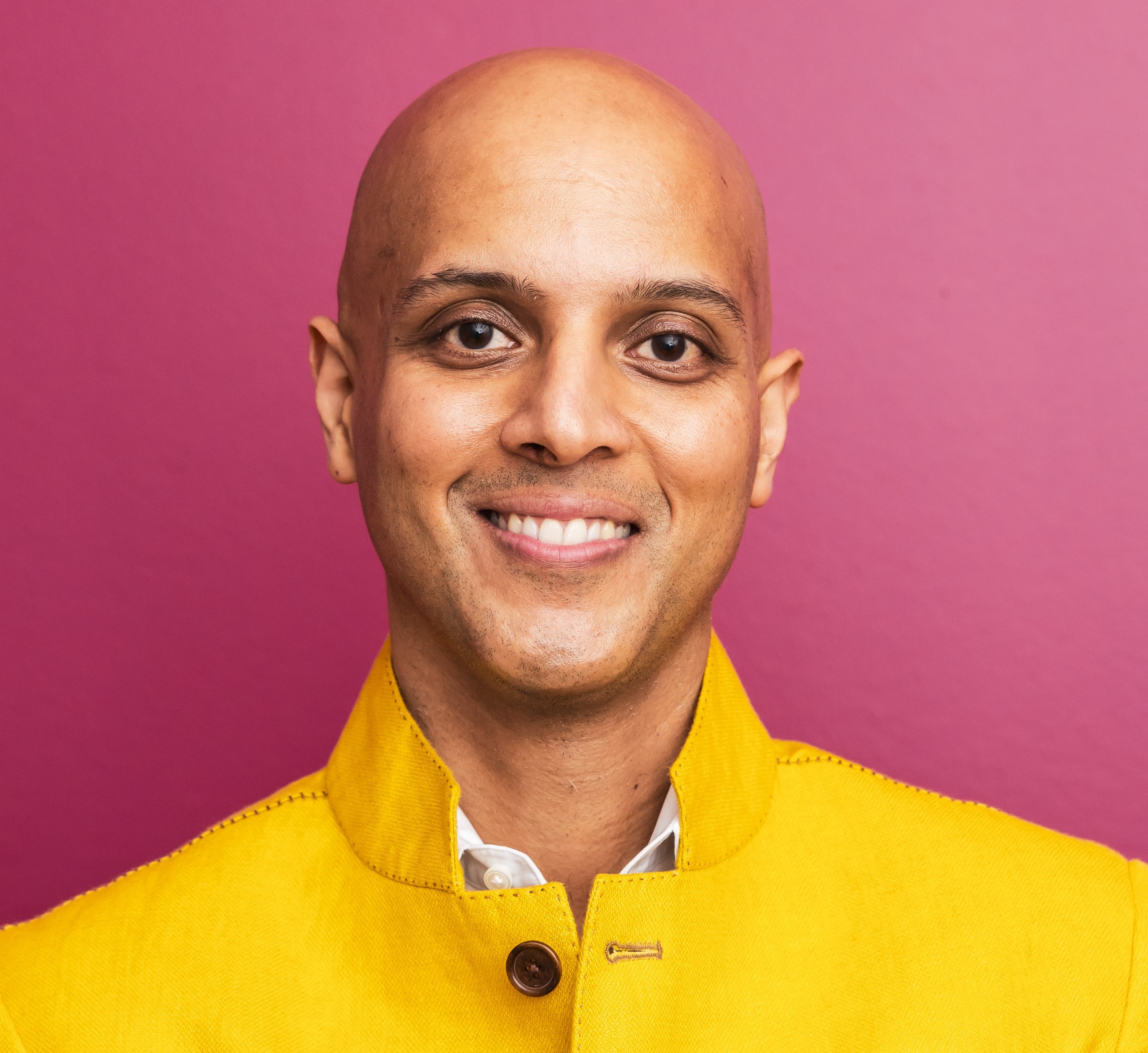
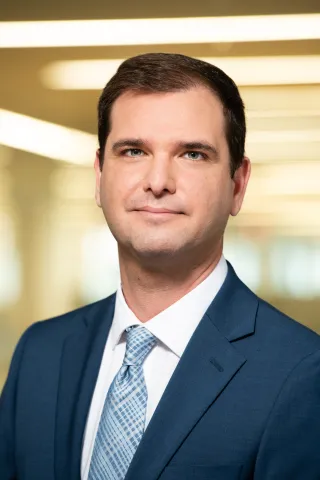
To discuss the book, co-authors Aidan Milliff and Paul Staniland join Milan on the podcast this week. Aidan is an assistant professor of political science at Florida State University. Many moons ago, he was a James C. Gaither Junior Fellow with the Carnegie South Asia Program. Paul is professor of political science at the University of Chicago and a non-resident scholar at the Carnegie Endowment for International Peace.
The trio discuss the treasure trove of data on Indian public opinion the authors stumbled upon, the characteristics of India’s “foreign policy public,” and the variation in Indian attitudes toward the United States, China, and Russia/the Soviet Union. Plus, the discuss why a respondent’s region emerges as a strong predictor of one’s foreign policy views.
Episode notes:
- Aidan Milliff and Paul Staniland, “Replication Archive: India Public Opinion Toward the Major Powers,” May 2026.
- Paul Staniland, “The Indian ‘foreign policy public,’” paulstaniland.com (Blog), May 6, 2026.
- Christine Huang, “Americans see India in positive light, but few have confidence in Modi,” Pew Research Center, June 21, 2023.
- Paul Staniland and Vipin Narang, “Democratic Accountability and Foreign Security Policy: Theory and Evidence from India,” Security Studies 27, no. 3 (2018): 410-447.
- Aidan Milliff and Paul Staniland, "Indian Public Opinion toward the Major Powers," in Elements in Indo-Pacific Security, (Cambridge: Cambridge University Press, 2026). (The piece is publicly available until June 15, 2026)
Transcript
Note: this is an AI-generated transcript and may contain errors
Milan Vaishnav Welcome to Grand Tamasha, a co-production of the Carnegie Endowment for International Peace and the Hindustan Times. I'm your host, Milan Vaishnav. In democracies, we typically assume that public opinion on issues like jobs, the economy, and inflation matter for shaping policy and politics. But opinions on foreign policy are often treated as the preserve of elites, especially in a country like India. Yet it turns out that we know surprisingly little about what ordinary Indians think about foreign policy, how stable those views are, and whether they influence the choices that governments make. A new short book, Indian Public Opinion Towards the Major Powers, tackles these questions by examining more than six decades of Indian attitudes towards the United States, China, and Russia. The book draws on a wide range of survey data to ask how Indians view the major powers, how those views have shifted over time, and what they reveal about democracy, accountability, and foreign policy in India. To discuss the book, I'm joined by its authors, Aidan Milliff and Paul Staniland. Aidan is an assistant professor of political science at Florida State University. And many, many moons ago, he was a junior fellow with the South Asia Program. Paul is a professor of Political Science at the University of Chicago and a non-resident scholar at the Carnegie Endowment for International Peace. Aidan, Paul, congrats on the book and thanks so much for taking the time.
Paul Staniland Great, thanks for having us, Milan.
Aidan Milliff Yeah, thank you. Excited to be here.
Milan Vaishnav So Paul, every book has its own origin story. And so, I want to ask you about the origin story behind this short book. What prompted you two to sort of take up this pretty large question where there's really not a ton of literature on Indian public opinion on foreign policy?
Paul Staniland Yeah, I was actually going back and looking through my email the other week to try to figure out what the story is. And it goes back, it turns out, I thought it went back to 2017, but it actually goes back to 2012 originally. So I, with a co-author, Vipin Narang, we've been in the early 2010s working on some issues around domestic politics and Indian foreign policy, especially understanding if or to what extent there are constraints or incentives that Indian domestic politics create for Indian policymakers in cases of, like, crises with Pakistan or China. And so, you know, we were kind of going through the literature, and I found some references to this thing called the Indian Institute of Public Opinion, which had run a long series of surveys of urban Indians, and we'll come back to that issue later, as well as some broader, like, all India surveys, starting in the 1950s. And I emailed Vipin in 2012 to be like, oh, there's this reference. I later saw it cited at some other work as well. That in 2017, and I don't remember exactly why, we started getting more serious about trying to systematize these data. And so, working with Vipin at the time and then Aidan got brought into the project – he was a graduate student at that point—we started really delving into this kind of set of surveys for the 1950s. It turned out through the 1990s, I tried to figure out like what's out there because there isn't a lot in the really kind of traditional high quality series of Indian surveys. So, for instance, the Center for the Study of Developing Societies has a really excellent series of election surveys. There's very little in there about foreign policy, especially very little that's consistent, like election to election, asking the same question. Whereas these IA Indian Institute of Public Opinion surveys generally ask very similar questions every year or two for decades. So, we started delving into. What can we learn descriptively. It was not a project that was driven by some grand theoretical insight, but rather kind of a simple descriptive fact that we actually didn't know that much historically. And so we started doing this historical work and then in the book, we had to combine that with also examining much more recent surveys from the 21st century, from the big, whether Indian or international survey firms to try to figure out what patterns during the Cold War looked like and how those comparative patterns after the Cold war. So, the gestation period here was, you know, about 14 years at the longest, about nine years even in its, its shortest, which tells you something about academic publishing, I think.
Milan Vaishnav You know, Aidan, the book is organized around these three core questions, and I thought maybe we could just kind of start getting into the details by just asking you to lay out what those questions are and why you settled on these three particular kind of guiding questions as kind of the overall framework or foundation for the book.
Aidan Milliff Yeah, absolutely. The first is what Paul already mentioned, which is just, what are the descriptive trends in general? What do Indians think about the major powers going back to the 50s and 60s and continuing into the 20th and 21st century? As Paul said, this is something that we knew a surprisingly small amount about, at least in the academic literature. And so just laying out the data and looking at changes over time was the first big task that we captured. The second question that we were really interested in was whether aggregate level public opinion, so just average approval of countries like China, Russia, and the United States, does that average respond to the external environment in some way? Foreign policy scholars obviously have this narrative understanding of when the diplomatic relationship between India and China, India and Russia, India in the US is better or worse. Obviously, things between India and China were quite bad around the 1962 war, around various border crises. Things between India in The United States were pretty bad around the USS Enterprise incident in ‘71. Do we see that kind of foreign policy scholar-level narrative or that diplomatic-level narrative about the relationship reflected in the opinions that ordinary people have about the countries on the other side of the hyphen, so to speak, just at the most basic level? And then the third task that we took up was trying to understand a little bit more about the individual level structure of opinions. So not only who expresses opinions about foreign policy in the first place, But what exactly are the factors that make a person in India more or less likely to have a positive view of China or a positive view of the United States? We started with this description and these trends over time, again, because this is just kind of like material that hasn't been presented in such a systematic way in the past. And we think this is a pretty important thing to do, because India in the 21st century is trying to play a much bigger role on the world stage and the public in theory should have something to say about whether and how that happened though we think that this can provide some sort of or setting up the book this way can provide sort of historical context to understand whether the foreign and domestic political interplay that we're seeing now is change or continuation relative to the past
Milan Vaishnav I mean, you know, it reminds me of a conversation I had many years ago with the economist Karthik Muralidharan. You know, one of the things that Karthik said at the time is we just need kind of a journal of like facts about India, which is just stuff that we encounter during our research, which just like not going to end up in like a top econ or top poli sci journal. But it's just stuff that's interesting. And what I admire about what you guys have done here is obviously it's not just facts. You've put it together in book format, and it appears very structured even though you started with this kind of basic description. I want to just kind of step back and think about this a little bit from the kind of standpoint of political science and scholarship, right? Because you sort of situate the book between these two opposing schools of thought. On the one hand, there's a literature out that out there that sees citizens as having pretty coherent foreign policy attitudes, and then another that sees public opinion as largely being shaped by kind of elite cues, what they hear from politicians and political leaders. I mean, I guess there's kind of a third school of thought, which is that people don't really think about foreign policy opinion at all. But Paul, I wonder if I could just ask you, I mean what were… going into this project, right, what were your priors about where India would fit into this framework?
Paul Staniland Yeah, so I would say my views have kind of evolved over time on some of this. Earlier on, let's say in the early 2010s, just kind of reading the literature, my sense was a much more kind of top-down model in which we know a lot about Indian domestic politics. I mean, Milan, you know more than either of us do about parties and voters. And our sense in that literature is that foreign affairs play a fairly minimal role. Maybe in particular elections, issues like Pakistan get mobilized and you know, the early 1970s and the aftermath of the India-Pakistan War, Mrs. Gandhi rode high in a series of state elections, the so-called khaki elections. But for the most part, Indian domestic politics is about domestic politics. And so that led us to suspect a fairly topped out model in which most voters, and I want to be clear, this is true in most democracies in general. Most voters most of the time are not carefully reading the economist and forming sophisticated opinions about like, you know, Luxembourg's exchange rate regime or whatever. And so- our expectation, or at least mine, I don't want to speak for Aidan, was something of a more top-down model. I think in part because like all voters and citizens, people are busy. They have other things that they worry about on a daily basis. They have much more pressing daily issues that they're grappling with, whether it's the education of their children or the state of inflation. That said, as we started getting into these data, I think a much more nuanced picture emerged and Aidan can talk more later about the specific questions around sampling, but I will note what we see is kind of a heterogeneous population in which there is what we call a foreign policy public that does seem to pay pretty substantial attention to what's going on. Like in other countries, disproportionately urban, educated, higher socioeconomic status. And so, it's not representative of the country at large, but within that subset of the population, fairly consistent attitudes in a lot of ways and that don't seem to reflect purely top-down elite cues, though obviously those are also very important. And so, we think this suggests a more, I think, nuanced and kind of careful assessment of where Indian public opinion has been and where it's likely to be in the present as well.
Milan Vaishnav I mean, Aidan, maybe now is the time to talk a little bit about this data that you all have collected. I mean it's a pretty impressive corpus when you step back and look at it over time, including these IIPO surveys that Paul mentioned earlier in the conversation. Just walk us through, if you could, the main data sets you used. How should listeners think about both their value on the one hand and maybe some of the kind of constraints or limitations on the other?
Aidan Milliff Yeah, so we use three big data sets. I think these IIPO surveys are the crown jewel of the evidence that we bring to the table. But in the 21st century, starting with the ones that are maybe a little more widely used or widely known, our data that cover 21st century attitudes and opinions come from two, I think, pretty widely known survey series that are conducted more or less annually in a bunch of countries around the world. This is the Global Attitudes Polls from Pew and the Gallup World Polls series. These are both really high-quality data collection efforts, they're big polls, they have samples that are approximately representative of India's 14 major states, and that's about what the CFDS polls cover as well. So, it's kind of the gold standard in terms of modern survey sampling in India. They're amazing resources, they have all the and all the downsides of the modern surveys. The new contribution and I think the thing that Paul and I are both most excited about in this project is the old set of surveys that Paul rediscovered in the UChicago library. So little background on these because I think this story is actually kind of interesting. The U.S. government did a ton of public opinion research during the Cold War for reasons that I think are fairly intuitive and it all happened through this now defunct organization called the U.S. Information Agency. Grand Tamasha listeners might know the U.S. Information Agency's other work, which would be operating the American centers and the American libraries in big Indian cities. They ran the Fulbright program back in the Cold War. And from 1959 to 2001, they surveyed the Indian public about 60 times through a local contractor that this is the Indian Institute of Public Opinion that we're talking about. Most of their questions were the things you'd expect to have in the Cold War is like every survey asked, Hey, what's your feeling about the United States? How do you feel about the Soviet Union? They added China in later, which is very useful to us. And then there are a bunch of other countries, including Pakistan, that's, you know, opinions are measured less regularly. So as far as we know, there isn't another source of data that asks about these kind of foreign policy attitudes so regularly for so long in India. And you know, somewhere in a giant Dropbox folder, we have a bunch of scans that I think are photos off of Paul's phone from the physical survey reports that are somewhere deep in the stacks at the UChicago library, and those cover polls going back to 1959. But for polls starting in the 70s, we actually get digital access to the individual survey data through the Roper Center. And we're able to clean that up from the punch card format that those files are stored in and like turn it into things that you can analyze with modern statistical tools. So this is a super cool data set, at least as far as I'm concerned. And I think I can speak for Paul on that as well. There are some obvious limitations that are mostly just a product of the time. So, IIPO, they don't really sample respondents and they don't really structure their questions in the way that we would do it today if we had a time machine. The biggest difference there is geographical. Every survey we look at covers four cities, Delhi, Chennai, Kolkata, and Mumbai, and they just sample 250 people in each city. All the respondents are literate. They probably got them by just asking people in public places, hey, would you like to take a survey about your opinions? The resulting population for these surveys has way more formal education and is obviously way more urban than India was at the time. That's really important to keep in mind when we're talking about this 20th century data. We're talking a highly educated, urban, probably English-speaking section of the Indian public. But even with that limitation, I think it doesn't really outweigh the opportunity to kind of reach back in time, understand how people were thinking about the world as early as like 12 years after India's independence.
Milan Vaishnav And I'm guessing heavily male too.
Aidan Milliff Yeah, I think men are over-represented in the IIPO data in a way that they aren't in the kind of more modern scientific stuff from Pew and Gallup.
Milan Vaishnav Paul, do you want to weigh in on that?
Paul Staniland Yeah, so, I mean, there are obviously huge limits to what the sampling strategy gives us. That said, one thing we did do is there were some broader kind of all India, still mostly urban surveys we compared too. And actually, the findings don't look radically different. So at least as a sample of urban India, we think this gives us some real insights. Beyond that, obviously there are real limitations, but it's kind of a peek, a very systematic kind of window into, at least some subsection of Indian foreign policy over time. I think we both find it really exciting because there's been a lot of really excellent, in the last 20 years, kind of diplomatic history and elite level archival research on Indian foreign policy, a real kind of renaissance of research, especially on India in the early Cold War. But the broader sense of what the public, or at least parts of the public are thinking about this has been a missing piece. And so that's something that we think we can bring to the table here, even with these limitations.
Aidan Milliff Yeah, exactly. I was a research assistant for a survey in college, and the director of the survey had a cross-stitch framed on his wall and it said, “you can't measure change if you change the measure.” And I think that actually encapsulates what's really nice about these surveys. They ask the exact same question to a pretty much identical population with the exception of these times that Paul is mentioning where they kind of broaden out and survey people in every state capital, for instance. They're asking the same question to the same cross-section of society over and over again for a period of decades, and that gives us a perfect setup to look for change over time.
Milan Vaishnav I mean, you know, get into this question of the who is the foreign policy public. You know, one of the most interesting parts of the book is your treatment and discussion of the don't know responses, right? I mean anyone who's done a survey knows that typically you have a response option, which is, you don't the respondent simply doesn't know how to answer the question one way or another. What do you think studying those ‘don't know’ responses reveals and what do we know about who tends to answer ‘don't know’ on foreign policy questions in India?
Aidan Milliff Yeah, so the reason we study these things in the first place is kind of going back to some of Paul's earlier work with Vipin about this broader question of whether Indian citizens can hold India's government accountable in the conduct of foreign policy. And political scientists, when we think about the way that governments get held accountable for foreign policy conduct, we look to attitudes and opinions of voters as that channel for accountability. And so, it really matters from a normative perspective, if you're thinking about accountability and public input into foreign policy, to understand whose attitudes contribute to public opinion. If you respond ‘don't know’ to a survey question, you are left out of the average, whatever it is that you might actually think or whether you really just don't care or don't have an opinion. This builds on some work by political scientists in American politics. Adam Berinsky is one of the people who's worked a lot on these don't know responses. And what he finds in the United States is that the people who don't answer survey questions about foreign policy, if you do actually go succeed in collecting their views, their views are actually systematically different from the people who do answer. So, understanding whose opinions contribute to the public sentiment is really important from this kind of perspective of accountability. So, what we find is actually really quite similar to what people like Berinsky have found in the United States. India is not that different from high income countries in this regard. People with more education, people with higher incomes, people living in urban areas, people with all those characteristics are just way more likely to answer questions about foreign policy than people with less formal education, lower household incomes, people living in rural areas. So, when we talk about public opinion on foreign policy in India, we are talking about this special group, and this is what Paul was calling the foreign policy public earlier. And it's a group that is more wealthy, more educated, and more urban than the Indian electorate.
Milan Vaishnav Paul, I wanted to ask you before we get into the country-specific stories, because I think there's actually something to talk about with each one of these that's quite interesting and nuanced. Just share with us, if you could, just at that macro level, what are the big top-line findings? How have Indian attitudes towards the United States, China, Russia, slash Soviet Union evolved over time?
Paul Staniland Yeah. So, let's start with in some ways, the easiest case, which is Russia slash the Soviet Union. I'm just going to refer to it as Russia for this conversation, but obviously for the IIOP survey data during the Cold Wars, the Soviet Union. That one has been consistently quite positive during the Cold War. After the Cold War, since the Ukraine war, before the Ukraine War, just generally kind of positive sentiment. There's some nuances I'll come back to in a second. The U.S., and this is what surprised me, I think, quite a lot, is there is unsurprisingly a large dip around the 1971 war. For those few listeners who may be unaware, the U.S. pretty actively backed Pakistan in the run up to the 1971 War, during the war took actions that were seen as very hostile toward India. And so you see a real…
Milan Vaishnav And this is the war that ended with the liberation of Bangladesh and the creation of a sovereign Bangladesh that was separate from East Pakistan.
Paul Staniland That's correct, so the war that creates Bangladesh, the US ends up being on the wrong side of that in terms of both the outcomes that Bangladesh has created but also in terms in Indian elite and public opinion. So, we see a really dramatic drop in the early 1970s. So that makes a lot of sense. What's a little more surprising is it's quite positive other than that. So even during the 1960s when there were periods of real tension between New Delhi and Washington in the mid-late 1960s, pretty favorable attitudes toward the United States. And then actually, again, to my surprise, there's a fairly substantial rebound pretty quickly by the mid-1970s in views of the U.S., and that kind of persists through the rest of the Cold War. What we see in both cases after the Cold war, in the 21st century, is simultaneously relatively high favorability toward both the US and Russia. And I think we can come back to this later to kind of tell us what we should think about this and what this tells us about the Indian public. I mentioned kind of caveats or nuances a second ago. So, one thing that I really enjoyed reading are specific survey questions about specific foreign policies. And so, what you can see is simultaneously this foreign policy public thinking quite highly of these countries in aggregate while disagreed with specific foreign policy choices or actions by both. This is mainly the United States, which is aligned with Pakistan at various points that is pursuing quite confrontational policies in places like Vietnam that the Indian public disagrees with, but we also see it with regard to the Soviet Union and Russia. The Indian public is not excited at all about the Soviet intervention in Afghanistan in the late 1970s, early 1980s. There's a lot of dissatisfaction with Soviet policy in that period. But that doesn't actually change the overall top-line sense of the Soviet Union as a broadly reliable ally to India, even if there are real disagreements about specific Soviet policies. This is the same pattern we've seen with regard to the Russian war in Ukraine since 2022. Not much enthusiasm for the war itself among the Indian public, but also very little interest in breaking ties with Russia or downgrading ties with Russian as a result. So, there's this, again, a nuanced picture in which it's possible to think broadly well of a country and very viscerally disagree with some of its foreign policies. With regard to China, unsurprisingly, the 1960s, extremely negative views of this very slowly rebounds over the course of the Cold War. The 1962 war ends poorly for India, instills real deep distrust and suspicion of China, and you see this persistent effect kind of for decades afterwards. Now, what's interesting is by the time we get to the modern surveys of the early 21st century, you have decently positive or at least neutral views of China that then really start dropping over the last 15, 16 years. The 2010s are really bad for approval of China. And so we see kind of a fairly consistent downtrend over the course of the 2010s. And this then, you know, unsurprisingly, this is that accentuated by the 2020 clashes with China at the border. And so that story tends to be pretty simple. Very negative, gets a little bit less negative over time, gets pretty negative again in the last 15 years.
[…]
Milan Vaishnav I mean, just on that, Paul, you know, I know it's hard to tease out, but when you see these declines that are happening in in more recent years, you said the last 10 or 15 years, to what extent are we confident that these are kind of correlated with incidents that took place on the border or kind of geopolitical shocks that really kind of created a conflict between these two countries, if not active armed conflict, at least hostilities at the border.
Paul Staniland Yeah, so this is a really interesting question and, you know, we can't pretend that we're, we know the answer. I'll defer to Aidan a little bit after I talk about some of these more specific studies he did of the effects of very particular crises on public opinion and what he found, what we found there. But broadly, an interesting kind of aspect of the 2010s decline is it really predates the kind of elite shift toward hostility that we see toward the late 2010s and especially 2020. So, in the 2010s, both the first the UPA government and then the BJP-led government after 2014 are actually tried to kind of create a stable modus vivendi with China. And I think we're seeing a similar effort right now to kind re-find some stable footing for relations between India and China. At least in the data we see, the modern data, this is not stopping the decline in Indian public opinion, which you see in the early 2010s well predates 2017 or 2020 border crises. So there's something going on where the Indian public is very more concerned about China, whether it's as a result of China's economic expansion into South Asia, its strategic clout, its military strength, kind of some general sense of China as this rising behemoth next to India in a context of kind decades of hostility. Something about this is worried the Indian public well before elite discourse starts to really show concern of the late 2010s, early 2020s, which I think is at least suggestive that there's some potential disconnect between what politicians are telling the public and what the public is actually thinking that I think it's worth keeping in mind.
Milan Vaishnav I mean, that, to me, I think was one of the most surprising findings, right, which is that the negative attitudes towards China are unlikely to be driven primarily by elite cues.
Paul Staniland I just also wanted to jump in. I think we have much more limited data from the late 1950s and early 1960s, but there's something not at least suggestively similar about this period between 1959 and 1962, where Nehru is this incredibly popular prime minister, this founding father of modern India, and yet he's coming under increasing domestic political pressure over China from especially the summer fall of 1959 onward. And so. I think there are domains which Indian politicians have extraordinary discretion and there are really important top-down elite cues, but I think when it comes to these really big geopolitical issues, there's less room for spin and maybe less room to maneuver than we might think. And I think that there's also not just recent but more historical evidence for that as well.
Milan Vaishnav I mean, you know, there's another really interesting part of the book, which looks at the kind of individual kind of predictors of how people or the factors that shape how a person views foreign policy and the kind of favorability, unfavourability of other countries. And you know Aidan, if I could just ask you, if you look across the three country cases, you have this really striking thing, which is that region, which has the person's city essentially, where the respondent is based, ends up emerging as one of the most robust predictors of foreign policy attitudes while partisanship, you know, whether you're a supporter of the BJP or support of the Congress doesn't really seem to matter all that much. And I guess one, I'd love you to unpack the region finding, but then second, just kind of, why do you think region matters so much to have somebody's looking at foreign policy?
Aidan Milliff Yeah, I mean, to be completely frank, it's still a bit of a mystery to me. It's a very robust pattern, but I don't know that we in point a single answer to it in the book, in part because there's not a huge amount of theory and a huge amount of existing work that we can build on here. Region doesn't come up that much in most of the public opinion on foreign policy literature that's centered in Western Europe and the United States. I hope, I guess, that our book tees up this regionalism question well for someone else maybe to write a dissertation about region and Indian foreign policy. But to explain a little bit about what exactly we do find and maybe some hunches we have about what might be going on, basically when you take the Hindi belt, Northern India as your baseline and compare average attitudes in the North to other parts of the country –and this is after we adjust for all sorts of like demographic and compositional differences—you find that the South is much more positive about China and also much more positive about the United States than Indians in the North. Even in some surveys, they're a little more positive about Russia. So that's the South. If you look at Western India, so this is like Maharashtra, Gujarat, a couple of other states, mostly tracks the patterns that you see in the belt except when it comes to Russia where people in western India have much cooler attitudes towards Russia than their compatriots in other parts of the country. And again, all of these descriptions are things that we can't explain away by looking at differences in like average regional education, income, partisanship, etc. So, we have a couple of ways to explain this and, you know, no way to really adjudicate between them given the data that we have. One possibility for China, at least, is that some parts of India are just more exposed to the potential threat coming from China than other parts of India. This could be both economically in terms of competition with you know China's expansion in South Asia and obviously Northern India and Eastern India are closer to the border standoffs than people in Tamil Nadu. That's one possibility. I don't know that it's my favorite anymore even though it was my favorite explanation for the first half decade we were working on this project. Another possibility is actually the history of communism, it's like regionally different in different parts of India, right? Focus on the history on communism and the success of communist parties in democratic India in the south and the east. Maybe that explains why these parts of the country have warmer attitudes towards China, why the south has warmer attitudes toward Russia in the 20th century. Obviously, you know, MK Stalin has been a major figure in Indian domestic politics, so there's some cultural affinity towards Russia somewhere. The last possibility is just that, you know, India is a bunch of different countries united in one polity, right? So, there's a lot of great work already by people like Louise Tillin and Perna Singh, others as well on sub-nationalism and regional identity in India. So, if you take really seriously the idea that Indian identity is like national identity means something really different to a person in Kerala and a person in Delhi, you can kind of get from there to an intuition about why people in different parts of India just care more or less about competition between India and China or the India-U.S. relationship. And again, I don't think our data can really help us pick a story out of these three. There may even be a fourth one that we're not thinking of. But I think it's a really interesting and robust pattern across time and across space. So, it's probably not a fluke, but it is still a bit of a mystery to me.
Milan Vaishnav I think there's somewhere, hopefully an aspiring University of Chicago PhD student who is listening here today who gets inspired to write this up as a personal statement. Paul?
Paul Staniland Yeah, I mean, I just wanted to mention like the Observer Research Foundation, the big Indian think tank has been doing surveys of Indian youth and their attitudes toward foreign policy. [In] the most recent survey, they also found that kind of geography as they quote, right, emerges as a critical lens through which foreign policy is interpreted. And so, they find a regional pattern as well. And so, it's not just kind of a weird artifact of the very extensive data we're using. There's something interesting going on there and I think more broadly, this raises some really interesting questions about the relationship between these big external competitions and Indian domestic politics. And I think something really striking is, Indian domestic politics don't really line up very cleanly along these lines of external competition, right? And so, my assumption is always as coming from the US, like, oh, partisanship, this probably matters a lot. But if you think about left-right competition in India, right, there were, fiercely pro-China and fiercely pro-Soviet dueling factions of the Indian left, right? And so that doesn't kind of maybe it's there's anti-Americanism, but it doesn't map easily onto attitude toward the Chinese or the Soviets, even on the left, right? The Indian right certainly has elements that you might think of as very pro-American, but others that are very skeptical of Western liberalism, the United States. And so, this kind of doesn't…the right also is not monolithic and how you might expect it to view some of these countries. And so there isn't this kind of like seamless overlap of these external categories of China versus the US or the Soviets versus the Chinese into Indian domestic political mobilization and competition. And so, some of the things we might expect to exist there just because Indian politics are delinked to some degree from these global competitions, like these external terms of reference don't really play out internally in the ways that at least Americans might expect.
Milan Vaishnav I mean, maybe I could ask, and I don't know which one of you wants to take this up, but one thing I found interesting, I mean somewhat expected, I guess, on the partisanship side is that supporters of the party in power tend to be more favorable towards China. And, and, I don't know, I mean, Paul, given some of your previous work on democracy and accountability and foreign policy, I'm wondering, you know, what does this tell us about the link between public opinion and democratic accountability?
Paul Staniland I mean, so this is just a guess, but and Aidan, you could feel free to disagree if you want. My guess would be that leaders of, sorry, members of ruling parties are more accepting or interested in cues coming from ruling elites. And so, to the extent that kind of elites are saying we have a good relationship with China or China policy is working, you know, things are fine, then supporters of a really party may be inclined to kind of. Look more favorably upon China because the government says that it has it handled. That's just an interpretation. I can't be sure about that, but that I think is a plausible guess. I don't know, Ada, you can feel free to cut it differently if you want.
Aidan Milliff I think this is a tricky question, and I mean, you know, we are we are parsing very small differences here because the overall trend as Paul teed up very nicely is that, for the most part, Indians views of foreign countries are, or the time period we study, at least relatively independent of their partisan identity. It's just not something that even in the 2010s was really polarized effectively or cleanly in domestic political competition. We should put a pin in that because that seems like it might be changing. And Milan, I know you've written a lot about this, especially in the context of the 2024 and 2019 election. Now, when we look at these little partisan differences, especially in attitudes towards China, which is where we see what looks most like a partisan difference in attitudes post 2014, right? BJP supporters after 2014 are a couple percentage points more favorable towards China than non-BJP supporters. We just lumped together all the opposition parties for this. The weird thing here is that most of that movement, comparing before 2014 to after 2014, most of the movement is actually among supporters of other parties having views of China that decline faster than supporters of the BJP. That could be totally consistent with what Paul is saying. BJP supporters in Northern and Western India have pretty flat average views of China across the 2010s, maybe in the hypothetical counterfactual world where the BJP is not in power in 2015, 16, 17, their views are actually declining rather than staying flat. And this is kind of the main place in our data where we see something that might look like It's a partisan cue taking model. That scholars have found in U.S. public opinion on foreign policy. Supporters of the party that's out of power view a major rival more negatively when it's political elites in the opposition, you know, raising concerns about like the NDA government's handling of the Doklam crisis, for instance. More broadly, I don't think that we conclude in this book that partisan cue-taking is what's really driving uh, Indian public attitudes, right? Paul already mentioned there's this big gap in the late 2010s between, you know, Narendra Modi's really fairly positive, optimistic China policy and, and Indians overwhelmingly negative views. But I think this question of partisanship is something that, you know, unfortunately we don't get to look very far back in time. The Indian Institute of Public Opinion polls don't ask about vote choice or party ID. Gallup doesn't, in the data that we have asked about vote choice or party ID, so we're really looking at a narrow slice here, which is these Pew Global Attitude surveys in the 2010s. And I think that if we were to extend this analysis, it's plausible that we would find something different. As foreign policy gets more polarized in the 2019 elections and then from then on.
Paul Staniland I'll just mention as kind of an interesting extension here, there are all kinds of other questions in these data. And so, we actually have a big Excel spreadsheet of all these foreign policy questions. So, there was some interesting kind of bespoke questions in 1967 about the Arab-Israeli conflict. And that's one where at least very impressionistically, there were some partisan differences between supporters to the left and the right and their views of India, I'm sorry, the Israel-Palestine conflict, Israel-Arab conflict at that point. So, there may be areas and issues where you see more of a partisan cleavage. And I think that, you know, that makes some, some amount of sense where kind of you could imagine some of these party issues getting mapped onto some of this, to one of these global conflicts. But I think this is a really rich area for future research moving forward.
Milan Vaishnav I mean, Paul, I want to come back to something that you flagged earlier, which is it relates to the kind of findings you have on the U.S. on one hand and then Russia on the other. You know, in some ways, I think your findings kind of complicate some conventional wisdom. I mean Indians appear to have this deep reservoir of positive feelings towards the United States, even when they don't always see Indian and American interests as aligned. And yet, despite Putin's authoritarianism, the Ukraine War, Russia continues to enjoy pretty considerable goodwill and I'm wondering kind of how do you explain these two patterns kind of coexisting at the same time?
Paul Staniland You know, my sense would be this wouldn't challenge conventional wisdoms in India necessarily, but I think it does challenge a lot of kind of Western ways of thinking about US kind of competition.
Milan Vaishnav How we have people outside perceive what's happening.
Paul Staniland Yeah. So I don't, you know, I think the way… I think about this is that Indian public opinion is structurally pretty well set up for maintaining or trying to maintain decent ties with even competing major powers simultaneously. I think we see this at the elite level, a lot of discussions first during the Cold War about non-alignment to that in more recent years with this idea of multi-alignment that the Indian public and elites don't see the kind of zero-sum trade-offs necessarily, certainly between the United States and Russia, where it's possible and indeed desirable to maintain good ties with both of these simultaneously. I think there's a sense with Russia that while there are limits to what cooperation with Russia can bring, that it historically has been quite a steady supporter. Uh, going back, you know, at this point, quite a few decades and that there's no reason to break ties over the war in Ukraine, which, you know, Indians may not be supportive of on its own terms, but don't see a sufficiently problematic for Indian interests to, to lead to this kind of break. Conversely on the US I mean, the idea of the United States have had tense political relations at many points in history. And we're seeing a very kind of tense example right now, um, that I think could have real implications for Indian public opinion. But on the other hand, India has many connections to the United States, including flows of people, ideas, obviously, you know, economic flows as well. And so, I think there's kind of, as you said, this reservoir of at least openness to good ties with the United States, as long as U S policies aren't directly undermining Indian foreign policy and domestic interests, like in the 1971 war. And I think an interesting open question right now is whether this Trump hostility toward, or kind of tension with India will lead to another 1971-like moment where approval of the US begins to really drop. And this is seen not just as kind of Trumpian bluster, but instead as a real shift in US foreign policy toward India that could have, I think, pretty substantial effects on Indian public opinion. And one reason we think about this, or we should be thinking about this is previously when there was a really big drop in Indian public opinions toward the US, it was because the foreign policy public perceived U.S. as really acting in ways that are difficult to India's core national interests. And I worry that we're kind of returning to a period like that again, if the Trump administration continues with its current approach toward India.
Milan Vaishnav I mean, you know, I was kind of thinking about the most recent visit of Secretary of State Marco Rubio to India, right? With your question kind of looming in the background, right, Paul? Because on the one hand, you had this typically well-choreographed visit where both sides seemed to say the right thing. Certainly, the elite cues from the Indian side were largely very positive in terms of how they greeted Rubio, both bilaterally as well as within the Quad. But then one does get the sense that actually the kind of feeling on the street, quote unquote, again, amongst a certain set that might think about foreign policy is not really as positive. And in fact, you know, perhaps the same could be said of in the United States, which is that the administration's policies anyway, are perhaps a little bit at odds with the kind of talking points that the Secretary is working off of. I don't know if you kind of watching those events unfold kind of also felt a little bit of that dissonance.
Paul Staniland Yeah, I mean, I think we don't know enough yet to be confident about anything. I mean I guess that that's life in general.
Milan Vaishnav That's like an evergreen statement from political scientists.
Paul Staniland Yeah, I mean, I did, you did have this sense that like a good, a good public show was being put on, but there wasn't a huge amount of substantive takeaways from it or out kind of new striking, surprising developments that you could point to as a result of this against this like structural background of a Trump administration that really has been treating India as an object to be coerced rather than as kind of a really valuable strategic partner. And I think my sense, a lot of people in India are still kind of unsure about the extent to which this is a structural change in US foreign policy, as opposed to just Donald Trump being Donald Trump, mercurial, personalist, you know, chasing shiny objects left and right, and everything could stabilize in a couple of years. So, I think we're still in this kind of like liminal space, but I do think it's been a little bit of a wakeup call, or at least, you know, I personally think it should be a bit of wakeup call, both for the Indian public and Indian policy elites about. How at least parts of the US political system view India, not as a rising major power that needs to be taken very seriously, but as a B plus country in importance that you want to pay some attention to, but it's not the same as China or the Gulf or Europe, though the Trump administration, I don't think views Europe as even a B-plus these days in terms of its importance. And so, I think you could really see, depending how the next couple of years go, a really major shift in Indian public opinion. I think as you kind of reference, Milan, there's also a part of the US political spectrum that has become increasingly openly anti-Indian, both anti-Indian American and anti- Indian within the Republican coalition in ways that could have pretty substantial repercussions in the years to come as well.
Aidan Milliff One thing we see a lot in the elite level conversation now is that taking India seriously is a bit of a matter of respect and disrespect. I think you even see this in the deeply unrepresentative Indian Twitter conversations. But this is, to me, an open empirical question as to whether Indian sense of their own national identity and India's place in the world is a driver of their opinions towards countries like the United States. The one other thing I want to highlight from what Paul said is the importance of these people to people ties. One of the things that was most surprising to me in looking at Indians attitudes towards the United States is how high they stay across the 1990s when there's a lot of tension between India and the United States over sanctions related to the nuclear tests. Um, we don't really see a meaningful dip in public opinion in the 1990s when the United States is basically telling India, you know, stay in your place. You, you were wrong to test this nuclear weapon and again, unscientific hunch here, but when I look at that and I wonder why don't we see Indians upset with the United States at this time, I think, well, Norman Borlaug, Coca-Cola, immigration and Nationality Act of 1965, right? Like, these are cores, not the only cores, but these are cores of the Indian relationship with the United States, especially the Immigration and Nationality Act of 1965, the ability of Indians to immigrate to the United States, come to the United States to study. This is maybe the thing that I personally worry about the most looking forward, as if there's a, you know, if there's a major and permanent reset in the availability of H1B visas, the possibility of bringing family members over, this kind of thing, I think that that would, my guess would be that that will lead to a longer-term decline in Indian feelings towards the U.S.
Paul Staniland And something I think is also worth mentioning is, while there are obviously real limits to what the Indian public, like any public knows about foreign affairs, we find some really striking things, like in the 1960s, at least among this subset of the population, which admittedly is more literate, kind of more educated, more urban, remarkably detailed knowledge among this sub-set of the Indian public about the United States. 80% of 1968 knew about Lyndon Johnson's decision not to run for reelection. In 1960, I think something like 80% of respondents knew what political party John F. Kennedy was part of, right? Like you can imagine if you flip these things around, did a 1960 asked American respondents, like who is Nehru? Like where is India, right. These things like we Americans would have no idea. And I think a few years ago, there was a survey that showed like 40 or so percent of Americans had never heard of Narendra Modi. So there's a kid of asymmetry in knowledge between these different publics. And I think US foreign policy right now, you know, it resonates strongly with a fairly attentive indeed public in ways that I think are, as Aidan pointed out, really problematic.
Milan Vaishnav My guests on the show this week are the political scientists Aidan Milliff and Paul Staniland. Together they are the co-authors of a brand new book called Indian Public Opinion Towards Major Powers. It's published by Cambridge University Press. For those of you who are daunted by adding another book to your list, this is a very short book. It's only around 100 pages, something that could be read very quickly, incredibly well written and just has a real gold mine of data on Indian public opinion towards foreign policy. Aiden, Paul, congrats on the book and thank you guys so much for coming on the show.
Paul Staniland Thanks for having us.
Aidan Milliff Thanks for having us.